Perspective - (127) Volume 11, Issue 6
Received: 01-Dec-2025, Manuscript No. cdp-26-185479;
Editor assigned: 03-Dec-2025, Pre QC No. P-185479;
Reviewed: 17-Dec-2025, QC No. Q-185479;
Revised: 22-Dec-2025, Manuscript No. R-185479;
Published:
29-Dec-2025
, DOI: 10.37421/2572-0791.2025.11.206
Citation: Santoro, Miguel. ”Taming Negative Thoughts: Path to Mental Well-being.” Clin Depress 11 (2025):206.
Copyright: © 2025 Santoro M. This is an open-access article distributed under the terms of the Creative Commons Attribution License, which permits unrestricted use, distribution and reproduction in any medium, provided the original author and source are credited.
Negative thought patterns are a significant contributor to the development and persistence of various mental health challenges, particularly depression and anxiety. These patterns, characterized by rumination, catastrophizing, and self-criticism, create a self-reinforcing cycle of negative emotions and beliefs, thereby impeding recovery. Interventions specifically designed to address these cognitive distortions, such as Cognitive Behavioral Therapy (CBT), have proven effective in disrupting this cycle and enhancing overall mental well-being [1].
Persistent negative self-referential processing is a core characteristic of depression, intensifying feelings of worthlessness and hopelessness. This inclination to interpret ambiguous or negative events in a self-critical light solidifies a negative self-schema. Research indicates that interventions focused on shifting this self-focused attention towards external stimuli can be beneficial [2].
Rumination, defined as a repetitive dwelling on distress and its origins and consequences, is a robust predictor of depressive symptoms. This cognitive style ensnares individuals in a loop of negative thoughts, hindering their ability to engage in problem-solving and adaptive coping mechanisms. Mindfulness-based interventions show promise in mitigating rumination by fostering present-moment awareness [3].
Cognitive reappraisal, a strategy involving the re-evaluation of a situation's meaning, can serve to buffer the impact of negative thought patterns. By actively reframing negative experiences, individuals can diminish their emotional intensity and prevent the escalation of distress. This technique is a fundamental component of effective cognitive therapy [4].
Catastrophizing, the tendency to anticipate the worst possible outcome, is closely associated with heightened anxiety and depression. This cognitive bias amplifies the perception of threats and can lead to avoidance behaviors, further perpetuating negative thought cycles. Cognitive restructuring techniques are essential for challenging and modifying this pattern [5].
The brain's default mode network (DMN) plays a role in self-referential processing and mind-wandering, both of which can contribute to negative thought patterns. Alterations in DMN function have been observed in individuals with depression, suggesting a neurobiological basis for sustained negative thinking. Neurofeedback and meditation techniques aim to modulate DMN activity [6].
Negative cognitive biases, including attentional bias towards threat and memory bias for negative information, contribute to the persistence of anxiety disorders. These biases direct cognitive resources toward threatening stimuli, reinforcing fearful beliefs and perpetuating avoidance. Understanding these biases is critical for the development of targeted cognitive interventions [7].
The influence of negative thought patterns extends beyond internal distress, affecting interpersonal relationships and social functioning. Self-criticism and a negative perception of others can result in social withdrawal and challenges in forming supportive connections, thus exacerbating mental health issues. Social skills training and group therapy can be employed to address these difficulties [8].
Deficits in emotional regulation are strongly linked to negative thought patterns. Individuals who struggle to manage their emotions often resort to maladaptive coping strategies, such as rumination and avoidance, which in turn sustain negative thinking. The development of robust emotional regulation skills is a crucial element of mental health recovery [9].
Acceptance and Commitment Therapy (ACT) presents an alternative strategy for managing negative thought patterns by emphasizing acceptance and psychological flexibility over cognitive restructuring. ACT encourages individuals to observe their thoughts without judgment and to commit to actions aligned with their values, even when experiencing difficult thoughts [10].
Negative thought patterns are a primary driver in the genesis and perpetuation of numerous mental health conditions, with a particular emphasis on depression and anxiety disorders. These cognitive styles, which encompass rumination, catastrophizing, and persistent self-criticism, foster a cyclical dynamic that intensifies negative emotions and beliefs, thereby creating significant obstacles to recovery. Interventions that specifically target these cognitive distortions, notably Cognitive Behavioral Therapy (CBT), have demonstrated considerable efficacy in dismantling this problematic cycle and fostering improvements in general mental well-being [1].
A fundamental characteristic of depression involves ongoing negative self-referential processing, which consequently amplifies feelings of inadequacy and despair. This habitual tendency to interpret events, especially those that are ambiguous or negative, through a lens of self-recrimination solidifies a maladaptive negative self-schema. Empirical evidence suggests that therapeutic approaches aimed at redirecting attention away from the self and towards external stimuli can yield beneficial outcomes [2].
Rumination, characterized by repetitive and unproductive contemplation of distress, its causes, and its consequences, stands as a potent predictor of depressive symptomatology. This ingrained cognitive habit traps individuals within an intractable loop of negative thoughts, impeding their capacity for constructive problem-solving and the adoption of adaptive coping strategies. Mindfulness-based interventions have emerged as a promising avenue for reducing rumination by cultivating an awareness of the present moment [3].
Cognitive reappraisal, a strategic re-evaluation of the meaning ascribed to a particular situation, serves as a critical mechanism for mitigating the adverse effects of negative thought patterns. By actively engaging in the reframing of negative experiences, individuals can effectively diminish the intensity of their emotional responses and preempt the escalation of psychological distress. This cognitive skill is integral to the practice of effective cognitive therapy [4].
The tendency towards catastrophizing, which involves anticipating the most dire possible outcomes, is intrinsically linked to elevated levels of anxiety and depression. This pervasive cognitive bias exaggerates the perceived magnitude of threats and frequently precipitates avoidance behaviors, thereby reinforcing the very negative thought cycles it aims to escape. Cognitive restructuring techniques are indispensable for the effective challenge and modification of this detrimental pattern [5].
The brain's default mode network (DMN), a network of interacting brain regions, is actively implicated in self-referential processing and spontaneous thought, commonly referred to as mind-wandering, both of which can contribute significantly to the development of negative thought patterns. Dysregulation within the DMN has been consistently observed in individuals diagnosed with depression, indicating a potential neurobiological undercurrent to the experience of persistent negative thinking. Interventions such as neurofeedback and meditation are being explored for their capacity to modulate DMN activity [6].
Negative cognitive biases, including a heightened attentional focus on threatening stimuli and a biased recall of negative information, are central to the maintenance of anxiety disorders. These biases conspire to direct limited cognitive resources toward perceived threats, thereby reinforcing fear-based beliefs and perpetuating avoidance behaviors. A thorough understanding of these cognitive biases is paramount for the design and implementation of targeted cognitive interventions [7].
The ramifications of negative thought patterns extend well beyond the confines of internal psychological distress, exerting a tangible influence on interpersonal relationships and overall social functioning. Pervasive self-criticism and a generally negative outlook towards others can precipitate social withdrawal and create significant hurdles in the establishment and maintenance of supportive social connections, which in turn can exacerbate existing mental health issues. Interventions such as social skills training and group therapy are valuable tools for addressing these complex challenges [8].
Deficiencies in emotional regulation capabilities are profoundly associated with the prevalence and intensity of negative thought patterns. Individuals who experience difficulties in effectively managing their emotions are often compelled to adopt maladaptive coping mechanisms, including rumination and avoidance strategies, which serve to perpetuate negative thinking processes. The cultivation of enhanced emotional regulation skills is therefore a critical determinant of successful mental health recovery [9].
Acceptance and Commitment Therapy (ACT) offers a distinct therapeutic paradigm for managing negative thought patterns by prioritizing the principles of acceptance and fostering psychological flexibility, rather than solely relying on cognitive restructuring. ACT guides individuals in observing their thoughts non-judgmentally and actively engaging in value-driven actions, even when confronted by the presence of challenging thoughts [10].
Negative thought patterns such as rumination, catastrophizing, and self-criticism are strongly implicated in the development and persistence of mental health conditions like depression and anxiety. These cognitive distortions create self-reinforcing cycles that hinder recovery. Interventions like Cognitive Behavioral Therapy (CBT) and Acceptance and Commitment Therapy (ACT) have shown efficacy in disrupting these patterns. Persistent negative self-referential processing and cognitive biases, such as attentional bias to threat, also contribute to these disorders. The brain's default mode network (DMN) and deficits in emotional regulation are linked to negative thinking. These patterns not only affect internal distress but also impair social functioning. Techniques like cognitive reappraisal and mindfulness help in managing negative thoughts and promoting emotional well-being.
None.
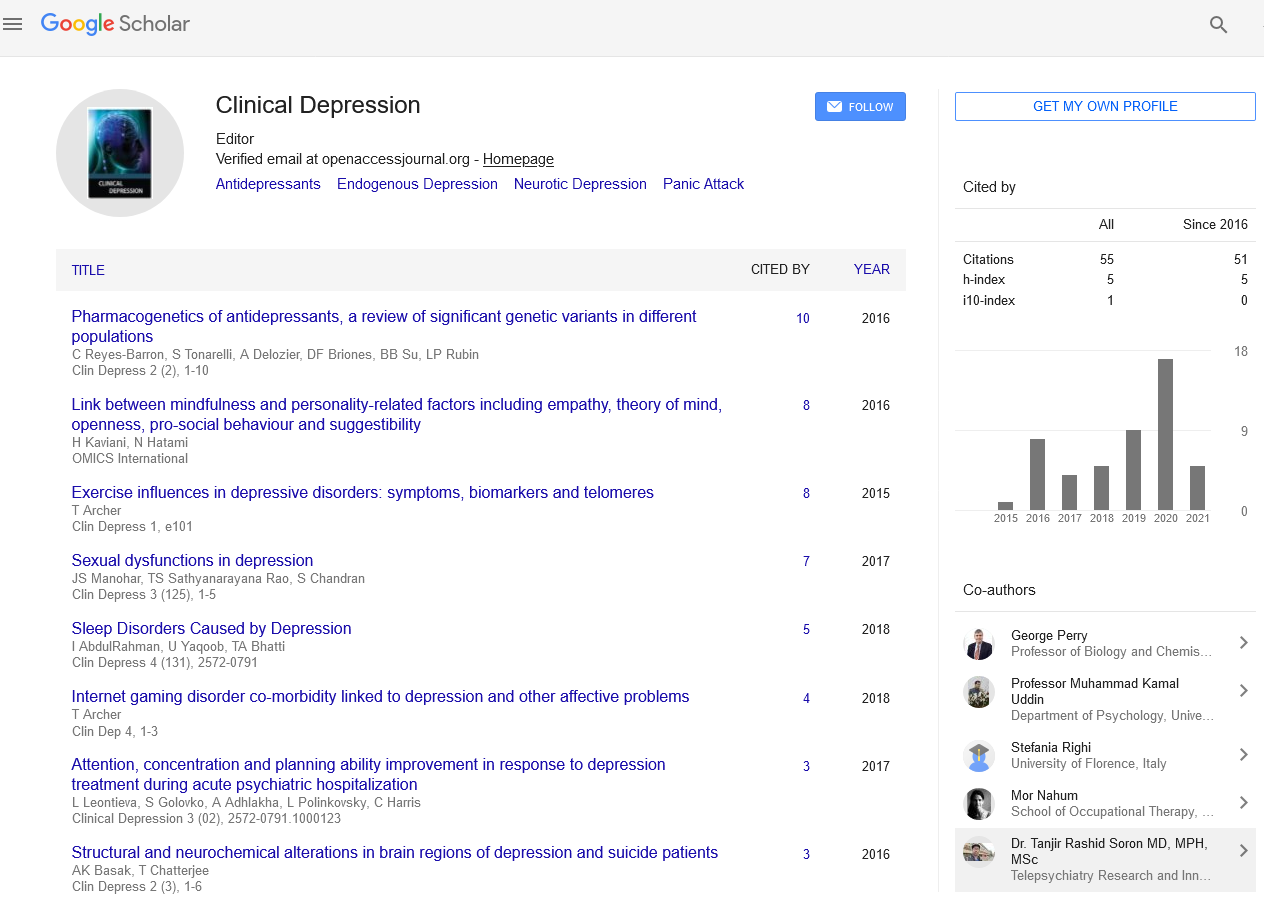
Clinical Depression received 89 citations as per Google Scholar report