Short Communication - (2025) Volume 15, Issue 5
Received: 01-Sep-2025, Manuscript No. jnt-26-178970;
Editor assigned: 03-Sep-2025, Pre QC No. P-178970;
Reviewed: 17-Sep-2025, QC No. Q-178970;
Revised: 22-Sep-2025, Manuscript No. R-178970;
Published:
29-Sep-2025
, DOI: 10.37421/2161-0959.2025.15.589
Citation: Laurent, Pierre. ”Systemic Diseases: A Threat to Kidney Health.” J Nephrol Ther 15 (2025):589.
Copyright: © 2025 Laurent P. This is an open-access article distributed under the terms of the Creative Commons Attribution License, which permits unrestricted use, distribution and reproduction in any medium, provided the original author and source are credited.
This article delves into the complex interplay between systemic diseases and their impact on kidney function. It highlights how conditions like diabetes, hypertension, and autoimmune disorders can lead to significant renal damage, often manifesting as chronic kidney disease (CKD) or acute kidney injury (AKI). The authors emphasize the importance of early detection and targeted management strategies to slow disease progression and improve patient outcomes. Key insights include the molecular mechanisms underlying renal pathology in various systemic conditions and the evolving therapeutic landscape [1].
This review focuses on diabetic nephropathy, a leading cause of end-stage renal disease. It details the pathological pathways, including hyperfiltration, glomerular hypertrophy, and mesangial expansion, driven by hyperglycemia and other metabolic derangements. The authors discuss current and emerging treatments, such as SGLT2 inhibitors and GLP-1 receptor agonists, and their efficacy in slowing CKD progression in diabetic patients. The impact of genetics and lifestyle factors is also considered [2].
Hypertension-related kidney disease is explored in this study, examining how elevated blood pressure damages renal vasculature and glomeruli. The article outlines the mechanisms of hypertensive nephrosclerosis and the role of RAAS blockade in mitigating its progression. It also discusses the challenges in managing hypertension in patients with pre-existing kidney disease and the importance of personalized treatment approaches [3].
This research investigates the renal manifestations of systemic lupus erythematosus (SLE), particularly lupus nephritis. It describes the pathogenesis, characterized by immune complex deposition in glomeruli, leading to inflammation and kidney damage. The review covers diagnostic criteria, histopathological findings, and treatment strategies, including immunosuppressants and novel targeted therapies, aiming to preserve renal function in SLE patients [4].
This paper examines the impact of rheumatoid arthritis (RA) on kidney health, focusing on renal amyloidosis and drug-induced nephrotoxicity. It discusses how chronic inflammation in RA can lead to amyloid deposition, impairing kidney function. The article also reviews the nephrotoxic potential of commonly used RA medications and emphasizes the need for careful monitoring of renal parameters in RA patients [5].
The article explores the kidney complications associated with cardiovascular diseases (CVDs), including cardiorenal syndrome. It elaborates on the bidirectional relationship between heart and kidney dysfunction, where impaired cardiac function affects kidney perfusion and vice versa. Strategies for managing both conditions simultaneously are discussed, focusing on optimizing fluid balance, blood pressure, and cardiac medications [6].
This review examines the kidney pathology in liver diseases, particularly hepatorenal syndrome (HRS). It outlines the pathophysiology of HRS, involving intense renal vasoconstriction due to splanchnic vasodilation and activation of the renin-angiotensin-aldosterone system. The article discusses the diagnostic criteria, current treatment options including terlipressin and albumin, and the role of liver transplantation in managing HRS [7].
This study investigates the nephrotoxic effects of certain medications commonly used in systemic diseases, such as NSAIDs and chemotherapy agents. It details the mechanisms of drug-induced kidney injury (DIKI), including direct tubular damage and interstitial inflammation. The authors highlight the importance of pharmacovigilance and the development of safer drug alternatives [8].
This article focuses on the impact of metabolic syndrome on renal health. It explains how obesity, dyslipidemia, insulin resistance, and hypertension, core components of metabolic syndrome, contribute to the development of diabetic nephropathy and other kidney diseases. The authors advocate for lifestyle modifications and pharmacological interventions to manage metabolic syndrome and protect kidney function [9].
This research explores the renal complications of autoimmune diseases beyond SLE, including vasculitis and scleroderma. It details the diverse patterns of kidney involvement, such as glomerulonephritis and interstitial nephritis, and discusses the pathogenesis driven by autoantibodies and immune cell activation. The article emphasizes the need for early diagnosis and aggressive immunosuppressive therapy to prevent irreversible kidney damage [10].
Systemic diseases are a significant concern in the United States, impacting various organ systems, including the kidneys. Trends in kidney disease and hypertension highlight the growing prevalence of chronic kidney disease (CKD) and acute kidney injury (AKI) in the population. Early detection and tailored management are crucial for improving patient outcomes by slowing disease progression. Understanding the molecular mechanisms of renal pathology in different systemic conditions and the advancements in therapeutic strategies are key areas of research [1].
Diabetic nephropathy stands out as a primary driver of end-stage renal disease. The pathological cascades initiated by hyperglycemia, such as hyperfiltration and glomerular hypertrophy, lead to progressive kidney damage. Current and investigational treatments, including SGLT2 inhibitors and GLP-1 receptor agonists, demonstrate promise in mitigating CKD progression among diabetic individuals. Genetic predispositions and lifestyle choices further influence disease development and severity [2].
Hypertensive nephropathy arises from the sustained elevation of blood pressure, which inflicts damage on renal vasculature and glomeruli. Hypertensive nephrosclerosis is a hallmark of this condition, and blockade of the renin-angiotensin-aldosterone system (RAAS) plays a vital role in its management. Effectively controlling hypertension in patients with existing kidney disease presents unique challenges, necessitating individualized treatment plans [3].
The renal consequences of systemic lupus erythematosus (SLE) are notably severe, with lupus nephritis being a common and debilitating manifestation. The pathogenesis involves the deposition of immune complexes within glomeruli, triggering inflammation and subsequent kidney damage. Diagnosis relies on specific criteria and histopathological examination, with treatment often involving immunosuppressants and novel therapies aimed at preserving renal function [4].
Rheumatoid arthritis (RA) can precipitate several renal complications, most notably renal amyloidosis and drug-induced nephrotoxicity. Chronic inflammation in RA contributes to amyloid deposition, leading to impaired kidney function. Additionally, the medications used to manage RA carry a risk of nephrotoxicity, underscoring the importance of diligent renal monitoring in affected patients [5].
Cardiovascular diseases (CVDs) are intimately linked with kidney health, often manifesting as cardiorenal syndrome. This condition describes the reciprocal detrimental relationship between cardiac and renal dysfunction. Impaired cardiac output can compromise renal perfusion, while kidney disease can exacerbate cardiac issues. Integrated management strategies focus on optimizing hemodynamic stability and therapeutic regimens [6].
Liver diseases can precipitate severe renal dysfunction, most critically hepatorenal syndrome (HRS). HRS is characterized by profound renal vasoconstriction, stemming from splanchnic vasodilation and hyperactivation of the RAAS. Diagnosis follows specific criteria, and management involves pharmacological interventions such as terlipressin and albumin, with liver transplantation offering a definitive solution in select cases [7].
A significant concern in managing systemic diseases is drug-induced kidney injury (DIKI). Medications like NSAIDs and chemotherapy agents can exert direct toxic effects on renal tubules or induce interstitial inflammation. Robust pharmacovigilance systems are essential for identifying and mitigating DIKI, alongside efforts to develop safer therapeutic alternatives [8].
Metabolic syndrome, a constellation of conditions including obesity, dyslipidemia, insulin resistance, and hypertension, significantly impacts renal health. These metabolic derangements contribute to the pathogenesis of diabetic nephropathy and other kidney pathologies. Lifestyle interventions and pharmacotherapy are vital for managing metabolic syndrome and safeguarding kidney function [9].
Beyond SLE, other systemic autoimmune diseases such as vasculitis and scleroderma can also affect the kidneys. These conditions can lead to diverse renal lesions, including glomerulonephritis and interstitial nephritis, driven by autoantibodies and immune cell activity. Prompt diagnosis and aggressive immunosuppressive therapy are critical to prevent irreversible kidney damage [10].
Systemic diseases like diabetes, hypertension, and autoimmune disorders significantly impact kidney function, leading to chronic kidney disease (CKD) and acute kidney injury (AKI). Early detection and targeted management are crucial for slowing disease progression. Diabetic nephropathy, driven by hyperglycemia, is a leading cause of end-stage renal disease, with new treatments showing promise. Hypertension damages renal vasculature, requiring personalized treatment. Autoimmune diseases such as lupus, rheumatoid arthritis, vasculitis, and scleroderma also have significant renal manifestations, necessitating immunosuppressive therapies. Cardiovascular diseases contribute to cardiorenal syndrome, impacting both heart and kidney function. Liver diseases can cause hepatorenal syndrome, a critical complication. Drug-induced kidney injury from medications like NSAIDs and chemotherapy is a concern, highlighting the need for pharmacovigilance. Metabolic syndrome, characterized by obesity, insulin resistance, and hypertension, further exacerbates kidney damage. Understanding the underlying mechanisms and evolving therapeutic landscapes is essential for preserving renal health in patients with systemic conditions.
None
None
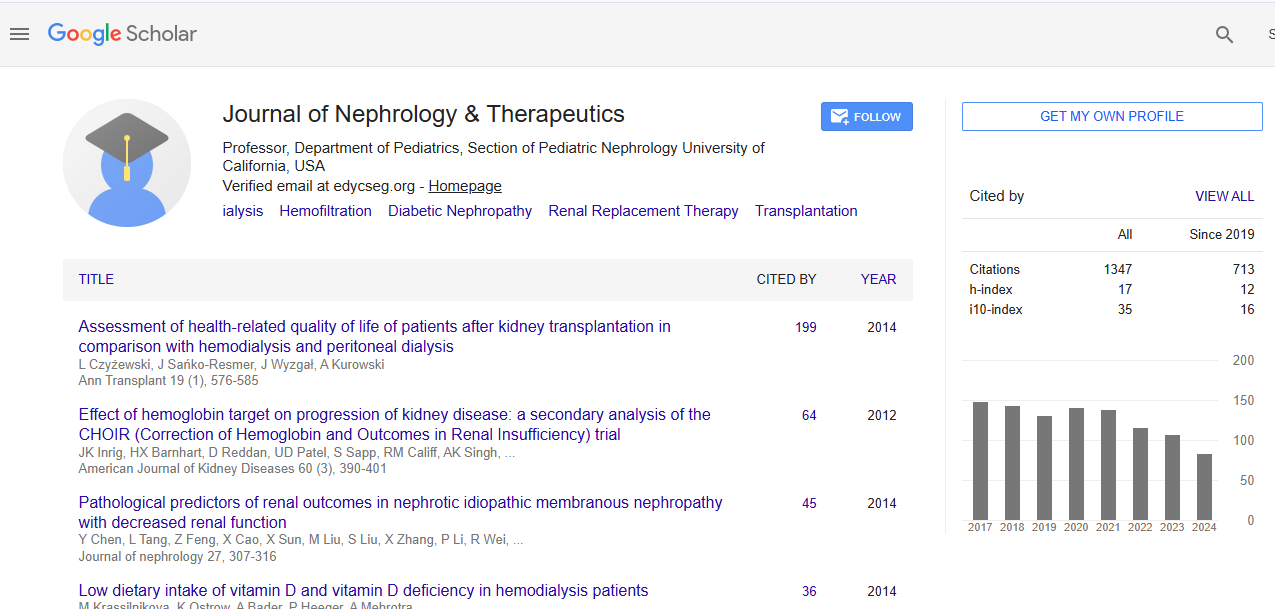
Journal of Nephrology & Therapeutics received 784 citations as per Google Scholar report