Opinion - (2025) Volume 13, Issue 2
Received: 01-Apr-2025, Manuscript No. JGPR-26-188011;
Editor assigned: 03-Apr-2025, Pre QC No. P-188011;
Reviewed: 17-Apr-2025, QC No. Q-188011;
Revised: 22-Apr-2025, Manuscript No. R-188011;
Published:
29-Apr-2025
, DOI: 10.37421/2329-9126.2025.13.612
Citation: Rossi, Sofia. ”Multifaceted Hypertension Management: Patient, Team, and Tools.” J Gen Pract 13 (2025):612.
Copyright: © 2025 Rossi S. This is an open-access article distributed under the terms of the Creative Commons Attribution License, which permits unrestricted use, distribution and reproduction in any medium, provided the original author and source are credited.
The evolving landscape of hypertension management in primary care presents numerous opportunities and challenges that demand continuous attention and adaptation. Effective strategies are crucial for improving diagnosis, risk stratification, and treatment intensification, particularly for individuals with difficult-to-control hypertension, highlighting the critical role of guideline adherence and patient-centered approaches [1].
Enhancing patient engagement is paramount in achieving successful hypertension management. Primary care physicians require practical tools and effective communication strategies to foster better adherence to antihypertensive medications, addressing common barriers such as cost, side effects, and a lack of understanding by employing shared decision-making and personalized treatment plans [2].
Lifestyle modifications stand as a cornerstone in the comprehensive management of hypertension within primary care settings. A synthesis of recent evidence underscores the effectiveness of dietary interventions, physical activity, weight management, and smoking cessation, advocating for integrated counseling and support to promote sustainable behavioral changes [3].
Addressing the complex issue of resistant hypertension necessitates a thorough diagnostic approach and refined pharmacological strategies for primary care practitioners. Identifying secondary causes and optimizing existing therapies are critical steps before considering more intensive interventions or specialist referral, with practical guidance available for medication adjustments and the appropriate use of specialist consultation [4].
The integration of nurse-led programs offers a promising avenue for enhancing hypertension management in primary care. Studies indicate that involving advanced practice nurses can significantly improve blood pressure control, medication adherence, and overall patient satisfaction through education, regular follow-up, and self-management support [5].
Staying abreast of the latest hypertension guidelines is essential for primary care practice to ensure optimal patient care and cardiovascular risk reduction. Key updates in blood pressure targets, diagnostic criteria, and treatment recommendations, including the incorporation of newer drug classes, equip providers with the most current evidence-based approaches [6].
The strategic use of technology, particularly telehealth and remote monitoring, presents a significant opportunity to enhance hypertension management. Virtual consultations and wearable devices can improve patient access, facilitate continuous monitoring, and enable timely interventions, though careful consideration of implementation challenges and best practices is required [7].
Recognizing and addressing the socioeconomic determinants of hypertension control is vital for reducing health disparities. Factors such as income, education, and healthcare access profoundly influence treatment adherence and outcomes, necessitating strategies within primary care to mitigate these influences [8].
Effective communication of cardiovascular risk associated with hypertension is a critical component of patient empowerment and informed decision-making in primary care. Providing tools and frameworks to discuss risk facilitates shared understanding and motivates patients towards sustained adherence to treatment and lifestyle modifications [9].
Finally, the implementation of robust team-based care models is instrumental in optimizing hypertension management within primary care. Collaboration among pharmacists, nurses, medical assistants, and physicians, alongside shared responsibility and efficient patient flow, can significantly improve patient outcomes and the overall delivery of care [10].
Primary care serves as the frontline for managing the complex and evolving landscape of hypertension. The emphasis on guideline adherence, coupled with patient-centered and team-based care approaches, forms the bedrock of effective hypertension management. Strategies aimed at improving diagnosis, risk stratification, and timely treatment intensification are essential, especially for those with challenging-to-control hypertension, underscoring the continuous need for professional development and leveraging technology [1].
Patient engagement is a critical determinant of success in managing hypertension within primary care. Equipping physicians with practical tools and refined communication strategies is vital for enhancing adherence to antihypertensive medications. Overcoming common barriers such as financial constraints, medication side effects, and patient understanding requires a commitment to shared decision-making and tailoring treatment plans to the unique needs and preferences of each individual [2].
The integral role of lifestyle modifications in hypertension management cannot be overstated. Primary care settings are ideally positioned to deliver comprehensive counseling and support for dietary changes, including adherence to recommended diets like the DASH diet and sodium restriction, alongside promoting physical activity, weight management, and smoking cessation to foster sustainable behavioral shifts [3].
Managing resistant hypertension demands a systematic approach in primary care. This involves meticulous diagnostic evaluations to identify potential secondary causes and the strategic optimization of existing antihypertensive regimens before escalating therapy. Practical guidance on medication adjustments, the judicious use of diuretics, and understanding when to involve specialist consultation are key components of this management [4].
Nurse-led hypertension management programs have demonstrated significant efficacy in primary care settings. The involvement of advanced practice nurses has been shown to markedly improve blood pressure control, enhance medication adherence, and boost patient satisfaction through structured educational components, consistent follow-up, and robust self-management support, offering a replicable model for service expansion [5].
Staying current with hypertension management guidelines is imperative for primary care providers. Recent updates often introduce critical changes to blood pressure targets, diagnostic criteria, and therapeutic recommendations, including the integration of novel drug classes. This ensures that providers are equipped with the most up-to-date evidence to optimize patient care and mitigate cardiovascular risk effectively [6].
Technological advancements, particularly telehealth and remote monitoring, offer transformative potential for hypertension management in primary care. These tools facilitate improved patient access to care, enable continuous physiological monitoring, and allow for prompt therapeutic adjustments. Successful integration requires careful consideration of implementation strategies and best practices to embed these technologies into routine clinical workflows [7].
Socioeconomic factors significantly influence the control of hypertension within primary care. Disparities in income, educational attainment, and access to healthcare resources can profoundly impact treatment adherence and health outcomes. Primary care settings have a crucial role in developing and implementing strategies that address these social determinants to reduce health inequities in hypertension management [8].
Communicating the complex concept of cardiovascular risk associated with hypertension is a fundamental skill for primary care physicians. Providing patients with understandable information about their risk, alongside practical tools and frameworks for discussion, empowers them to engage actively in treatment decisions and lifestyle changes, fostering a partnership for long-term health management [9].
Optimizing hypertension management within primary care settings is significantly enhanced through the adoption of team-based care models. Effective collaboration among diverse healthcare professionals, including pharmacists, nurses, medical assistants, and physicians, ensures shared responsibility, efficient patient management, and ultimately, improved patient outcomes through a coordinated and comprehensive approach to care delivery [10].
Hypertension management in primary care is multifaceted, emphasizing guideline adherence, patient-centered care, and team-based approaches. Strategies focus on improving diagnosis, risk stratification, and treatment intensification, particularly for difficult cases. Patient engagement is key, with practical tools and communication aiding medication adherence. Lifestyle modifications, including diet and exercise, are foundational. Resistant hypertension requires careful diagnosis and pharmacological optimization. Nurse-led programs and technology like telehealth show promise in improving control. Addressing socioeconomic determinants and effectively communicating cardiovascular risk are vital for equity and shared decision-making. Team-based care models involving various healthcare professionals are crucial for comprehensive management and improved patient outcomes.
None
None
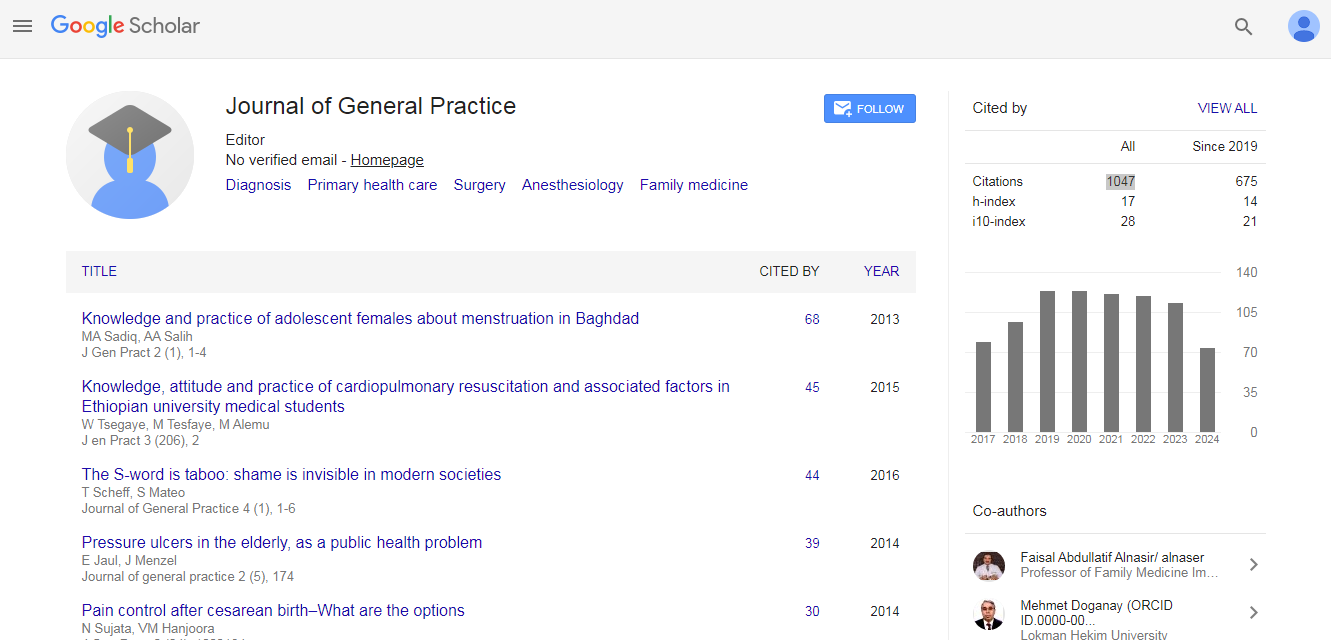
Journal of General Practice received 1047 citations as per Google Scholar report