Short Communication - (2025) Volume 15, Issue 5
Received: 01-Sep-2025, Manuscript No. jnt-26-178971;
Editor assigned: 03-Sep-2025, Pre QC No. P-178971;
Reviewed: 17-Sep-2025, QC No. Q-178971;
Revised: 22-Sep-2025, Manuscript No. R-178971;
Published:
29-Sep-2025
, DOI: 10.37421/2161-0959.2025.15.590
Citation: Adu-Boahen, Kofi. ”Strategies to Slow Kidney Disease Progression.” J Nephrol Ther 15 (2025):590.
Copyright: © 2025 Adu-Boahen K. This is an open-access article distributed under the terms of the Creative Commons Attribution License, which permits unrestricted use, distribution and reproduction in any medium, provided the original author and source are credited.
The relentless progression of kidney disease poses a significant global health challenge, necessitating a comprehensive understanding of therapeutic strategies to preserve renal function and improve patient outcomes. Early intervention plays a pivotal role, emphasizing timely diagnosis and initiation of treatment protocols to mitigate irreversible damage. Lifestyle modifications, encompassing dietary adjustments and increased physical activity, are fundamental in managing the underlying factors contributing to kidney deterioration. Targeted pharmacological interventions have advanced considerably, offering new avenues for slowing disease advancement and protecting the kidneys. Among these, managing comorbid conditions such as hypertension and diabetes is paramount, as they are primary drivers of renal pathology. Novel therapeutic agents, including SGLT2 inhibitors, have emerged as potent renoprotective agents, demonstrating efficacy beyond glycemic control. Mineralocorticoid receptor antagonists (MRAs) are also gaining prominence for their ability to counteract inflammatory and fibrotic processes within the kidneys. The management of proteinuria, particularly albuminuria, serves as a critical marker and therapeutic target for slowing CKD progression. Advances in understanding the pathophysiology of kidney disease have paved the way for developing anti-fibrotic therapies, aiming to halt or reverse the scarring that leads to organ failure. Ultimately, a multifaceted approach integrating pharmacological treatments, lifestyle changes, and vigilant management of associated conditions is essential for effectively combating kidney disease progression [1].
Dietary interventions are increasingly recognized as a cornerstone in the management of chronic kidney disease (CKD), significantly influencing disease trajectory and patient outcomes. Careful attention to protein intake, sodium restriction, and the regulation of phosphorus and potassium levels are vital components of these tailored dietary plans. These adjustments, often guided by nephrologists and registered dietitians, can help alleviate the burden on the kidneys and slow the progression of the disease. The impact of these nutritional strategies extends to improving the overall quality of life for individuals living with CKD, highlighting the integral role of diet in a holistic treatment approach. By optimizing nutrient intake and minimizing the load on compromised renal systems, dietary modifications contribute substantially to the long-term management of CKD [2].
The efficacy of Sodium-Glucose Cotransporter 2 (SGLT2) inhibitors in halting the progression of kidney disease across diverse CKD etiologies is a subject of intense research and clinical application. Evidence strongly supports their renoprotective effects, primarily through the reduction of albuminuria and the deceleration of glomerular filtration rate (GFR) decline. Notably, these benefits are observed independently of their well-established glycemic control properties, making them valuable agents for a broader spectrum of CKD patients. The multifaceted action of SGLT2 inhibitors underscores their growing importance in nephrology, offering a promising strategy for preserving kidney function and preventing the need for renal replacement therapy [3].
Mineralocorticoid receptor antagonists (MRAs) are demonstrating significant therapeutic potential in slowing the progression of CKD, especially in patients afflicted with resistant hypertension and persistent albuminuria. These agents work through their anti-inflammatory and anti-fibrotic mechanisms, effectively counteracting key pathological processes that drive kidney damage. By mitigating these detrimental pathways, MRAs offer a valuable addition to the existing therapeutic armamentarium for CKD management, providing an additional layer of protection for the kidneys and potentially improving long-term renal outcomes. Their role in complementing other treatments is becoming increasingly evident [4].
Hypertension management stands as a fundamental pillar in the prevention of kidney disease progression, underscoring the intricate relationship between elevated blood pressure and renal health. The article meticulously details various antihypertensive drug classes and their specific renal protective benefits, advocating for individualized treatment goals and consistent patient monitoring. Achieving and maintaining optimal blood pressure control is not merely about managing cardiovascular risk but is intrinsically linked to safeguarding kidney function. This proactive approach to hypertension treatment is crucial in preventing the onset and slowing the advancement of kidney damage, thereby preserving the long-term health of the renal system [5].
The critical importance of diabetes mellitus control in preventing the progression of kidney disease cannot be overstated, particularly in the context of diabetic nephropathy. The article elaborates on how achieving optimal glycemic control, when synergistically combined with renin-angiotensin-aldosterone system (RAAS) blockade, can substantially reduce the risk of developing or exacerbating diabetic kidney damage. This dual approach addresses both the metabolic derangements of diabetes and the hemodynamic changes that contribute to nephropathy, offering a robust strategy for renal protection in diabetic individuals. Vigilant management of blood glucose levels is therefore a key determinant in preserving kidney function [6].
Finerenone, a non-steroidal mineralocorticoid receptor antagonist (MRA), is emerging as a significant therapeutic option for patients suffering from CKD in conjunction with type 2 diabetes. Its demonstrated ability to reduce both kidney and cardiovascular events stems from its unique mechanism of action, which targets inflammation and fibrosis within the kidneys. This offers a novel and effective avenue for modifying the course of the disease, providing a promising new strategy for managing this complex patient population and mitigating the risk of serious complications [7].
Targeting proteinuria, specifically albuminuria, is recognized as a paramount strategy for slowing the progression of CKD, a central theme in contemporary nephrological practice. The article highlights the well-established efficacy of renin-angiotensin-aldosterone system (RAAS) inhibitors in reducing albuminuria, a key indicator of kidney damage. Furthermore, it provides insights into the potential benefits of combination therapies and the exploration of novel agents that may further enhance renoprotection. This focus on proteinuria reduction underscores its critical role in preserving renal function and delaying disease advancement [8].
Lifestyle interventions, including consistent engagement in physical activity and the cessation of smoking, are increasingly acknowledged as crucial components in mitigating the progression of kidney disease. This paper emphasizes how addressing these modifiable risk factors can significantly complement pharmacological treatments. By fostering healthier habits, individuals can actively contribute to improving their overall kidney health and potentially slow the advancement of renal pathology. The integration of lifestyle modifications into comprehensive CKD management plans is therefore essential for optimizing patient outcomes [9].
The frontier of anti-fibrotic therapies for kidney disease progression is a rapidly evolving area of research, holding considerable promise for patients experiencing irreversible kidney damage. This article reviews the current scientific landscape concerning agents designed to target renal fibrosis, a common pathological pathway leading to kidney failure. By delving into the prospects of these therapies in clinical practice, it highlights the potential for a paradigm shift in how we manage and treat advanced stages of kidney disease, offering hope for preserving renal function where previously limited options existed [10].
The multifaceted therapeutic strategies essential for impeding the advancement of kidney disease are thoroughly examined, underscoring the critical importance of early intervention, lifestyle modifications, and targeted pharmacological treatments in preserving renal function. Emphasis is placed on the effective management of underlying conditions such as hypertension and diabetes, alongside the integration of novel approaches like SGLT2 inhibitors and mineralocorticoid receptor antagonists into treatment regimens. This comprehensive overview provides a foundational understanding of the current landscape in kidney disease management [1].
The pivotal role of dietary interventions in the management of chronic kidney disease (CKD) progression is explored in detail, focusing on the impact of protein intake, sodium restriction, and the critical balance of phosphorus and potassium levels. The article underscores how tailored dietary plans, meticulously developed and guided by nephrologists and dietitians, can profoundly influence the disease trajectory and significantly improve patient outcomes. This highlights the indispensable nature of nutritional strategies in a holistic approach to CKD care [2].
This study meticulously investigates the efficacy of Sodium-Glucose Cotransporter 2 (SGLT2) inhibitors in preventing kidney disease progression across a spectrum of CKD etiologies. It presents compelling evidence demonstrating their significant renoprotective effects, primarily through the reduction of albuminuria and the deceleration of glomerular filtration rate (GFR) decline, benefits that are achieved independently of their impact on glycemic control. This points to a broader application of SGLT2 inhibitors in nephrology [3].
The therapeutic potential of mineralocorticoid receptor antagonists (MRAs) in slowing CKD progression is extensively reviewed, with particular attention paid to their benefits in patients suffering from resistant hypertension and albuminuria. The article elucidates their anti-inflammatory and anti-fibrotic mechanisms, establishing them as a valuable addition to existing treatment regimens aimed at protecting renal function [4].
This paper critically reviews the management of hypertension as a cornerstone strategy for preventing kidney disease progression, offering a detailed exploration of various antihypertensive drug classes and their specific renal protective advantages. It emphasizes the importance of individualized treatment goals and rigorous monitoring to ensure optimal outcomes and preserve kidney health [5].
The crucial role of effective diabetes mellitus control in the prevention of kidney disease progression is thoroughly detailed, highlighting how optimal glycemic control, in conjunction with renin-angiotensin-aldosterone system (RAAS) blockade, can substantially reduce the risk of developing or worsening diabetic nephropathy. This dual strategy is essential for managing diabetic kidney disease [6].
This review focuses on finerenone, a non-steroidal mineralocorticoid receptor antagonist (MRA), and its therapeutic benefits for patients with CKD and type 2 diabetes. The article highlights its capacity to reduce kidney and cardiovascular events by targeting inflammation and fibrosis, thereby offering a novel avenue for disease modification and improved patient prognosis [7].
The article delves into the management of proteinuria as a key target for slowing CKD progression, emphasizing the established efficacy of RAAS inhibitors in reducing albuminuria. It also provides insights into potential combination therapies and novel agents that could further enhance renoprotection and preserve kidney function [8].
This paper explores the emerging and significant role of lifestyle interventions, specifically physical activity and smoking cessation, in mitigating the progression of kidney disease. It underscores how addressing these modifiable factors can effectively complement pharmacological treatments and contribute to improved overall kidney health [9].
The article examines the potential of anti-fibrotic therapies for kidney disease progression, reviewing current research on agents designed to target renal fibrosis, a common pathway leading to irreversible kidney damage. It discusses the future prospects of these therapies in clinical practice, offering hope for novel treatment strategies [10].
This collection of articles explores various strategies for impeding kidney disease progression. It emphasizes early intervention, lifestyle modifications like diet and exercise, and pharmacological treatments. Key therapeutic areas include managing hypertension and diabetes, with specific focus on novel agents such as SGLT2 inhibitors and mineralocorticoid receptor antagonists. The management of proteinuria is highlighted as a critical target. Emerging anti-fibrotic therapies and the complementary role of lifestyle changes are also discussed, presenting a comprehensive overview of current and future approaches to preserving renal function and improving patient outcomes.
None
None
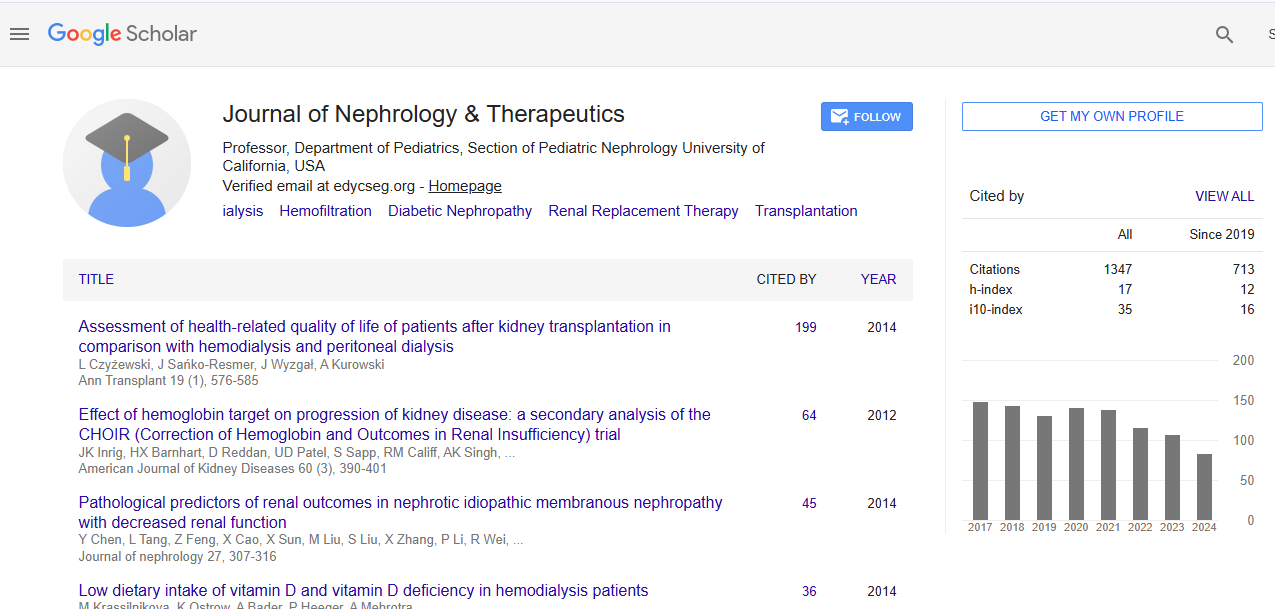
Journal of Nephrology & Therapeutics received 784 citations as per Google Scholar report