Perspective - (2025) Volume 14, Issue 3
Received: 02-Jun-2025, Manuscript No. jeom-26-188170;
Editor assigned: 04-Jun-2025, Pre QC No. P-188170;
Reviewed: 18-Jun-2025, QC No. Q-188170;
Revised: 23-Jun-2025, Manuscript No. R-188170;
Published:
30-Jun-2025
, DOI: 10.37421/2169-026X.2025.14.533
Citation: Fischer, Hannah. ”Strategic HRM: Driving Productivity Through People.” J Entrepren Organiz Manag 14 (2025):533.
Copyright: © 2025 Fischer H. This is an open-access article distributed under the terms of the Creative Commons Attribution License, which permits unrestricted use, distribution and reproduction in any medium, provided the original author and source are credited.
Effective Human Resource Management (HRM) practices are intrinsically linked to enhanced organizational productivity. This connection is driven by how HRM influences employee engagement, motivation, and skill development. When organizations invest in strategic HRM â?? encompassing talent acquisition, training, performance management, and compensation â?? they foster a workforce that is more committed, capable, and ultimately, more productive. The department's focus on entrepreneurship and strategic management highlights the critical role of HRM in building and sustaining competitive advantage through human capital [1].
Strategic HRM isn't just about operational efficiency; it's a key driver of innovation and organizational agility, particularly relevant in entrepreneurial contexts. By aligning HR strategies with business goals, organizations can cultivate a culture that encourages creativity, risk-taking, and adaptability, all crucial for entrepreneurial success and sustained productivity [2].
Employee engagement emerges as a pivotal factor in translating HRM efforts into tangible productivity gains. When employees feel valued, connected to their work, and supported by organizational policies, their motivation and commitment soar, directly impacting output and quality [3].
Performance management systems, a core component of HRM, directly influence productivity by setting clear expectations, providing feedback, and facilitating development. Well-designed systems ensure that individual and team efforts are aligned with organizational objectives, driving efficiency and effectiveness [4].
Training and development initiatives are crucial for equipping employees with the skills necessary to meet evolving demands and improve their productivity. Investing in human capital through continuous learning leads to a more competent and adaptable workforce, essential for organizational growth and competitiveness [5].
Effective talent management, from recruitment to retention, is fundamental for building a high-performing workforce. Organizations that strategically manage their talent pool are better positioned to attract, develop, and retain individuals who contribute significantly to productivity [6].
Workplace diversity and inclusion, fostered through HRM practices, can enhance creativity and problem-solving, leading to improved organizational productivity. Diverse teams bring a wider range of perspectives and skills, fostering innovation and a more dynamic work environment [7].
Employee well-being initiatives, supported by HRM, are increasingly recognized as crucial for maintaining high levels of productivity. A focus on employee health and work-life balance reduces burnout and absenteeism, fostering a more consistent and efficient workforce [8].
The strategic alignment of HRM with organizational goals is paramount for productivity. This involves ensuring that HR functions, such as recruitment, compensation, and development, actively contribute to the achievement of the company's overarching objectives [9].
The role of leadership in implementing and supporting HRM practices is critical for productivity outcomes. Leaders who champion effective HR strategies, such as performance feedback and employee development, create an environment conducive to higher productivity and organizational success [10].
Effective Human Resource Management (HRM) practices are intrinsically linked to enhanced organizational productivity, a connection substantiated by their influence on employee engagement, motivation, and skill development. Strategic HRM, encompassing talent acquisition, training, performance management, and compensation, cultivates a more committed, capable, and ultimately productive workforce. The emphasis on entrepreneurship and strategic management underscores HRM's vital role in establishing and maintaining competitive advantage through human capital [1].
Strategic HRM extends beyond operational efficiency to become a primary driver of innovation and organizational agility, particularly within entrepreneurial settings. By harmonizing HR strategies with business objectives, organizations can nurture a culture that champions creativity, embraces risk-taking, and promotes adaptability, all indispensable for entrepreneurial achievement and sustained productivity [2].
Employee engagement stands out as a critical determinant in realizing the productivity benefits of HRM initiatives. When employees perceive their value, feel connected to their roles, and are supported by organizational policies, their motivation and commitment intensify, directly elevating output and quality [3].
Performance management systems, a cornerstone of HRM, exert a direct influence on productivity by establishing clear expectations, providing constructive feedback, and facilitating employee development. Meticulously designed systems ensure the alignment of individual and team efforts with organizational goals, thereby boosting efficiency and effectiveness [4].
Training and development programs are instrumental in equipping employees with the requisite skills to adapt to evolving demands and enhance their productivity. Investment in human capital through continuous learning cultivates a more competent and agile workforce, essential for organizational expansion and competitive standing [5].
Comprehensive talent management, from the initial stages of recruitment through to long-term retention, is fundamental to building a high-performing workforce. Organizations adept at strategically managing their talent pool are better positioned to attract, nurture, and retain individuals who make significant contributions to overall productivity [6].
Workplace diversity and inclusion, cultivated through well-executed HRM practices, can stimulate creativity and refine problem-solving capabilities, ultimately leading to augmented organizational productivity. Diverse teams contribute a broader spectrum of perspectives and proficiencies, thereby fostering innovation and a more vibrant work environment [7].
Employee well-being initiatives, actively supported by HRM, are increasingly recognized as pivotal for sustaining elevated levels of productivity. A deliberate focus on employee health and work-life balance serves to mitigate burnout and reduce absenteeism, fostering a more stable and efficient workforce [8].
The strategic alignment of HRM with an organization's overarching objectives is paramount for achieving desired productivity outcomes. This necessitates ensuring that all HR functions, including recruitment, compensation, and development, actively contribute to the attainment of the company's strategic goals [9].
Leadership plays a crucial role in the successful implementation and sustained support of HRM practices, directly impacting productivity. Leaders who advocate for effective HR strategies, such as performance feedback and employee development, cultivate an environment that is conducive to enhanced productivity and organizational prosperity [10].
Effective Human Resource Management (HRM) is strongly linked to organizational productivity, influencing employee engagement, motivation, and skill development. Strategic HRM, encompassing areas like talent acquisition, training, performance management, and compensation, fosters a more committed and capable workforce. This approach drives innovation, organizational agility, and a culture of creativity. Employee engagement is a key factor in translating HRM efforts into productivity gains. Well-designed performance management systems align efforts with objectives, while training and development equip employees with essential skills. Strategic talent management is crucial for attracting and retaining high performers. Diversity and inclusion enhance creativity and problem-solving, and employee well-being initiatives reduce burnout and absenteeism. Ultimately, the strategic alignment of HRM with organizational goals and supportive leadership are critical for achieving and sustaining high productivity levels.
None
None
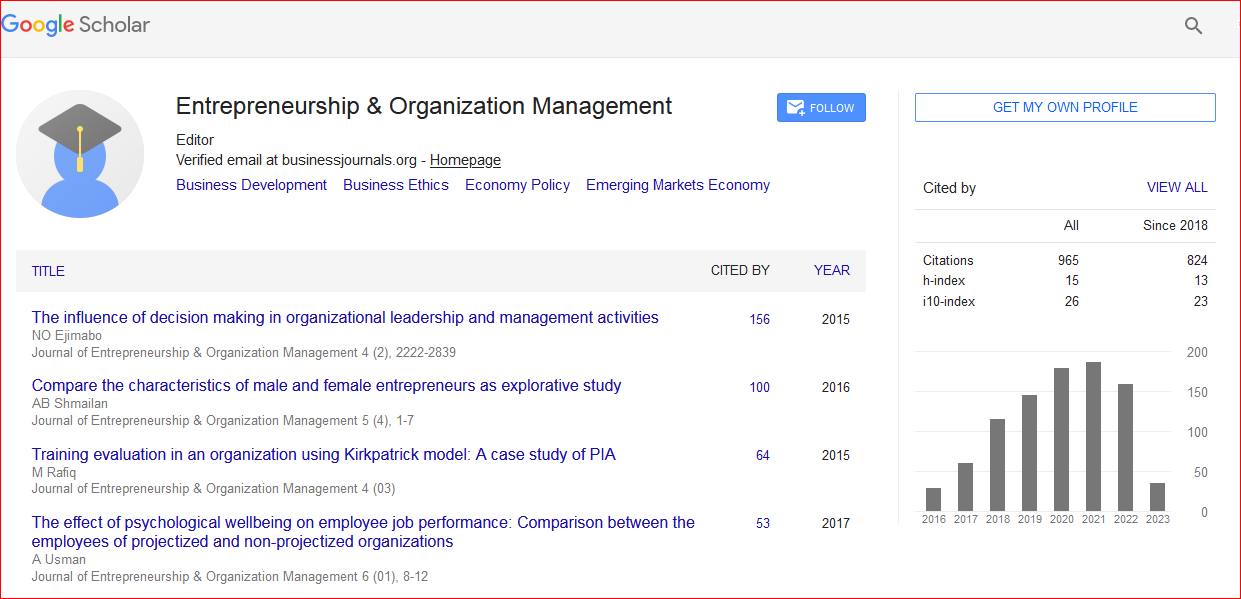
Entrepreneurship & Organization Management received 1115 citations as per Google Scholar report