Commentary - (2025) Volume 14, Issue 2
Received: 01-Apr-2025, Manuscript No. jsp-26-182239;
Editor assigned: 03-Apr-2025, Pre QC No. P-182239;
Reviewed: 17-Apr-2025, QC No. Q-182239;
Revised: 22-Apr-2025, Manuscript No. R-182239;
Published:
29-Apr-2025
, DOI: 10.37421/2165-7939.2025.14.716
Citation: Bernard, Sophie L.. ”Spinal Inflammation: Drivers, Mechanisms, and Therapeutic Targets.” J Spine 14 (2025):716.
Copyright: © 2025 Bernard L. Sophie This is an open-access article distributed under the terms of the Creative Commons Attribution License, which permits unrestricted use, distribution and reproduction in any medium, provided the original author and source are credited.
Inflammation is a fundamental process in the development and advancement of degenerative spine disorders. It plays a crucial role in conditions such as disc degeneration, facet joint osteoarthritis, and radicular pain by initiating and sustaining cellular damage and the breakdown of the extracellular matrix. Pro-inflammatory cytokines and signaling pathways are key drivers of these processes, leading to oxidative stress and apoptosis within spinal tissues. Consequently, targeting these inflammatory mechanisms presents a promising avenue for therapeutic intervention in managing these debilitating conditions [1].
Intervertebral disc degeneration is profoundly influenced by inflammatory processes that contribute to its pathogenesis. Specific cytokines, including IL-1β and TNF-α, are known to promote chondrocyte apoptosis and matrix degradation, thereby exacerbating the overall breakdown of the disc structure. A thorough understanding of these complex inflammatory cascades is therefore essential for the development of targeted therapies aimed at slowing or potentially reversing the progression of disc degeneration [2].
Facet joint osteoarthritis, a prevalent cause of low back pain, is intrinsically characterized by chronic inflammation within the joint. The inflammatory state of the synovium and the subsequent release of various inflammatory mediators contribute significantly to the erosion of articular cartilage and the formation of osteophytes in the facet joints. This underscores the critical need to address inflammation as a primary target in the management of facet joint pain [3].
Radicular pain, a common symptom in degenerative spine disorders, is frequently driven by inflammatory responses triggered by nerve root compression or irritation. Inflammatory mediators released from degenerated discs and adjacent tissues actively sensitize nociceptors, which are pain-sensing nerve endings, ultimately leading to the perception of pain. Therefore, anti-inflammatory strategies have demonstrated effectiveness in alleviating this type of pain [4].
Oxidative stress is inextricably linked with inflammation in the context of degenerative spine conditions. Inflammatory processes inherently generate reactive oxygen species, which can inflict damage on cellular components and accelerate tissue degeneration within the spine. Consequently, antioxidant therapies hold the potential to mitigate these damaging inflammatory effects and protect spinal tissues [5].
Apoptosis, or programmed cell death, is a significant cellular event observed in degenerative spine disorders, and it is often initiated by inflammatory signals. Spinal cells, including chondrocytes, are susceptible to undergoing apoptosis, which contributes to tissue loss and a decline in spinal function. Inhibiting the pro-apoptotic pathways that are activated by inflammation is therefore considered a viable therapeutic strategy [6].
The JAK-STAT signaling pathway serves as a critical mediator of inflammatory responses within the spine. Dysregulation of this pathway has been implicated in the pathogenesis of disc degeneration and facet joint inflammation. Consequently, targeting the JAK-STAT signaling pathway offers promising therapeutic potential for the effective treatment of these spinal conditions [7].
MicroRNAs (miRNAs) play a notable role in the regulation of inflammatory gene expression within the complex milieu of degenerative spine disorders. Aberrant expression patterns of miRNAs can either promote or exacerbate inflammatory responses, thereby influencing the overall progression of the disease. These miRNAs also represent potential biomarkers for diagnosis and targets for future therapeutic interventions [8].
The tumor necrosis factor-alpha (TNF-α) pathway is recognized as a key contributor to the inflammatory processes that characterize degenerative spine conditions. Clinical trials targeting and blocking TNF-α have shown considerable promise in managing inflammatory back pain and osteoarthritis, further highlighting its therapeutic relevance in this domain [9].
Novel therapeutic strategies are continually emerging for the management of degenerative spine disorders, with a particular focus on targeting inflammatory cytokines and specific cellular pathways. These innovative approaches include the development of biologics, small molecule inhibitors, and advanced cell-based therapies, all aimed at effectively reducing inflammation and promoting tissue repair processes within the spine [10].
Inflammation is a critical factor in the pathogenesis and progression of various degenerative spine disorders. It contributes to the deterioration of intervertebral discs, the development of facet joint osteoarthritis, and the manifestation of radicular pain. This inflammatory cascade is driven by the initiation and perpetuation of cellular damage and the breakdown of the extracellular matrix. Key contributors to this process include pro-inflammatory cytokines and specific signaling pathways that ultimately lead to oxidative stress and apoptosis in spinal tissues. Therefore, exploring therapeutic strategies that target these inflammatory mechanisms holds significant promise for managing these debilitating spinal conditions [1].
The process of intervertebral disc degeneration is substantially influenced by ongoing inflammatory processes within the disc. Cytokines such as interleukin-1 beta (IL-1β) and tumor necrosis factor-alpha (TNF-α) are known to promote the programmed cell death of chondrocytes, the cells responsible for maintaining the disc matrix, and to accelerate the degradation of the extracellular matrix. This exacerbates the overall breakdown of the disc structure. Consequently, a deep understanding of these intricate inflammatory cascades is absolutely crucial for the successful development of targeted therapies designed to slow down or even reverse the progression of disc degeneration [2].
Facet joint osteoarthritis, a common and often debilitating cause of low back pain, is characterized by a state of chronic inflammation within the facet joints. The inflammation of the synovial lining and the subsequent release of a variety of inflammatory mediators play a significant role in the erosion of articular cartilage and the formation of abnormal bony growths, known as osteophytes, within the facet joints. This highlights the paramount importance of addressing the inflammatory component as a primary therapeutic goal in the effective management of facet joint pain [3].
Radicular pain, a characteristic symptom experienced in many degenerative spine disorders, is often significantly driven by inflammatory responses that are triggered by mechanical compression or irritation of the nerve roots. Inflammatory mediators released from degenerated spinal discs and surrounding inflamed tissues have the capacity to sensitize peripheral nociceptors, the sensory nerve endings responsible for detecting painful stimuli, which directly leads to the experience of pain. Therefore, the implementation of anti-inflammatory strategies has been shown to be an effective approach for alleviating this type of pain [4].
Oxidative stress is intimately and complexly linked with the inflammatory processes occurring in degenerative spine conditions. The inflammatory response itself can lead to the generation of reactive oxygen species (ROS), which are highly reactive molecules that can cause significant damage to cellular components, including DNA, proteins, and lipids, thereby contributing to overall tissue degeneration within the spine. As such, the potential application of antioxidant therapies may serve to mitigate these damaging inflammatory effects [5].
Apoptosis, also known as programmed cell death, is a prominent and significant feature observed in the pathological processes of degenerative spine disorders, and it is frequently triggered by inflammatory signals. Spinal cells, including crucial chondrocytes, undergo apoptosis, which leads to a loss of these vital cells and contributes to a decline in the structural integrity and functional capacity of the spine. Therefore, inhibiting the pro-apoptotic pathways that are activated by inflammation is considered a key therapeutic consideration for preserving spinal tissue [6].
The Janus kinase-Signal transducer and activator of transcription (JAK-STAT) signaling pathway plays a critical role in mediating inflammatory responses within the spinal environment. Aberrant activation or dysregulation of this pathway has been strongly implicated in the pathogenesis of both disc degeneration and inflammation of the facet joints. Consequently, therapeutic interventions aimed at modulating or targeting the JAK-STAT signaling pathway demonstrate considerable potential for the effective treatment of these degenerative spinal conditions [7].
MicroRNAs (miRNAs), small non-coding RNA molecules, have emerged as significant regulators of inflammatory gene expression within the complex biological context of degenerative spine disorders. Abnormal or dysregulated miRNA expression profiles can either promote the development of inflammation or exacerbate existing inflammatory conditions, thereby influencing the overall progression and severity of the disease. These miRNAs also hold promise as potential biomarkers for disease detection and as targets for novel therapeutic strategies [8].
The tumor necrosis factor-alpha (TNF-α) signaling pathway is widely recognized as a key mediator and contributor to the inflammatory processes that are central to many degenerative spine conditions. Clinical studies and trials investigating the blockade of TNF-α have demonstrated encouraging results and shown significant promise in the management of inflammatory back pain and established cases of osteoarthritis, thereby underscoring its critical therapeutic relevance in this field [9].
Emerging therapeutic strategies for degenerative spine disorders are increasingly focusing on innovative approaches that target specific inflammatory cytokines and critical cellular pathways involved in disease progression. These advanced strategies encompass a range of interventions, including the use of biologic agents, the development of small molecule inhibitors, and the application of cell-based therapies, all of which are designed with the ultimate goal of effectively reducing inflammation and promoting the repair and regeneration of damaged spinal tissues [10].
Degenerative spine disorders are significantly influenced by inflammation, which drives disc degeneration, facet joint osteoarthritis, and radicular pain. Pro-inflammatory cytokines and signaling pathways, such as JAK-STAT and TNF-α, contribute to cellular damage, oxidative stress, and apoptosis in spinal tissues. MicroRNAs also play a regulatory role in spinal inflammation. Understanding these mechanisms is crucial for developing targeted therapies, including anti-inflammatory agents, antioxidants, and novel treatments aimed at reducing inflammation and promoting tissue repair. Therapeutic approaches are evolving to address these inflammatory pathways for improved patient outcomes.
None
None
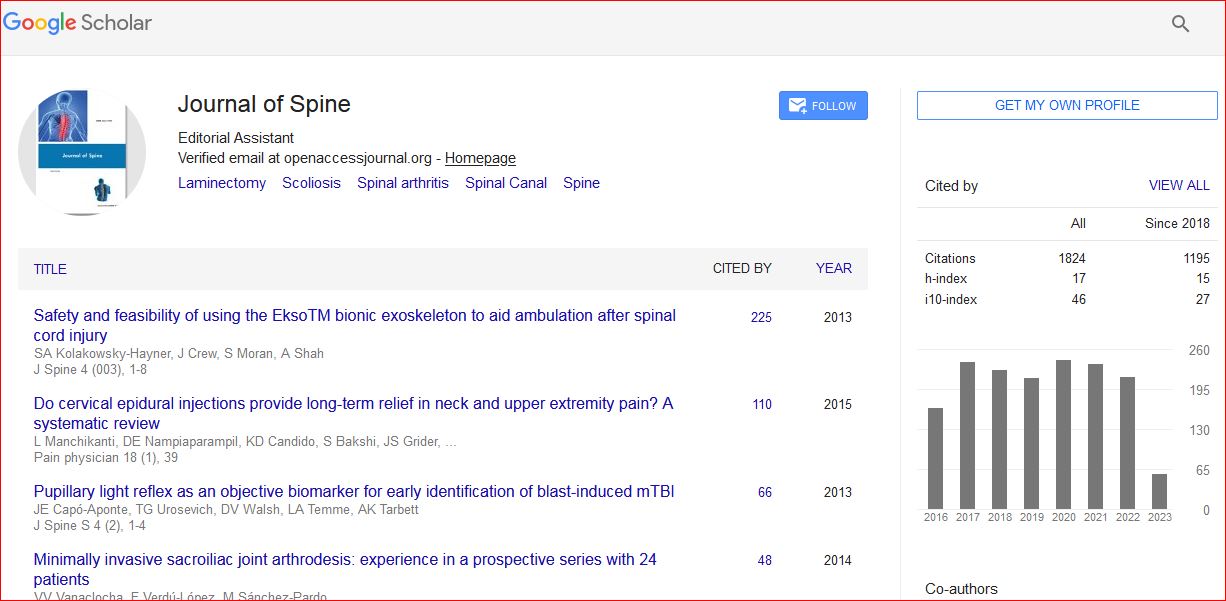
Journal of Spine received 2022 citations as per Google Scholar report