Commentary - (127) Volume 14, Issue 5
Received: 01-Sep-2025, Manuscript No. jtm-26-186026;
Editor assigned: 03-Sep-2025, Pre QC No. P-186026;
Reviewed: 17-Sep-2025, QC No. Q-186026;
Revised: 22-Sep-2025, Manuscript No. R-186026;
Published:
29-Sep-2025
, DOI: 10.37421/2167-1222.2025.14.699
Citation: Muller, Thomas. ”Spinal Cord Injury: A Multi-faceted Management Approach.” J Trauma Treat 14 (2025):699.
Copyright: © 2025 Muller T. This is an open-access article distributed under the terms of the Creative Commons Attribution License, which permits unrestricted use, distribution and reproduction in any medium, provided the original author and source are credited.
The acute management of spinal cord injury (SCI) is a critical process that centers on rapid stabilization, decompression, and comprehensive medical optimization to mitigate secondary injury cascades and preserve neurological function. Early surgical intervention is frequently paramount for effective decompression, particularly in cases of incomplete SCI that exhibit neurological deterioration or significant compromise of the spinal canal. The long-term prognosis for individuals with SCI is intrinsically linked to the severity and anatomical level of the initial injury, with rehabilitation emerging as a pivotal factor in maximizing functional recovery and substantially enhancing overall quality of life. Emerging therapeutic strategies, including the transplantation of stem cells and the development of novel pharmacologic interventions, are showing considerable promise for further advancing neurological repair and promoting functional restoration in the aftermath of SCI. [1] The precise timing and extent of surgical decompression following acute traumatic SCI represent a critical area of ongoing scientific investigation, with significant efforts dedicated to understanding its impact on improving neurological outcomes. This systematic review endeavors to examine the current body of evidence pertaining to the optimal timing and scope of surgical decompression procedures, with a particular focus on delineating crucial patient selection criteria and identifying potential benefits in the prevention of secondary injury mechanisms. [2] Pharmacological interventions designed to attenuate the inflammatory processes and oxidative stress that occur subsequent to SCI are currently under extensive exploration. This particular study is focused on investigating the potential neuroprotective effects of a novel anti-inflammatory agent within preclinical models of SCI, with a view to assessing its impact on neuronal survival rates and subsequent functional recovery. [3] Rehabilitation strategies are recognized as being central to the effective long-term management of individuals living with the effects of SCI. This research initiative is dedicated to evaluating the efficacy of a multifaceted approach that integrates intensive physical therapy alongside occupational therapy interventions, aiming to enhance motor function and improve the ability to perform activities of daily living in individuals diagnosed with chronic SCI. [4] Stem cell therapy presents a significant and promising avenue for promoting neural regeneration subsequent to SCI. This comprehensive review aims to discuss the diverse types of stem cells currently under investigation for SCI treatment, elucidate their specific mechanisms of action, and explore the inherent challenges and promising future directions for their successful clinical translation. [5] The management of neuropathic pain stands as a significant and persistent challenge within the long-term care paradigm for individuals with SCI. This article undertakes an exploration of the current therapeutic approaches available for addressing SCI-related neuropathic pain, encompassing both pharmacological agents and various non-pharmacological interventions, with the objective of achieving effective pain management. [6] Endovascular techniques are increasingly being recognized and utilized in the management of vascular injuries, which can, in certain circumstances, be associated with the occurrence of SCI. This specific study undertakes a review of the pivotal role that endovascular therapy plays in the treatment of traumatic aortic injuries and critically assesses its subsequent impact on neurological outcomes in affected patients. [7] Dysfunctions of the bowel and bladder are commonly experienced and frequently debilitating complications that arise as a consequence of SCI. This research project is dedicated to exploring innovative management strategies, which include the application of neuromodulation techniques and the utilization of advanced assistive devices, all aimed at improving continence and thereby enhancing the quality of life for individuals living with SCI. [8] Psychosocial adjustment represents a critical and integral component of the long-term recovery trajectory following SCI. This particular study is focused on examining the profound impact that peer support programs and tailored psychological interventions can have on mental health outcomes and the overall sense of well-being among individuals who are living with SCI. [9] Neuroinflammation is understood to play a significant and often detrimental role in the progression of secondary injury processes that occur after SCI. This article provides a comprehensive review of the intricate cellular and molecular mechanisms underpinning neuroinflammation and subsequently discusses potential therapeutic targets that could be exploited to effectively modulate this inflammatory response and thereby promote recovery. [10]
The acute phase of spinal cord injury (SCI) management is fundamentally characterized by the urgent need for stabilization of the injured spine, prompt decompression of neural elements, and meticulous medical optimization to minimize the impact of secondary injury processes. In many instances, particularly when dealing with incomplete SCI that shows signs of neurological decline or substantial compromise of the spinal canal, early surgical intervention for decompression is not merely beneficial but often crucial for optimizing the potential for recovery. While the severity and specific level of the injury remain significant determinants of long-term outcomes, the role of comprehensive rehabilitation cannot be overstated, as it is instrumental in maximizing functional capabilities and improving the overall quality of life for affected individuals. Furthermore, the landscape of SCI treatment is continuously evolving with the emergence of promising new therapies, such as stem cell transplantation and advanced pharmacologic interventions, which offer the potential for enhanced neurological repair and functional restoration. [1] Central to the discourse on improving neurological outcomes after acute traumatic SCI is the question of the effectiveness of early decompressive surgery, an area that continues to be a focal point of dedicated scientific investigation. This review systematically examines the existing evidence base concerning the optimal timing and the appropriate extent of surgical decompression, paying close attention to identifying robust patient selection criteria and potential advantages in the prevention of cascading secondary injury events. [2] The exploration of pharmacological interventions aimed at mitigating the detrimental effects of inflammation and oxidative stress in the post-SCI environment is an active and important area of research. This study specifically investigates the potential neuroprotective benefits of a novel anti-inflammatory agent, utilizing preclinical models of SCI to assess its impact on neuronal survival and subsequent functional recovery. [3] Within the framework of long-term SCI management, rehabilitation strategies are considered indispensable and central to achieving meaningful functional gains. This research project critically evaluates the effectiveness of a combined therapeutic approach that involves intensive physical therapy and occupational therapy, specifically focusing on its ability to improve motor function and enhance the performance of daily living activities in individuals with chronic SCI. [4] Stem cell therapy represents a highly promising therapeutic strategy with significant potential for fostering neural regeneration following SCI. This review provides a detailed overview of the various types of stem cells currently being investigated for SCI treatment, outlines their proposed mechanisms of action, and discusses the significant challenges that need to be overcome, alongside future prospects for their successful clinical application. [5] A considerable challenge in the long-term care of individuals with SCI is the effective management of neuropathic pain, a common and often debilitating symptom. This article systematically reviews the current therapeutic modalities employed for the management of SCI-related neuropathic pain, including an examination of both pharmacological agents and various non-pharmacological interventions designed to achieve effective relief. [6] The application of endovascular techniques is becoming increasingly prevalent in the management of vascular injuries, some of which can be directly associated with SCI. This study specifically reviews the role and utility of endovascular therapy in the treatment of traumatic aortic injuries and analyzes its demonstrable impact on the neurological outcomes of affected patients. [7] Bowel and bladder dysfunction are frequently encountered and can be profoundly disabling complications for individuals living with SCI. This research effort is dedicated to exploring and identifying innovative management strategies, including the use of neuromodulation and sophisticated assistive devices, with the ultimate goal of improving continence and thereby enhancing the overall quality of life for those affected by SCI. [8] Psychosocial adjustment is a critical and often underestimated component of the long-term recovery process after SCI. This study focuses on examining the tangible impact that participation in peer support programs and engagement in tailored psychological interventions can have on the mental health status and the general well-being of individuals living with SCI. [9] Neuroinflammation is recognized as a significant contributor to the secondary injury processes that unfold after SCI, exacerbating the initial damage. This article provides a comprehensive review of the intricate cellular and molecular mechanisms that drive neuroinflammation and consequently discusses potential therapeutic targets that could be leveraged to effectively modulate this inflammatory response and promote neural recovery. [10]
Spinal cord injury (SCI) management requires a multi-faceted approach, beginning with acute stabilization, decompression, and medical optimization to prevent secondary injury. Early surgery is often critical, especially for incomplete injuries with neurological decline. Rehabilitation plays a vital role in long-term functional recovery and quality of life. Emerging therapies like stem cell transplantation and pharmacologic interventions show promise for neurological repair. The timing and extent of decompressive surgery, effectiveness of rehabilitation, stem cell therapy, pain management, and addressing bowel/bladder dysfunction are key research areas. Neuroinflammation and psychosocial adjustment are also crucial aspects of SCI care. Emerging endovascular techniques are also relevant for associated vascular injuries.
None
None
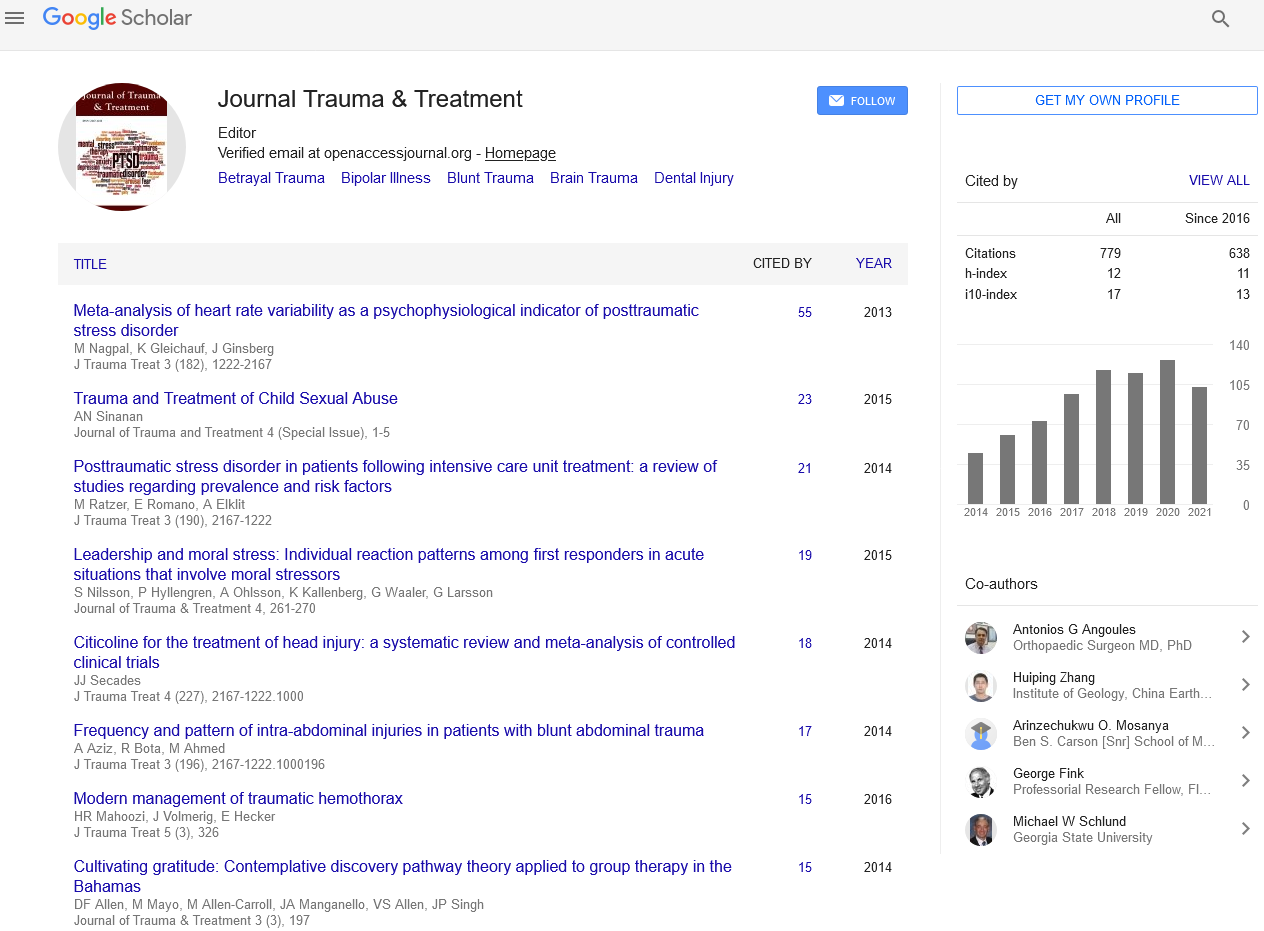
Journal of Trauma & Treatment received 1048 citations as per Google Scholar report