Perspective - (2025) Volume 13, Issue 5
Received: 01-Oct-2025, Manuscript No. jaat-26-183182;
Editor assigned: 03-Oct-2025, Pre QC No. P-183182;
Reviewed: 17-Oct-2025, QC No. Q-183182;
Revised: 22-Oct-2025, Manuscript No. R-183182;
Published:
29-Oct-2025
, DOI: 10.37421/2329-6542.2025.13.379
Citation: Rahman, Mariam Abdel. ”Spectroscopy: Unlocking Cosmic Composition and Evolution.” J Astrophys Aerospace Technol 13 (2025):379.
Copyright: © 2025 Rahman A. Mariam This is an open-access article distributed under the terms of the Creative Commons Attribution License, which permits unrestricted use, distribution and reproduction in any medium, provided the original author and source are credited.
Spectroscopy stands as a foundational pillar in the realms of astrophysical and planetary science, enabling the detailed analysis of light to unravel the intricate composition, temperature profiles, and dynamic behaviors of celestial bodies. In the vast expanse of astrophysics, a diverse array of spectroscopic techniques, including optical, infrared, and radio methods, are employed to probe the outer layers of stars, nebulae, and galaxies, thereby illuminating their chemical makeup and evolutionary trajectories. For the burgeoning field of planetary science, spectroscopy is an indispensable tool for the precise characterization of exoplanet atmospheres, serving as a critical method for identifying molecules that may signal habitability and for understanding the surface composition of both terrestrial and extraterrestrial planets and moons within our solar system. Ongoing advancements in detector technology and the evolution of sophisticated computational methodologies are continuously expanding the horizons of astronomical observation and comprehension, pushing the boundaries of what can be perceived and scientifically understood about the cosmos. These leaps forward are essential for interpreting the complex light signatures emanating from distant objects and for refining our models of cosmic phenomena. The ability to analyze spectra with ever-increasing precision allows scientists to discern subtle variations that hold clues to fundamental physical and chemical processes occurring across the universe. Furthermore, the synergy between observational data and theoretical models, both driven by spectroscopic insights, is crucial for building a comprehensive picture of cosmic evolution and the potential for life beyond Earth. The pursuit of knowledge through spectroscopy is not merely about cataloging elements but about understanding the fundamental physics governing the universe and our place within it. As instruments become more sensitive and data analysis more powerful, the insights gained from spectroscopic studies will undoubtedly continue to shape our understanding of the universe in profound ways. Spectroscopy is a cornerstone of astrophysical and planetary science, enabling the analysis of light to decipher the composition, temperature, and dynamics of celestial objects. In astrophysics, techniques like optical, infrared, and radio spectroscopy probe stellar atmospheres, nebulae, and galaxies, revealing their chemical makeup and evolutionary states. For planetary science, spectroscopy is crucial for characterizing exoplanet atmospheres, identifying molecules indicative of habitability, and understanding the surface composition of planets and moons within our solar system. Advancements in detector technology and computational methods continue to push the boundaries of what can be observed and understood [1].
Infrared spectroscopy is a critical technique for dissecting the atmospheric composition of exoplanets, with a particular focus on the detection of key molecules such as water, methane, and carbon dioxide. These vital observations, frequently facilitated by advanced space-based observatories, furnish crucial insights into the atmospheric dynamics and potential habitability of worlds located far beyond our solar system. The continuous development of highly sophisticated radiative transfer models is paramount for accurately interpreting the spectral data obtained and for deriving reliable atmospheric properties. These models allow scientists to translate the observed light absorption and emission patterns into concrete information about atmospheric constituents and their physical states. The ability to precisely model how radiation interacts with planetary atmospheres is fundamental to extracting meaningful scientific data from observational spectra. Without these advanced modeling techniques, the subtle spectral fingerprints of atmospheric molecules would remain largely indecipherable. The ongoing refinement of these models, driven by increasingly complex theoretical calculations and experimental validation, is a key factor in advancing our understanding of exoplanetary environments. This interplay between observation and theory is essential for making significant discoveries in the search for habitable worlds. The precision offered by infrared spectroscopy, when coupled with robust modeling, unlocks a deeper understanding of exoplanet atmospheres and their potential for supporting life. Infrared spectroscopy plays a vital role in analyzing the composition of exoplanet atmospheres, particularly for detecting molecules like water, methane, and carbon dioxide. These observations, often facilitated by space-based telescopes, provide critical insights into the atmospheric processes and potential habitability of distant worlds. The development of sophisticated radiative transfer models is essential for interpreting the spectral data and deriving accurate atmospheric properties [2].
High-resolution optical spectroscopy serves as an indispensable methodology for the detailed study of stellar chemical compositions, their radial velocities, and the successful detection of exoplanets through the radial velocity method. Recent breakthroughs in spectrograph technology have enabled unprecedented levels of measurement precision, thereby facilitating the precise characterization of stellar activity and the discovery of even the most subtle planetary signals. These advanced techniques are also routinely applied to analyze the intricate material ejected from energetic stellar events, such as supernovae. The ability to resolve fine spectral lines allows for the identification of trace elements and subtle shifts in wavelength that reveal stellar motion. This precision is vital for both understanding the intrinsic properties of stars and for detecting the gravitational influence of orbiting planets. Moreover, the analysis of light from stellar explosions provides crucial data on the nucleosynthesis of heavy elements and the chemical enrichment of the interstellar medium. The continuous improvement of optical spectrographs is a driving force behind many fundamental discoveries in astrophysics, offering a window into the physical and chemical processes that shape stars and their environments. The accuracy achieved by these instruments allows for the validation of theoretical models of stellar evolution and the detection of phenomena that might otherwise remain hidden. High-resolution optical spectroscopy is indispensable for studying the chemical composition of stars, their radial velocities, and the detection of exoplanets via the radial velocity method. Recent advancements in spectrograph technology allow for unprecedented precision, enabling the characterization of stellar activity and the discovery of subtle planetary signals. These techniques are also applied to analyze the material ejected from stellar events like supernovae [3].
Radio spectroscopy emerges as a potent analytical tool for probing the elusive, cold interstellar medium, including the dense molecular clouds where the intricate processes of star and planet formation originate. This technique permits the detection and identification of a remarkably diverse range of molecules, thereby offering invaluable insights into their formation pathways, their subsequent chemical evolution, and the prevailing physical conditions within these cosmic nurseries. Furthermore, radio spectroscopy plays a pivotal role in the study of gas dynamics within galaxies and the energetic phenomena associated with quasars. By analyzing the specific radio frequencies emitted or absorbed by different molecules, astronomers can map out the distribution and movement of matter in regions that are otherwise opaque to optical light. This allows for a deeper understanding of the chemical complexity of the universe and the ingredients necessary for the formation of planetary systems. The insights gained from radio spectroscopy are crucial for understanding the lifecycle of matter in the cosmos, from the earliest stages of star formation to the evolution of galaxies themselves. The sensitivity of modern radio telescopes has dramatically improved our ability to detect faint molecular signals, opening up new avenues for research into the fundamental processes of the universe. These observations are vital for completing our picture of galactic and extragalactic environments. Radio spectroscopy is a powerful tool for probing the cold interstellar medium, including molecular clouds where stars and planets form. It allows for the detection of a wide range of molecules, providing insights into their formation pathways, chemical evolution, and physical conditions. This technique is also crucial for studying the dynamics of gas in galaxies and quasars [4].
X-ray spectroscopy is an indispensable technique for investigating high-energy astrophysical phenomena, encompassing events and structures such as supernova remnants, active galactic nuclei, and the diffuse hot gas found within galaxy clusters. It yields critical information regarding the elemental composition, ionization states, and precise temperatures of extremely hot plasmas that permeate these cosmic environments. The ongoing development of advanced X-ray telescopes equipped with sophisticated grating spectrometers has dramatically enhanced our capacity to conduct highly detailed spectral analyses. This enables scientists to probe the physics of some of the most energetic processes in the universe, from the aftermath of stellar explosions to the supermassive black holes at galactic centers. The ability to analyze X-ray spectra allows for the determination of the abundance of elements forged in stellar interiors and released during supernovae, providing a direct link to cosmic chemical evolution. Furthermore, X-ray spectroscopy is crucial for understanding the dynamics and thermal properties of the hot gas that dominates the baryonic content of galaxy clusters, shedding light on the formation and evolution of large-scale cosmic structures. The exquisite spectral resolution provided by modern X-ray instruments opens up new possibilities for exploring the most extreme environments in the universe. X-ray spectroscopy is essential for studying high-energy astrophysical phenomena such as supernova remnants, active galactic nuclei, and the atmospheres of hot gas in galaxy clusters. It provides information on the elemental composition, ionization states, and temperatures of extremely hot plasmas. The development of advanced X-ray telescopes with grating spectrometers has significantly enhanced our ability to perform detailed spectral analysis [5].
Mass spectrometry, although not directly an optical observational technique, plays a fundamentally important role in the field of laboratory astrophysics. It is extensively used for simulating and subsequently analyzing the chemical composition of interstellar ice analogues and materials found in comets. These carefully controlled laboratory experiments are instrumental in interpreting astronomical observations by providing crucial reference spectra and by elucidating the complex chemical reactions that can occur in extraterrestrial environments. This methodology effectively bridges the gap between precise laboratory measurements and the often challenging interpretations of space-based observations. By recreating the conditions found in space, mass spectrometry allows scientists to understand the chemical processes that lead to the formation of molecules observed in interstellar clouds and comets. This understanding is vital for deciphering the origins of organic molecules in the universe and for assessing the potential for life. The ability to precisely identify the composition of simulated extraterrestrial materials through mass spectrometry provides a solid foundation for astronomical discoveries. It offers a way to ground theoretical chemical models in empirical data, enhancing the reliability of astrophysical interpretations. The insights gained from these laboratory studies are directly applicable to understanding the chemistry of planetary formation and evolution. Mass spectrometry, while not a direct optical technique, is fundamental in laboratory astrophysics for simulating and analyzing the chemical composition of interstellar ice analogues and cometary materials. These experiments help interpret astronomical observations by providing reference spectra and understanding chemical reactions occurring in extraterrestrial environments. This bridges the gap between laboratory measurements and space observations [6].
The emergence of advanced interferometric techniques operating at millimeter and submillimeter wavelengths has profoundly transformed our observational capabilities, particularly in the study of dusty disks surrounding young stars, which represent a critical phase in the process of planet formation. These cutting-edge observations, often conducted using highly sophisticated instruments like the Atacama Large Millimeter/submillimeter Array (ALMA), furnish exceptionally high-resolution imaging and detailed spectral information. This data reveals the intricate internal structure and chemical composition of these protoplanetary disks, offering direct and compelling evidence of ongoing planet formation processes. The ability of interferometers to combine signals from multiple telescopes provides the necessary resolution to observe the fine details within these disks, such as gaps and spirals that are thought to be carved by forming planets. The spectral information obtained allows astronomers to map the distribution of various molecules, providing clues about the chemical environment in which planets are born. This technique is revolutionizing our understanding of how planets form and the diversity of planetary systems that may exist in the universe. The high sensitivity and resolution of ALMA, in particular, have opened a new era in the study of protoplanetary disks, providing unprecedented insights into the earliest stages of planet formation. The detailed maps generated by these observations are crucial for testing and refining theoretical models of disk evolution and planet assembly. The development of advanced interferometric techniques in millimeter and submillimeter wavelengths has revolutionized our ability to study the dusty disks around young stars, a crucial stage in planet formation. These observations, using instruments like ALMA, provide high-resolution imaging and spectral information that reveals the structure and composition of these protoplanetary disks, offering direct evidence of planet formation processes [7].
Lyman-alpha spectroscopy has emerged as a preeminent investigative method for the thorough study of both the interstellar medium and the atmospheric characteristics of early-type stars. Additionally, it serves as a crucial tool for probing the epoch of reionization in the early Universe. The Lyman-alpha line, recognized for its pronounced emission feature produced by neutral hydrogen, functions as a highly sensitive tracer of gas present in a wide variety of astrophysical settings. A comprehensive understanding of the complex transfer mechanisms governing Lyman-alpha photons is absolutely critical for the accurate interpretation of observational data derived from this spectral line. This involves understanding how the light is absorbed and re-emitted as it travels through various cosmic environments, which can significantly alter its observed properties. The Lyman-alpha line is particularly important for studying the intergalactic medium because it is sensitive to the presence of neutral hydrogen, which was abundant in the early Universe but has since been largely reionized. Studying the absorption patterns of Lyman-alpha photons from distant quasars allows astronomers to map the distribution of this neutral hydrogen and to understand the process of reionization. The ability to analyze these spectral features with precision is vital for reconstructing the history of the Universe and understanding the formation of the first stars and galaxies. Lyman-alpha spectroscopy is a key method for studying the interstellar medium and the atmospheres of early-type stars, as well as probing the reionization epoch of the Universe. The Lyman-alpha line is a strong emission feature produced by neutral hydrogen, making it a sensitive tracer of gas in various astrophysical environments. Understanding the complex transfer of Lyman-alpha photons is critical for interpreting observations [8].
Stellar spectroscopy forms the bedrock for comprehending the intricate processes of stellar evolution. By meticulously analyzing the absorption and emission lines present within a star's spectrum, astronomers are empowered to accurately determine its surface temperature, its precise chemical composition, its surface gravity, and its rate of rotation. This wealth of detailed information is subsequently utilized to position stars on the Hertzsprung-Russell diagram and to rigorously test and refine theoretical models pertaining to stellar interiors and their lifecycles. The spectral lines act like fingerprints, revealing the elements present and their abundance, as well as the physical conditions under which the light was produced. By measuring the Doppler shift of these lines, astronomers can determine a star's motion towards or away from us, a crucial component for understanding stellar kinematics and for detecting exoplanets. The detailed spectral analysis provided by this technique is essential for building accurate models of how stars form, evolve, and eventually die, contributing significantly to our understanding of the universe's overall evolution. The long-term study of stellar spectra has allowed for the development of a comprehensive picture of stellar lifecycles, from the birth of stars in nebulae to their eventual demise as white dwarfs, neutron stars, or black holes. Stellar spectroscopy is fundamental to understanding stellar evolution. By analyzing the absorption and emission lines in a star's spectrum, astronomers can determine its surface temperature, chemical composition, gravity, and rotation rate. This information is used to place stars on the Hertzsprung-Russell diagram and to test and refine models of stellar interiors and lifecycles [9].
The analysis of sunlight reflected from the surfaces of planets, a technique known as reflectance spectroscopy, is paramount for accurately ascertaining the mineralogical and chemical composition of planets and asteroids throughout the solar system. Different minerals and chemical compounds exhibit unique absorption and reflection patterns at specific wavelengths of light, thereby generating distinctive spectral signatures that can be reliably identified. This versatile technique is extensively employed in numerous space missions dedicated to the study of celestial bodies such as Mars, the Moon, and various other planets and moons within our own solar system. By studying the spectrum of light reflected from a planet's surface, scientists can infer the presence of specific minerals, water ice, organic compounds, and other crucial constituents. This allows for the mapping of surface composition and the identification of regions with potentially interesting geological or chemical features. The application of reflectance spectroscopy has been instrumental in missions that have significantly advanced our understanding of the geological history and potential for past or present habitability of various solar system bodies. Its non-invasive nature makes it an ideal tool for remote characterization of planetary surfaces. The analysis of reflected sunlight from planetary surfaces, known as reflectance spectroscopy, is crucial for determining the mineralogical and chemical composition of planets and asteroids. Different minerals and compounds absorb and reflect light at specific wavelengths, creating unique spectral signatures that can be identified. This technique is widely used in missions studying Mars, the Moon, and other solar system bodies [10].
Spectroscopy serves as a fundamental cornerstone in the scientific disciplines of astrophysics and planetary science, providing the essential capability to analyze light for the purpose of deciphering the intricate composition, thermal characteristics, and dynamic processes of celestial objects. Within the broad field of astrophysics, various spectroscopic methodologies, such as optical, infrared, and radio spectroscopy, are rigorously employed to examine the atmospheres of stars, nebulae, and entire galaxies, thereby revealing their detailed chemical makeup and evolutionary stages. For the specialized domain of planetary science, spectroscopy holds paramount importance for the precise characterization of exoplanet atmospheres, facilitating the identification of molecules that may serve as indicators of habitability and enhancing our understanding of the surface composition of planets and moons within our solar system. Continuous advancements in detector technology, coupled with the evolution of sophisticated computational approaches, are persistently expanding the frontiers of observational capabilities and scientific comprehension. These evolving technologies allow for more detailed analyses of faint signals and complex spectral features, leading to a deeper understanding of cosmic phenomena. The synergy between observational data and theoretical modeling, both heavily reliant on spectroscopic insights, is crucial for constructing a comprehensive narrative of cosmic evolution and the potential for life beyond our planet. The ongoing quest for knowledge through spectroscopy is not merely about cataloging the elemental constituents of the universe but about comprehending the fundamental physical principles that govern its existence and our place within it. As observational instruments achieve ever-greater sensitivity and data processing capabilities become more powerful, the discoveries stemming from spectroscopic studies will undoubtedly continue to reshape our perception of the universe in profound and transformative ways. The pursuit of detailed spectral information allows scientists to investigate the physical conditions and chemical processes occurring in diverse astronomical environments, from the interiors of stars to the atmospheres of distant planets. Spectroscopy is a cornerstone of astrophysical and planetary science, enabling the analysis of light to decipher the composition, temperature, and dynamics of celestial objects. In astrophysics, techniques like optical, infrared, and radio spectroscopy probe stellar atmospheres, nebulae, and galaxies, revealing their chemical makeup and evolutionary states. For planetary science, spectroscopy is crucial for characterizing exoplanet atmospheres, identifying molecules indicative of habitability, and understanding the surface composition of planets and moons within our solar system. Advancements in detector technology and computational methods continue to push the boundaries of what can be observed and understood [1].
Infrared spectroscopy plays a pivotal role in the analysis of exoplanet atmospheric composition, specifically aiding in the detection of molecules like water, methane, and carbon dioxide. Observations facilitated by space-based telescopes offer critical perspectives into atmospheric processes and the potential habitability of remote worlds. The development of advanced radiative transfer models is indispensable for interpreting spectral data and deriving accurate atmospheric properties, enabling a deeper understanding of conditions on exoplanets. These models are essential for translating raw spectral data into meaningful scientific information, allowing researchers to infer atmospheric densities, temperatures, and molecular abundances. The ability to accurately model how light interacts with planetary atmospheres is crucial for making informed conclusions about the potential for life elsewhere in the universe. As our observational capabilities improve, so too must our theoretical frameworks for interpretation. The continuous refinement of radiative transfer models, informed by both theoretical advancements and observational constraints, is key to unlocking the secrets held within exoplanet spectra. This interdisciplinary approach, combining cutting-edge observational techniques with sophisticated theoretical modeling, is driving progress in the search for habitable worlds and a greater understanding of planetary formation and evolution. Infrared spectroscopy plays a vital role in analyzing the composition of exoplanet atmospheres, particularly for detecting molecules like water, methane, and carbon dioxide. These observations, often facilitated by space-based telescopes, provide critical insights into the atmospheric processes and potential habitability of distant worlds. The development of sophisticated radiative transfer models is essential for interpreting the spectral data and deriving accurate atmospheric properties [2].
High-resolution optical spectroscopy is an indispensable tool for the investigation of stellar chemical compositions, the measurement of their radial velocities, and the detection of exoplanets using the radial velocity method. Recent progress in spectrograph technology has yielded unprecedented precision, enabling detailed characterization of stellar activity and the identification of subtle planetary signatures. These techniques are also applied to analyze materials expelled from stellar events like supernovae, providing insights into nucleosynthesis and galactic chemical evolution. The precision offered by modern optical spectrographs allows for the detection of minute Doppler shifts in starlight, which are indicative of the gravitational tug of orbiting planets. This method has been responsible for the discovery of thousands of exoplanets. Furthermore, the analysis of light from supernovae remnants provides direct evidence of the production and dispersal of heavy elements throughout the cosmos. Understanding these processes is fundamental to comprehending the chemical enrichment of the universe over time. The ongoing development of more sensitive and higher-resolution optical spectrographs continues to push the boundaries of what can be observed, leading to new discoveries and a deeper understanding of stellar physics and planetary systems. High-resolution optical spectroscopy is indispensable for studying the chemical composition of stars, their radial velocities, and the detection of exoplanets via the radial velocity method. Recent advancements in spectrograph technology allow for unprecedented precision, enabling the characterization of stellar activity and the discovery of subtle planetary signals. These techniques are also applied to analyze the material ejected from stellar events like supernovae [3].
Radio spectroscopy represents a powerful methodology for probing the cold interstellar medium, including the molecular clouds where stars and planets initiate their formation. This technique facilitates the detection of a wide spectrum of molecules, offering profound insights into their formation pathways, chemical evolutionary trajectories, and the physical conditions prevailing within these regions. Moreover, radio spectroscopy is critically important for studying the dynamics of gas within galaxies and the energetic processes associated with quasars. By analyzing the specific radio wavelengths emitted or absorbed by different molecules, astronomers can map the distribution and movement of gas in regions that are often obscured from optical view. This provides a unique perspective on the chemical inventory and physical state of the interstellar medium, which are crucial for understanding star formation and the chemical evolution of galaxies. The insights derived from radio spectroscopy are vital for understanding the complex chemical processes occurring in the universe and for identifying the building blocks of stars and planets. The continuous improvement in radio telescope sensitivity and resolution is enabling the detection of fainter and more complex molecular species, further enriching our understanding of these environments. Radio spectroscopy is a powerful tool for probing the cold interstellar medium, including molecular clouds where stars and planets form. It allows for the detection of a wide range of molecules, providing insights into their formation pathways, chemical evolution, and physical conditions. This technique is also crucial for studying the dynamics of gas in galaxies and quasars [4].
X-ray spectroscopy is an indispensable technique for the study of high-energy astrophysical phenomena such as supernova remnants, active galactic nuclei, and the hot gaseous atmospheres of galaxy clusters. It provides critical information on the elemental composition, ionization states, and temperatures of extremely hot plasmas. The evolution of advanced X-ray telescopes equipped with grating spectrometers has significantly amplified our capability to conduct detailed spectral analyses. This allows scientists to probe the physics of some of the most energetic processes in the universe, from the aftermath of stellar explosions to the vicinity of supermassive black holes. The spectral analysis of X-ray emissions from these sources can reveal the abundance of elements forged in stellar interiors and dispersed into the interstellar medium, offering direct insights into cosmic chemical enrichment. Furthermore, X-ray spectroscopy is crucial for understanding the dynamics and thermal properties of the hot gas that constitutes the majority of baryonic matter in galaxy clusters, shedding light on the formation and evolution of large-scale cosmic structures. The detailed spectral resolution offered by modern X-ray instruments is opening new avenues for exploring the most extreme environments in the cosmos. X-ray spectroscopy is essential for studying high-energy astrophysical phenomena such as supernova remnants, active galactic nuclei, and the atmospheres of hot gas in galaxy clusters. It provides information on the elemental composition, ionization states, and temperatures of extremely hot plasmas. The development of advanced X-ray telescopes with grating spectrometers has significantly enhanced our ability to perform detailed spectral analysis [5].
Mass spectrometry, while not a direct observational technique in the optical sense, serves as a fundamental tool in laboratory astrophysics. It is extensively employed to simulate and analyze the chemical composition of interstellar ice analogues and cometary materials. These controlled laboratory experiments play a crucial role in the interpretation of astronomical observations by providing essential reference spectra and by elucidating the complex chemical reactions that can occur in extraterrestrial environments. This process effectively bridges the gap between precise laboratory measurements and the often challenging interpretation of astronomical data obtained from space. By recreating the conditions found in space, mass spectrometry allows scientists to understand the chemical processes that lead to the formation of molecules observed in interstellar clouds and comets. This understanding is vital for deciphering the origins of organic molecules in the universe and for assessing the potential for life. The ability to precisely identify the composition of simulated extraterrestrial materials through mass spectrometry provides a solid foundation for astrophysical interpretations. It offers a way to ground theoretical chemical models in empirical data, enhancing the reliability of astronomical discoveries. The insights gained from these laboratory studies are directly applicable to understanding the chemistry of planetary formation and evolution. Mass spectrometry, while not a direct optical technique, is fundamental in laboratory astrophysics for simulating and analyzing the chemical composition of interstellar ice analogues and cometary materials. These experiments help interpret astronomical observations by providing reference spectra and understanding chemical reactions occurring in extraterrestrial environments. This bridges the gap between laboratory measurements and space observations [6].
The advent of advanced interferometric techniques operating at millimeter and submillimeter wavelengths has profoundly transformed our observational capabilities, particularly in the study of dusty disks surrounding young stars, which represent a critical phase in the process of planet formation. These sophisticated observations, often conducted using instruments like the Atacama Large Millimeter/submillimeter Array (ALMA), yield exceptionally high-resolution imaging and detailed spectral information. This data reveals the intricate internal structure and chemical composition of these protoplanetary disks, offering direct and compelling evidence of ongoing planet formation processes. The ability of interferometers to combine signals from multiple telescopes provides the necessary resolution to observe fine details within these disks, such as gaps and spirals thought to be carved by forming planets. Spectral information allows astronomers to map the distribution of various molecules, providing clues about the chemical environment in which planets are born. This technique is revolutionizing our understanding of how planets form and the diversity of planetary systems. The high sensitivity and resolution of ALMA, in particular, have opened a new era in the study of protoplanetary disks, providing unprecedented insights into the earliest stages of planet formation. The detailed maps generated by these observations are crucial for testing and refining theoretical models of disk evolution and planet assembly. The development of advanced interferometric techniques in millimeter and submillimeter wavelengths has revolutionized our ability to study the dusty disks around young stars, a crucial stage in planet formation. These observations, using instruments like ALMA, provide high-resolution imaging and spectral information that reveals the structure and composition of these protoplanetary disks, offering direct evidence of planet formation processes [7].
Lyman-alpha spectroscopy has become a crucial investigative method for the detailed study of the interstellar medium and the atmospheres of early-type stars, and it also serves as a vital tool for probing the reionization epoch of the early Universe. The Lyman-alpha line, characterized by its strong emission produced by neutral hydrogen, functions as a highly sensitive tracer of gas within a broad spectrum of astrophysical environments. A thorough comprehension of the complex photon transfer processes related to Lyman-alpha is absolutely essential for the accurate interpretation of observational data derived from this specific spectral line. This involves understanding how the light is absorbed and re-emitted as it propagates through various cosmic mediums, which can significantly influence its observed characteristics. The Lyman-alpha line is particularly significant for studying the intergalactic medium due to its sensitivity to neutral hydrogen, which was abundant in the early universe but has since undergone reionization. Analyzing the absorption patterns of Lyman-alpha photons originating from distant quasars allows astronomers to map the distribution of this neutral hydrogen and to investigate the process of reionization. The precision with which these spectral features can be analyzed is fundamental to reconstructing the history of the Universe and comprehending the formation of the first stars and galaxies. Lyman-alpha spectroscopy is a key method for studying the interstellar medium and the atmospheres of early-type stars, as well as probing the reionization epoch of the Universe. The Lyman-alpha line is a strong emission feature produced by neutral hydrogen, making it a sensitive tracer of gas in various astrophysical environments. Understanding the complex transfer of Lyman-alpha photons is critical for interpreting observations [8].
Stellar spectroscopy is fundamental to the understanding of stellar evolution. By meticulously analyzing the absorption and emission lines present within a star's spectrum, astronomers are able to determine its surface temperature, chemical composition, surface gravity, and rotation rate. This detailed information is then used to position stars on the Hertzsprung-Russell diagram and to rigorously test and refine models of stellar interiors and their lifecycles. The spectral lines act as unique fingerprints, revealing the elements present and their abundances, as well as the physical conditions under which the light was generated. By measuring the Doppler shift of these spectral lines, astronomers can determine a star's velocity relative to Earth, a critical component for understanding stellar kinematics and for detecting exoplanets. The detailed spectral analysis provided by this technique is essential for constructing accurate models of stellar formation, evolution, and eventual demise. This contributes significantly to our overall understanding of the universe's evolution. The long-term study of stellar spectra has facilitated the development of a comprehensive model of stellar lifecycles, from the birth of stars in nebulae to their eventual transformation into white dwarfs, neutron stars, or black holes. Stellar spectroscopy is fundamental to understanding stellar evolution. By analyzing the absorption and emission lines in a star's spectrum, astronomers can determine its surface temperature, chemical composition, gravity, and rotation rate. This information is used to place stars on the Hertzsprung-Russell diagram and to test and refine models of stellar interiors and lifecycles [9].
Reflectance spectroscopy, which involves the analysis of sunlight reflected from planetary surfaces, is crucial for determining the mineralogical and chemical composition of planets and asteroids. Different minerals and chemical compounds absorb and reflect light at specific wavelengths, creating unique spectral signatures that can be identified. This technique is widely used in missions studying Mars, the Moon, and other solar system bodies. By studying the spectrum of light reflected from a planet's surface, scientists can infer the presence of specific minerals, water ice, organic compounds, and other crucial constituents. This allows for the mapping of surface composition and the identification of regions with potentially interesting geological or chemical features. The application of reflectance spectroscopy has been instrumental in missions that have significantly advanced our understanding of the geological history and potential for past or present habitability of various solar system bodies. Its non-invasive nature makes it an ideal tool for remote characterization of planetary surfaces, providing essential data for mission planning and scientific interpretation. The analysis of reflected sunlight from planetary surfaces, known as reflectance spectroscopy, is crucial for determining the mineralogical and chemical composition of planets and asteroids. Different minerals and compounds absorb and reflect light at specific wavelengths, creating unique spectral signatures that can be identified. This technique is widely used in missions studying Mars, the Moon, and other solar system bodies [10].
Spectroscopy is a pivotal technique across astrophysics and planetary science, enabling the analysis of light to understand celestial objects. Optical, infrared, and radio spectroscopy are used to study stellar atmospheres, nebulae, and galaxies, revealing their chemical makeup and evolution. For planetary science, spectroscopy is key to characterizing exoplanet atmospheres, identifying molecules indicative of habitability, and determining the surface composition of planets and moons. Advancements in detector technology and computational methods continuously expand observational capabilities. Infrared spectroscopy is vital for detecting molecules like water and methane in exoplanet atmospheres, requiring sophisticated models for interpretation. High-resolution optical spectroscopy allows for precise determination of stellar properties and exoplanet detection via radial velocity. Radio spectroscopy probes the cold interstellar medium, revealing molecular composition and formation pathways. X-ray spectroscopy examines high-energy phenomena like supernova remnants and active galactic nuclei. Mass spectrometry aids laboratory astrophysics in simulating and analyzing extraterrestrial materials. Interferometric techniques study dusty disks around young stars, providing direct evidence of planet formation. Lyman-alpha spectroscopy investigates the interstellar medium and early universe. Stellar spectroscopy is fundamental to understanding stellar evolution by analyzing spectral lines. Reflectance spectroscopy determines the mineralogical and chemical composition of planetary surfaces. These diverse spectroscopic methods collectively enhance our understanding of the universe.
None
None
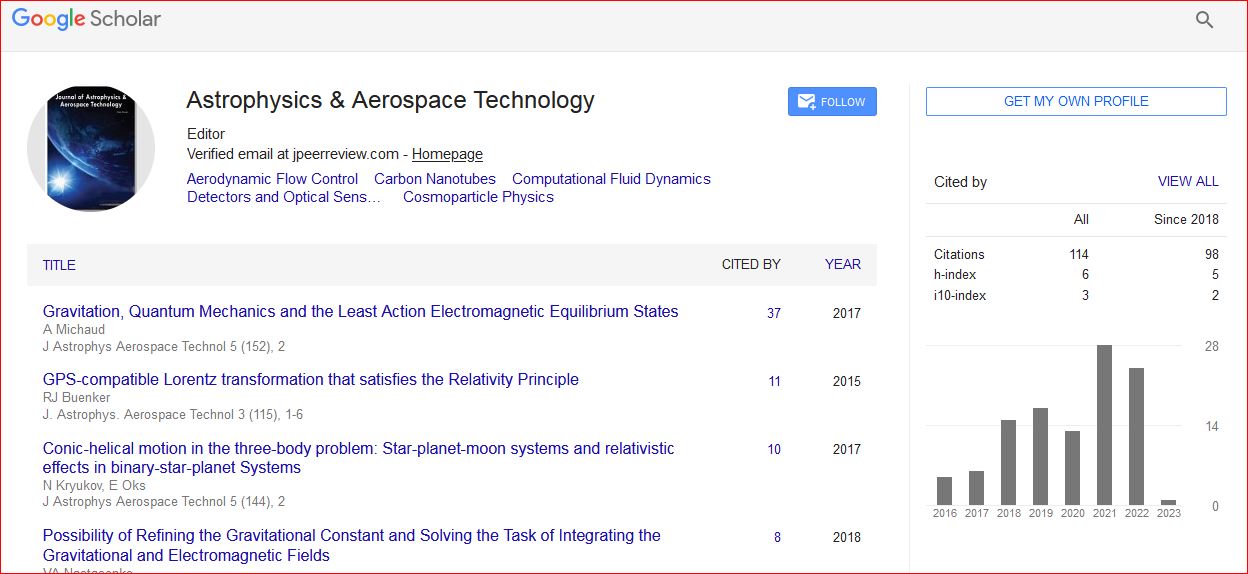
Astrophysics & Aerospace Technology received 114 citations as per Google Scholar report