Case Report - (2026) Volume 10, Issue 1
Received: 08-Feb-2026, Manuscript No. cmcr-26-184172;
Editor assigned: 10-Feb-2026, Pre QC No. P-184172;
Reviewed: 24-Feb-2026, QC No. Q-184172;
Revised: 04-Mar-2026, Manuscript No. R-184172;
Published:
11-Mar-2026
, DOI: 10.37421/2684-4915.2026.10.413
Citation: Pacheco, Lyvia do Prado, Amanda Borges, Gabriela Heringer and Licia Gobeti, et al. âSolid Serous Carcinoma of the Fallopian Tube: A Case Report.â Clin Med Case Rep 10 (2026): 413.
Copyright: © 2026 Pacheco LDP, et al. This is an open-access article distributed under the terms of the Creative Commons Attribution License, which permits unrestricted use, distribution and reproduction in any medium, provided the original author and source are credited.
Background: Primary fallopian tube cancer is a rare and highly malignant neoplasm, frequently confused with ovarian cancer. Among the risk factors, mutations in the BRCA-1 and BRCA-2 genes play an important role. The gold standard for diagnosis is postoperative histological examination. Treatment is based on surgery, and patients with BRCA-½ mutations are indicated for screening and preventive rehabilitation due to the high risk of tumor of the fallopian tube. This article aims to report the case of a 58-year-old patient with a condition of a solid serous carcinoma of the fallopian tube.
Methods: The information was obtained through analysis and review from the patient's medical record, photographic records of the lesions, and literature review.
Results: It is demonstrated that a significant number of serous carcinomas pelvic are originated in the fallopian tubes, especially in patients carrying mutations in the BRCA1 genes and BRCA2. In this reported case, the absence of ovarian abnormalities and the isolated involvement of the fallopian tube support this interpretation; moreover, the presence of a BRCA1 mutation reinforces the increased risk and the need for risk-reducing salpingo-oophorectomy. Even in the early stages, it is noticeable that high-grade serous neoplasms present a high risk of recurrence, and adjuvant chemotherapy is indicated based on staging, tumor grade, and genetic profile.
Conclusion: The reported case reinforces the importance of evaluating and considering the fallopian tube as a site of origin for serous carcinomas, particularly in patients with BRCA1 or BRCA2 mutations. The association between genetic factors and the tumor’s morphological characteristics highlights the relevance of follow-up and individualized prevention strategies in these patients.
Fallopian tube; Carcinoma; Genes BRCA1
BRCA: Breast Cancer gene
Primary fallopian tube cancer is a rare neoplasm, representing less than 2% of genital tumors, and is highly malignant. It is also poorly studied and frequently confused with ovarian cancer, which makes its diagnosis difficult [1-3]. The average incidence is 3.6 cases per million women/year, being more prevalent in women with an average age of 55 years [2]. Among the risk factors for this neoplasm, mutations in the BRCA-1 and BRCA-2 genes play an important role, being strongly associated with the development of high-grade serous carcinomas of the gynecologic tract and being present in up to 30% of cases of primary fallopian tube carcinoma [2, 4]. Several patients carrying the BRCA1 mutations had serous carcinomas initially classified as ovarian, which in fact originated in the distal secretory epithelium of the fallopian tube, reinforcing this site as a primary location of carcinogenesis. A family history of breast and ovarian cancer, chronic pelvic inflammatory conditions, and infertility also increase the risk for this tumour [1, 2].
The clinical presentation usually includes nonspecific symptoms such as vaginal bleeding, abdominal pain, and a pelvic mass. Latzko's triad is described in only 15% of cases, which consists of pain, intermittent serosanguineous discharge, and a pelvic mass [2]. Thus state that the diagnostic hypothesis of malignant tumours of the fallopian tube should be considered when a solid adnexal mass is identified in association with normal-appearing ovaries and a lesion located in a region corresponding to the tubal course. Furthermore, the mobility of the pelvic mass on physical examination may also contribute to the diagnosis.
The diagnosis of fallopian tube tumors are rarely suspected in the preoperative period, and the gold standard for diagnosis is the postoperative histological examination. The diagnosis is most often established intraoperatively or after anatomopathological analysis [2, 4], using classically the Sedlis criteria in which they include: tumor origin from the endosalpinx, a histological pattern compatible with the tubal mucosal epithelium, demonstrating a transition between benign and malignant tubal epithelium, and absence of significant ovarian involvement or the presence of an ovarian lesion smaller than the main tubal tumor [4-6].
From a clinical-radiological point of view, suspicion should be raised in the presence of a solid or solid-cystic adnexal mass associated with morphological preservation of the ovaries, location along the tubal tract, and suggestive findings in imaging methods such as transvaginal ultrasound and magnetic resonance imaging, which may demonstrate irregular thickening of the tubal wall, intraluminal papillary projections, and neovascularization on Doppler evaluation [2, 7]. In addition, serum CA-125 levels may be measured, as this marker is elevated in most cases, although it is not specific for this neoplasm [4, 5].
Definitive staging is surgical-pathological, and based on this, appropriate therapy and prognosis can be determined by differentiating primary fallopian tube carcinoma from serous ovarian carcinomas and peritoneal carcinomas [2, 4]. Regarding pathology, more than 90% of tumors are papillary serous adenocarcinomas [2]. The treatment is primarily surgical and typically includes total hysterectomy, bilateral salpingo-oophorectomy, omentectomy and lymphadenectomy, followed by adjuvant chemotherapy [2]. It is important to note that patients with BRCA-½ mutations have indications for screening and risk-reducing interventions due to the high risk of fallopian tube tumors [1]. This study aims to report the case of a 58-year-old female patient with solid serous carcinoma of the fallopian tube.
The sample consisted of a single 58-year-old patient with solid serous carcinoma of the fallopian tube, treated at a Gynecology service in Vitória/ ES in May 2025. Participation in the study was contingent upon the patient’s agreement and signature of the Informed Consent Form (ICF). Study procedures included consultation and use of the patient’s clinical, laboratory, and radiological data recorded in the medical record, as well as images of the case, for scientific purposes. Data collection instruments were applied between September and December 2025. The study followed the recommendations of Resolution 466 of 2012 from the National Health Council (CNS) and was approved by the Research Ethics Committee with Human Beings (CEP) under CAAE: 93802325.6.0000.5065. The principal investigator and other collaborators involved in the above study commit, individually and collectively, to using the data from this study only for the purposes described and to complying with all guidelines and regulations described in CNS Resolution No. 466/12, and its complementary resolutions, regarding the confidentiality and privacy of the collected data.
Patient, 58 years old, menopausal for 10 years without undergoing hormone replacement therapy. Her medical history includes hypertension, hypothyroidism, depression, and pre-diabetes. She denies alcohol consumption or smoking. The patient carries BRCA1 mutation and has a history of right breast cancer treated 20 years ago with a total mastectomy, and she also has a daughter with breast cancer and a BRCA1 mutation. She was scheduled for prophylactic mastectomy and salpingo-oophorectomy and presented to the onco-gynecology clinic due to the finding of an elongated and tortuous cystic formation in the right adnexal region, suggestive of hydrosalpinx, containing a solid component inside with suspected neoplastic lesion, observed on magnetic resonance imaging.
The patient presents with a genetic test (genome) showing heterozygosity, specifically a deletion of the exon 23 of gene BRCA1. She was chosen for the schedule of Total hysterectomy.
The patient underwent laparotomy to assess the tumor in the right fallopian tube. A midline incision was performed, and the cavity was opened in layers. Upon inspection, the left and right ovaries appeared normal, while the right fallopian tube was enlarged with anatomical distortion (Figure 1). Right salpingectomy was performed (Figure 2), and the specimen was sent for intraoperative frozen section analysis (Figures 3 and 4), which revealed a high-grade malignant tumor in the right fallopian tube.
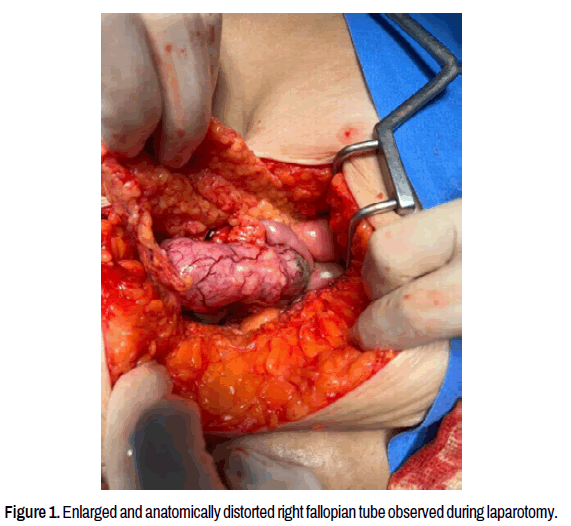
Figure 1. Enlarged and anatomically distorted right fallopian tube observed during laparotomy.
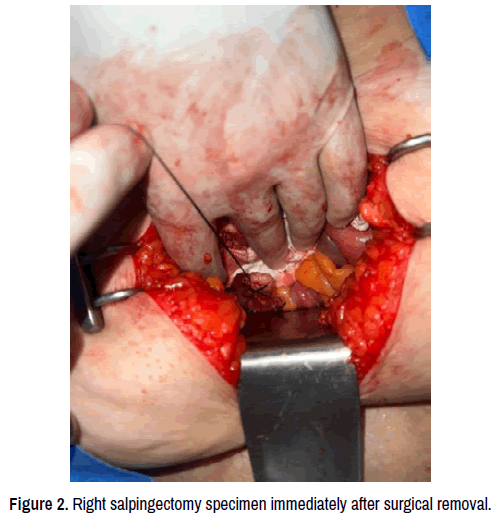
Figure 2. Right salpingectomy specimen immediately after surgical removal.
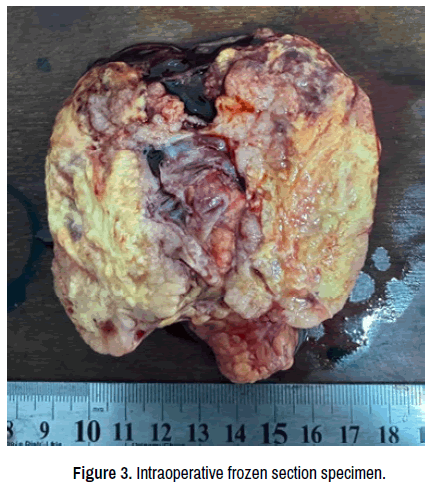
Figure 3. Intraoperative frozen section specimen.
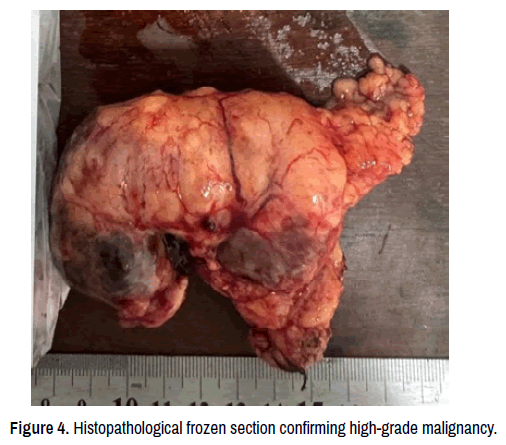
Figure 4. Histopathological frozen section confirming high-grade malignancy.
A total hysterectomy and bilateral salpingo-oophorectomy were performed, followed by closure of the vaginal cuff, bilateral pelvic lymphadenectomy, omentectomy, and peritoneal biopsies (right and left paracolic gutters and right and left subdiaphragmatic regions). Hemostasis was reviewed, anatomical layers were closed, and the skin was sutured with simple interrupted stitches. A compressive dressing was applied, and an indwelling urinary catheter was placed, with clear urine observed before, during, and after the procedure. The specimens were sent for histopathological examination (Figures 5 and 6).
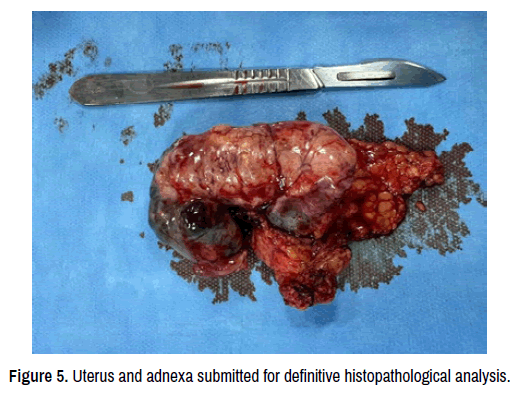
Figure 5. Uterus and adnexa submitted for definitive histopathological analysis.
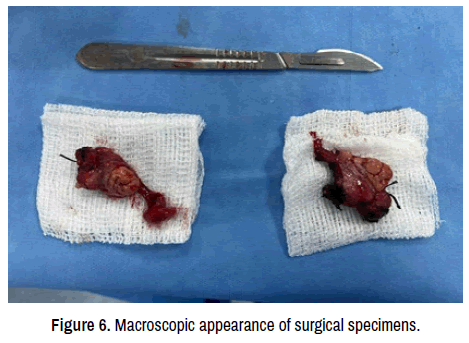
Figure 6. Macroscopic appearance of surgical specimens.
One month later, the patient attended a follow-up appointment at the surgical outpatient clinic. The histopathological examination of the fallopian tubes revealed a solid serous carcinoma of the fallopian tube, grade 3, with no evidence of angiolymphatic invasion and surgical margins free of disease. Pathological staging was pT1N0 (Figures 7-9). Histopathological examination of the ovaries revealed no neoplastic process (Figure 10).
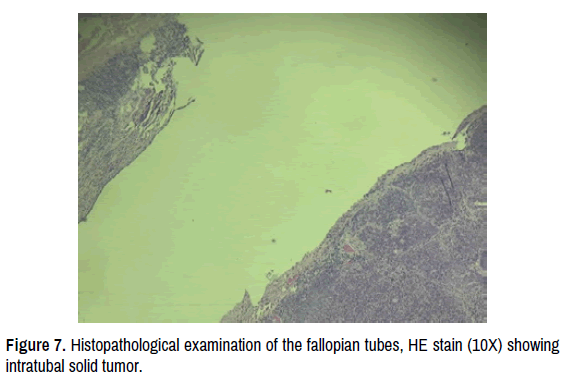
Figure 7. Histopathological examination of the fallopian tubes, HE stain (10X) showing intratubal solid tumor.
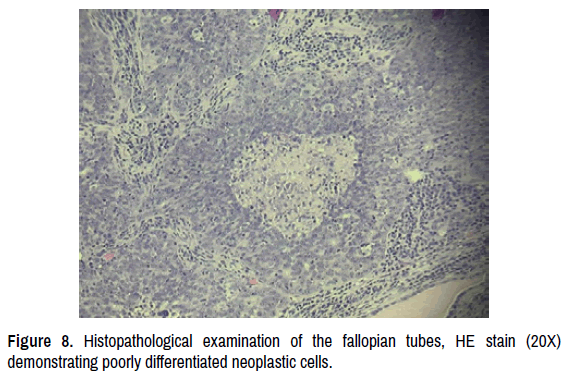
Figure 8. Histopathological examination of the fallopian tubes, HE stain (20X) demonstrating poorly differentiated neoplastic cells.
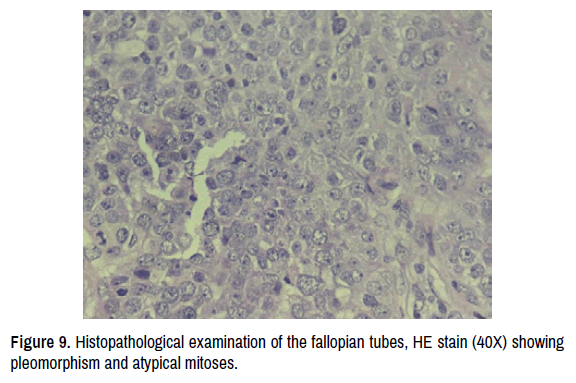
Figure 9. Histopathological examination of the fallopian tubes, HE stain (40X) showing pleomorphism and atypical mitoses.
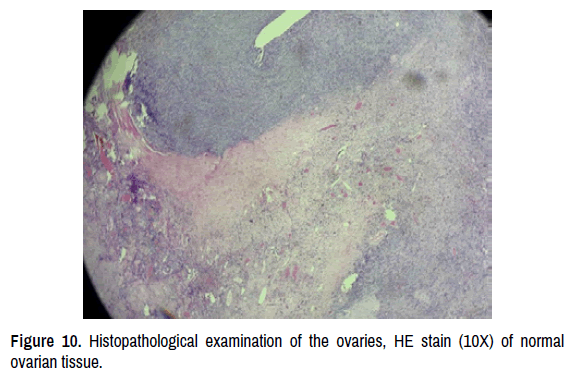
Figure 10. Histopathological examination of the ovaries, HE stain (10X) of normal ovarian tissue.
According to Perets, a significant portion of epithelial ovarian cancers may arise from precursor lesions in the fallopian tube. In ovarian and tubal tissue samples from patients carrying BRCA1 and BRCA2 mutations of a high-risk in women who underwent prophylactic salpingo-oophorectomy, 5 to 15% presented with cancerous lesions, of which 60 to 100% were found in the fallopian tubes. In Perets' study with mice, although the mice presented lesions suggestive of serous tubal intraepithelial carcinoma, the fallopian tubes appeared macroscopically unchanged while the ovary showed signs of disease, which would justify the difficulty in establishing the diagnosis of the fallopian tube neoplasia and the tendency to misdiagnose it as ovarian cancer. In the patient reported here, however, the ovaries showed no abnormalities, while the right fallopian tube was enlarged and anatomically distorted.
In the patient's case, the diagnosis of primary solid serous carcinoma of the fallopian tube was supported by the application of Sedlis' criteria, making it possible to identify the tumor origin in the endosalpinx, a histological pattern consistent with tubal epithelium, and absence of ovarian involvement. Therefore, the possibility of primary ovarian or peritoneal carcinoma was ruled out, diagnoses which share similar morphological characteristics and patterns of dissemination, many sometimes leading to underdiagnosis of tubal tumors [2, 4]. The presence of a solid mass along the tubal tract, coupled with preserved ovarian morphology, is a factor that makes diagnostic suspicion difficult in the preoperative period and reinforces the importance of intraoperative and anatomopathological correlation for diagnostic definition [5, 7].
Furthermore, the mutation in the BRCA1 gene plays an important role in both tumor origin and as in guiding patient management, as studies have shown that BRCA1 is significantly involved in the development of high-grade metastatic serous carcinoma, with a predilection for the fallopian tube and often without concomitant ovarian alterations [2, 8]. The presence of the BRCA1 mutation is a factor that justifies reductive salpingo-oophorectomy risk indicated in this case, a procedure that significantly decreases the incidence of ovarian and fallopian tube cancer and improves overall survival, supporting the management approach taken in this report [8].
The site where such tumors originate determines the strategy for early detection, since a large proportion of ovarian serous tumors may actually originate in the distal portion of the fallopian tube, it is worth reconsidering whether patients at high risk of high-grade serous carcinoma should have only the affected distal portion of the fallopian tube removed, or both the fallopian tube and ovaries [8].
The BRCA1 and BRCA2 gene mutations present elevated risks for developing breast and ovarian cancer throughout life, making it necessary to adopt strategies for prevention and risk reduction in women carrying these mutations. In the case of ovarian cancer, due to the lack of effective screening methods, risk-reducing salpingo-oophorectomy is strongly recommended [8, 9]. A meta-analysis by Rebbeck demonstrated An 80% reduction in the risk of ovarian and fallopian tube cancer with risk-reducing salpingo-oophorectomy in women carrying BRCA1 or BRCA2 mutations and in addition, this procedure was associated with increased overall survival and reduced all-cause mortality. Therefore, considering that the patient in this report carried a BRCA1 mutation, her initial surgical plan for prophylactic salpingo-oophorectomy is justified [8].
Regarding the differences between the BRCA1 and BRCA2 genes, it has been established that BRCA1 has a bigger association with gynecologic cancers compared to BRCA2, as illustrated by this patient, who exhibited a deletion in exon 23 of BRCA1. Nevertheless, risk-reducing oophorectomy remains effective in lowering the incidence of ovarian neoplasia in carriers of mutations in either gene [9]. In regards to routine histopathological examination of adnexa, ovaries and fallopian tubes are generally sectioned to document their presence, with neoplasia discovered in certain cases. For the fallopian tube, histopathological analysis is typically performed on only a portion, except in women carrying BRCA1 or BRCA2 mutations who undergo risk-reducing surgery, in which the fallopian tubes and ovaries are fully submitted for histopathological examination [10]. Accordingly, the patient in this report underwent intraoperative frozen section analysis to enable complete evaluation of the tube for management decisions. This was followed by total hysterectomy, bilateral salpingo-oophorectomy, bilateral pelvic lymphadenectomy, omentectomy, and peritoneal biopsies after intraoperative histopathology confirmed a high-grade malignant tumor in the right fallopian tube.
Primary serous carcinoma of the fallopian tube is known to exhibit aggressive behavior, even when confined to the fallopian tube, which generates debate regarding the treatment of this tumor in its early stages. In the case of the patient in this report, despite the final staging being pT1N0, the solid pattern and high histological grade indicate greater risk than suggested by anatomical extent alone. This discrepancy between stage and clinical behavior was demonstrated in the multicenter SOCRATE study, which showed recurrence in almost half of patients despite adequate surgical staging [11].
The recommendations of the NCCN 2024/2025 guidelines remain consistent in indicating adjuvant chemotherapy for serous tumors regardless of whether they are confined to the fallopian tube, which is justified by the high recurrence rate observed in such cases [12]. This becomes even more relevant when considering patients with BRCA1 mutations, as identified in this case, since this influences tumor sensitivity to chemotherapy. Thus, the therapeutic approach after the surgery should not be based solely on pathological staging but should also take into account tumor morphology, grade, genetic factors, and prognosis. In patients with stage I high-grade serous tumors, these considerations support the use of adjuvant chemotherapy and prolonged clinical follow-up due to the risk of recurrence.
The reported case reinforces the importance of evaluating and considering the fallopian tube as a site of origin for serous carcinomas, mainly in patients with BRCA 1 or 2 mutations. In this patient, the absence of ovarian alterations, the lesion restricted to the fallopian tube, and the highgrade histological pattern made the diagnosis possible and, therefore, the appropriate management decisions. The aggressive profile of these tumors, even when in early staging, coupled with the high risk of recurrence, justifies the need for adjuvant chemotherapy. The association between genetic factors and morphological characteristics of the tumor demonstrates the relevance of follow-up and individualized prevention strategies in these patients. This case report aims to broaden the recognition of fallopian tube serous tumors and highlight the importance of early diagnosis and consequent appropriate surgical management.
The authors declare no funding sources or institutional support for this study.
Google Scholar, Cross Ref, Indexed at
Google Scholar, Cross Ref, Indexed at
Google Scholar, Cross Ref, Indexed at
Google Scholar, Cross Ref, Indexed at
Google Scholar, Cross Ref, Indexed at
Google Scholar, Cross Ref, Indexed at
Google Scholar, Cross Ref, Indexed at
Google Scholar, Cross Ref, Indexed at
Google Scholar, Cross Ref, Indexed at
Clinical and Medical Case Reports received 53 citations as per Google Scholar report