Brief Report - (2025) Volume 15, Issue 5
Received: 01-Oct-2025, Manuscript No. jprm-25-174466;
Editor assigned: 03-Oct-2025, Pre QC No. P-174466;
Reviewed: 17-Oct-2025, QC No. Q-174466;
Revised: 22-Oct-2025, Manuscript No. R-174466;
Published:
29-Oct-2025
, DOI: 10.37421/2161-105X.2025.15.76
Citation: Hoffmann, Clara. ”Smoking’s Lung Toll: Diseases, Quitting, Precision Medicine.” J Pulm Respir Med 15 (2025):761.
Copyright: © 2025 Hoffmann C. This is an open-access article distributed under the terms of the Creative Commons Attribution License, which permits unrestricted use, distribution and reproduction in any medium, provided the original author and source are credited.
The impact of smoking on respiratory health remains a paramount concern, driving extensive research into its multifaceted effects on the lungs. For instance, studies confirm that stopping smoking can significantly slow the progression of emphysema, a hallmark of Chronic Obstructive Pulmonary Disease (COPD), indicating a direct influence on the structural damage within the lungs. This conclusion is supported by robust research utilizing propensity-matched designs to mitigate confounding variables, underscoring the profound benefits of cessation for affected individuals [1].
Beyond emphysema, smoking stands as the primary culprit in the development of non-small cell lung cancer (NSCLC), though diagnostic and treatment paradigms are evolving at a rapid pace. Current understanding emphasizes not only ongoing efforts in smoking cessation but also the remarkable advancements in targeted therapies and immunotherapies. These innovations are markedly improving outcomes for NSCLC patients, irrespective of their past smoking habits. Critical to personalized treatment approaches is a deep understanding of the tumorâ??s molecular profile, which often bears the indelible mark of smoking exposure [2].
Another severe lung condition, Idiopathic Pulmonary Fibrosis (IPF), a relentless and often fatal disease, sees smoking emerge as a significant risk factor. Contemporary research has illuminated how smoking exacerbates IPF pathogenesis through various detrimental pathways, including heightened oxidative stress, chronic inflammation, and direct cellular damage. Recognizing these mechanisms carries significant clinical weight, stressing the need for thorough identification and counseling of at-risk smokers, while also integrating smoking status into the broader context of disease management and prognosis [3].
The landscape of respiratory health has been further complicated by the emergence and widespread use of electronic cigarettes (e-cigarettes). A comprehensive review of available scientific evidence reveals a spectrum of respiratory effects associated with e-cigarette use, ranging from acute lung injury to potential long-term health ramifications. These findings highlight a pressing need for more rigorous research, particularly concerning the prolonged effects and the diverse components found in vaping products. Moreover, the insights gained emphasize the formidable challenges in establishing effective regulatory frameworks to safeguard public health amidst this evolving trend [4].
For individuals grappling with bronchiectasis, a condition characterized by irreversible airway dilation, smoking presents a substantial threat, demonstrably worsening its course. A recent systematic review and meta-analysis consolidates compelling evidence, showing that smoking is strongly linked to increased disease severity, more frequent acute exacerbations, and a decline in lung function among adults with this condition. This body of evidence firmly positions smoking cessation as an indispensable component of any comprehensive management strategy for bronchiectasis [5].
Asthma, a common chronic respiratory ailment, is significantly complicated by smoking, which critically impacts both the diseaseâ??s severity and a patient's responsiveness to conventional therapies. Investigations into the intricate interactions between cigarette smoke and the asthmatic airway reveal mechanisms that lead to amplified inflammation, a diminished response to corticosteroids, and a more rapid deterioration of lung function. Unraveling these complex pathways is essential for crafting more effective treatment protocols for asthmatic smokers and continually reinforcing the vital importance of quitting smoking [6].
Beyond localized lung issues, smoking is a well-established risk factor for a spectrum of cardiovascular and pulmonary disorders, including pulmonary hypertension (PH). Mechanistic studies have delved into the specific links connecting smoking to the onset and progression of PH, uncovering its adverse effects on pulmonary vascular remodeling, endothelial dysfunction, and inflammatory processes. These therapeutic implications strongly suggest that addressing a patientâ??s smoking status is a critical element in the management of PH, potentially paving the way for targeted interventions [7].
At a more fundamental level, cigarette smoke consistently triggers a sophisticated inflammatory response within the airways, acting as a key driver in the development of numerous lung diseases. Recent reviews meticulously detail the molecular and cellular mechanisms underpinning this inflammation, including the activation of specific immune cells, the release of potent inflammatory mediators, and the induction of pervasive oxidative stress. Such insights are crucial for developing and refining current and future therapeutic strategies designed to mitigate this inflammation, thereby preventing or ameliorating smoking-induced lung damage [8].
Despite the clear link between smoking and lung disease, not all smokers develop severe conditions, hinting at the crucial role of individual genetic susceptibility. Research has made significant strides in identifying genetic factors that predispose individuals to smoking-related lung diseases such as COPD and lung cancer. A deeper understanding of these genetic underpinnings holds immense promise for enabling personalized risk assessments, facilitating earlier and more targeted interventions, and potentially identifying novel therapeutic targets for those most genetically vulnerable [9].
Finally, the quest for reliable biomarkers is paramount for advancing early diagnosis, accurate prognosis, and effective treatment monitoring in the realm of smoking-related lung diseases. A comprehensive overview highlights the current state and future potential of various biomarkers, detectable in blood, sputum, and exhaled breath. These markers offer invaluable objective measures of disease activity, risk, and treatment response, representing a significant step toward the realization of more precise and individualized patient care [10].
The pervasive impact of smoking on lung health is a central theme in contemporary respiratory medicine, affecting a wide array of conditions from chronic obstructive pulmonary disease (COPD) to various cancers and inflammatory states. Smoking cessation, for example, is unequivocally critical for managing COPD, with evidence showing it significantly slows the progression of emphysema, a key feature of the disease. This direct impact on underlying structural lung damage is well-supported by studies employing robust designs to control for confounding factors, providing strong evidence for the benefits of quitting [1]. Furthermore, smoking remains the leading cause of non-small cell lung cancer (NSCLC), although the landscape of diagnosis and treatment continues to evolve. Advances in targeted therapies and immunotherapies are improving outcomes, even as the importance of continued cessation efforts and understanding molecular tumor characteristicsâ??often influenced by smokingâ??remains paramount for personalized treatment [2].
Beyond these well-known conditions, smoking acts as a significant risk factor for Idiopathic Pulmonary Fibrosis (IPF), a progressive and fatal lung disease. Research illuminates how smoking contributes to IPF pathogenesis through mechanisms like oxidative stress, inflammation, and cellular damage. Clinicians emphasize identifying and counseling at-risk smokers, integrating smoking status into disease management and prognosis [3]. The scope of inhalation-related lung issues has broadened with the rise of electronic cigarettes (e-cigarettes). Reviews examining their respiratory effects point to concerns ranging from acute lung injury to potential long-term consequences. This highlights a clear need for more research into long-term impacts and the effects of various vaping constituents, posing significant challenges for public health regulation [4].
Smoking also severely exacerbates existing lung conditions, complicating their management and worsening patient outcomes. Bronchiectasis, characterized by permanent dilation of airways, sees a significant negative impact from smoking, which is associated with increased disease severity, more frequent exacerbations, and poorer lung function. This makes smoking cessation a crucial management strategy for these patients [5]. Similarly, smoking complicates asthma, influencing both disease severity and treatment response. It interacts intricately with the asthmatic airway, leading to increased inflammation, corticosteroid resistance, and accelerated lung function decline. Understanding these mechanisms is vital for developing effective strategies for asthmatic smokers and reinforces the critical role of quitting [6]. Even broader systemic effects are noted, as smoking is a known risk factor for pulmonary hypertension (PH). Mechanistic insights reveal its impact on pulmonary vascular remodeling, endothelial dysfunction, and inflammation, suggesting that addressing smoking status is central to PH management and targeted interventions [7].
At a cellular and molecular level, cigarette smoke consistently triggers a complex inflammatory response in the airways, contributing to a range of lung diseases. This inflammation involves the activation of immune cells, the release of inflammatory mediators, and oxidative stress. Understanding these mechanisms is key to developing current and future therapeutic strategies aimed at mitigating this inflammation and preventing smoking-related lung damage [8]. Interestingly, while smoking is a primary risk factor, not all smokers develop lung disease, pointing to the crucial role of genetic susceptibility. Recent advances identify genetic factors predisposing individuals to smoking-related lung diseases like COPD and lung cancer. These genetic underpinnings can lead to personalized risk assessment, earlier interventions, and novel therapeutic targets [9]. The development of reliable biomarkers is also essential for improving the care of smoking-related lung diseases. These markers, found in blood, sputum, or exhaled breath, offer objective measures for early diagnosis, prognosis, and treatment monitoring, paving the way for more precision medicine [10].
Smoking profoundly impacts lung health, contributing to a spectrum of respiratory diseases. Quitting significantly slows emphysema progression in COPD and remains the leading cause of non-small cell lung cancer, though modern therapies offer improved outcomes. Itâ??s a major risk factor for Idiopathic Pulmonary Fibrosis, driven by oxidative stress and inflammation, necessitating early identification and counseling for at-risk individuals. Emerging concerns include electronic cigarettes, which pose respiratory risks from acute injury to long-term effects, highlighting the urgent need for further research and regulation. Smoking also exacerbates existing conditions like bronchiectasis, increasing severity and exacerbations, making cessation vital. In asthma, it worsens inflammation, fosters corticosteroid resistance, and accelerates lung function decline. Furthermore, smoking is linked to pulmonary hypertension, affecting vascular remodeling and endothelial function. Mechanistically, cigarette smoke induces complex airway inflammation through immune cell activation and oxidative stress, a target for therapeutic strategies. Beyond direct effects, individual genetic susceptibility plays a role in who develops smoking-related lung diseases, offering avenues for personalized risk assessment. The development of reliable biomarkers in blood, sputum, and breath is crucial for early diagnosis, prognosis, and tailored treatment monitoring, moving towards precision medicine.
None
None
1. George RW, R GB, Steven DS. "Smoking cessation and reduction in emphysema progression in COPD: a propensity-matched analysis.".Thorax 78 (2023):756-764.
Indexed at, Google Scholar, Crossref
2. Edward BG, Lecia VS, Roy SH. "Smoking and non-small cell lung cancer: a review of the current landscape and future directions.".J Thorac Oncol 17 (2022):352-363.
Indexed at, Google Scholar, Crossref
3. Christopher JR, Joseph JH, Ganesh R. "Smoking and idiopathic pulmonary fibrosis: an update on mechanisms and clinical implications.".Am J Respir Crit Care Med 204 (2021):504-515.
Indexed at, Google Scholar, Crossref
4. Charlotta P, Sophia IBC, Ute M. "Electronic cigarettes and lung health: current evidence and future challenges.".Eur Respir Rev 32 (2023):230003.
Indexed at, Google Scholar, Crossref
5. J M, E P, J G. "Impact of smoking on clinical features and outcomes in adult bronchiectasis: a systematic review and meta-analysis.".Respir Med 194 (2022):106841.
Indexed at, Google Scholar, Crossref
6. Fabio P, Stefano A, Laura ECA. "Smoking and asthma: a complex interplay influencing disease severity and treatment response.".Eur Respir J 58 (2021):200318.
Indexed at, Google Scholar, Crossref
7. Soni SU, Khaliq HK, Mansoor SA. "Smoking and pulmonary hypertension: mechanistic insights and therapeutic implications.".Am J Physiol Lung Cell Mol Physiol 319 (2020):L1-L16.
Indexed at, Google Scholar, Crossref
8. Peter JB, Andrew MJF, Kian FC. "Cigarette smoke and airway inflammation: mechanisms and therapeutic strategies.".Annu Rev Physiol 84 (2022):301-325.
Indexed at, Google Scholar, Crossref
9. Michael HC, Edwin KS, David AL. "Genetic susceptibility to smoking-related lung diseases: recent advances and clinical implications.".Clin Chest Med 41 (2020):57-73.
Indexed at, Google Scholar, Crossref
10. Alvaro A, Jørgen V, Wisia W. "Biomarkers in smoking-related lung diseases: current status and future prospects.".J Thorac Dis 13 (2021):1-13.
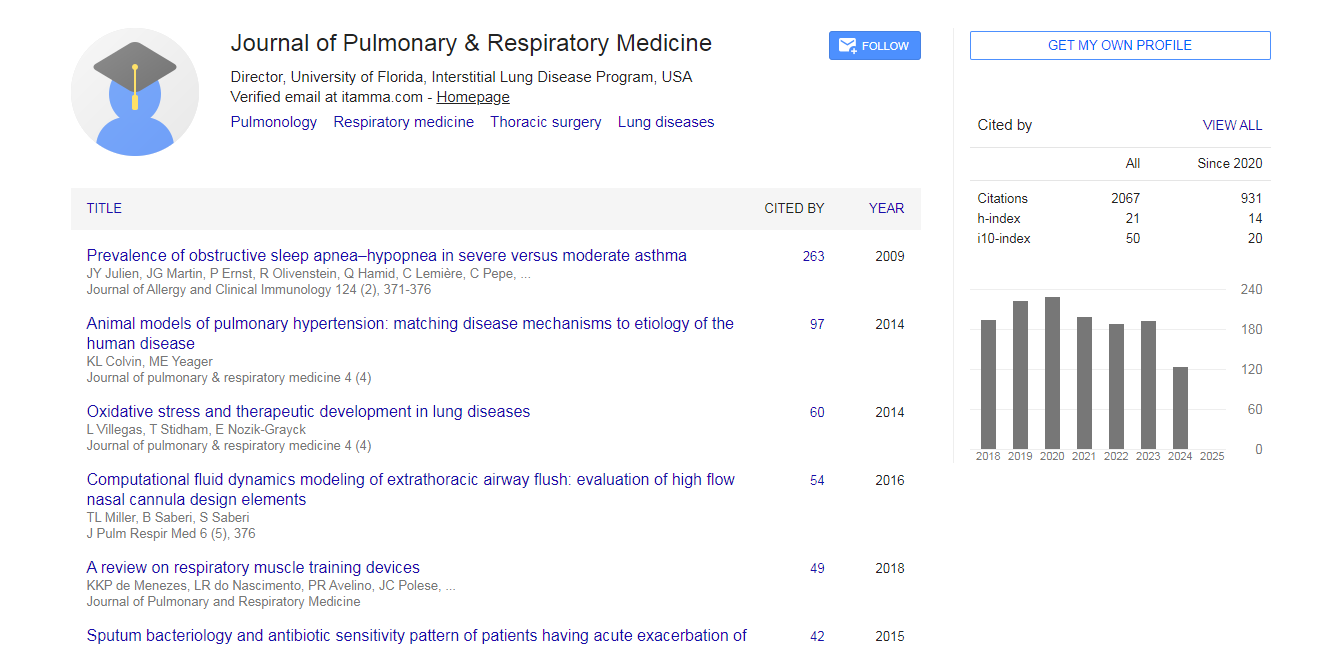
Pulmonary & Respiratory Medicine received 1690 citations as per Google Scholar report