Short Communication - (2025) Volume 14, Issue 5
Received: 02-Oct-2025, Manuscript No. jeom-26;
Editor assigned: 06-Oct-2025, Pre QC No. P-188194;
Reviewed: 20-Oct-2025, QC No. Q-188194;
Revised: 23-Oct-2025, Manuscript No. R-188194;
Published:
30-Oct-2025
, DOI: 10.37421/2169-026X.2025.14.555
Citation: Abdullahi, Bashir. ”SME Growth: Entrepreneurship, Digitalization, Finance, and Sustainability.” J Entrepren Organiz Manag 14 (2025):555.
Copyright: © 2025 Abdullahi B. This is an open-access article distributed under the terms of the Creative Commons Attribution License, which permits unrestricted use, distribution and reproduction in any medium, provided the original author and source are credited.
Small and medium-sized enterprises (SMEs) are fundamentally important to the economic vitality of nations, serving as engines for growth, innovation, and employment generation. Their unique characteristics and challenges necessitate dedicated examination to understand their contribution and potential. This article aims to explore the multifaceted landscape of SME entrepreneurship, acknowledging the inherent difficulties they face in critical areas such as securing adequate finance, adopting new technologies, and developing their human capital. The overarching goal is to shed light on the factors that promote SME competitiveness and ensure their long-term sustainability, recognizing the crucial role of supportive policy frameworks and astute management practices. The findings emphasize the imperative for specifically designed interventions that cater to the distinct needs of SMEs, fostering an environment where they can thrive and contribute maximally to economic development. The digital age has presented both opportunities and challenges for businesses of all sizes, and SMEs are no exception. Research in this domain investigates the profound impact that digital transformation is having on the performance of these enterprises. By identifying key digital technologies that SMEs are adopting, studies analyze how these adoptions correlate with improvements in operational efficiency, expanded market reach, and enhanced profitability. It is becoming increasingly clear that successful digital adoption is not merely about acquiring new tools but requires a holistic approach encompassing strategic planning, significant investment in digital skills for the workforce, and the cultivation of a supportive organizational culture that embraces change. Furthermore, understanding and addressing the barriers that hinder digital adoption is crucial for guiding policymakers and SME managers toward more effective strategies. Access to adequate and appropriate financing remains a persistent and significant constraint for the growth and expansion of SMEs across various economies. This paper undertakes a comprehensive review of the diverse financing options that are currently available to SMEs, ranging from traditional channels like bank loans to more contemporary avenues such as venture capital and the rapidly growing field of crowdfunding. An assessment of the effectiveness of these various financial instruments in genuinely supporting entrepreneurial ventures is presented, alongside the identification of concrete policy recommendations designed to improve the overall accessibility of finance for SMEs. The findings underscore a critical point: the financing needs of SMEs are not uniform; they are heterogeneous, which highlights the essential importance of pursuing diversified funding sources that can align with these varied requirements. Human capital is widely recognized as a critical determinant of entrepreneurial success within the context of SMEs. This study specifically investigates the intricate relationship between employee training initiatives, the development of essential skills among the workforce, and the subsequent performance of SMEs. It delves into how strategic investments in human capital can yield significant improvements in key areas such as innovation capacity, overall productivity levels, and the organization's ability to adapt to changing market conditions. The research strongly suggests that those SMEs that actively prioritize and invest in the continuous development of their employees are demonstrably more likely to achieve sustained success and thrive within increasingly competitive market environments. Entrepreneurial leadership is a pivotal force that significantly shapes the strategic direction, operational effectiveness, and ultimate success of small and medium-sized enterprises. This article undertakes an exploration of the defining characteristics that constitute effective entrepreneurial leadership, including a clear and compelling vision, a willingness to embrace calculated risk-taking, and a high degree of resilience in the face of adversity. It further analyzes the nuanced ways in which these distinct leadership traits can influence the prevailing organizational culture, foster innovation, and ultimately contribute to the establishment of a sustainable competitive advantage. The study aims to provide practical and actionable guidance for the development and cultivation of strong entrepreneurial leadership within the specific context of SME settings. Innovation is an indispensable element for SMEs seeking to maintain their competitive edge and adapt to evolving market demands. This paper rigorously examines the multifaceted factors that actively influence the adoption and diffusion of innovative practices and technologies within SMEs. These factors include, but are not limited to, the organizational structure, the level of investment dedicated to research and development (R&D), and the extent of external collaborations undertaken. It further explores the diverse types of innovation that are particularly relevant and applicable to the operational realities of SMEs, such as product innovation, process innovation, and marketing innovation. The research endeavors to provide a clear and actionable framework that SMEs can utilize to effectively enhance their intrinsic innovation capabilities. In the contemporary globalized economy, internationalization has emerged as an increasingly vital and strategic imperative for SMEs that are aspiring to achieve significant growth and expand their market presence. This study provides an in-depth analysis of the key motivations that drive SMEs towards international expansion, the diverse strategies they employ to achieve it, and the significant challenges they inevitably encounter along the way. It carefully considers a range of critical factors, including the process of selecting appropriate foreign markets, the various entry modes available for establishing a presence, and the crucial role that government support can play in facilitating this process. The findings strongly suggest that a proactive and well-planned approach to internationalization can substantially enhance both the overall competitiveness and the inherent resilience of SMEs in the global marketplace. The influence of government policies on the trajectory and development of SMEs is undeniably substantial and far-reaching. This article undertakes a critical examination of the diverse array of policy interventions that have been specifically designed and implemented to support SMEs. These interventions encompass a broad spectrum, including financial incentives, regulatory reforms aimed at streamlining business operations, and various capacity-building programs intended to enhance SME capabilities. The study proceeds to evaluate the actual effectiveness of these different policy instruments in successfully promoting entrepreneurship and fostering broader economic growth. Ultimately, the study aims to offer well-informed recommendations for the design of future SME support policies that are likely to be more impactful and achieve their intended objectives. Entrepreneurial ecosystems, characterized by a complex interplay of various actors and factors, play a profoundly vital role in nurturing the growth and development of SMEs. This research undertakes an exploration of the fundamental characteristics that define successful entrepreneurial ecosystems and meticulously examines their demonstrable impact on SME growth trajectories and their capacity for innovation. It investigates key factors such as the accessibility of skilled talent, the availability of funding opportunities, the presence and effectiveness of support organizations, and the cultivation of a pervasive culture that champions entrepreneurship. The findings critically highlight the inherent interconnectedness of these various ecosystem components and their collective contribution to fostering a dynamic and vibrant landscape for SMEs. Sustainability is rapidly evolving from a niche concern to a central strategic consideration for SMEs aiming for long-term viability and a competitive edge. This article investigates the practical pathways through which SMEs can effectively integrate sustainable practices into their core business models, thereby achieving both long-term operational resilience and enhanced competitive advantage. It systematically examines the inherent challenges and emerging opportunities associated with the adoption of environmentally friendly technologies, the implementation of ethical sourcing strategies, and the active engagement in social responsibility initiatives. The study endeavors to provide a clear and practical roadmap to guide SMEs in their transition towards more sustainable and responsible operational frameworks.
Small and medium-sized enterprises (SMEs) are vital contributors to economic progress, innovation, and job creation. This article delves into the entrepreneurial landscape of SMEs, examining key challenges such as access to finance, technological adoption, and human capital development. It emphasizes the importance of supportive policies and strategic management for fostering SME competitiveness and sustainability, highlighting the need for tailored interventions to meet their unique needs [1].
The digital transformation's impact on SME performance is a central theme in current research. Studies identify crucial digital technologies adopted by SMEs and their correlation with improved operational efficiency, market reach, and profitability. Successful digital adoption hinges on strategic planning, investment in digital skills, and a supportive organizational culture, with barriers to adoption also being a key consideration for policymakers and managers [2].
Access to finance continues to be a critical constraint for SME growth. This paper reviews various financing options, including bank loans, venture capital, and crowdfunding, assessing their effectiveness in supporting entrepreneurial ventures. Policy recommendations are provided to enhance financial accessibility, recognizing the diverse financing needs of SMEs and the importance of varied funding sources [3].
Human capital serves as a primary driver of entrepreneurial success in SMEs. This study explores the link between employee training, skill development, and SME performance, examining how investments in human capital boost innovation, productivity, and adaptability. SMEs prioritizing employee development are found to be more likely to succeed in competitive markets [4].
Entrepreneurial leadership plays a pivotal role in defining the strategic direction and success of SMEs. This article explores the characteristics of effective leaders, such as vision, risk-taking, and resilience, and analyzes their influence on organizational culture, innovation, and competitive advantage. It offers practical guidance for developing entrepreneurial leadership within SME contexts [5].
Innovation is essential for SMEs to remain competitive. This paper examines factors influencing innovation adoption and diffusion, including organizational structure, R&D investment, and external collaborations. It explores various types of innovation relevant to SMEs and provides a framework to enhance their innovation capabilities [6].
Internationalization is a growing strategy for SMEs seeking expansion. This study analyzes the motivations, strategies, and challenges of SME internationalization, considering market selection, entry modes, and government support. Proactive internationalization is shown to significantly boost SME competitiveness and resilience [7].
The impact of government policies on SME development is substantial. This article examines policy interventions like financial incentives, regulatory reforms, and capacity-building programs, evaluating their effectiveness in promoting entrepreneurship and economic growth. Recommendations are offered for designing more impactful SME support policies [8].
Entrepreneurial ecosystems are crucial for nurturing SMEs. This research explores the characteristics of successful ecosystems and their impact on SME growth and innovation, focusing on talent access, funding, support organizations, and a culture of entrepreneurship. The findings emphasize the interconnectedness of ecosystem components in fostering a vibrant SME landscape [9].
Sustainability is becoming increasingly critical for SMEs. This article investigates how SMEs can integrate sustainable practices into their business models for long-term viability and competitive advantage, examining challenges and opportunities in adopting green technologies, ethical sourcing, and social responsibility initiatives. It offers a roadmap for SMEs to move towards more sustainable operations [10].
This collection of research explores the critical factors influencing the growth and sustainability of small and medium-sized enterprises (SMEs). Key themes include the foundational role of entrepreneurship, the transformative impact of digital adoption, and the persistent challenge of accessing finance. Human capital development is highlighted as a significant driver of performance, alongside the importance of effective entrepreneurial leadership. The role of innovation in maintaining competitiveness and the strategic imperative of internationalization are also discussed. Furthermore, the study examines the influence of government policies in supporting SME development and the crucial function of entrepreneurial ecosystems in fostering their growth. Finally, the increasing importance of integrating sustainability into SME business models for long-term viability and competitive advantage is emphasized, offering practical guidance for SMEs to adopt more responsible operations.
None
None
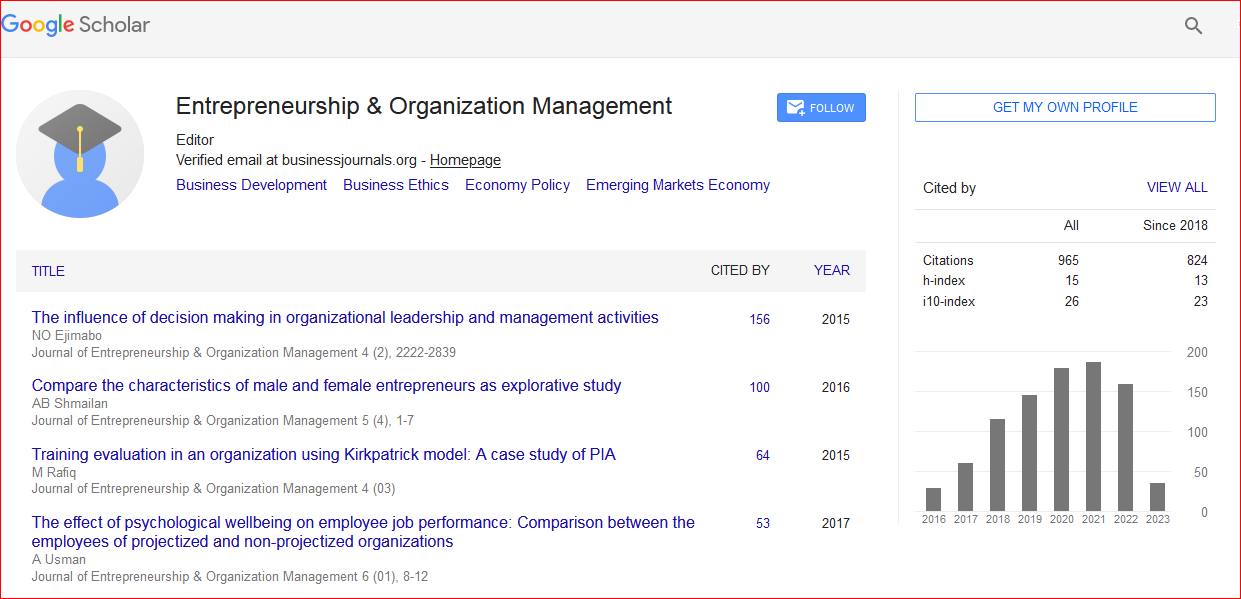
Entrepreneurship & Organization Management received 1115 citations as per Google Scholar report