Opinion - (2025) Volume 14, Issue 6
Received: 31-Oct-2025, Manuscript No. jmmd-26-184709;
Editor assigned: 03-Nov-2025, Pre QC No. P-184709;
Reviewed: 17-Nov-2025, QC No. Q-184709;
Revised: 21-Nov-2025, Manuscript No. R-184709;
Published:
29-Nov-2025
, DOI: 10.37421/2161-0703.2025.14.553
Citation: Cornell, Sarah. ”Sepsis and Bloodstream Infections: Diagnosis, Treatment, and Resistance.” J Med Microb Diagn 14 (2025):553.
Copyright: © 2025 Cornell S. This is an open-access article distributed under the terms of the Creative Commons Attribution License, which permits unrestricted use, distribution and reproduction in any medium, provided the original author and source are credited.
Sepsis and bloodstream infections (BSIs) represent a significant and ongoing global health challenge, predominantly instigated by bacterial and fungal pathogens. The imperative for early and precise identification of the causative microorganism cannot be overstated, as it is paramount for initiating effective treatment regimens and ultimately improving patient prognoses. Considerable advancements in the field of molecular diagnostics, in conjunction with established traditional microbiological techniques, are currently revolutionizing the speed and sensitivity with which pathogens can be detected, thereby guiding the timely administration of antimicrobial therapy and contributing to a reduction in mortality rates. A thorough understanding of the specific microbial etiology that characterizes different patient demographics and diverse geographical regions is indispensable for the informed development and implementation of robust infection control strategies and effective antimicrobial stewardship programs. [1] Gram-negative bacteria, with a particular emphasis on species within the Enterobacterales order such as *Escherichia coli* and *Klebsiella pneumoniae*, persistently remain among the primary etiologic agents responsible for sepsis. The escalating prevalence of antimicrobial resistance, most notably carbapenem resistance, among these formidable pathogens introduces substantial complexities into the treatment landscape. Consequently, the accurate identification of resistance mechanisms through the application of molecular methodologies has become critically important for guiding appropriate therapeutic interventions and for actively preventing the further dissemination of multidrug-resistant organisms within healthcare environments. [2] Gram-positive bacteria, including prominent species like *Staphylococcus aureus* (encompassing methicillin-resistant *S. aureus* or MRSA) and *Streptococcus pneumoniae*, continue to be substantial contributors to the overall burden of sepsis. Invasive infections caused by *S. aureus*, which frequently originate from antecedent skin and soft tissue infections or direct bloodstream inoculation, are regrettably associated with significant rates of morbidity and mortality. Furthermore, bloodstream infections stemming from coagulase-negative staphylococci also present a considerable clinical concern, particularly in patient populations reliant on indwelling medical devices. [3] Fungal infections, notably those attributed to various *Candida* species, are progressively being recognized with greater frequency as a causative factor in sepsis. This is especially true for individuals who are immunocompromised, critically ill, or who have experienced prolonged hospitalizations. The early and prompt detection of candidemia is of utmost importance, as substantial delays in initiating appropriate treatment are consistently linked to increased mortality. Significant progress in molecular methods and the application of biomarkers are actively enhancing the diagnostic yield for fungal sepsis. [4] Substantial advancements in the development of rapid diagnostic technologies, which encompass multiplex polymerase chain reaction (PCR) panels and sophisticated mass spectrometry techniques (such as MALDI-TOF MS), are fundamentally transforming the diagnostic landscape for sepsis. These cutting-edge technologies facilitate the expedited identification of pathogens, either directly from positive blood cultures or even from whole blood samples, thereby enabling the prompt initiation of targeted antimicrobial therapy and leading to improved patient outcomes. This notable shift from traditional culture-dependent methods to more rapid culture-independent approaches represents a significant and transformative development in the field. [5] The host's inflammatory response to infection plays an undeniably critical role in the complex pathogenesis of sepsis. While the accurate identification of the causative pathogen remains a fundamental element of management, gaining a deeper understanding of host-derived biomarkers can furnish invaluable complementary information for diagnostic purposes, prognostication, and the precise guidance of therapeutic interventions. Biomarkers such as procalcitonin and C-reactive protein are currently in widespread clinical use, yet ongoing research is diligently pursuing the discovery and validation of more specific and sensitive host-based diagnostic markers. [6] Disruption of the delicate balance within the gut microbiome, a condition known as dysbiosis, has been increasingly implicated in both the initial development and the overall severity of sepsis. The pathological translocation of gut bacteria or their constituent products across the intestinal barrier can act as a potent trigger for systemic inflammatory responses throughout the body. Consequently, rigorous investigation into the multifaceted role of the microbiome in sepsis pathogenesis holds considerable promise for the eventual development of novel therapeutic strategies specifically designed to target and restore gut health. [7] Effective antimicrobial stewardship programs are absolutely essential in the ongoing battle against the alarming rise of antibiotic resistance, which stands as a primary driver of suboptimal outcomes in patients suffering from sepsis. A comprehensive understanding of the local epidemiological patterns of causative pathogens and their corresponding resistance profiles is critically important for the judicious optimization of antibiotic selection, the determination of appropriate treatment durations, and the implementation of effective de-escalation strategies. These measures collectively aim to preserve the clinical efficacy of the antimicrobial agents currently available. [8] The timely administration of appropriate and effective antimicrobial therapy constitutes a cornerstone principle in the comprehensive management of sepsis. Empirical evidence consistently demonstrates that delays in the initiation of such therapy are strongly associated with a significant increase in patient mortality. Therefore, the rapid and accurate identification of the most likely causative pathogen and its associated susceptibility profile is of paramount importance. This critical process necessitates close and effective collaboration between clinical care teams and microbiology laboratories, leveraging the capabilities of both traditional and advanced diagnostic methodologies. [9] Emerging pathogens and novel resistance mechanisms continue to present persistent and evolving challenges in both the diagnosis and effective management of sepsis and BSIs. Vigilant surveillance data and continuous, dedicated research efforts are absolutely crucial for maintaining an proactive stance against these dynamic and developing threats. Furthermore, fostering robust global collaboration in the prompt sharing of vital epidemiological information and pertinent research findings is an indispensable component of a coordinated and effective response to these complex and often devastating infections. [10]
Sepsis and bloodstream infections (BSIs) are identified as critical global health challenges, with bacterial and fungal pathogens being the primary instigators. The prompt and accurate identification of the specific causative microorganism is crucial for effective treatment and enhanced patient outcomes. Significant progress in molecular diagnostics, complemented by traditional microbiology, is enhancing the speed and sensitivity of pathogen detection, which is vital for timely antimicrobial therapy and reducing mortality. Understanding the microbial causes of infection in various patient groups and regions is essential for informing infection control measures and antimicrobial stewardship. [1] Gram-negative bacteria, particularly Enterobacterales such as *Escherichia coli* and *Klebsiella pneumoniae*, continue to be leading causes of sepsis. The increasing incidence of antimicrobial resistance, especially carbapenem resistance, in these pathogens presents significant treatment challenges. Identifying resistance mechanisms using molecular methods is vital for guiding therapy and preventing the spread of multidrug-resistant organisms in healthcare settings. [2] Gram-positive bacteria, including *Staphylococcus aureus* (including MRSA) and *Streptococcus pneumoniae*, remain significant contributors to sepsis. Invasive infections caused by *S. aureus*, often stemming from skin and soft tissue infections or direct bloodstream spread, are associated with high rates of morbidity and mortality. Bloodstream infections caused by coagulase-negative staphylococci are also a clinical concern, particularly in patients with indwelling medical devices. [3] Fungal infections, particularly those caused by *Candida* species, are increasingly recognized as a cause of sepsis, especially in immunocompromised individuals, critically ill patients, and those with prolonged hospital stays. Early diagnosis of candidemia is critical, as treatment delays are linked to increased mortality. Molecular methods and biomarkers are improving the diagnostic accuracy for fungal sepsis. [4] Rapid diagnostic technologies, such as multiplex PCR panels and mass spectrometry (e.g., MALDI-TOF MS), are revolutionizing sepsis diagnosis. These technologies enable faster pathogen identification directly from positive blood cultures or whole blood, allowing for prompt, targeted antimicrobial therapy and improved patient outcomes. This transition from culture-dependent to culture-independent methods marks a significant advancement. [5] The host immune response to infection plays a crucial role in sepsis pathogenesis. While pathogen identification is essential, understanding host biomarkers can provide complementary diagnostic, prognostic, and therapeutic guidance. Biomarkers like procalcitonin and C-reactive protein are widely used, and research into more specific and sensitive host-based diagnostics is ongoing. [6] Disruption of the gut microbiome, known as dysbiosis, has been implicated in sepsis development and severity. The translocation of gut bacteria or their products across the intestinal barrier can trigger systemic inflammation. Investigating the microbiome's role in sepsis pathogenesis may lead to novel therapeutic strategies focused on gut health. [7] Antimicrobial stewardship programs are critical for combating the rise of antibiotic resistance, a major factor in poor sepsis outcomes. Understanding local pathogen epidemiology and resistance patterns is vital for optimizing antibiotic selection, duration, and de-escalation, thereby preserving the effectiveness of existing antimicrobial agents. [8] The timely initiation of effective antimicrobial therapy is fundamental to sepsis management. Delays in starting treatment are strongly correlated with increased mortality. Therefore, rapid identification of the likely pathogen and its susceptibility profile is paramount. This requires close collaboration between clinical teams and microbiology laboratories, utilizing both traditional and advanced diagnostic tools. [9] Emerging pathogens and new resistance mechanisms continue to challenge the diagnosis and management of sepsis and BSIs. Surveillance data and ongoing research are crucial for addressing these evolving threats. Global collaboration in sharing epidemiological information and research findings is vital for a coordinated response to these complex infections. [10]
Sepsis and bloodstream infections (BSIs) are critical global health issues primarily caused by bacteria and fungi. Rapid and accurate pathogen identification is paramount for effective treatment and improved patient outcomes, with molecular diagnostics and traditional microbiology playing key roles. Gram-negative bacteria like *E. coli* and *K. pneumoniae*, and Gram-positive bacteria such as *S. aureus* and *S. pneumoniae*, are significant contributors. Fungal infections, especially candidemia, are increasingly recognized, particularly in vulnerable populations. Advanced diagnostic technologies like multiplex PCR and mass spectrometry are transforming sepsis diagnosis by enabling faster pathogen identification and guiding targeted therapies. The host immune response, assessed through biomarkers like procalcitonin, and gut microbiome dysbiosis are also crucial areas of study in sepsis. Antimicrobial stewardship programs are essential to combat rising resistance, and timely administration of appropriate antibiotics remains a cornerstone of sepsis management. Continuous surveillance and global collaboration are vital to address emerging pathogens and resistance mechanisms.
None
None
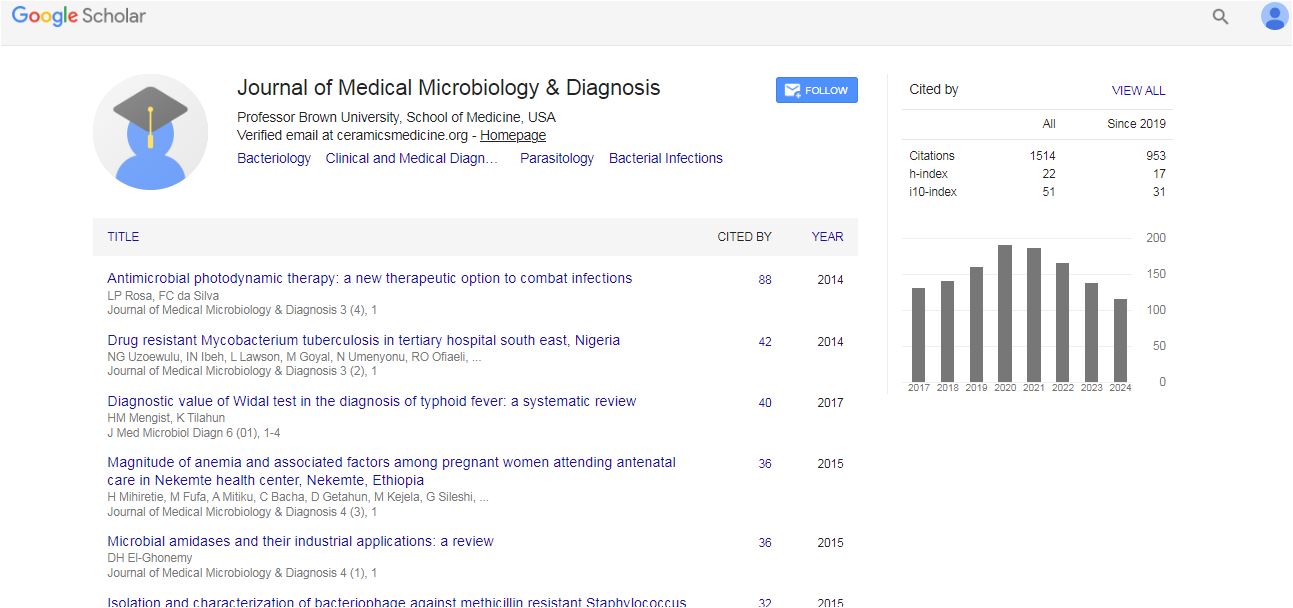
Medical Microbiology & Diagnosis received 14 citations as per Google Scholar report