Opinion - (2025) Volume 9, Issue 2
Received: 01-Apr-2025, Manuscript No. jmp-26-189988;
Editor assigned: 03-Apr-2025, Pre QC No. P-189988;
Reviewed: 17-Apr-2025, QC No. Q-189988;
Revised: 22-Apr-2025, Manuscript No. R-189988;
Published:
29-Apr-2024
, DOI: 10.37421/2684-4931.2025.9.239
Citation: Schneider, Lukas. ”Salmonella’s Sophisticated Intracellular Survival Strategies.” J Microb Path 09 (2025):239.
Copyright: © 2025 Schneider L. This is an open-access article distributed under the terms of the Creative Commons Attribution License, which permits unrestricted use, distribution and reproduction in any medium, provided the original author and source are credited.
Salmonella enterica is a significant intracellular pathogen that employs a remarkable array of strategies to establish and maintain its presence within host cells, a fundamental aspect of its pathogenesis. The pathogen's ability to actively manipulate host cellular processes, evade the host's immune surveillance, and ultimately establish a persistent intracellular niche is critical for its survival and dissemination. Central to understanding Salmonella's intracellular lifestyle is the concept of the Salmonella-containing vacuole (SCV). This specialized vacuole is not merely a passive compartment but is actively remodeled by the pathogen to create a permissive environment for its growth and replication. Salmonella achieves this by recruiting specific host proteins and dynamically altering the vacuole membrane. The intricate interplay between Salmonella and the host immune system is another key area of investigation. The pathogen has evolved sophisticated mechanisms to avoid detection and elimination by innate immune cells, particularly macrophages, which are crucial sites for its intracellular survival and replication. Furthermore, the pathogen's resilience within the host cell is significantly influenced by its internal stress response mechanisms and the function of bacterial chaperones. These systems are vital for enabling Salmonella to withstand the challenging intracellular environment, including exposure to reactive oxygen and nitrogen species and nutrient scarcity. Metabolic adaptation is also a cornerstone of Salmonella's intracellular survival. The bacterium meticulously adjusts its metabolic pathways to efficiently acquire and utilize nutrients from the host cell, thereby fueling its intracellular growth and replication processes. Salmonella's interaction with host cells begins with adhesion and invasion, processes mediated by specific surface structures such as outer membrane proteins and fimbriae. These structures play a dual role, facilitating entry into host cells and also contributing to the pathogen's persistence within them. The host cell itself mounts a defense against Salmonella infection, employing mechanisms like autophagy and apoptosis. However, Salmonella has developed counter-strategies to evade or subvert these host defense pathways, ensuring its continued intracellular survival. Emerging research also points to the influence of epigenetic modifications within host cells during Salmonella infection. The pathogen appears to manipulate host gene expression profiles, potentially creating a more conducive intracellular environment for its survival and proliferation. Pathogenicity islands (SPIs) are critical genetic determinants of Salmonella's virulence, including its capacity for intracellular survival. Genes within these islands encode essential effector proteins and other virulence factors that are indispensable for manipulating host cell functions and establishing a persistent intracellular niche. Finally, the host cell's lipid metabolism plays a crucial role in supporting Salmonella's intracellular lifestyle. The pathogen actively hijacks host lipid synthesis and transport pathways to acquire the lipids necessary for membrane biogenesis and its own replication within the host cell. This intricate coordination highlights the sophisticated adaptations of Salmonella for intracellular survival.
Salmonella enterica's intracellular survival is a complex phenomenon involving the orchestration of numerous virulence factors and sophisticated manipulation of host cellular machinery. At the forefront of these mechanisms is the pathogen's ability to deliver effector proteins into host cells via type III secretion systems, which are instrumental in subverting host processes and establishing a persistent intracellular niche. The Salmonella-containing vacuole (SCV) is a prime example of the pathogen's active remodeling of its environment. Salmonella doesn't simply reside within a pre-formed vacuole; rather, it dynamically modifies the vacuole membrane and recruits host proteins to establish a protected and nutrient-rich compartment that supports its intracellular growth and replication. Evasion of the host immune system is paramount for Salmonella's survival. The pathogen employs specific strategies to avoid recognition and elimination by innate immune cells, such as macrophages. This involves suppressing inflammatory responses and manipulating host signaling pathways to promote its own survival within these critical immune cells. Bacterial stress response mechanisms and the action of chaperones are vital for Salmonella's resilience within the host cell. These internal systems enable the pathogen to cope with the harsh intracellular conditions, including oxidative stress, nutrient deprivation, and osmotic fluctuations, thereby enhancing its survival rates. Metabolic reprogramming is a key adaptation that allows Salmonella to thrive within host cells. By acquiring and efficiently utilizing nutrients derived from the host, the bacterium can sustain its energy demands for replication and persistence, underscoring the importance of specific metabolic pathways. Surface structures, including outer membrane proteins and fimbriae, are crucial for Salmonella's initial interactions with host cells. These structures facilitate both the adhesion to and invasion of host cells, and they also contribute to the pathogen's ability to persist within the intracellular environment by mediating specific interactions with host cell receptors. Host cell defense mechanisms, such as autophagy and apoptosis, are activated in response to Salmonella infection. However, Salmonella has evolved to effectively evade or subvert these cellular processes, demonstrating a remarkable capacity to counteract host immune responses and ensure its own survival. The influence of epigenetic modifications within host cells during Salmonella infection is an area of growing interest. Salmonella may induce changes in host gene expression patterns through epigenetic alterations, thereby creating a more favorable intracellular milieu that supports its replication and survival. Salmonella pathogenicity islands (SPIs) are essential for the expression of many virulence factors that contribute to intracellular survival. These genetic loci encode effector proteins and other molecules that are critical for the pathogen's ability to manipulate host cell functions and establish a persistent intracellular niche. Lastly, the exploitation of host lipid metabolism by Salmonella is a critical survival strategy. The pathogen actively hijacks host lipid synthesis and transport pathways to secure essential lipids required for membrane biogenesis and its own intracellular replication, showcasing its ability to adapt and utilize host resources.
Salmonella enterica employs sophisticated strategies for intracellular survival, including manipulating host cellular processes and evading immune responses. Key mechanisms involve the remodeling of the Salmonella-containing vacuole (SCV), the delivery of effector proteins into host cells, and the activation of bacterial stress response systems. Metabolic adaptations and the exploitation of host lipid metabolism are crucial for providing the necessary nutrients for replication and persistence. Surface structures facilitate host cell adhesion and invasion, while the pathogen also subverts host defense mechanisms like autophagy and apoptosis. Salmonella pathogenicity islands (SPIs) encode critical virulence factors, and epigenetic modifications in host cells may further contribute to a favorable intracellular environment. These combined strategies allow Salmonella to establish a persistent intracellular niche within its host.
None
None
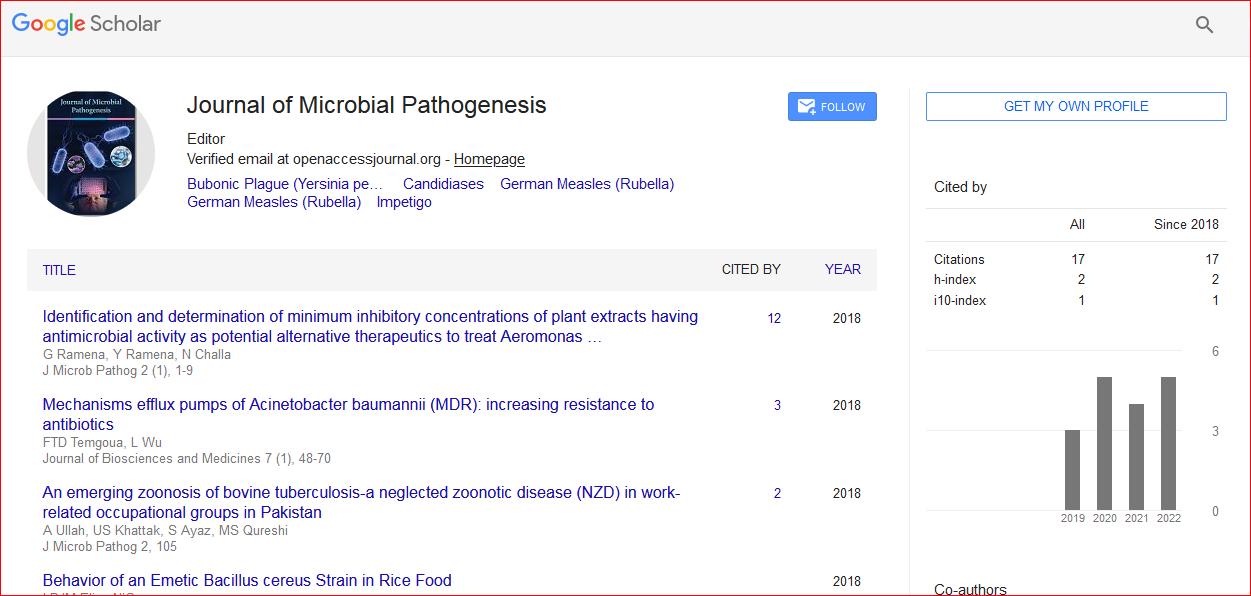
Journal of Microbial Pathogenesis received 17 citations as per Google Scholar report