Research Article - (2025) Volume 15, Issue 3
Received: 27-Aug-2024, Manuscript No. JPRM-24-146556;
Editor assigned: 29-Aug-2024, Pre QC No. JPRM-24-146556 (PQ);
Reviewed: 12-Sep-2024, QC No. JPRM-24-146556;
Revised: 01-Jun-2025, Manuscript No. JPRM-24-146556 (R);
Published:
08-Jun-2025
, DOI: 10.37421/2161-105X.2025.15.737
Citation: Adwi, Mohamed, Mohamed Elmoshy, Mahmoud Bassiony and Mahmoud Madkour. "Risk Stratification, Knowledge and Awareness of Obstructive Sleep Apnea among Egyptians Attending Outpatient Clinics; A Cross-Sectional Study." J Pulm Respir Med 15 (2025): 737.
Copyright: © 2025 Elmoshy M, et al. This is an open-access article distributed under the terms of the creative commons attribution license which permits unrestricted use, distribution and reproduction in any medium, provided the original author and source are credited.
Introduction: Obstructive Sleep Apnea (OSA) is a common sleep disorder that causes upper airway collapse, leading to sleep apnea or hypopnea, and is associated with serious health conditions. Despite its prevalence, it is an underdiagnosed and undertreated disease. We aimed to measure the prevalence of OSA risk and detect the level of knowledge of OSA among Egyptians attending outpatient clinics.
Methods: A cross-sectional study was conducted at two university hospitals in Cairo using the Berlin questionnaire and OSA Knowledge and Attitude Questionnaire (OSAKA). The participants were recruited from the outpatient clinics of Al-Hussein University Hospital and Al-Sayed Galal University Hospital. We used a validated Arabic translated version of the Berlin questionnaire. Ten questions across three domains were evaluated: The presence and severity of snoring, frequency of daytime sleepiness, and presence of obesity or hypertension. A translation of five questions from (OSAKA) deemed suitable for the general population, was also used.
Results: Out of 395 participants, 345 (87%) completed the questionnaire. The participants’ ages ranged from 18 to 82 years old (40.9 ± 15.5 SD). Approximately 52% of the participants were female (n=179) and 48% were male (n=166). The prevalence of high risk OSA among the studied population was 17.4% (n=60). Older age and obesity were found to be significantly associated with OSA risk. In terms of OSA awareness, 90.1% (n=311) of the participants did not have previous knowledge of OSA, and there was no significant association between the participants’ knowledge and risk of OSA.
Conclusion: OSA was associated with older age and obesity. Knowledge level was far from needed among the studied group. This lack of knowledge needs to be addressed to reduce the under diagnosis and under treatment of OSA.
Obstructive sleep apnea • Prevalence • Knowledge • Awareness • Obesity
OSA: Obstructive Sleep Apnea; OSAKA: OSA Knowledge and Attitude Questionnaire; PSG: Polysomnography; AHI: Apnea– Hypopnea Index
Obstructive Sleep Apnea (OSA), the most common sleep disorder worldwide, is characterized by the recurrent collapse of the upper airway during sleep, causing apnea or hypopnea and leading to hypoxia, hypercapnia, and sleep disturbances [1,2].
OSA is a prevalent disease, with a recent study estimating that almost 1 billion adults aged 30-69 years are affected worldwide and with the prevalence exceeding 50% in some countries. Risk factors include obesity, male sex, older age, menopause, adenotonsillar hypertrophy, and smoking [3-5].
Presentations vary from asymptomatic to severe symptoms of snoring, headache upon waking up, daytime sleepiness, impaired concentration, and daytime fatigue. Studies show an association between OSA and serious comorbidities such as hypertension, cerebrovascular stroke, insulin resistance, decreased life quality, and cognitive dysfunction [6-9]. These issues can lead to increased medical and economic burdens due to decreased work productivity and increased workplace and traffic accidents [10,11].
Despite its high prevalence, OSA is usually overlooked by clinicians often because of the lack of awareness among the general population and physicians. In fact, an estimated 80% to 90% of people with OSA have not received a clinical diagnosis [12].
The Berlin questionnaire is a beneficial screening tool widely used in epidemiological studies to identify high risk groups for OSA [13]. Polysomnography (PSG) is the gold standard for diagnosing and determining OSA severity using the Apnea–Hypopnea Index (AHI), which is the number of apnea or hypopnea events per hour of sleep [14].
We aimed to use the Berlin questionnaire along with five questions from the OSA Knowledge and Attitude Questionnaire (OSAKA) to assess the knowledge, awareness, and prevalence of OSA among Egyptians attending outpatient clinics.
Study design
Cross-sectional study (survey): We disseminated a questionnaire consisting of two parts. The first part was obtained from the Berlin questionnaire, which consists of ten questions across three domains related to the presence and severity of snoring, frequency of daytime sleepiness, and presence of obesity or hypertension, with the aim of classifying the risk of OSA. We used an Arabic translated version of the Berlin questionnaire, which was validated in a previous study in Egypt [15]. The second part of the questionnaire was a translation of five questions from the OSAKA, originally a questionnaire for medical personnel aimed at assessing their knowledge and awareness of OSA. We chose five questions that were suitable for the general population. Participants were approached in June 2021 in the outpatient clinics of Al-Hussein University Hospital and Al-Sayed Galal University Hospital, which is where we obtained our ethics approval and communicated with local authorities. These two hospitals were chosen because they are university hospitals that have high visit rates from all over the country.
The target sample size was to collect 280 questionnaire responses from participants attending outpatient clinics regarding their knowledge and awareness of OSA. Participants were required to be 18 years old or above.
All procedures performed in studies involving human participants were in accordance with the ethical standards of the institutional research committee of Al-Azhar Faculty of Medicine and the 1964 Helsinki Declaration and its later amendments or comparable ethical standards. The ethics approval (IRB 00012367) was obtained from the Ethical Committee at the Faculty of Medicine, Al-Azhar University. An informed consent was obtained from all participants included in this study.
Analysis
Data were collected, tabulated, and analyzed using Statistical Package for Social Science software version 21 and other statistical programs.
Descriptive statistics, such as percentage (%), mean (x), and Standard Deviation (SD), and analytic statistics were used. Chisquare test (χ 2 ) was used to indicate the presence or absence of a statistically significant difference between two qualitative variables. Mann–Whitney test was used to compare differences between two independent groups when the dependent variable was either ordinal or continuous but not normally distributed. A P value of <0.05 was considered statistically significant. The risk prevalence of OSA (high risk or low-risk) was calculated according to the responses to the Berlin Questionnaire (score of the three categories).
Of 395 participants who were approached to answer the questionnaire, 345 (87%) completed the questionnaire. The participants’ age ranged from 18 to 82 years, with a mean and Standard Deviation (SD) of 40.9 ± 15.5 years. The participants’ mean Body Mass Index (BMI) was 28.7 (SD ± 6.7) kg/m2 and ranged from 15.6 to 52.4 kg/m2 . Females represented 51.9% of the participants (n=179), and smokers accounted for 20.9% (n=72)
The Berlin questionnaire and OSA risk
Upon assessing snoring among the participants, we found that 112 of 345 participants (32.5%) snored (P<0.001), as reported by their relatives, 205 did not, and were not sure whether they did or did not (Table 1).
| Variable | Sample (N = 345) | |
| Number | Frequency (%) | |
| Occurrence of snoring (N=345) | ||
| Yes | 112 | 32.5 |
| No | 205 | 59.4 |
| Do not know | 28 | 8.1 |
| Prevalence of snoring among the study participants=32.5% (112) | ||
| Nature of snoring (N=112) | ||
| Slightly louder than breathing | 39 | 34.8 |
| As loud as talking | 35 | 31.3 |
| Louder than talking | 11 | 9.8 |
| Very loud to be heard from another room | 27 | 24.1 |
| Times of snoring (N=112) | ||
| Almost every day | 44 | 39.3 |
| 3-4 times per week | 18 | 16.1 |
| 1-2 times per week | 22 | 19.6 |
| 1-2 times per month | 23 | 20.5 |
| Rarely or never | 5 | 4.5 |
| Snoring bothers people (N=112) | ||
| Yes | 54 | 48.2 |
| No | 49 | 43.8 |
| Do not know | 9 | 8 |
| Observation of having sleep apnea (N=112) | ||
| Almost every day | 0 | 0 |
| 3-4 times per week | 10 | 8.9 |
| 1-2 times per week | 7 | 6.3 |
| 1-2 times per month | 8 | 7.1 |
| Rarely or never | 87 | 77.7 |
Table 1. Frequent distribution of snoring and its characteristics among the study participants (N=345).
When assessing outcomes associated with OSA such as behavior and sleep per day, we found that 28.1% of the participants (n=97) felt fatigued after waking up almost every day and 52 had a high risk of OSA (P<0.001). In addition, 27% of the participants (n=93) felt fatigued during their waking hours almost every day, and they had a significant association (P<0.001) with high OSA risk.
When evaluating sleep during driving, we found that 4.6% (n=16) of participants reported falling asleep at the wheel. Furthermore, 12.5% (n=2) of those participants reported falling asleep while driving almost every day, which puts them at high risk of causing car accidents (Table 2).
| The variable | The sample (N=345) | |
| Number | Frequency (%) | |
| Feeling of fatigue after sleep | ||
| Almost every day | 97 | 28.1 |
| 3-4 times per week | 44 | 12.8 |
| 1-2 times per week | 63 | 18.3 |
| 1-2 times per month | 24 | 7 |
| Rarely or never | 117 | 33.9 |
| Feeling of fatigue during waking time | ||
| Almost every day | 93 | 27 |
| 3-4 times per week | 47 | 13.6 |
| 1-2 times per week | 52 | 15.1 |
| 1-2 times per month | 20 | 5.8 |
| Rarely or never | 133 | 38.6 |
| Falling asleep during driving | ||
| Yes | 16 | 4.6 |
| No | 79 | 22.9 |
| ÃÂ? Have no car | 250 | 72.5 |
| Number of times of falling asleep during driving (N=16) | ||
| Almost every day | 2 | 12.5 |
| 3-4 times per week | 2 | 12.5 |
| 1-2 times per week | 7 | 43.8 |
| 1-2 times per month | 2 | 12.5 |
| Rarely or never | 3 | 18.8 |
Table 2. Frequent distribution of some of OSA associated outcomes (behavior and sleep) during the day.
In addition, 18.8% (n=65) had a history of high blood pressure, whereas 71.9% (n=248) did not, and 9.3% (n=32) were not sure regarding the status of their blood pressure (Table 3). We found that the percentage of high risk OSA was 17.4% (n=60) among all participants (Figure 1). Age and BMI were found to have a significant association with OSA.
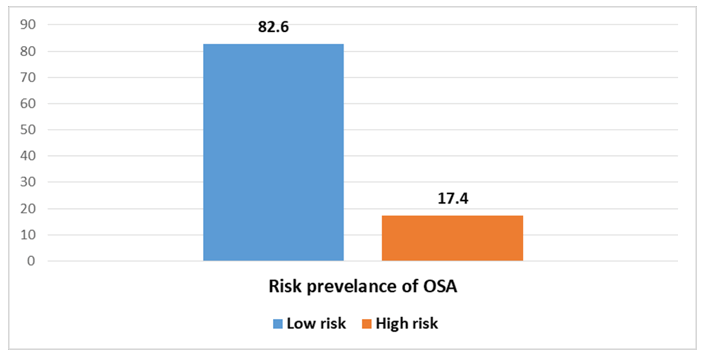
Figure 1. Percent distribution of the risk prevalence of OSA among the study participants.
| The variables | The sample (N = 345) | |
| Number | Frequency (%) | |
| Age (year) | ||
| 18 | 102 | 29.5 |
| 30 | 188 | 54.5 |
| 60 + | 55 | 16 |
| Mean ± SD | 40.9 ± 15.5 | |
| Range | 18-82 | |
| Sex | ||
| Male | 166 | 48.1 |
| Female | 179 | 51.9 |
| Weight (kg) | ||
| Mean ± SD | 78.6 ± 18.9 | |
| Range | 40-170 | |
| Height (cm) | ||
| Mean± SD | 165.8 ± 9.9 | |
| Range | 105-200 | |
| Body Mass Index (BMI) | ||
| Mean ± SD | 28.7 ± 6.7 | |
| Range | 15.6-52.4 | |
| Smoking | ||
| Yes | 72 | 20.9 |
| No | 273 | 79.1 |
| Having high blood pressure | ||
| Yes | 65 | 18.8 |
| No | 248 | 71.9 |
| Do not know | 32 | 9.3 |
| Note: SD: Standard Deviation; %: Percentage; kg: kilogram; cm: centimeter | ||
Table 3. Characteristics of study participants (N = 345).
Obstructive sleep apnea: Knowledge and awareness
All participants’ responses to the knowledge assessment questionnaire regarding OSA are shown in (Table 4). We found that 90.1% (n=311) of participants did not have prior knowledge of OSA. When assessing participants’ knowledge and awareness of the association between OSA and hypertension and high incidence of car crashes, we found that 89.3% (n=308) and 87.2% (n=301) of participants, respectively, said that they do not know of the association and only 7.5% (n=26) of the participants were aware of this association (Table 4).
| The variable | The sample (N = 345) | |
| Number | Frequency (%) | |
| Having previous knowledge regarding OSA | ||
| Yes | 34 | 9.9 |
| No | 311 | 90.1 |
| OSA is associated to HTN | ||
| Yes | 26 | 7.5 |
| No | 11 | 3.2 |
| Do not know | 308 | 89.3 |
| OSA is associated with high incidence of automobile crashes | ||
| Yes | 26 | 7.5 |
| No | 18 | 5.2 |
| Do not know | 301 | 87.2 |
| OSA is more common in women | ||
| Yes | 16 | 4.6 |
| No | 22 | 6.4 |
| Do not know | 307 | 89 |
| Diagnosed with OSA | ||
| Yes | 7 | 2 |
| No | 338 | 98 |
Table 4. Assessment of OSA-related knowledge and awareness among the study participants.
Only 2% (n=7) of the participants reported that they had been previously diagnosed with OSA. Finally, there was no significant association between participants’ knowledge, awareness, and risk prevalence of OSA (P=0.634).
Although OSA is a common disease that can affect general health, no previous screening was conducted to assess the prevalence of its risk among Egyptians. This study aimed to provide some data on OSA and to compare the knowledge and attitude between high and low-risk groups.
According to our study results, 17.4% of the participants were classified in the high-risk category for OSA. Risk was greater among participants who were older, were obese, and had hypertension. The vast majority of those at a high risk had no previous knowledge of the disease. Numerous studies have been conducted to measure the prevalence of OSA in different countries using the Berlin questionnaire, all of which have yielded comparable results. Nationwide screening in South Korea showed a prevalence of 15.8%, and a sample of the working population in Kuwait showed a 20% prevalence. Another study comparing the United States and European countries found the risk prevalence to be 35.8% and 26.3%, respectively. These differences can be traced back to demographic differences between study participants [16].
An association between older age and OSA risk was observed in our study. Accumulating evidence has supported the association between age and OSA in other studies as well. Applied multiple logistic regression on a study sample aged 30–70 years and detected an increasing OSA percentage with increasing age, with a range of 35% in males in the 30–39 years’ age group compared to 49% in the 60–70 years’ age group.
Obesity (defined as BMI ≥ 30) is also positively associated with OSA and is considered a risk factor [17-19]. A 10%increase in body weight could result in a six-fold increase in OSA risk. In addition to the OSA risk, excess BMI could exacerbate the desaturation of oxygen amid apnea and hypopnea events. Conversely, OSA could predispose weight gain due to metabolic disturbances and daytime sleepiness.
In our study sample, 56.7% of the high-risk group was already diagnosed with hypertension compared to 10.9% in the low-risk group, a finding that was statistically significant (P<0.001). OSA is considered a risk factor for hypertension and is independent from other confounding comorbidities that can be found in Patients with OSA. In addition, OSA has a well-established reputation as a risk factor for other cardiovascular diseases, such as heart failure, coronary heart diseases, and atrial fibrillation. Therefore, Patients with OSA have a higher rate of cardiovascular morbidity and mortality. Interestingly, treating patients with Continuous Positive Airway Pressure (CPAP) resulted in lowering systolic blood pressure, an effect that could be associated with a reduction of major complications such as heart failure and stroke [20].
Many studies have considered male gender to be a risk factor for OSA, with a male-to-female ratio of 2–3:133. In our study, men showed a slightly higher risk (18%) than women (16.75%) but with no statistical significance, in accordance with other population-based studies. In fact, the gender disparity demonstrated by some studies tends to decline in people over the ages of 60 or 50. This could be explained by the fact that OSA severity increases in women after menopause. Consequently, there was no significant difference in Apnea–Hypopnea Index (AHI) between postmenopausal women and men of the same age. The gender factor could also differ from one society to another. For example, a study of 2946 participants in Saudi Arabia over the age of 60 showed the risk prevalence to be higher in women than in men (60.8%versus 44.2%, respectively). Some researchers suggest that women have different symptom profiles that are under recognized by the current diagnostic tools. This calls for further research to investigate the relation between gender and OSA.
In terms of the level of knowledge and attitude testing, the high-risk group showed no significant awareness of the disease, with only 11.7%, in contrast to 9.5% in the low-risk group. The lack of awareness can be mainly attributed to the suboptimal OSA knowledge of physicians. In an Egyptian study aimed at knowledge assessment using 18 questions from the OSAKA questionnaire, critical care physicians had a lower mean score for knowledge (10.05 ± 2.3) of OSA. This low level is concordant with studies conducted in different countries. On a regional level, primary care doctors from the Middle East and North Africa region had a low mean knowledge score (12.6 ± 2.5) regarding OSA, and primary care doctors in Latin America did not show much difference with a mean score of 60% (equal to 10.8). In Italy, anesthetists had a mean knowledge score of 12.
To our knowledge, our study is the first to provide epidemiological information on OSA risk in patients attending outpatient clinics in Egypt and to measure the knowledge level in high and low-risk groups. The Berlin questionnaire was chosen because it is inexpensive, standardized, and easy to analyze, and yields fast results. The study sample was strengthened by ensuring a gender balance and including variant age groups, which enabled us to observe the differences among them. On the other hand, convenience sampling could be a limitation that affects the generalizability of the results. Another limitation was the use of a self-report questionnaire because there is a possibility of participants’ recall bias. In addition, the Berlin Questionnaire was shown to be less than other diagnostic tools such as polysomnography (gold diagnostic tool), with sensitivity and specificity that could reach 58.8% and 77.76% and with a high negative predictive value of 82.9% when the AHI cutoff is <15. The use of a questionnaire also has the inherent disadvantages of misunderstanding and skipped questions, which we overcame using Arabic translated questionnaires and not including responses that had incomplete answers.
Many conclusions could be deduced from our study. First, lifestyle changes and control of the reversible risk factors (such as obesity) should be the mainstays in the management of OSA. Different studies have highlighted the effect of weight reduction on OSA, with one showing that a 10% reduction in body weight could decrease AHI by 26%. Other studies estimated that AHI reductions of 47% and 61% could be achieved by body weight reductions of 9% and 17%, respectively.
Second, OSA is prevalent among drivers and pilots, and its effects may extend beyond medical comorbidities to increase the risk of car and traffic accidents. Hence, we recommend OSA screening for vital jobs such as drivers and pilots.
Furthermore, this study underlines the need for raising awareness of OSA among medical personnel and the public. Using different educational tools to tutor medical students could elevate the level of OSA knowledge. Information regarding OSA should be disseminated to the public to alter the perception of snoring from being a social problem to being a possible symptom of OSA. Recognizing the risk factors and complications of OSA is essential to overcome the underdiagnosis and undertreatment of OSA. Moreover, OSA was recently identified as a risk factor for severe outcomes in COVID-19 patients, and it is associated with higher mortality rates.
In our study, Obstructive Sleep Apnea (OSA) was associated with older age, obesity, and hypertension. Knowledge level was far from needed among the studied high and low-risk groups. This study highlights the urge to control the risk factors associated with OSA as an essential line of management. Importantly, there is a conspicuous need to increase awareness of OSA among the medical community and the public to overcome the under diagnosis and under treatment of OSA.
We would like to offer special regards to Professor Dr. Hosni Khairy for supervising the early stages of this study. Although he tragically lost his life, he continues to inspire us by his example and dedication to the students he served over his career. We also acknowledge the role of Dr. Abdallah Al-Balsha in developing the research idea.
Conceptualized the study, collected data, and significantly contributed to the writing of the manuscript. Collected data, substantially contributed to the writing of the manuscript, and oversaw the overall research project. Played a vital role in data collection and provided valuable input during the writing process. Contributed to data collection and assisted with manuscript preparation. Provided statistical expertise and analysis for the study. As the most senior author, provided critical review and guidance throughout the research process.
Not applicable.
The Ethics Committee of the Al-Azhar Faculty of Medicine granted ethics approval in May 2021. The Al-Azhar Faculty of Medicine's institutional research committee's ethical standards, the 1964 Helsinki Declaration and its subsequent amendments, or equivalent ethical standards were followed in all procedures carried out in studies involving human subjects. Informed consent was obtained from all participants included in this study.
All data generated or analyzed during this study are accessed through the corresponding author.
All authors certify that they have no affiliations with or involvement in any organization or entity with any financial interest (such as honoraria; educational grants; participation in speakers’ bureaus; membership, employment, consultancies, stock ownership, or other equity interest; and expert testimony or patent-licensing arrangements) or non-financial interest (such as personal or professional relationships, affiliations, knowledge, or beliefs) in the subject matter or materials discussed in this manuscript.
No funding was received for this research.
[Crossref] [Google Scholar] [PubMed]
[Crossref] [Google Scholar] [PubMed]
[Crossref] [Google Scholar] [PubMed]
[Google Scholar] [PubMed]
[Crossref] [Google Scholar] [PubMed]
[Crossref] [Google Scholar] [PubMed]
[Crossref] [Google Scholar] [PubMed]
[Crossref] [Google Scholar] [PubMed]
[Crossref] [Google Scholar] [PubMed]
[Crossref] [Google Scholar] [PubMed]
[Crossref] [Google Scholar] [PubMed]
[Crossref] [Google Scholar] [PubMed]
[Crossref] [Google Scholar] [PubMed]
[Crossref] [Google Scholar] [PubMed]
[Crossref] [Google Scholar] [PubMed]
[Crossref] [Google Scholar] [PubMed]
[Crossref] [Google Scholar] [PubMed]
[Crossref] [Google Scholar] [PubMed]
Pulmonary & Respiratory Medicine received 1690 citations as per Google Scholar report