Short Communication - (2025) Volume 11, Issue 6
Received: 03-Nov-2025, Manuscript No. OHCR-25-167879;
Editor assigned: 05-Nov-2025, Pre QC No. P-167879;
Reviewed: 17-Nov-2025, QC No. Q-167879;
Revised: 22-Nov-2025, Manuscript No. R-167879;
Published:
29-Nov-2025
, DOI: 10.37421/2471-8726.2025.11.220
Citation: Russell, Fapbach. “Reversing Acid Erosion Appearance with Preventive Aesthetic Hygiene Strategies.” Oral Health Case Rep 11 (2025): 220.
Copyright: © 2025 Russell F. This is an open-access article distributed under the terms of the Creative Commons Attribution License, which permits unrestricted use, distribution and reproduction in any medium, provided the original author and source are credited.
Acid erosion is a growing concern in modern dental practice, driven by dietary habits, lifestyle choices, and systemic conditions such as acid reflux. It results in the progressive loss of tooth enamel, leading to surface dullness, translucency, cupping, and aesthetic deterioration. While structural damage may be irreversible in advanced cases, early intervention through preventive aesthetic hygiene strategies can minimize visual impact and halt progression. Addressing acid erosion from an aesthetic standpoint involves more than re-mineralization it requires a personalized approach that integrates preventive care, cosmetic masking, and enamel preservation. Patients often present seeking not just relief from sensitivity but also restoration of their natural tooth appearance. Dental professionals must balance cosmetic expectations with biological limitations, using hygiene-focused protocols to prevent further damage while subtly enhancing the visual integrity of affected teeth [1].
Preventive aesthetic hygiene strategies offer a proactive pathway to managing the early appearance of acid erosion, focusing on stabilizing enamel, restoring surface luster, and supporting long-term cosmetic integrity. These approaches involve tailored oral hygiene routines, dietary counselling, and non-invasive cosmetic enhancements designed to restore brightness and reduce the chalky or translucent look associated with enamel loss. When erosion is addressed at an early stage, aesthetic decline can be effectively slowed or partially reversed without resorting to invasive restorative work. Emphasis is placed on re-mineralizing agents, gentle polishing, and education on acid-neutralizing habits. Recognizing the subtle visual cues of erosion and implementing timely, aesthetic-conscious interventions are key responsibilities in modern hygiene care. By combining functionality with cosmetic mindfulness, clinicians help patients maintain both oral health and confidence in their smile [2].
The visual manifestations of acid erosion include dullness, loss of surface definition, incisal translucency, and thinning enamel that exposes the underlying dentin. These changes, although often gradual, significantly affect smile aesthetics and patient self-perception. Preventive aesthetic hygiene strategies aim to mitigate these effects through early detection and non-invasive interventions. Central to this approach is the use of re-mineralizing agents such as Casein Phosphopeptide-Amorphous Calcium Phosphate (CPP-ACP), fluoride varnishes, and nano-hydroxyapatite pastes. These formulations help restore mineral content and improve surface gloss, subtly enhancing the toothâ??s optical properties. In addition to chemical support, polishing systems with low abrasivity and high-luster compounds can improve surface reflectivity without further damaging enamel. Clinicians may also use resin infiltration techniques for areas showing incipient erosion, preserving structure while improving appearance. Patient education plays a critical role; individuals must understand the erosive potential of acidic beverages, frequent snacking, and gastric reflux. Implementing a personalized oral hygiene routine featuring pH-neutralizing rinses, soft-bristled brushes, and non-abrasive toothpaste supports both prevention and aesthetics. These strategies not only address existing cosmetic concerns but also promote enamel resilience. When carried out consistently, they delay the need for restorative interventions and preserve the natural beauty of teeth affected by early acid erosion [3].
Effective management of acid erosion's aesthetic consequences relies on identifying patients at risk and customizing hygiene protocols that prioritize enamel preservation. Risk assessment includes dietary history, salivary flow analysis, and evaluation of systemic conditions like GERD. Clinicians should conduct regular photographic documentation and index-based assessments to track erosion progression. Aesthetic hygiene strategies begin with dietary modifications, advising patients to limit exposure to citrus fruits, carbonated beverages, and sports drinks. Following acidic intake, rinsing with water and delaying brushing for at least 30 minutes help prevent further enamel softening. From an aesthetic standpoint, the use of high-fluoride toothpaste and topical calcium-rich gels can enhance luster and hardness. Professional care may involve gentle air polishing with glycine or erythritol powders to remove biofilm without harming demineralized surfaces. Additionally, applying desensitizers with cosmetic benefits such as those that reduce opacity and mimic enamel reflectivity can improve appearance. Some patients may benefit from application of tooth-colored sealants or surface resins that both protect and mask early erosion zones. Importantly, these measures are conservative and reversible, aligning with modern dentistry's minimally invasive ethos. Through consistent hygiene-based interventions, patients can experience visible improvements in tooth appearance while protecting against progression, preserving both aesthetic confidence and long-term oral health [4].
Patient motivation is a key driver in the success of preventive aesthetic strategies for acid erosion. Individuals are more likely to adhere to hygiene recommendations when they perceive a visible improvement in tooth appearance. Clinicians should capitalize on this motivation by demonstrating before-and-after comparisons, explaining the cosmetic benefits of preventive care, and involving patients in tracking their progress. Digital imaging tools and luster measurement devices can be valuable in visualizing subtle changes. Establishing regular hygiene maintenance appointments allows for reinforcement of erosion-preventive behaviors and incremental aesthetic improvements. Custom trays for nightly application of re-mineralizing gels can be introduced as part of home care, especially for patients at high risk. In younger populations, where aesthetics often drive treatment acceptance, early education on enamel-safe behaviors can yield long-term benefits. Equally important is the use of motivational interviewing techniques to elicit lifestyle changes that support enamel preservation. Clinicians must remain cautious not to overpromise cosmetic results; the goal is improvement and stabilization, not perfection. As erosion often progresses silently, combining aesthetic reinforcement with preventive vigilance ensures sustained engagement. In this context, the hygiene visit transforms from a routine check-up into an aesthetic care opportunity. This paradigm shift fosters long-term relationships and empowers patients to protect their natural smiles proactively [5].
Google Scholar Cross Ref Indexed at
Google Scholar Cross Ref Indexed at
Google Scholar Cross Ref Indexed at
Google Scholar Cross Ref Indexed at
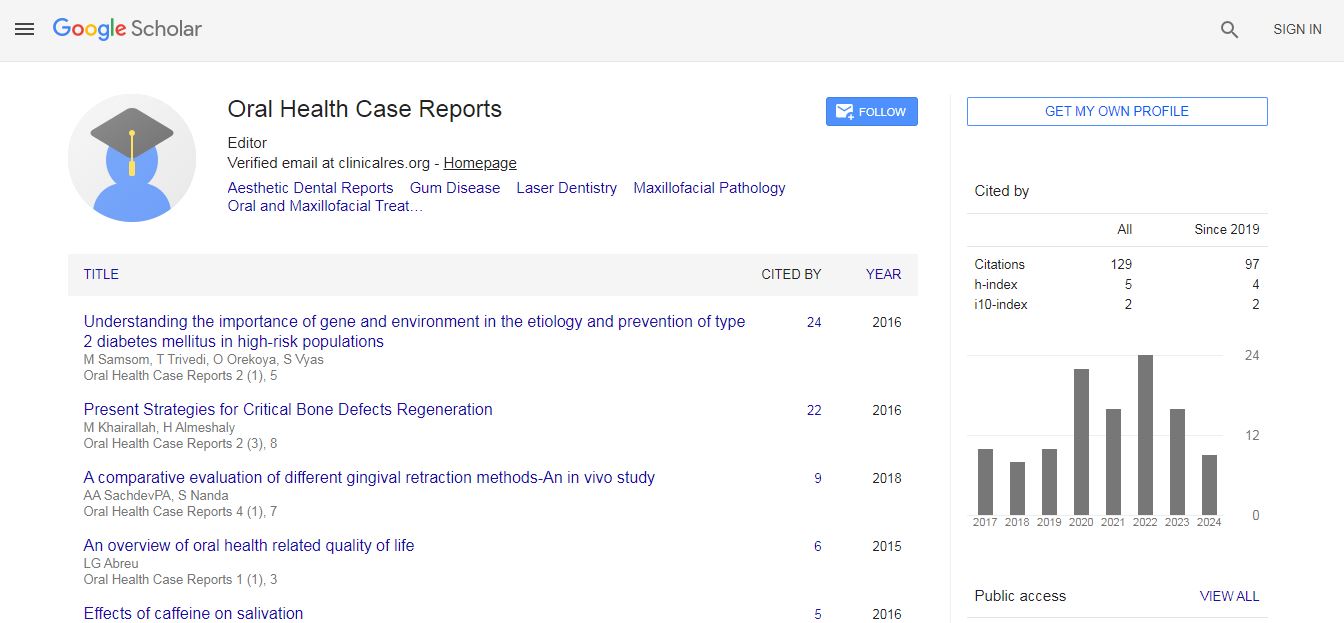
Oral Health Case Reports received 120 citations as per Google Scholar report