Perspective - (2025) Volume 15, Issue 6
Received: 01-Dec-2025, Manuscript No. jprm-25-174603;
Editor assigned: 03-Dec-2025, Pre QC No. P-174603;
Reviewed: 17-Dec-2025, QC No. Q-174603;
Revised: 22-Dec-2025, Manuscript No. R-174603;
Published:
29-Dec-2025
, DOI: 10.37421/2161-105X.2025.15.772
Citation: El-Masri, Sara. ”Respiratory Infections: Diagnosis, Treatment, Prevention, Challenges.” J Pulm Respir Med 15 (2025):772.
Copyright: © 2025 El-Masri S. This is an open-access article distributed under the terms of the Creative Commons Attribution License, which permits unrestricted use, distribution and reproduction in any medium, provided the original author and source are credited.
Understanding and tackling common viral respiratory infections is a continuous global health challenge. This includes a deep dive into effective identification, treatment, and prevention strategies. Significant progress has been made in refining diagnostic methods, with new and more precise tools becoming available. Alongside this, the development of emerging antiviral therapies offers promising avenues for better patient outcomes. Public health strategies remain paramount in controlling the spread and impact of these widespread illnesses, highlighting both persistent challenges and notable advancements in their management [1].
The escalating crisis of antibiotic resistance poses a severe threat, particularly in the context of bacterial respiratory tract infections. This issue critically examines the most prevalent and concerning bacterial pathogens involved, thoroughly detailing the various mechanisms by which they develop resistance to existing antibiotics. There is an undeniable and urgent call for innovative therapeutic strategies, alongside a robust commitment to improving antibiotic stewardship practices. These interventions are crucial for effectively combating what has become a major public health emergency [2].
Protecting children from acute respiratory infections is a top priority, requiring multifaceted and effective strategies. The focus here is on preventative measures such as comprehensive immunization programs, rigorous hygiene practices, and appropriate environmental modifications to reduce exposure to pathogens. Furthermore, nutritional support plays a vital role in bolstering childrenâ??s immune systems. These combined interventions are crucial for significantly reducing the overall burden of illness experienced by pediatric populations, leading to healthier developmental outcomes [3].
The long-term health ramifications of COVID-19 extend far beyond the initial acute infection, often resulting in persistent respiratory issues. This includes debilitating conditions such as chronic cough, ongoing dyspnea, and even lung fibrosis. Gaining a deeper understanding of the underlying mechanisms driving these long-term sequelae is critical. Alongside this, the development and implementation of effective management strategies are essential to mitigate the impact on affected individuals, providing pathways to improved quality of life for those grappling with post-COVID-19 respiratory complications [4].
Community-acquired pneumonia (CAP) remains a significant respiratory concern, requiring a clear understanding of its pathogenesis and effective management. This involves identifying common causative pathogens, which vary depending on geographic and demographic factors, along with precise diagnostic methods crucial for timely and accurate identification. Adherence to current treatment guidelines, coupled with tailored interventions, is key to optimizing patient outcomes. The aim is to ensure that individuals suffering from CAP receive the most appropriate and effective care, thereby reducing morbidity and mortality associated with this widespread infection [5].
A thorough understanding of seasonal influenza vaccine effectiveness is vital for global public health, especially given the continuous evolution of influenza strains. This systematic review and meta-analysis synthesizes a decade of data, illustrating the varied efficacy of vaccines against different strains each season. The findings consistently underscore the profound importance of vaccination in significantly reducing disease burden across populations. Moreover, this extensive evaluation provides critical insights that directly inform and guide future vaccine development efforts, ensuring more targeted and effective preventative measures [6].
Accurate and timely diagnosis of Respiratory Syncytial Virus (RSV) infections is crucial, especially for vulnerable demographics like infants and the elderly. This review highlights significant advancements in diagnostic techniques, specifically focusing on new molecular and antigen-based tests. These modern diagnostic tools offer marked improvements in both sensitivity and specificity compared to older methods, enabling earlier and more precise detection. This enhanced diagnostic capability holds immense potential for better management strategies, ultimately leading to improved patient outcomes by facilitating prompt and appropriate interventions [7].
Air pollution represents a pervasive environmental threat with particularly dire consequences for childrenâ??s respiratory health on a global scale. This comprehensive review meticulously details the direct links between exposure to various atmospheric pollutants and the alarming prevalence of conditions such as asthma, bronchiolitis, and other serious respiratory diseases in young populations. The evidence strongly calls for urgent and decisive public health interventions. These measures are essential to mitigate exposure and protect vulnerable young populations from the long-term, damaging effects of environmental contaminants [8].
The therapeutic landscape for viral respiratory tract infections is continuously evolving, necessitating a review of the latest pharmacological advancements. This particular review extends beyond conventional antivirals, exploring a range of emerging therapeutic agents and elucidating their novel mechanisms of action. The emphasis here is on the critical importance of adopting diverse and innovative approaches. This broad strategy is essential to effectively combat the ever-changing and complex landscape of respiratory viral pathogens, ensuring that treatment options remain robust and relevant against new threats [9].
Solid organ transplant recipients represent a highly vulnerable patient group, facing unique and complex challenges when it comes to respiratory infections. This article meticulously covers the spectrum of both common and opportunistic pathogens that frequently affect these immunocompromised individuals. It also critically examines effective diagnostic strategies tailored to this specific population, alongside specialized management approaches designed to optimize outcomes. Recognizing these distinct factors is paramount for providing comprehensive care and improving the prognosis for transplant recipients susceptible to severe respiratory complications [10].
Respiratory infections, a persistent global health concern, demand continuous advancements in identification, treatment, and prevention. Here's the thing, recent research comprehensively explores the complexities of common viral respiratory infections, highlighting modern diagnostic methods, groundbreaking antiviral therapies, and crucial public health strategies. These studies underscore the ongoing challenges while celebrating significant advancements in managing these widespread illnesses [1]. Further insights reveal an evolving landscape in pharmacological treatments for viral respiratory tract infections, moving beyond traditional antivirals. This involves exploring emerging therapeutic agents and their distinct mechanisms of action, emphasizing a need for diverse approaches to effectively combat the continually changing nature of viral pathogens [9]. This commitment to innovation is critical for staying ahead of new and re-emerging viral threats.
Delving deeper into specific viral threats, advancements in diagnosing Respiratory Syncytial Virus (RSV) infections are particularly noteworthy. New molecular and antigen-based tests offer improved sensitivity and specificity, promising to enhance early detection and management, especially in vulnerable populations like infants and the elderly [7]. Separately, a comprehensive systematic review and meta-analysis evaluated the global effectiveness of seasonal influenza vaccines over an entire decade. What this really means is that while vaccine efficacy varies against different influenza strains annually, the data consistently underlines the profound importance of vaccination in significantly reducing disease burden worldwide. This extensive body of evidence is invaluable for informing and guiding future vaccine development efforts, ensuring more targeted and effective preventative measures [6].
Beyond viral threats, bacterial respiratory tract infections present their own formidable challenges, primarily due to the growing problem of antibiotic resistance. This critical review examines key bacterial pathogens, detailing their current resistance mechanisms, and urgently calls for new therapeutic strategies alongside better antibiotic stewardship. These actions are vital to combat this escalating public health threat effectively [2]. Similarly, understanding community-acquired pneumonia (CAP) remains essential. Research provides an update on its pathogenesis and management, covering common causative pathogens, accurate diagnostic methods, and adherence to current treatment guidelines. Emphasizing tailored interventions is key to achieving improved patient outcomes, ultimately reducing morbidity and mortality associated with CAP [5].
Vulnerable populations require specialized attention, and children's respiratory health is a prime example. Effective strategies to prevent acute respiratory infections in children are well-outlined, encompassing immunizations, crucial hygiene practices, beneficial environmental modifications, and essential nutritional support. These integrated interventions are designed to significantly reduce the burden of illness in pediatric populations, promoting healthier childhoods [3]. Furthermore, a global review meticulously explores how air pollution dramatically affects children's respiratory health. It details the direct links between exposure to various pollutants and the prevalence of serious conditions like asthma and bronchiolitis, calling for urgent public health interventions to protect these particularly susceptible young populations from environmental harm [8].
Finally, the unique challenges faced by solid organ transplant recipients regarding respiratory infections cannot be overstated. These immunocompromised individuals are susceptible to both common and opportunistic pathogens. Here, the focus is on identifying these pathogens, implementing precise diagnostic strategies, and developing tailored management approaches to significantly improve patient outcomes [10]. Additionally, the persistent respiratory issues that can follow a COVID-19 infection, even long after the acute phase, are a growing concern. Conditions such as chronic cough, dyspnea, and lung fibrosis are detailed, offering crucial insights into their underlying mechanisms and potential management strategies for these long-term sequelae. Addressing these lingering effects is vital for post-pandemic recovery and long-term patient well-being [4].
This compilation provides a comprehensive overview of respiratory infections, encompassing viral, bacterial, and environmentally induced conditions. It highlights the ongoing efforts in diagnosing, treating, and preventing widespread viral respiratory illnesses, detailing the latest diagnostic techniques, emerging antiviral therapies, and crucial public health initiatives to manage these persistent health challenges. The critical issue of antibiotic resistance in bacterial respiratory tract infections is thoroughly examined, emphasizing the urgent need for new treatment strategies and better antibiotic stewardship to counter this growing public health threat. Specific attention is given to preventive measures for acute respiratory infections in children, covering essential interventions like immunizations, hygiene practices, environmental adjustments, and nutritional support to significantly lower disease incidence in pediatric populations. The long-term respiratory effects following COVID-19 infection are also discussed, identifying conditions like chronic cough and lung fibrosis, and exploring their underlying mechanisms and potential management approaches. Furthermore, the data provides insights into community-acquired pneumonia, detailing its development, common pathogens, diagnostic methods, and current treatment guidelines to enhance patient care. The global effectiveness of seasonal influenza vaccines is assessed through extensive data, affirming the vital role of vaccination in reducing disease burden and guiding future vaccine innovations. Diagnostic advancements for Respiratory Syncytial Virus (RSV) infections, specifically new molecular and antigen-based tests, are presented as key to improving early detection, especially for vulnerable groups. The profound impact of air pollution on children's respiratory health, linking various pollutants to conditions such as asthma and bronchiolitis, is also a focal point, advocating for immediate public health interventions. Finally, the collection addresses pharmacological treatments for viral respiratory infections, looking at novel therapeutic agents, and outlines the unique challenges and tailored management strategies for respiratory infections in immunocompromised solid organ transplant recipients.
None
None
Ana ERGS, PatrÃcia C, João CAF. "Respiratory viral infections: an update on diagnosis, treatment, and prevention".Virulence 14 (2023):2200388.
Indexed at, Google Scholar, Crossref
Ruchi G, Ankur G, Divya V. "Bacterial respiratory tract infections: A review of antimicrobial resistance".Clin Epidemiol Glob Health 16 (2022):101062.
Indexed at, Google Scholar, Crossref
Padmini S, Sarah CWL, Marya SJ. "Prevention of Acute Respiratory Infections in Children".Pediatrics 147 (2021):e2020046559.
Indexed at, Google Scholar, Crossref
Andrea BAMvdM, Charlotte LSTEFANV, Daan PMvH. "Long-term respiratory sequelae after COVID-19: a narrative review".Eur Respir Rev 32 (2023):220199.
Indexed at, Google Scholar, Crossref
Mark LM, Michael SN, Donald MY. "Community-acquired pneumonia: An update on pathogenesis and management".Semin Respir Crit Care Med 41 (2020):366-381.
Indexed at, Google Scholar, Crossref
Raph LRKWvdZ, Femke B, H. P(vL. "Global seasonal influenza vaccine effectiveness: a systematic review and meta-analysis of data from the 2009 to 2019 seasons".Lancet Infect Dis 24 (2024):e103-e115.
Indexed at, Google Scholar, Crossref
Laura AV, Rona HL, Rebecca RS. "Diagnostic Advances in Respiratory Syncytial Virus (RSV) Infection".Curr Infect Dis Rep 24 (2022):1-9.
Indexed at, Google Scholar, Crossref
George DL, Deborah LO, Stephanie EJ. "Impact of Air Pollution on Children's Respiratory Health: A Global Perspective".Environ Health Perspect 131 (2023):015001.
Indexed at, Google Scholar, Crossref
Elena C, Andrea MP, Giorgio C. "Advances in Pharmacological Treatment of Viral Respiratory Tract Infections".Pathogens 10 (2021):1618.
Indexed at, Google Scholar, Crossref
Patricia RSK, Allison MH, Peter RHH. "Respiratory Infections in Solid Organ Transplant Recipients".Semin Respir Crit Care Med 40 (2019):537-548.
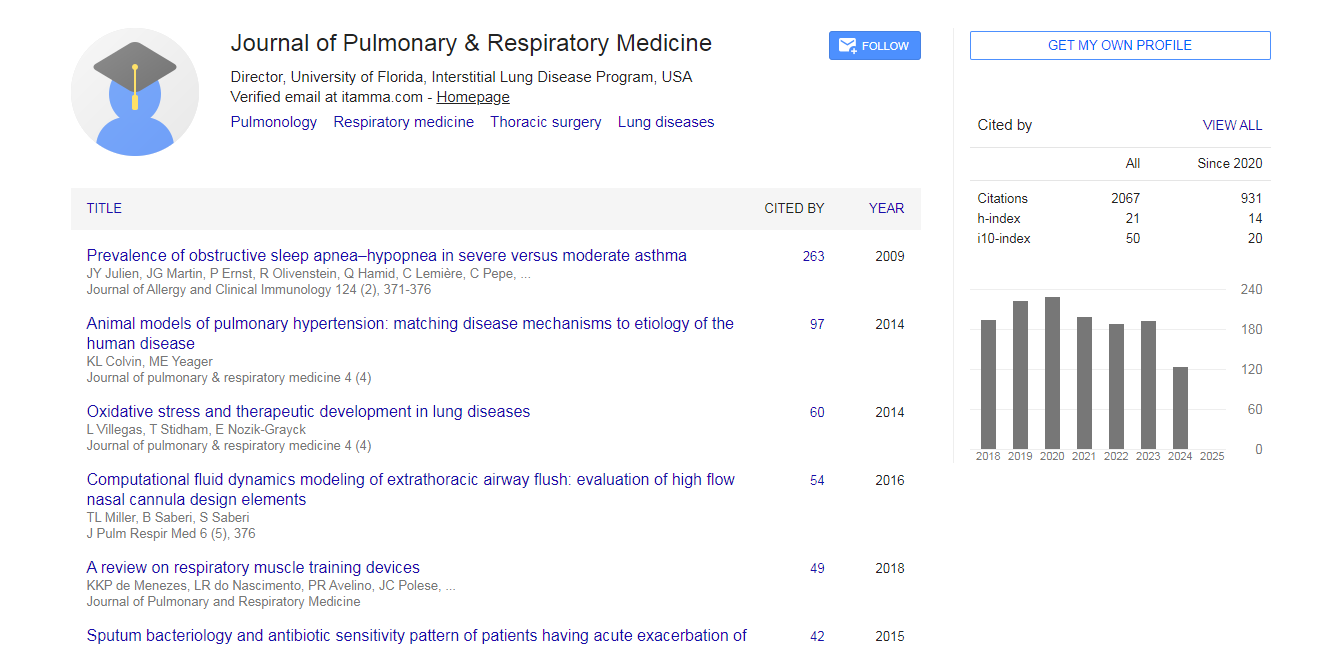
Pulmonary & Respiratory Medicine received 1690 citations as per Google Scholar report