Commentary - (2025) Volume 13, Issue 6
Received: 01-Dec-2025, Manuscript No. JGPR-26-190243;
Editor assigned: 03-Dec-2025, Pre QC No. P-190243;
Reviewed: 17-Dec-2025, QC No. Q-190243;
Revised: 22-Dec-2025, Manuscript No. R-190243;
Published:
29-Dec-2025
, DOI: 10.37421/2329-9126.2025.13.653
Citation: Nowicka, Marta. ”Remote Monitoring: Improving Chronic Care In Primary Settings.” J Gen Pract 13 (2025):653.
Copyright: © 2025 Nowicka M. This is an open-access article distributed under the terms of the Creative Commons Attribution License, which permits unrestricted use, distribution and reproduction in any medium, provided the original author and source are credited.
Remote monitoring of chronic diseases in primary care represents a significant advancement in healthcare delivery, offering a multifaceted approach to patient management and well-being. This innovative strategy enables continuous patient oversight, which is crucial for the early detection of potential health deteriorations and the implementation of timely interventions. Such an approach is particularly beneficial for individuals managing chronic conditions like heart failure, diabetes, and hypertension, where consistent monitoring can effectively prevent the onset of severe complications and enhance overall health outcomes [1].
Implementing remote patient monitoring (RPM) within primary care settings necessitates a thorough evaluation of various critical components. These include the development of robust technological infrastructure, fostering active engagement from both patients and clinicians, and ensuring seamless integration into existing healthcare workflows. The success of RPM adoption is largely dependent on the availability of user-friendly technology, comprehensive training programs for all stakeholders, and the establishment of clear protocols for data interpretation and subsequent action. Addressing the digital divide to ensure equitable access and maintaining stringent data security measures are fundamental challenges that must be overcome [2].
Telehealth platforms and remote monitoring technologies have demonstrated a remarkable capacity to substantially improve the management of heart failure, particularly within the primary care environment. By facilitating the regular tracking of vital signs, such as blood pressure and body weight, clinicians are better equipped to identify subtle indicators of decompensation. This allows for prompt adjustments to medication regimens or overall treatment strategies, thereby fostering a proactive approach that aims to reduce hospital readmission rates and significantly improve the quality of life for affected patients [3].
For individuals living with diabetes, remote monitoring systems serve as a powerful instrument for enhancing self-management capabilities and achieving better glycemic control. Continuous glucose monitoring (CGM) devices, when integrated with telehealth support services, empower patients to gain a deeper understanding of their glucose fluctuations. This knowledge enables them to make more informed lifestyle decisions, ultimately leading to a reduction in both hypoglycemic and hyperglycemic episodes and mitigating the risk of long-term diabetic complications [4].
In the context of hypertension management within primary care, remote monitoring holds the potential to achieve superior blood pressure control and a notable reduction in the incidence of cardiovascular events. Home blood pressure monitoring, when effectively integrated into primary care services, provides a more accurate representation of a patient's blood pressure than sporadic clinic-based measurements. The establishment of clear feedback loops and timely physician reviews are indispensable elements for optimizing patient engagement and ensuring adherence to treatment plans [5].
The patient experience associated with remote monitoring in primary care settings is predominantly characterized by positive feedback. Many individuals report an increased sense of engagement with their own health and appreciate the convenience offered by these technologies. However, it is imperative to address potential concerns related to technology usability, the privacy of personal health data, and the perceived absence of direct human interaction to fully maximize patient satisfaction and promote consistent adherence to remote monitoring programs [6].
From a clinician's perspective, remote monitoring in primary care settings presents a compelling opportunity to enhance operational efficiency and elevate the standard of patient care. Nevertheless, healthcare providers also highlight significant challenges, including difficulties in integrating these new systems into established workflows, the potential for alert fatigue from continuous data streams, and complexities surrounding reimbursement models. Effective implementation mandates the clear definition of roles and responsibilities, alongside the provision of robust support systems for healthcare professionals [7].
The economic implications of remote monitoring within primary care are increasingly becoming a subject of focused research. While the initial adoption of remote monitoring technology and associated training programs requires a financial investment, existing studies indicate that these systems can yield substantial cost savings. These savings are primarily realized through a reduction in hospitalizations, fewer visits to emergency departments, and more effective management of chronic diseases, which collectively contribute to lowering the overall economic burden on the healthcare system [8].
Ensuring robust data security and maintaining patient privacy are of utmost importance in the successful implementation of remote monitoring strategies for chronic disease management. The deployment of strong cybersecurity measures, strict adherence to regulatory frameworks such as HIPAA, and transparent communication with patients regarding data handling practices are fundamental to cultivating trust and guaranteeing the secure and ethical utilization of remote monitoring technologies [9].
The future trajectory of remote monitoring in primary care is strongly projected to involve a deeper integration of artificial intelligence (AI) and machine learning (ML) algorithms. These advanced technologies are poised to enhance predictive analytics capabilities and enable more personalized patient care. AI and ML can effectively identify patients at higher risk, optimize therapeutic pathways, and alleviate the workload on clinicians by automating routine administrative tasks and providing insightful interpretations of complex health data [10].
Remote monitoring of chronic diseases in primary care presents a promising pathway for enhancing patient outcomes, expanding access to healthcare services, and potentially reducing overall healthcare expenditures. This innovative methodology allows for continuous patient observation, which is instrumental in the early identification of disease exacerbations and the prompt initiation of necessary interventions. This model is particularly impactful for managing conditions such as heart failure, diabetes, and hypertension, where ongoing monitoring can serve to prevent serious health complications and improve quality of life [1].
The successful integration of remote patient monitoring (RPM) into primary care environments requires meticulous planning and execution concerning several key elements. These include the establishment of appropriate technological infrastructure, the active involvement and buy-in of both patients and healthcare providers, and the effective incorporation of RPM into existing clinical workflows. Achieving widespread adoption hinges on the availability of intuitive technology, adequate training for users, and clearly defined protocols for managing and acting upon the data generated. Crucial challenges that need to be addressed involve bridging the digital divide to ensure accessibility and upholding stringent data security standards [2].
Telehealth and remote monitoring capabilities are proving to be highly effective in significantly improving the management of heart failure within primary care settings. By enabling consistent tracking of vital signs, including blood pressure and body weight, clinicians can detect early indications of decompensation, thereby facilitating timely adjustments to medication or treatment plans. This proactive approach plays a vital role in decreasing hospital readmissions and enhancing the overall well-being of patients [3].
For individuals diagnosed with diabetes, remote monitoring offers a potent tool for self-management and achieving enhanced glycemic control. Systems such as continuous glucose monitoring (CGM), when supported by telehealth services, empower patients with the ability to understand their glucose patterns and make informed decisions regarding their lifestyle. This leads to a reduction in the frequency of hypoglycemic and hyperglycemic events and lowers the risk of developing long-term diabetes-related complications [4].
Remote monitoring of hypertension within primary care can contribute to more effective blood pressure management and a decrease in the occurrence of cardiovascular events. Home blood pressure monitoring, when seamlessly integrated with primary care services, offers more accurate readings compared to infrequent clinic measurements. The presence of feedback mechanisms and prompt physician review are essential for ensuring optimal patient engagement and adherence to prescribed treatments [5].
The patient perspective on remote monitoring within primary care is generally favorable, with many reporting increased involvement in their health management and a higher degree of convenience. However, to maximize patient satisfaction and adherence, it is important to address concerns regarding the ease of use of technology, data privacy issues, and the perceived lack of direct human interaction [6].
From the viewpoint of healthcare providers, remote monitoring in primary care settings holds the potential to increase efficiency and improve patient care. Nonetheless, challenges related to workflow integration, the burden of managing numerous alerts, and the complexities of reimbursement models are frequently cited. Successful implementation necessitates the establishment of clear roles, responsibilities, and comprehensive support systems for clinicians [7].
The economic impact associated with the use of remote monitoring in primary care is an increasingly explored research area. While there is an initial investment in technology and training, studies suggest that remote monitoring can lead to cost reductions through fewer hospitalizations, reduced emergency department visits, and more effective chronic disease management, ultimately lessening the overall financial strain on the healthcare system [8].
Maintaining robust data security and patient privacy is of paramount importance when implementing remote monitoring solutions for chronic diseases. The adoption of strong cybersecurity protocols, strict compliance with regulatory mandates such as HIPAA, and transparent communication with patients about how their data is handled are critical for building trust and ensuring the safe and ethical application of remote monitoring technologies [9].
The future landscape of remote monitoring in primary care is expected to be shaped by the increased integration of artificial intelligence (AI) and machine learning (ML) for advanced predictive analytics and personalized care delivery. These technologies are anticipated to assist in identifying high-risk individuals, optimizing treatment strategies, and reducing the workload on clinicians by automating routine processes and providing actionable insights from extensive data sets [10].
None
None
Remote monitoring in primary care offers significant benefits for chronic disease management, including improved patient outcomes, enhanced access to care, and potential cost reductions. Technologies like telehealth and continuous glucose monitoring empower patients and allow for early detection of exacerbations, particularly for conditions such as heart failure, diabetes, and hypertension. While patient and clinician experiences are largely positive, challenges remain concerning technological infrastructure, data security, and workflow integration. The future of remote monitoring is likely to involve advanced AI and machine learning for predictive analytics and personalized care, further optimizing chronic disease management within primary care settings.
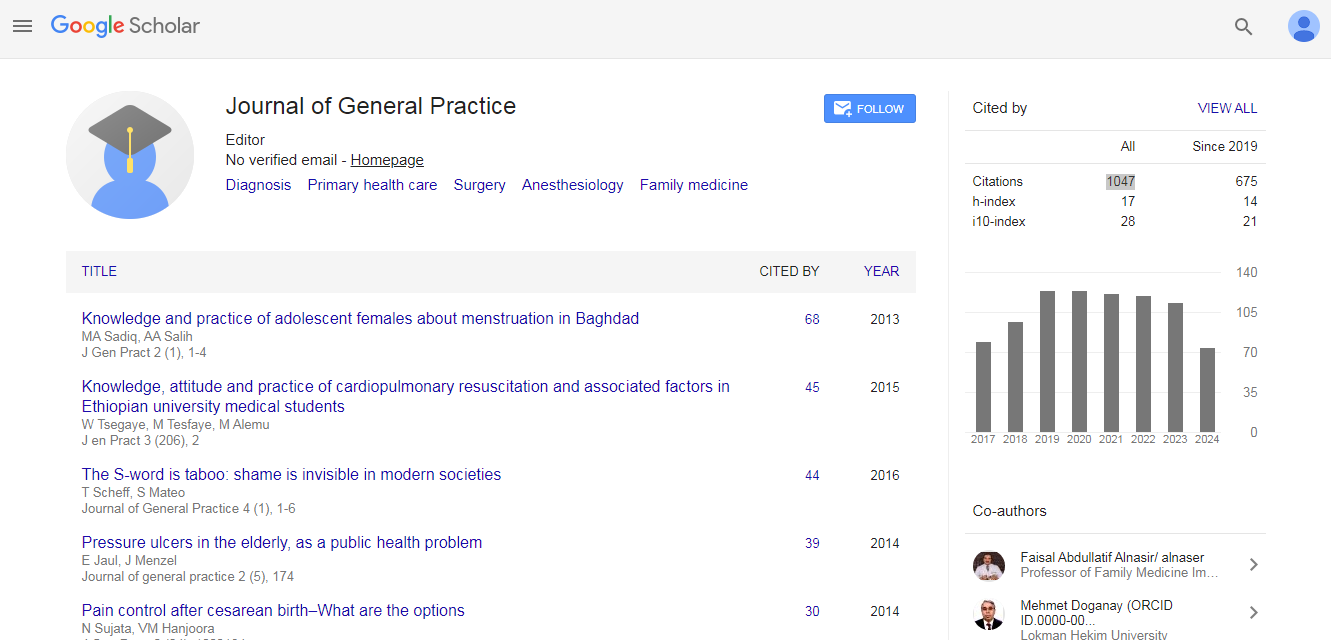
Journal of General Practice received 1047 citations as per Google Scholar report