Short Communication - (2025) Volume 11, Issue 6
Received: 01-Nov-2025, Manuscript No. ldt-25-178465;
Editor assigned: 03-Nov-2025, Pre QC No. P-178465;
Reviewed: 17-Nov-2025, QC No. Q-178465;
Revised: 24-Nov-2025, Manuscript No. R-178465;
Published:
29-Nov-2025
, DOI: 10.37421/2472-1018.2025.11.339
Citation: Mendes, Carlos. ”Pulmonary Therapeutics: Translating Science to Patient Care.” J Lung Dis Treat 11 (2025):339.
Copyright: © 2025 Mendes C. This is an open-access article distributed under the terms of the Creative Commons Attribution License, which permits unrestricted use, distribution and reproduction in any medium, provided the original author and source are credited.
Translational research in pulmonary therapeutics represents a critical endeavor aimed at bridging the chasm between fundamental scientific discoveries and their practical application in managing lung diseases. This multidisciplinary field is dedicated to expediting the development and implementation of innovative diagnostic tools and therapeutic interventions, ensuring that promising laboratory findings are efficiently translated into tangible patient care. The core focus lies in accelerating the movement of novel strategies from preclinical research to clinical practice, addressing the persistent unmet needs in various debilitating lung conditions. Key areas of exploration within this domain include the burgeoning field of gene therapy, which offers the potential to correct genetic defects underlying certain respiratory disorders, and sophisticated targeted drug delivery systems designed to precisely deliver therapeutic agents to affected lung tissues, thereby maximizing efficacy and minimizing systemic exposure. Furthermore, the development and application of advanced biomaterials are opening new frontiers for lung repair and regeneration, offering hope for restoring function in damaged lung structures. These efforts collectively aim to combat complex conditions such as chronic obstructive pulmonary disease (COPD), asthma, and pulmonary fibrosis, which continue to impose a significant burden on global health [1].
The advent of nanotechnology has ushered in a new era of possibilities for pulmonary therapeutics, providing innovative avenues for drug delivery and the comprehensive management of lung diseases. Nanoparticles, with their unique physicochemical properties, can be meticulously engineered to target specific cells or tissues within the intricate architecture of the lung. This precision targeting is instrumental in enhancing drug efficacy, as therapeutic agents are delivered directly to the site of action, while simultaneously reducing the incidence and severity of systemic side effects that often accompany traditional treatment regimens. This cutting-edge approach holds particular relevance for the treatment of inflammatory and fibrotic lung diseases, where localized drug action is paramount. Moreover, nanotechnology offers a promising platform for the delivery of gene-editing tools, such as CRISPR-Cas9, enabling the precise correction of disease-causing genetic mutations within lung cells. Despite these remarkable advancements, significant challenges persist in the scalable production of these sophisticated nanocarriers and in rigorously ensuring their long-term safety and biocompatibility within the human body [2].
Gene therapy has emerged as a field of immense promise, particularly for the treatment of inherited genetic lung disorders, with cystic fibrosis serving as a prime example of its potential impact. The remarkable progress in gene-editing technologies, exemplified by the groundbreaking CRISPR-Cas9 system, has empowered researchers with the capability to perform highly precise corrections of disease-causing genetic mutations. These advancements are paving the way for more effective and targeted therapeutic strategies. Translational efforts within this domain are intensely focused on the development of delivery vectors that are both safe and highly efficient. Among the most promising candidates are adeno-associated viruses (AAVs), which are being extensively investigated for their ability to deliver therapeutic genes directly into lung epithelial cells, the primary affected cells in many genetic lung diseases. The clinical translation of these gene therapy approaches is currently being rigorously evaluated through ongoing clinical trials, which aim to comprehensively assess their efficacy and safety profiles in patient populations [3].
Biomaterials and the rapidly advancing field of regenerative medicine are increasingly recognized as powerful and indispensable tools in the arsenal of pulmonary therapeutics. These innovative strategies are designed to leverage the body's inherent healing capacities and to provide structural support for tissue repair. Scaffolds, meticulously constructed from either natural or synthetic polymers, are playing a pivotal role in lung tissue engineering. These scaffolds act as frameworks, providing a conducive environment that actively promotes the regeneration of damaged lung structures and the restoration of normal lung architecture and function. In parallel, stem cell therapies, with a particular focus on mesenchymal stem cells (MSCs), are undergoing extensive investigation for their potent immunomodulatory and regenerative properties. These properties are being explored for their therapeutic potential in managing debilitating conditions such as pulmonary fibrosis and acute respiratory distress syndrome (ARDS). The successful translation of these complex regenerative approaches necessitates the development of robust and reliable preclinical models that accurately recapitulate human lung diseases and the meticulous design of comprehensive clinical trials to ensure both safety and efficacy [4].
Precision medicine represents a paradigm shift in the realm of pulmonary therapeutics, fundamentally altering how we approach the treatment of respiratory diseases. This innovative approach involves the meticulous tailoring of therapeutic strategies to the unique characteristics of individual patients. These characteristics encompass a wide spectrum, including their specific genetic makeup, the distinct phenotype of their disease, and relevant environmental factors that may influence disease progression or treatment response. Biomarkers play an absolutely crucial role in this personalized approach, serving as invaluable tools for identifying specific patient subgroups who are most likely to experience a favorable response to particular therapies. This is particularly relevant for complex conditions such as asthma and COPD, where disease heterogeneity is significant. The overarching goal of this personalized and individualized approach is to optimize treatment outcomes for each patient, thereby maximizing therapeutic benefit and concurrently minimizing the occurrence of adverse events, leading to improved quality of life [5].
The development of novel anti-inflammatory agents specifically designed for the management of chronic obstructive pulmonary disease (COPD) stands as a critical and highly active area within translational research. While the current mainstay treatments, including bronchodilators and inhaled corticosteroids, provide essential symptomatic relief, there is a pressing need for therapies that can more effectively modulate the underlying inflammatory processes driving COPD pathogenesis. Consequently, new therapeutic agents targeting specific inflammatory pathways are under intense investigation. These emerging therapies include phosphodiesterase 4 (PDE4) inhibitors, which modulate intracellular signaling pathways involved in inflammation, and various cytokine modulators designed to interfere with key inflammatory mediators. The successful translation of these promising agents into effective and widely accessible treatments hinges upon a profound and comprehensive understanding of the complex pathogenesis of COPD and the execution of rigorously designed and informative clinical evaluations to ascertain their true therapeutic value and safety profile [6].
Advanced imaging techniques are proving to be transformative in their impact on the diagnosis, staging, and ongoing monitoring of pulmonary diseases, thereby significantly facilitating the progress of translational research in this critical field. Modalities such as positron emission tomography/computed tomography (PET/CT), low-dose computed tomography (LDCT), and magnetic resonance imaging (MRI) provide unprecedented levels of detail in visualizing the intricate structure and dynamic function of the lungs. This enhanced visualization capability is invaluable for achieving earlier and more accurate disease detection, precisely assessing patient response to various therapeutic interventions, and crucially, for identifying distinct disease phenotypes. This latter capability is essential for enabling the development and implementation of truly personalized therapeutic strategies tailored to the specific needs of individual patients [7].
The development and increasing application of inhaled biologics for the treatment of severe asthma represent a major and highly significant advancement in the field of pulmonary therapeutics. Monoclonal antibodies, which are highly specific biological agents, have revolutionized the management of severe, often debilitating, forms of asthma that are otherwise difficult to treat. These biologics function by precisely targeting specific inflammatory pathways implicated in asthma pathogenesis, including those involving immunoglobulin E (IgE), interleukin-5 (IL-5), and the IL-4/IL-13 signaling axis. Translational research efforts in this rapidly evolving area are primarily focused on optimizing critical aspects such as dosing regimens, refining delivery methods to ensure efficient drug deposition in the lungs, and identifying reliable biomarkers. These biomarkers are crucial for the accurate selection of patients who are most likely to derive the maximum therapeutic benefit from these advanced biologic therapies, thereby enhancing their overall effectiveness and clinical utility [8].
Pulmonary fibrosis, a progressive and often devastating disease characterized by irreversible scarring of lung tissue, represents a major and urgent focus for translational research efforts. This urgency stems from its complex and often poorly understood pathogenesis, coupled with the current limitations in effective treatment options. Current research endeavors are intently directed towards unraveling the intricate underlying mechanisms that drive disease progression, with a particular emphasis on understanding myofibroblast activation, the excessive deposition of extracellular matrix components, and the identification of novel therapeutic targets. Simultaneously, significant efforts are dedicated to exploring a range of potential antifibrotic agents. This includes the development of both small molecule inhibitors and innovative cell-based therapies, all aimed at the ambitious goal of slowing, halting, or potentially even reversing the relentless progression of this debilitating disease [9].
The integration of artificial intelligence (AI) and machine learning (ML) into the domain of pulmonary therapeutics is catalyzing a profound transformation across multiple facets of the drug development and clinical care pipeline. These advanced computational techniques are revolutionizing key processes such as drug discovery, where they can accelerate the identification of novel therapeutic targets and the design of promising drug candidates. Furthermore, AI and ML are significantly enhancing the efficiency and effectiveness of clinical trial design, enabling more targeted patient selection and outcome prediction. Crucially, these technologies are empowering a more sophisticated approach to patient stratification, allowing for the precise categorization of individuals based on their unique characteristics. AI/ML algorithms possess the remarkable ability to analyze vast and complex datasets, thereby uncovering previously hidden patterns and correlations. This analytical power facilitates the identification of novel therapeutic targets, enables more accurate prediction of drug efficacy for specific patient populations, and supports the optimization of treatment regimens tailored to the individual needs of each patient. Ultimately, this integration promises to significantly accelerate the translational pipeline, leading to improved patient outcomes and a more personalized approach to the management of pulmonary diseases [10].
Translational research in pulmonary therapeutics is fundamentally about closing the gap between basic science discoveries and their real-world clinical applications for lung diseases. This field is dedicated to accelerating the process of developing new diagnostics and treatments, ensuring that promising laboratory findings are efficiently moved into patient care. Significant areas of focus include gene therapy for genetic lung disorders, targeted drug delivery systems using nanotechnology for improved efficacy and reduced side effects, and advanced biomaterials to aid in lung tissue engineering and regeneration. These strategies aim to address critical unmet needs in conditions like COPD, asthma, and pulmonary fibrosis [1].
The application of nanotechnology has opened up exciting new possibilities in pulmonary therapeutics, particularly for drug delivery and disease management. Nanoparticles can be designed to specifically target cells or tissues within the lungs, which can enhance the effectiveness of drugs and minimize unwanted effects on the rest of the body. This approach is especially relevant for treating lung diseases characterized by inflammation and fibrosis, as well as for delivering gene-editing tools to correct genetic defects. However, challenges remain in producing these nanoparticles on a large scale and ensuring they are safe for long-term use [2].
Gene therapy holds substantial promise for treating inherited lung conditions such as cystic fibrosis. Innovations in gene-editing technologies, like CRISPR-Cas9, are making it possible to more accurately correct the genetic mutations that cause these diseases. Translational efforts are concentrating on creating safe and effective delivery methods, such as adeno-associated viruses (AAVs), to introduce therapeutic genes into the cells lining the lungs. The effectiveness and safety of these gene therapy approaches are currently being investigated in ongoing clinical trials [3].
Biomaterials and regenerative medicine are rapidly becoming crucial tools in the field of pulmonary therapeutics. Materials made from natural or synthetic polymers can serve as scaffolds to support the engineering of lung tissue, encouraging the regeneration of damaged lung structures. Stem cell therapies, especially those using mesenchymal stem cells, are being studied for their ability to reduce inflammation and promote regeneration in conditions like pulmonary fibrosis and ARDS. Bringing these regenerative strategies into clinical practice requires the development of reliable preclinical models and carefully planned clinical trials [4].
Precision medicine in pulmonary therapeutics focuses on customizing treatments based on an individual patient's unique characteristics. This includes considering their genetic makeup, the specific way their disease manifests, and their environmental exposures. Biomarkers are essential for identifying which patients are most likely to respond well to certain treatments for diseases like asthma and COPD. This personalized approach aims to improve treatment results and reduce the likelihood of negative side effects [5].
The creation of new anti-inflammatory drugs for chronic obstructive pulmonary disease (COPD) is a vital area of translational research. While current treatments like bronchodilators and inhaled corticosteroids are important, new therapies that target specific inflammatory pathways are being explored. These include phosphodiesterase 4 (PDE4) inhibitors and drugs that modulate cytokines. Translating these potential therapies into effective treatments requires a deep understanding of COPD's underlying causes and thorough clinical testing [6].
Advanced imaging techniques are greatly improving the diagnosis and monitoring of pulmonary diseases, which in turn accelerates translational research. Technologies such as PET/CT, low-dose CT, and MRI provide detailed views of lung structure and function. This allows for earlier detection of diseases, better assessment of treatment responses, and the identification of specific disease patterns that can inform personalized therapies [7].
The development of inhaled biologic drugs for severe asthma marks a significant step forward in pulmonary therapeutics. Monoclonal antibodies that target specific inflammatory pathways, such as those involving IgE, IL-5, and IL-4/IL-13, have transformed the management of severe and difficult-to-treat asthma. Translational research in this area is working to optimize how these drugs are given, improve delivery methods, and find biomarkers to help select the right patients for treatment, thereby maximizing the benefits [8].
Pulmonary fibrosis, a progressive and often fatal lung disease, is a major target for translational research due to its complex nature and limited treatment options. Current efforts are focused on understanding the core mechanisms of myofibroblast activation and the buildup of extracellular matrix. Researchers are also exploring new antifibrotic agents, including both small molecules and cell-based therapies, with the goal of slowing or reversing the disease's progression [9].
The integration of artificial intelligence (AI) and machine learning (ML) is revolutionizing pulmonary therapeutics by speeding up drug discovery, improving clinical trial design, and enhancing patient stratification. AI/ML algorithms can analyze large datasets to identify new drug targets, predict how effective drugs will be, and tailor treatment plans for individual patients, thereby accelerating the translation of research into practice and improving patient outcomes [10].
Translational research in pulmonary therapeutics is crucial for advancing lung disease treatment by connecting basic science with clinical practice. Key areas include gene therapy for genetic disorders, nanotechnology for targeted drug delivery, and biomaterials for lung regeneration. Gene editing technologies like CRISPR-Cas9 are showing promise, while AI and machine learning are accelerating drug discovery and personalized medicine. Advanced imaging techniques aid in diagnosis and monitoring, and inhaled biologics have revolutionized severe asthma treatment. Research is also focused on novel anti-inflammatory agents for COPD and antifibrotic therapies for pulmonary fibrosis. The overarching goal is to translate scientific breakthroughs into improved patient care, optimizing outcomes through personalized approaches and innovative therapeutic strategies.
None
None
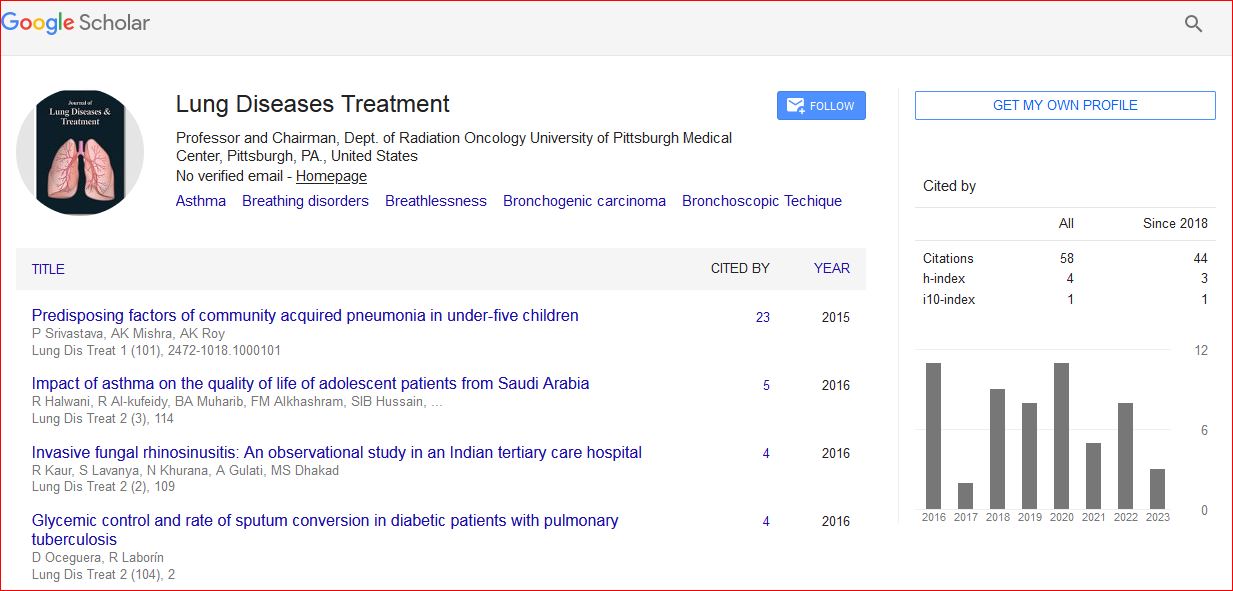
Journal of Lung Diseases & Treatment received 247 citations as per Google Scholar report