Perspective - (2025) Volume 11, Issue 5
Received: 01-Oct-2025, Manuscript No. cdp-26-185486;
Editor assigned: 03-Oct-2025, Pre QC No. P-185486;
Reviewed: 17-Oct-2025, QC No. Q-185486;
Revised: 24-Oct-2025, Manuscript No. R-185486;
Published:
29-Oct-2025
, DOI: 10.37421/2572-0791.2025.11.198
Citation: AlFarsi, Omar. ”Psychosocial Factors Driving Depression: A Comprehensive View.” Clin Depress 11 (2025):198.
Copyright: © 2025 AlFarsi O. This is an open-access article distributed under the terms of the Creative Commons Attribution License, which permits unrestricted use, distribution and reproduction in any medium, provided the original author and source are credited.
The complex relationship between psychosocial factors and depressive disorders is a subject of extensive scientific inquiry, revealing a multifaceted interplay that significantly influences an individual's vulnerability, onset, and course of depression. Early life adversity, encompassing experiences such as childhood trauma and neglect, has been consistently identified as a critical determinant, predisposing individuals to a heightened risk of developing depressive disorders later in life. These early experiences can shape neurobiological pathways and psychological resilience, setting the stage for future mental health challenges [1].
Childhood trauma, characterized by abuse and neglect, profoundly elevates the risk of developing depressive disorders in adulthood. This association is often mediated by alterations in neurobiological pathways and the development of maladaptive coping mechanisms, demonstrating a clear link between early adverse experiences and adult psychopathology. Longitudinal studies further reinforce this connection, showing a dose-response relationship between the severity and frequency of childhood adversity and the likelihood and intensity of depression [2].
Social isolation and loneliness emerge as potent risk factors for depression, with their impact resonating across the lifespan, although they are particularly pronounced in older adults. The absence of meaningful social connections can foster profound feelings of worthlessness and despair, directly contributing to the development and maintenance of depressive symptoms. Interventions designed to enhance social engagement and alleviate isolation show considerable promise in mitigating these negative outcomes [3].
The domain of cognitive patterns plays a pivotal role in both the genesis and persistence of depressive symptoms. Specifically, cognitive biases such as ruminationâ??the repetitive dwelling on negative thoughts and feelingsâ??are critical in exacerbating depressive states. Cognitive restructuring techniques, a cornerstone of therapies like CBT, aim to challenge and modify these maladaptive thought patterns to alleviate depressive symptoms [4].
Stressful life events, particularly those of an interpersonal nature or stemming from occupational challenges, frequently act as significant triggers for depressive episodes. The capacity of these stressors to precipitate depression is often influenced by an individual's existing coping resources and the strength of their social support systems. Understanding the relationship between specific stressors and subsequent depressive episodes is vital for elucidating causal pathways [5].
Certain personality traits have been identified as predisposing factors for depression. Among these, neuroticism and perfectionism stand out. Individuals high in neuroticism tend to experience negative emotions more intensely and frequently, while perfectionists may be more susceptible to self-criticism and disappointment when their stringent standards are not met, thus increasing their vulnerability to depression [6].
Adverse Childhood Experiences (ACEs) serve as robust predictors of depression and a spectrum of other mental health conditions that manifest in adulthood. The enduring impact of ACEs can extend across an individual's entire life, influencing physiological stress responses and cognitive functioning, thereby elevating their susceptibility to mood disorders and other psychological challenges [7].
Social support, whether perceived or actively received, plays a critical role in buffering the detrimental effects of stress and acting as a protective factor against the onset of depression. A deficit in social support is consistently identified as a significant risk factor, highlighting the indispensable importance of robust interpersonal relationships for maintaining overall mental well-being and resilience [8].
Cognitive styles, including attentional biases that favor negative information and interpretive biases that lead to predominantly negative appraisals of events, contribute substantially to the perpetuation of depressive states. Therapeutic efforts often focus on training individuals to disengage from negative stimuli and cultivate more balanced and adaptive interpretations of their experiences, which is a key goal in managing depression [9].
The etiology of depression is significantly influenced by stressful life events, with those related to interpersonal relationships and occupational environments being particularly potent precipitants of depressive episodes. The chronic stress experienced in challenging environments can lead to a state of allostatic load, which ultimately increases an individual's susceptibility to the development of various mental health disorders [10].
The intricate connection between psychosocial elements and depressive disorders is characterized by a complex interplay that significantly shapes an individual's predisposition, initiation, and progression of depression. Early life adversity, which encompasses experiences such as childhood trauma and neglect, has been consistently identified as a pivotal factor, predisposing individuals to an elevated likelihood of developing depressive disorders in their later years. These formative experiences have the capacity to modulate neurobiological pathways and shape psychological resilience, thereby laying the groundwork for future mental health difficulties [1].
Childhood trauma, including instances of abuse and neglect, markedly heightens the risk of developing depressive disorders during adulthood. This correlation is often facilitated by changes in neurobiological processes and the cultivation of maladaptive coping mechanisms, thus establishing a clear link between adverse early experiences and adult psychopathology. Further substantiation for this connection comes from longitudinal studies, which reveal a dose-response relationship between the severity and frequency of childhood adversity and the probability and intensity of depression [2].
Social isolation and feelings of loneliness are recognized as potent risk factors for depression, with their effects being evident across the entire lifespan, though they are particularly pronounced among older adults. The absence of meaningful social interactions can foster profound sentiments of worthlessness and despair, directly contributing to the onset and perpetuation of depressive symptoms. Interventions aimed at enhancing social engagement and mitigating isolation demonstrate considerable potential in alleviating these adverse outcomes [3].
Within the cognitive domain, specific patterns play a crucial role in both the onset and persistence of depressive symptoms. Noteworthy among these are cognitive biases, such as ruminationâ??a process involving the repetitive dwelling on negative thoughts and emotionsâ??which are instrumental in intensifying depressive states. Cognitive restructuring techniques, integral to therapies like Cognitive Behavioral Therapy (CBT), are designed to challenge and modify these maladaptive cognitive patterns to alleviate depressive symptoms [4].
Stressful life events, especially those of an interpersonal nature or originating from occupational pressures, frequently serve as significant triggers for depressive episodes. The impact of these stressors in precipitating depression is often moderated by an individual's existing repertoire of coping strategies and the robustness of their social support networks. A thorough understanding of the relationship between specific types of stressors and subsequent depressive episodes is therefore essential for unraveling causal mechanisms [5].
Certain personality traits have been implicated as contributing factors to the development of depression. Prominent among these are neuroticism and a disposition towards perfectionism. Individuals exhibiting high levels of neuroticism tend to experience negative emotions with greater intensity and frequency, while perfectionists may be more prone to self-criticism and disappointment when their rigorous standards are not met, consequently increasing their vulnerability to depression [6].
Adverse Childhood Experiences (ACEs) are recognized as strong predictors of depression and a range of other mental health conditions that emerge in adulthood. The lasting impact of ACEs can persist throughout an individual's life, influencing physiological stress responses and cognitive functioning, thereby augmenting their susceptibility to mood disorders and other psychological challenges [7].
Social support, whether subjectively perceived or actively received from others, plays a vital role in mitigating the adverse effects of stress and acting as a protective element against the onset of depression. A deficiency in social support is consistently identified as a significant risk factor, underscoring the fundamental importance of strong interpersonal relationships for the maintenance of overall mental well-being and psychological resilience [8].
Cognitive styles, including attentional biases that direct focus towards negative information and interpretive biases that lead to the predisposition of negative meanings, substantially contribute to the maintenance of depressive states. Therapeutic interventions frequently aim to equip individuals with the skills to disengage from negative stimuli and adopt more balanced and adaptive interpretations of their experiences, representing a critical objective in the management of depression [9].
The development of depression is significantly influenced by stressful life events, with those pertaining to interpersonal relationships and occupational settings being particularly potent in triggering depressive episodes. The chronic stress experienced within challenging environments can lead to an elevated allostatic load, thereby increasing an individual's vulnerability to the onset of various mental health disorders [10].
Depression is significantly influenced by a range of psychosocial factors. Early life adversity, including childhood trauma and neglect, increases vulnerability to later depression. Social isolation and loneliness are strong risk factors, impacting mood and self-worth. Cognitive patterns such as rumination and negative self-appraisals are critical in the development and maintenance of depressive symptoms. Stressful life events, particularly interpersonal conflicts and occupational stressors, often act as triggers for depressive episodes. Personality traits like neuroticism and perfectionism also predispose individuals to depression. The interplay of these factors highlights the need for comprehensive approaches to prevention and treatment.
None
None
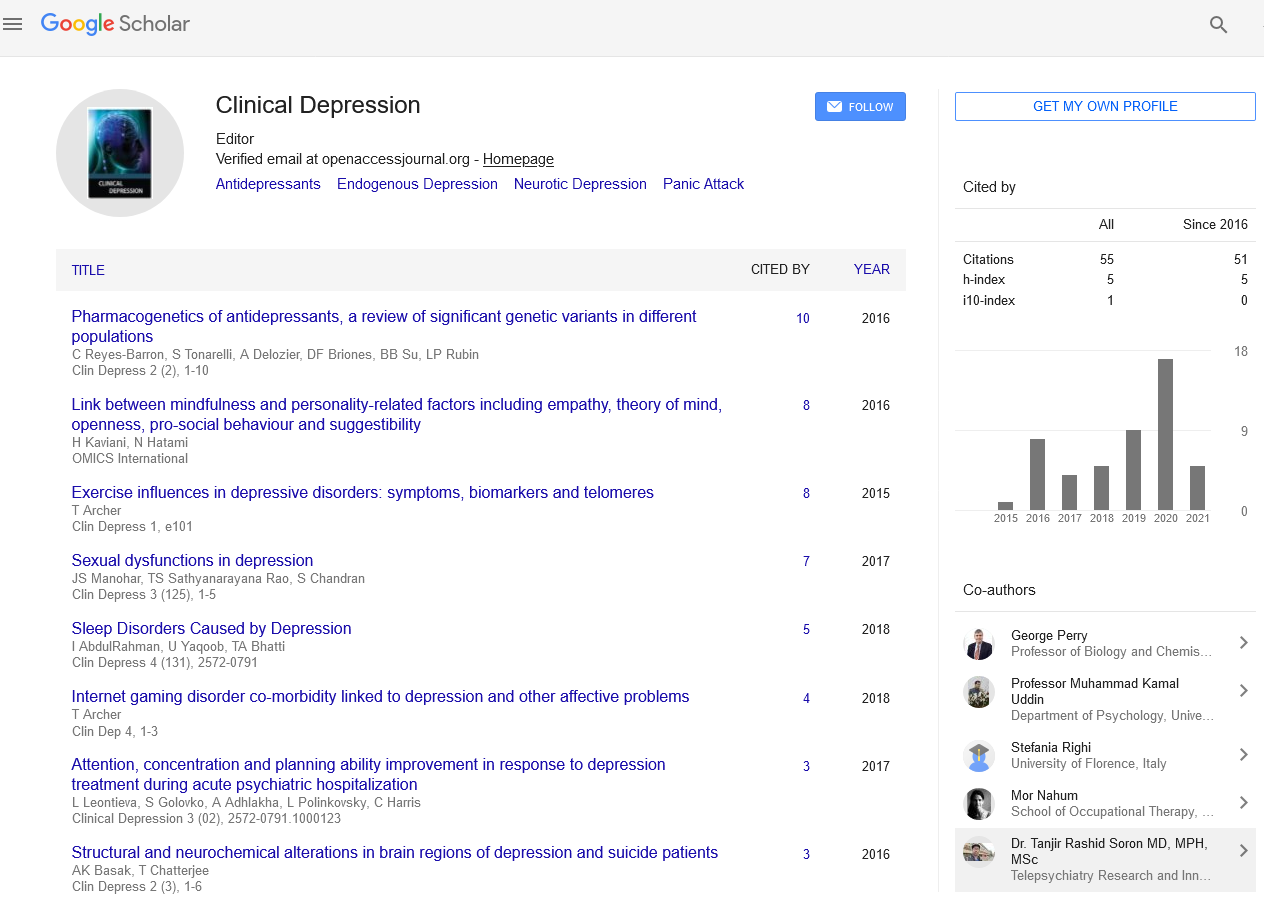
Clinical Depression received 89 citations as per Google Scholar report