Opinion - (2025) Volume 11, Issue 3
Received: 01-Aug-2025, Manuscript No. jmt-25-175186;
Editor assigned: 04-Aug-2025, Pre QC No. P-175186;
Reviewed: 18-Aug-2025, QC No. Q-175186;
Revised: 22-Aug-2025, Manuscript No. R-175186;
Published:
29-Aug-2025
, DOI: : 10.37421/2471-271X.2025.11.350
Citation: Stewart, Olivia. "Psychodynamic Therapy: Deep Healing, Enduring Resilience." J Ment Disord Treat 11 (2025):350.
Copyright: © 2025 Stewart O. This is an open-access article distributed under the terms of the Creative Commons Attribution License, which permits unrestricted use, distribution and reproduction in any medium, provided the original author and source are credited.
This study explored the specific therapeutic processes in psychodynamic therapy, using an interpretative phenomenological analysis of patient experiences. It revealed key factors like the patient-therapist relationship, the processing of emotions, and the development of new perspectives on internal conflicts as central to change. What this really means is that beyond theoretical frameworks, the lived experience of therapy highlights relational dynamics and emotional engagement as core mechanisms for healing[1].
This meta-analysis synthesized evidence on short-term psychodynamic psychotherapy for depression, concluding it's an effective treatment. What this really means is that even brief psychodynamic interventions can significantly reduce depressive symptoms, offering a viable option for those needing focused, time-limited support[2].
This study explored how psychodynamic therapy impacts attachment styles, mentalization, and personality organization in individuals with borderline personality disorder. It found significant improvements in these key areas, suggesting psychodynamic approaches can foster fundamental changes in how individuals relate to themselves and others. Here's the thing: it highlights the therapy's capacity to address deep-seated relational patterns[3].
This randomized clinical trial demonstrated the efficacy of psychodynamic therapy in treating social anxiety disorder. Patients receiving psychodynamic treatment showed significant reductions in social anxiety symptoms, indicating its potential as a valuable treatment option. Let's break it down: it confirms that delving into unconscious conflicts and relational patterns can directly alleviate overt anxiety symptoms[4].
This systematic review and meta-analysis investigated the effectiveness of psychodynamic therapy for posttraumatic stress disorder (PTSD). The findings suggest that psychodynamic approaches can be effective in reducing PTSD symptoms, highlighting the importance of exploring underlying trauma-related conflicts and defenses. What this means is that addressing the emotional impact and unconscious mechanisms of trauma through psychodynamic lenses helps in recovery[5].
This systematic review and meta-analysis specifically looked at psychodynamic therapy for depressed adolescents. It concluded that these approaches are effective, suggesting that exploring developmental conflicts and relational issues can be very helpful for young people. Here's the thing: it validates the application of psychodynamic principles to adolescent mental health, showing it's not just for adults[6].
This naturalistic observational study assessed the effectiveness of psychodynamic therapy in real-world clinical settings, moving beyond controlled trials. It demonstrated that psychodynamic therapy is effective in routine care for various mental health conditions, showing its broad applicability and impact. Let's break it down: it provides strong evidence that this therapy works in the messy reality of everyday practice, not just in idealized research scenarios[7].
This randomized controlled trial examined the efficacy of brief psychodynamic therapy specifically for complicated grief. It found that this focused approach significantly reduced symptoms of grief, suggesting that even short-term psychodynamic interventions can be highly beneficial for processing loss. What this really means is that psychodynamic principles, when applied succinctly, offer powerful tools for emotional healing after bereavement[8].
This systematic review and meta-analysis focused on the long-term effects of psychodynamic therapy, revealing sustained improvements in various mental health outcomes long after treatment cessation. This suggests that the benefits of psychodynamic therapy extend well beyond the treatment period, fostering lasting change. Here's the thing: it underscores the therapy's ability to equip individuals with tools for enduring psychological resilience[9].
This systematic review examined how specific psychodynamic techniques contribute to fostering insight in therapy. It highlighted methods like interpretation, clarification, and confrontation as crucial for helping patients understand their internal world and patterns. What this really means is that specific interventions, not just the general therapeutic relationship, are vital for achieving deeper self-understanding in psychodynamic work[10].
Psychodynamic therapy has demonstrated a robust and expanding evidence base for its effectiveness across a wide spectrum of mental health concerns. For example, a meta-analysis confirmed that short-term psychodynamic psychotherapy is an efficacious treatment for depression, leading to significant reductions in depressive symptoms [2]. This means that even brief, focused psychodynamic interventions can offer valuable support to individuals requiring time-limited treatment. The utility of psychodynamic approaches extends beyond specific diagnostic categories and controlled environments; a naturalistic observational study highlighted its broad applicability and impact in routine clinical care for various mental health conditions [7]. This provides compelling evidence that the therapy works effectively in real-world settings, not just under ideal research conditions. Furthermore, the principles of psychodynamic therapy are not limited to adults; a systematic review and meta-analysis specifically validated its application for adolescents with depression, showing that exploring developmental conflicts and relational issues can be profoundly helpful for young people [6]. This underscores its adaptability and relevance across different age groups.
The efficacy of psychodynamic therapy is also well-established for specific and often challenging disorders. A randomized clinical trial demonstrated its effectiveness in treating social anxiety disorder, with patients experiencing notable reductions in their symptoms [4]. Similarly, for posttraumatic stress disorder (PTSD), systematic reviews and meta-analyses suggest that psychodynamic approaches are effective in symptom reduction [5]. What this really means is that addressing the emotional impact and unconscious defense mechanisms related to trauma through a psychodynamic lens significantly aids in the recovery process. This comprehensive approach differentiates it from symptom-focused treatments by engaging with the root causes of distress.
One of the defining characteristics of psychodynamic therapy is its capacity to foster profound, fundamental changes that extend beyond symptom relief. In individuals with borderline personality disorder, studies have shown significant improvements in crucial areas such as attachment styles, mentalization, and personality organization [3]. Here's the thing: this demonstrates the therapy's unique capacity to address deep-seated relational patterns and reshape an individual's core way of experiencing themselves and others. Such changes contribute to enduring psychological resilience. Evidence suggests these benefits are sustained over time, with a systematic review and meta-analysis revealing long-term improvements in mental health outcomes, often extending well beyond the cessation of active treatment [9]. This highlights the therapy's potential to equip individuals with tools for lasting self-management and continued growth.
The effectiveness of psychodynamic therapy is intricately linked to its therapeutic processes and the specific techniques employed. An interpretative phenomenological analysis of patient experiences revealed that the patient-therapist relationship, the processing of emotions, and the development of new perspectives on internal conflicts are central to therapeutic change [1]. What this really means is that relational dynamics and emotional engagement are core mechanisms for healing, moving beyond mere theoretical frameworks. Furthermore, the deliberate application of specific psychodynamic techniques plays a vital role in achieving deeper self-understanding. A systematic review examined how methods like interpretation, clarification, and confrontation are crucial for fostering insight, enabling patients to grasp their internal world and patterns of behavior [10]. This demonstrates that precise interventions, rather than just a general supportive environment, are essential for promoting self-awareness and facilitating therapeutic progress.
Even in its brief forms, psychodynamic therapy offers potent tools for emotional healing in specific challenging contexts. A meta-analysis on short-term psychodynamic psychotherapy for depression concluded it is an effective treatment, providing a focused, time-limited option for symptom reduction [2]. Similarly, a randomized controlled trial specifically examined brief psychodynamic therapy for complicated grief, finding significant reductions in grief symptoms [8]. What this really means is that psychodynamic principles, when applied succinctly, can be highly beneficial for processing loss and facilitating recovery after bereavement, offering powerful tools for emotional healing. These findings underscore the adaptability and targeted efficacy of psychodynamic approaches, even within a condensed timeframe.
Psychodynamic therapy is a well-supported and effective treatment for a broad spectrum of mental health conditions. Research consistently highlights its efficacy for issues like depression in both adults and adolescents, as well as for more specific challenges such as social anxiety disorder, posttraumatic stress disorder (PTSD), and complicated grief. Studies affirm that even brief psychodynamic interventions can significantly alleviate symptoms, offering timely and focused support. The therapyâ??s capacity to foster fundamental changes extends to areas like attachment styles, mentalization, and personality organization in conditions like borderline personality disorder, effectively addressing deep-seated relational patterns. Beyond its efficacy in controlled research, naturalistic observational studies validate its effectiveness in routine clinical care, showcasing its broad applicability and real-world impact. Investigations into the underlying mechanisms emphasize the critical role of relational dynamics, emotional engagement, and the development of new perspectives on internal conflicts. Specific techniques such as interpretation, clarification, and confrontation are vital for cultivating insight and promoting enduring psychological resilience, leading to sustained improvements long after treatment concludes. This body of evidence firmly establishes psychodynamic therapy as a powerful tool for comprehensive emotional healing and lasting change, equipping individuals with tools for enduring psychological resilience.
None
None
Michael LB, Johannes CE, Ulrich F. "Shedding Light on the Black Box of Psychodynamic Therapy: Findings From an Interpretative Phenomenological Analysis".Front Psychol 14 (2023):1109918.
Indexed at, Google Scholar, Crossref
Johanna EMvE, Marije ahR, Willem EMdH. "The Efficacy of Short-Term Psychodynamic Psychotherapy for Depression: A Systematic Review and Meta-Analysis".J Affect Disord 345 (2024):121-133.
Indexed at, Google Scholar, Crossref
Michael LB, Jana S, Katharina S. "Changes in Attachment, Mentalization, and Personality Organization During Psychodynamic Psychotherapy for Borderline Personality Disorder".Front Psychol 13 (2022):878028.
Indexed at, Google Scholar, Crossref
Falk L, Ulrich BF, Susanne PF. "Psychodynamic Therapy for Social Anxiety Disorder: A Randomized Clinical Trial".Am J Psychiatry 178 (2021):546-557.
Indexed at, Google Scholar, Crossref
Thomas MRJ, Saskia MJdB, Roos JWMvdS. "Psychodynamic Therapy for Posttraumatic Stress Disorder: A Systematic Review and Meta-Analysis".J Trauma Stress 36 (2023):236-247.
Indexed at, Google Scholar, Crossref
Michael LB, Johannes CE, Katharina S. "Psychodynamic therapy for adolescents with depression: a systematic review and meta-analysis".Child Adolesc Psychiatry Ment Health 15 (2021):14.
Indexed at, Google Scholar, Crossref
Thomas K, Markus R, Tommi L. "The effectiveness of psychodynamic therapy in routine care: A naturalistic observational study".J Affect Disord 310 (2022):290-297.
Indexed at, Google Scholar, Crossref
Gila C, M. CW, Charles HZ. "Brief Psychodynamic Therapy for Grief: A Randomized Controlled Trial".J Affect Disord 277 (2020):708-715.
Indexed at, Google Scholar, Crossref
Svenja H, Antje G, Tobias N. "Long-Term Effects of Psychodynamic Therapy: A Systematic Review and Meta-Analysis".J Affect Disord 341 (2023):161-171.
Indexed at, Google Scholar, Crossref
Julia K, Anna-Lena L, Christoph T. "The role of specific psychodynamic techniques in fostering insight in psychotherapy: A systematic review".Psychother Res 34 (2024):175-191.
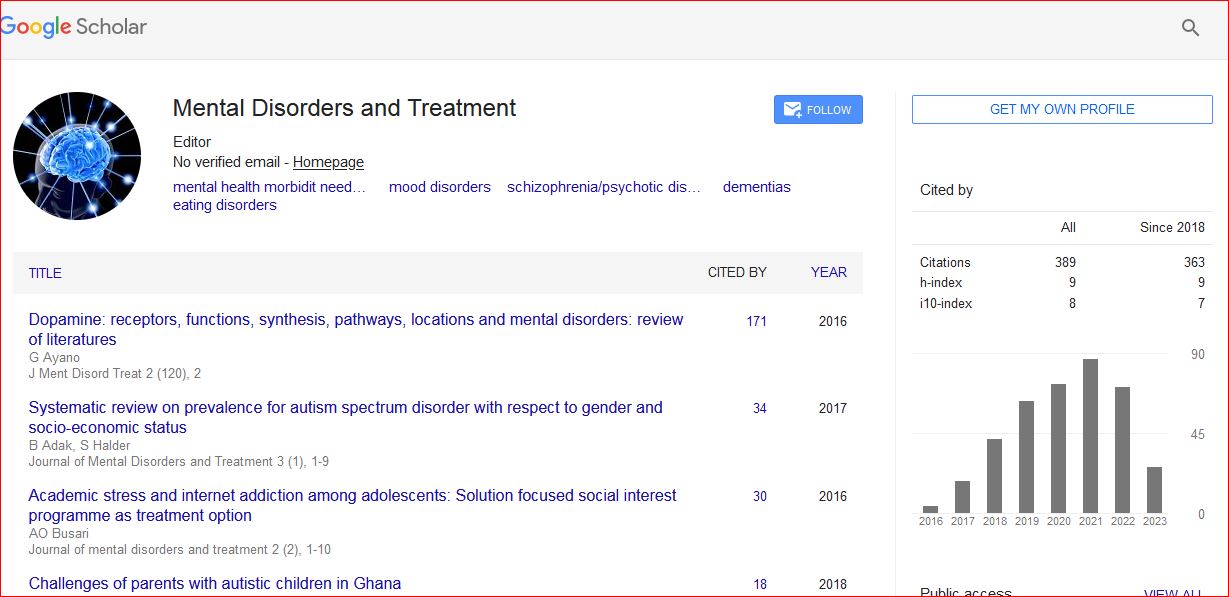
Mental Disorders and Treatment received 556 citations as per Google Scholar report