Short Communication - (2025) Volume 10, Issue 6
Received: 01-Nov-2025, Manuscript No. PE-26-179325;
Editor assigned: 03-Nov-2025, Pre QC No. P-179325;
Reviewed: 17-Nov-2025, QC No. Q-179325;
Revised: 24-Nov-2025, Manuscript No. R-179325;
Published:
01-Dec-2025
, DOI: 10.37421/2472-1042.2025.10.319
Citation: Bouchard, Salma. ”Preventive Drugs for Older Adults: Health and Economic Benefits.” Pharmacoeconomics 10 (2025):319.
Copyright: © 2025 Bouchard S. This is an open-access article distributed under the terms of the Creative Commons Attribution License, which permits unrestricted use, distribution and reproduction in any medium, provided the original author and source are credited.
Preventive pharmacotherapy in older adults presents a significant opportunity to enhance health outcomes and alleviate the long-term burden on healthcare systems. This area of research specifically examines the economic viability of various interventions aimed at preventing disease and its complications in this demographic. For instance, statins are crucial for the primary prevention of cardiovascular disease, where initial medication costs are frequently offset by substantial savings from averted hospitalizations and reduced long-term disability, as detailed in [1].
Similarly, bisphosphonates are essential for managing osteoporosis in postmenopausal women, preventing fractures and the associated high costs of hospitalization, surgery, and rehabilitation, demonstrating a favorable cost-effectiveness ratio [2].
Aspirin continues to be evaluated for its role in both primary and secondary prevention of cardiovascular disease in older adults. While inexpensive, its benefit-risk profile, particularly concerning bleeding, necessitates careful, personalized risk assessment, with strong evidence supporting its cost-effectiveness in secondary prevention for high-risk individuals [3].
Vitamin D supplementation is also investigated for its potential to prevent falls and fractures in the elderly. In populations with high deficiency rates, it can be a cost-effective strategy, especially when combined with exercise, by reducing healthcare expenditures related to fall-related injuries [4].
The economic value of anticoagulant therapy for stroke prevention in older adults with atrial fibrillation is substantial. Newer oral anticoagulants, despite higher acquisition costs, prove cost-effective due to reduced rates of severe bleeding and fewer drug interactions, leading to lower overall healthcare utilization [5].
Pharmacologic management of hypertension in aging populations is highly cost-effective. Effective blood pressure control, regardless of the specific drug class, significantly reduces major cardiovascular events and associated healthcare costs, underscoring the importance of adherence and individualized treatment plans [6].
Vaccination programs for older adults, including influenza, pneumococcal, and herpes zoster vaccines, consistently demonstrate high cost-effectiveness. They yield significant savings by preventing illness, hospitalizations, and complications, highlighting undeniable public health and economic benefits [7].
Inhaled therapies for preventing chronic obstructive pulmonary disease (COPD) exacerbations in the elderly are also found to be cost-effective. These treatments, by reducing exacerbation frequency and severity, significantly decrease hospital admissions and improve functional status, thereby lowering overall healthcare expenditure [8].
Metformin's role in the primary prevention of type 2 diabetes in at-risk older adults is under scrutiny. While it can lead to cost savings by averting diabetes-related morbidity, its use requires careful consideration of individual risk factors and potential side effects [9].
Finally, disease-modifying antirheumatic drugs (DMARDs) for rheumatoid arthritis in older adults are economically justifiable. Early and consistent use of DMARDs is cost-effective as treatment costs are offset by savings from reduced disability and improved quality of life, particularly by preventing the need for joint replacements [10].
The proactive use of pharmacotherapy in older adults is a critical strategy for enhancing health outcomes and mitigating long-term healthcare expenditures. This field of study critically assesses the economic advantages of interventions designed to prevent the onset of diseases and their subsequent complications. For example, the application of statins in the primary prevention of cardiovascular disease among older individuals demonstrates significant economic benefits. Although there are upfront costs associated with these medications, these are substantially outweighed by the avoidance of costly hospitalizations, emergency room visits, and the reduction in long-term disability, as illuminated by research [1].
In the realm of bone health, treatments such as bisphosphonates and denosumab play a vital role in preventing fractures in postmenopausal women. These pharmacologic interventions have been shown to yield a favorable cost-effectiveness ratio by reducing fracture incidence, thereby circumventing the considerable expenses related to hospitalization, surgical procedures, and extensive rehabilitation [2].
The utility of aspirin in the cardiovascular disease prevention landscape for older adults, encompassing both primary and secondary prevention, is continually under economic evaluation. While aspirin is an inexpensive medication, its benefit-risk assessment, particularly regarding the potential for bleeding events, necessitates a nuanced approach. Cost-effectiveness analyses consistently indicate that aspirin remains a cost-effective option for individuals at high risk of cardiovascular events, especially in secondary prevention scenarios [3].
Furthermore, the economic impact of vitamin D supplementation as a preventive measure against falls and fractures in the elderly is noteworthy. Studies suggest that in populations experiencing high rates of vitamin D deficiency, supplementation can be an economically sound intervention, particularly when integrated with exercise programs, due to the reduction in healthcare costs associated with fall-related injuries [4].
The economic value proposition of anticoagulant therapies for preventing strokes in older individuals diagnosed with atrial fibrillation is a key area of investigation. Newer oral anticoagulants (NOACs), despite their higher initial purchase price, often prove to be cost-effective owing to their lower rates of serious bleeding complications, such as intracranial hemorrhage, and fewer drug interactions, which collectively reduce overall healthcare resource utilization [5].
The pharmacologic management of hypertension within aging populations consistently reveals a high degree of cost-effectiveness. Effective control of blood pressure, irrespective of the specific drug class employed, leads to a substantial decrease in major cardiovascular events like strokes, myocardial infarctions, and heart failure, thereby generating significant healthcare cost savings. This underscores the crucial roles of patient adherence and tailored treatment regimens [6].
Immunizations stand out as a highly cost-effective preventive pharmacotherapy for older adults. Vaccines targeting influenza, pneumococcal disease, and herpes zoster have been consistently shown to provide substantial economic returns by preventing illness, reducing hospital admissions, and averting associated complications, confirming the undeniable public health and economic advantages of widespread vaccination programs in this demographic [7].
The economic implications of inhaled therapies used to prevent exacerbations of chronic obstructive pulmonary disease (COPD) in elderly patients are also considerable. These treatments are deemed cost-effective when they demonstrably reduce the frequency and severity of exacerbations, leading to fewer hospital admissions and improved patient functional status, ultimately contributing to lower overall healthcare spending [8].
The cost-effectiveness of metformin for the primary prevention of type 2 diabetes in older adults identified as being at risk is an area of ongoing research. While metformin may offer cost savings by delaying or preventing the onset of diabetes and its related complications, its application in primary prevention requires careful consideration of individual risk profiles, comorbidities, and potential adverse effects [9].
Lastly, the economic justification for employing disease-modifying antirheumatic drugs (DMARDs) in older adults with rheumatoid arthritis is well-established. These therapies are effective in preventing joint damage and subsequent disability, thereby reducing the long-term need for costly interventions like joint replacements and enhancing patients' functional capabilities. The consensus is that early and consistent use of DMARDs is cost-effective, as the financial investment in treatment is often recouped through savings associated with diminished disability and improved long-term quality of life [10].
Preventive pharmacotherapy in older adults offers significant health and economic benefits. Interventions like statins for cardiovascular disease prevention, bisphosphonates for osteoporosis, and aspirin for secondary cardiovascular prevention are cost-effective, with upfront costs offset by savings from avoided hospitalizations and reduced disability. Vitamin D supplementation helps prevent falls and fractures in the elderly, reducing healthcare costs. Anticoagulant therapy for atrial fibrillation, particularly newer oral anticoagulants, is economically advantageous due to reduced bleeding events. Managing hypertension effectively through pharmacotherapy significantly lowers the risk of major cardiovascular events and related healthcare spending. Vaccinations for influenza, pneumococcal disease, and herpes zoster are highly cost-effective, preventing illness and hospitalizations. Inhaled therapies for COPD exacerbations reduce hospital admissions and improve function. Metformin may help prevent type 2 diabetes, yielding potential cost savings. Disease-modifying antirheumatic drugs for rheumatoid arthritis are cost-effective by preventing joint damage and reducing long-term disability. Tailoring these strategies to individual risk profiles is crucial for optimizing resource allocation and maximizing the return on investment in aging populations.
None
None
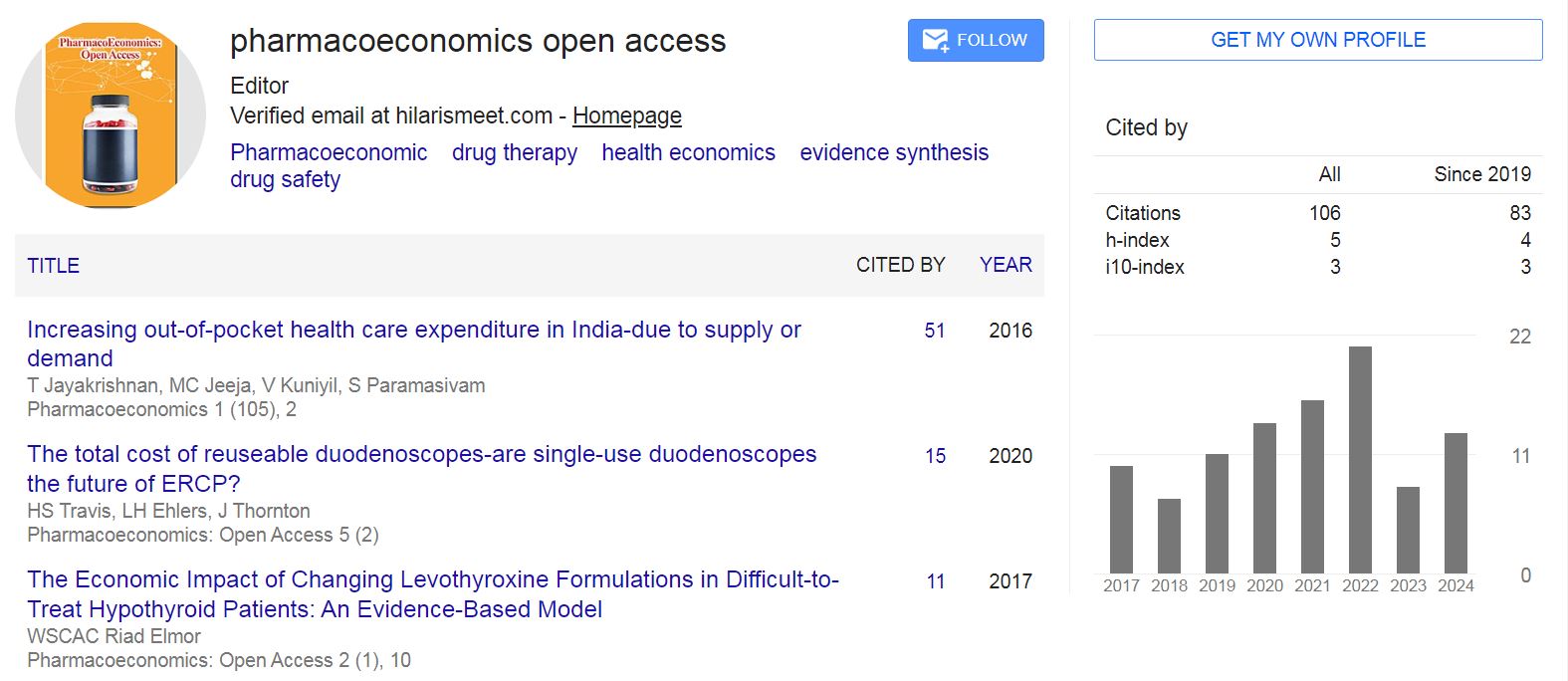
Pharmacoeconomics: Open Access received 106 citations as per Google Scholar report