Opinion - (2025) Volume 10, Issue 2
Received: 01-Apr-2025, Manuscript No. jidm-26-188052;
Editor assigned: 03-Apr-2025, Pre QC No. P-188052;
Reviewed: 17-Apr-2025, QC No. Q-188052;
Revised: 22-Apr-2025, Manuscript No. R-188052;
Published:
29-Apr-2025
, DOI: 10.37421/2576-1420.2025.10.392
Citation: Brown, Rebecca. ”Preventing Viral Infections In Healthcare:
Key Strategies.” J Infect Dis Med 10 (2025):392.
Copyright: © 2025 Brown R. This is an open-access article distributed under the terms of the Creative Commons Attribution License, which permits unrestricted use, distribution
and reproduction in any medium, provided the original author and source are credited.
The prevention and control of viral infections within healthcare facilities remain a paramount concern for public health and patient safety. Robust infection prevention and control programs are essential, encompassing a multifaceted approach to minimize transmission risks among both patients and healthcare workers. This includes rigorous adherence to hand hygiene protocols, meticulous environmental cleaning and disinfection, appropriate use of personal protective equipment (PPE), and strategic patient isolation when necessary. The focus is predominantly on proactive measures to mitigate the spread of highly transmissible or particularly severe viral pathogens that can pose significant threats within the healthcare environment [1].
The timely and accurate identification of viral pathogens is a cornerstone of effective viral outbreak management within hospital settings. Rapid diagnostic tests play a critical role by enabling prompt implementation of appropriate treatment regimens, targeted isolation measures, and efficient contact tracing. This swift diagnostic capability is instrumental in limiting the overall spread of infection, thereby significantly improving patient outcomes and reducing the burden on healthcare resources [2].
The clinical management of severe acute respiratory syndrome coronavirus 2 (SARS-CoV-2) infections in hospitalized patients has necessitated a comprehensive and evolving approach. This involves careful consideration of various therapeutic options, the provision of supportive care strategies tailored to individual patient needs, and specific management considerations for patients with underlying comorbidities. The dynamic landscape of treatment protocols, coupled with the imperative of evidence-based decision-making, are central themes in effectively addressing this significant viral threat [3].
Strategies for mitigating the risk of healthcare-associated viral infections, particularly those caused by influenza and norovirus, are of considerable importance. Key interventions include effective environmental disinfection, comprehensive staff education on transmission routes and prevention techniques, and the establishment of well-defined outbreak response plans. These measures are critical for reducing the transmission of common and impactful viral agents within the healthcare environment [4].
Managing patients with highly contagious viral hemorrhagic fevers (VHFs) in a hospital setting presents unique challenges that demand specialized infrastructure, highly specialized personal protective equipment (PPE), and stringent containment protocols. The implementation of these rigorous measures is crucial not only for protecting healthcare workers from exposure but also for preventing the potential spread of these dangerous pathogens into the wider community [5].
The judicious use of antiviral therapies for various viral infections commonly encountered in healthcare settings, such as influenza, herpes simplex virus, and cytomegalovirus, is an important aspect of patient care. Reviewing current treatment guidelines, understanding efficacy and potential resistance patterns, and emphasizing the importance of rational prescribing are vital to optimize patient outcomes and prevent the development of antiviral resistance [6].
The efficacy of different sterilization and disinfection methods for medical equipment is a critical consideration in the management of viral infections. Ensuring that medical equipment is adequately decontaminated is essential for preventing cross-contamination between patients and maintaining a safe healthcare environment. Evidence-based recommendations for equipment safety are indispensable in this regard [7].
Vaccination remains a highly effective strategy for preventing viral infections among healthcare professionals, thereby protecting both the workforce and the patient population. Understanding the rationale behind recommended vaccines, addressing vaccine hesitancy, and implementing strategies to improve vaccination rates are essential for bolstering a healthcare system's resilience against preventable viral diseases [8].
The development and meticulous implementation of outbreak investigation protocols are crucial for the rapid and effective management of viral infections within healthcare facilities. These protocols encompass all stages from initial detection and identification of the causative agent to implementing containment measures and conducting post-outbreak analyses, underscoring the necessity for swift and coordinated responses to minimize impact [9].
Continuous education and ongoing training for healthcare professionals on infection prevention and control measures specifically for viral pathogens are indispensable. This includes keeping staff updated on the latest best practices, emerging guidelines, and newly identified threats, ensuring a consistently high level of preparedness and competence in healthcare settings to combat viral infections effectively [10].
The implementation of robust infection prevention and control programs is fundamental to safeguarding healthcare facilities against the pervasive threat of viral infections. These comprehensive programs are designed to minimize transmission risks among vulnerable patient populations and dedicated healthcare workers. Key components include strict adherence to hand hygiene practices, thorough environmental cleaning and disinfection procedures, the correct and consistent use of personal protective equipment (PPE), and appropriate patient isolation strategies. The primary objective is to proactively reduce the likelihood of transmission, particularly concerning highly contagious or severe viral pathogens that can rapidly compromise the safety of the healthcare environment [1].
In the context of hospital-based viral outbreaks, the significance of rapid diagnostic capabilities cannot be overstated. The ability to quickly and accurately identify the specific viral pathogen responsible for an outbreak allows for the immediate implementation of crucial interventions. These include initiating targeted antiviral therapies or supportive care, enacting precise isolation precautions, and conducting efficient contact tracing. Such rapid diagnostic responses are vital for controlling the spread of infection, improving patient prognoses, and mitigating the overall impact on hospital operations [2].
The clinical management of patients diagnosed with severe acute respiratory syndrome coronavirus 2 (SARS-CoV-2) within hospital settings presents a complex challenge requiring a nuanced approach. This management involves evaluating and applying a range of therapeutic interventions, providing comprehensive supportive care tailored to the clinical presentation, and addressing the specific needs of patients with pre-existing health conditions. The continually evolving understanding of the disease and the imperative to base treatment decisions on the latest scientific evidence are central to optimizing care for these individuals [3].
Healthcare facilities must employ deliberate strategies to prevent the occurrence of viral infections acquired during the course of medical care, with a particular focus on common pathogens like influenza and norovirus. Effective environmental disinfection protocols are essential for eliminating viral reservoirs. Furthermore, comprehensive training for healthcare staff on infection control practices and the development of clear, actionable outbreak response plans are critical for minimizing transmission pathways and preventing widespread outbreaks within these settings [4].
The safe and effective management of patients afflicted with viral hemorrhagic fevers (VHFs) within a hospital environment necessitates specialized infrastructure and stringent protocols. This includes the provision of high-level personal protective equipment (PPE) for all staff involved in patient care, alongside the implementation of rigorous containment measures. These precautions are paramount to prevent occupational exposure among healthcare workers and to avert the potential dissemination of these highly dangerous diseases to the broader community [5].
Antiviral therapies play a significant role in the management of a variety of viral infections encountered in clinical practice, including influenza, herpes simplex virus (HSV), and cytomegalovirus (CMV). A thorough understanding of current treatment guidelines, the efficacy of different agents, potential mechanisms of drug resistance, and the principles of judicious prescribing are essential for ensuring optimal therapeutic outcomes and preserving the long-term effectiveness of these important medications [6].
Ensuring the sterility and safety of medical equipment is a non-negotiable aspect of viral infection control in healthcare settings. This involves rigorously evaluating and implementing effective sterilization and disinfection methods specifically designed to eliminate viral contaminants. Providing evidence-based recommendations for the safe handling and reprocessing of medical devices is crucial for preventing iatrogenic transmission and maintaining patient safety [7].
The proactive use of vaccinations among healthcare professionals serves as a critical line of defense against a wide spectrum of preventable viral infections. Beyond protecting individual healthcare workers, this strategy contributes significantly to safeguarding patients from potential transmission. Addressing concerns related to vaccine hesitancy and implementing effective strategies to promote higher vaccination rates are vital for strengthening the overall resilience of the healthcare workforce and the populations they serve [8].
Establishing and adhering to well-defined protocols for the investigation and management of viral outbreaks within healthcare facilities is essential for a rapid and organized response. These protocols detail the systematic steps required, commencing with the earliest detection of an outbreak and progressing through to effective containment strategies and thorough post-outbreak analysis. The emphasis is on ensuring a prompt, coordinated, and evidence-based approach to mitigate the impact of such events [9].
Sustained investment in the continuous education and training of healthcare personnel concerning viral infection prevention and control is imperative. This ongoing process ensures that staff remain current with evolving best practices, updated clinical guidelines, and emerging infectious threats. Maintaining a high level of knowledge and preparedness is fundamental to effectively defending healthcare settings against the dynamic challenges posed by viral pathogens [10].
This compilation of research highlights critical strategies for managing and preventing viral infections within healthcare settings. It emphasizes the importance of robust infection prevention programs, including hand hygiene, environmental cleaning, and PPE use, alongside proactive measures against highly transmissible pathogens. Rapid diagnostics are crucial for timely intervention and limiting outbreak spread. The clinical management of specific infections like COVID-19 requires tailored therapeutic and supportive care. Preventing healthcare-associated infections focuses on environmental disinfection and staff education, especially for influenza and norovirus. Highly contagious diseases like viral hemorrhagic fevers necessitate specialized infrastructure and stringent protocols. Antiviral therapies are important, requiring judicious use and awareness of resistance. Equipment sterilization and disinfection are vital for preventing cross-contamination. Vaccination of healthcare professionals is a key preventive measure. Outbreak investigation protocols ensure rapid and coordinated responses. Continuous staff education is essential for maintaining preparedness against evolving viral threats.
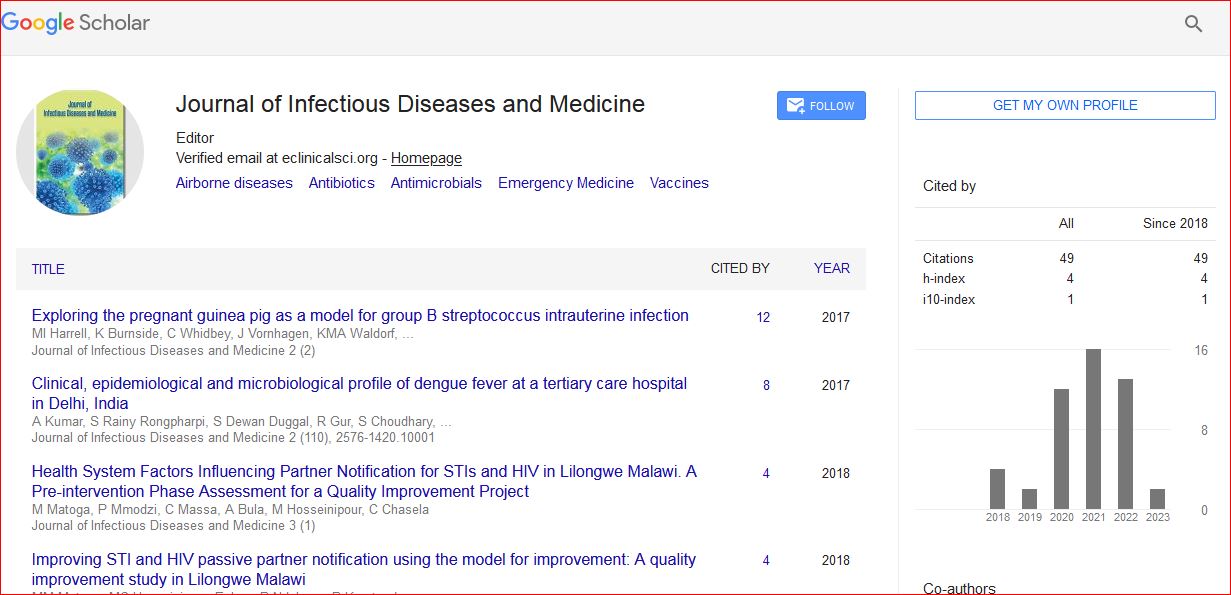
Journal of Infectious Diseases and Medicine received 1059 citations as per Google Scholar report