Brief Report - (2025) Volume 9, Issue 4
Received: 01-Jul-2025, Manuscript No. jchd-26-185695;
Editor assigned: 03-Jul-2025, Pre QC No. P-185695;
Reviewed: 17-Jul-2025, QC No. Q-185695;
Revised: 22-Jul-2025, Manuscript No. R-185695;
Published:
29-Jul-2025
, DOI: 10.37421/2684-6020.2024.9.251
Citation: Petrova, Maria. ”Precision Medicine Revolutionizes
Coronary Heart Disease Care.” J Coron Heart Dis 09 (2025):251.
Copyright: © 2025 Petrova M. This is an open-access article distributed under the terms of the Creative Commons Attribution License, which permits unrestricted use,
distribution and reproduction in any medium, provided the original author and source are credited.
The field of coronary heart disease (CHD) is undergoing a profound transformation, marked by significant advancements in our understanding and management strategies. Traditional risk factors such as hyperlipidemia, hypertension, and smoking continue to be central, but emerging research is illuminating the intricate connections between inflammation, metabolic dysregulation, and novel genetic predispositions that influence CHD [1].
Inflammation has been increasingly recognized as a pivotal player in the pathogenesis of atherosclerosis and CHD. Beyond simple lipid accumulation, chronic inflammatory processes are now understood to be key drivers of plaque formation, destabilization, and subsequent rupture. Recent investigations have highlighted specific inflammatory pathways, including interleukin-1β signaling and inflammasome activation, as promising therapeutic targets for CHD intervention [2].
The advent of genomic and proteomic technologies has fundamentally reshaped our comprehension of the genetic underpinnings of coronary heart disease. Polygenic risk scores, which aggregate the cumulative effects of numerous genetic variants, are emerging as potent tools for identifying individuals with a heightened inherited susceptibility. Furthermore, progress in gene editing and gene therapy offers potential future avenues for therapeutic interventions targeting specific genetic defects that contribute to lipid metabolism abnormalities or vascular dysfunction [3].
Metabolic dysregulation, encompassing conditions like diabetes mellitus and obesity, significantly amplifies the risk and progression of coronary heart disease. These metabolic disturbances not only contribute to hyperglycemia but also promote systemic inflammation, oxidative stress, and endothelial dysfunction, all of which are critical contributors to the development of atherosclerosis. Current research efforts are focused on exploring novel pharmacological agents that can target these metabolic pathways to confer cardiovascular protection, independent of conventional glycemic control measures [4].
Advanced imaging techniques, including coronary CT angiography and intravascular ultrasound, have revolutionized the diagnostic landscape for coronary artery disease. These modalities provide detailed visualization of plaque morphology, its extent, and its inherent vulnerability, thereby enabling more precise risk stratification and the formulation of personalized treatment plans. Future developments are expected to integrate AI-driven image analysis to further refine diagnostic accuracy and improve the prediction of adverse cardiovascular events, moving towards a more comprehensive and non-invasive characterization of atherosclerotic plaques [5].
Biomarkers are indispensable in the early detection and accurate risk stratification of coronary heart disease. Beyond well-established markers such as troponins, novel biomarkers reflecting inflammatory processes, endothelial dysfunction, and plaque stability are under active investigation. High-sensitivity assays for C-reactive protein, lipoprotein(a), and circulating microRNAs present promising opportunities for enhancing the predictive power of CHD risk assessments. The integration of multiplex biomarker panels, analyzed using sophisticated statistical methodologies, is anticipated to yield a more nuanced and precise evaluation of an individual's CHD risk profile [6].
The pharmacopeia available for managing coronary heart disease continues to expand, with a pronounced emphasis on novel mechanisms that extend beyond traditional statin therapy. PCSK9 inhibitors, for instance, have demonstrated substantial efficacy in reducing LDL cholesterol levels and mitigating cardiovascular events. Concurrently, research into anti-inflammatory drugs, agents targeting triglyceride levels, and therapies aimed at addressing diabetes and obesity are broadening the therapeutic options for CHD management. The future direction of CHD pharmacotherapy appears to lie in the development of combination therapies precisely tailored to the unique profiles and underlying pathophysiological mechanisms of individual patients [7].
Lifestyle modifications remain a cornerstone of both the prevention and management of coronary heart disease. However, contemporary research is delving into the specific molecular and physiological impacts of dietary patterns, exercise regimens, and stress reduction techniques with greater depth. Personalized lifestyle interventions, informed by an individual's genetic predispositions and unique physiological responses, are progressively gaining prominence. The integration of digital health technologies and principles of behavioral science is considered essential for fostering sustained adherence to healthy lifestyle choices, thereby achieving effective mitigation of CHD risk [8].
The influence of the gut microbiome on cardiovascular health, including its role in coronary heart disease, represents an emergent and intensely investigated area. Certain microbial metabolites, such as trimethylamine N-oxide (TMAO), have been associated with an elevated risk of CHD. A deeper understanding of the intricate interactions between gut bacteria, dietary intake, and host metabolism is paving the way for novel therapeutic strategies, including the use of probiotics, prebiotics, and fecal microbiota transplantation, to effectively modulate cardiovascular risk [9].
Artificial intelligence (AI) and machine learning (ML) are positioned to bring about a revolution in the diagnosis, prognosis, and treatment paradigms for coronary heart disease. These advanced technologies possess the capability to analyze extensive datasets, encompassing electronic health records, imaging data, and genomic information, thereby identifying subtle patterns and predicting clinical outcomes with remarkable precision. Applications span from early risk prediction and automated image analysis to the formulation of personalized treatment recommendations. The seamless integration of AI/ML into routine clinical practice holds the promise of enhancing operational efficiency, elevating diagnostic accuracy, and facilitating the advancement of precision medicine approaches for CHD management [10].
Coronary heart disease (CHD) management is evolving, driven by advances in genetics, lifestyle research, and therapeutics. While traditional risk factors remain important, new insights highlight inflammation, metabolic dysregulation, and genetic predispositions. The focus is shifting towards personalized risk assessment, early detection using advanced imaging and biomarkers, and targeted therapies for atherosclerosis progression. The future promises precision medicine, integrating multi-omics and AI for individualized care [1].
The critical role of inflammation in atherosclerosis and CHD pathogenesis is increasingly acknowledged. Beyond lipid accumulation, chronic inflammatory pathways contribute to plaque formation, instability, and rupture. Research is identifying specific inflammatory targets like interleukin-1β signaling and inflammasome activation for therapeutic development, complementing traditional cardiovascular risk factor management [2].
Genomic and proteomic technologies have revolutionized our understanding of genetic contributions to CHD. Polygenic risk scores are emerging as powerful tools for identifying individuals at high inherited risk. Advancements in gene editing and therapy may offer future interventions for genetic defects affecting lipid metabolism or vascular function. Personalized genetic profiling is becoming integral to CHD risk assessment and prevention [3].
Metabolic dysregulation, including diabetes and obesity, significantly exacerbates CHD risk and progression. These conditions promote inflammation, oxidative stress, and endothelial dysfunction, driving atherosclerosis. Research is exploring novel pharmacological agents targeting metabolic pathways for cardiovascular protection beyond glycemic control, emphasizing the importance of integrated management of metabolic health and vascular integrity [4].
Advanced imaging techniques such as coronary CT angiography and intravascular ultrasound have transformed CHD assessment. These modalities allow detailed visualization of plaque characteristics for more accurate risk stratification and personalized treatment decisions. Future directions include AI-driven image analysis to enhance diagnostic precision and predict adverse events, enabling comprehensive non-invasive plaque characterization [5].
Biomarkers are vital for early CHD detection and risk stratification. Novel markers of inflammation, endothelial dysfunction, and plaque stability are under investigation, complementing traditional ones. High-sensitivity assays for CRP, lipoprotein(a), and microRNAs show promise for improved risk prediction. Multiplex biomarker panels with advanced statistical analysis are expected to provide a more nuanced risk assessment [6].
The pharmacotherapy for CHD is expanding beyond statins, with significant advances in agents like PCSK9 inhibitors. Research into anti-inflammatory drugs, triglyceride-lowering agents, and therapies for metabolic conditions broadens the treatment arsenal. The future likely involves combination therapies tailored to individual patient profiles and pathophysiological mechanisms for optimal CHD management [7].
Lifestyle modifications remain fundamental for CHD prevention and management, with recent research focusing on the specific molecular impacts of diet, exercise, and stress. Personalized lifestyle interventions, considering genetic predispositions and individual responses, are gaining traction. Digital health technologies and behavioral science are crucial for promoting sustained adherence and effective CHD risk mitigation [8].
The influence of the gut microbiome on cardiovascular health, including CHD, is a rapidly growing area of research. Specific microbial metabolites, like TMAO, are linked to increased CHD risk. Understanding the interplay between gut bacteria, diet, and host metabolism is opening new therapeutic avenues, including probiotics, prebiotics, and fecal transplantation, to modulate cardiovascular risk [9].
Artificial intelligence and machine learning are set to revolutionize CHD diagnosis, prognosis, and treatment by analyzing vast datasets to identify patterns and predict outcomes. Applications range from risk prediction and image analysis to personalized treatment recommendations, promising to enhance efficiency, diagnostic accuracy, and precision medicine approaches in cardiovascular care [10].
Coronary heart disease (CHD) is experiencing significant advancements in understanding and management, moving towards precision medicine. Key areas of progress include the role of inflammation, genetic predispositions, and metabolic dysregulation in atherosclerosis. Advanced imaging techniques and novel biomarkers are enhancing early detection and risk stratification. Therapeutic strategies are expanding beyond traditional methods to include targeted therapies, expanded pharmacological options, and personalized lifestyle interventions. The gut microbiome's influence is an emerging area of research, and artificial intelligence is poised to transform CHD care by enabling more accurate prediction and personalized treatment. The overarching trend is a shift towards highly individualized approaches in preventing and managing CHD.
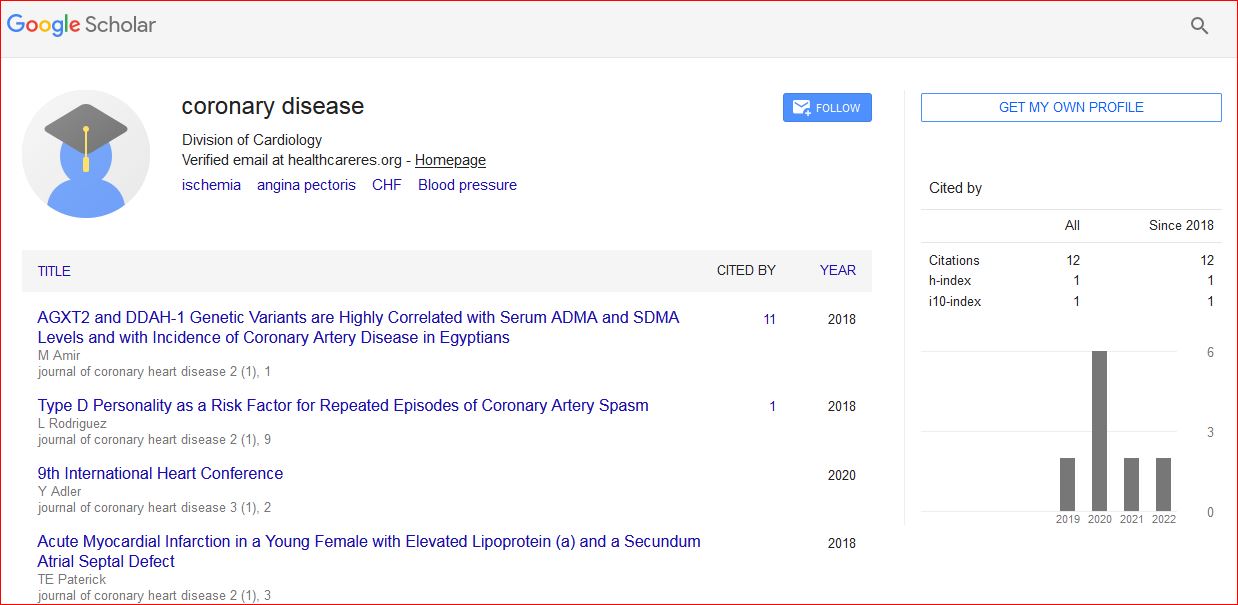
Journal of Coronary Heart Diseases received 15 citations as per Google Scholar report