Short Communication - (2025) Volume 15, Issue 4
Received: 02-Aug-2025, Manuscript No. jeat-26-188644;
Editor assigned: 04-Aug-2025, Pre QC No. P-188644;
Reviewed: 18-Aug-2025, QC No. Q-188644;
Revised: 25-Aug-2025, Manuscript No. R-188644;
Published:
01-Sep-2025
, DOI: 10.37421/2161-0525.2025.15.864
Citation: Rahman, Noor. ”Pollutants Threaten Wildlife: Bioaccumulation,
Damage, and Decline.” J Environ Anal Toxicol 15 (2025):864.
Copyright: © 2025 Rahman N. This is an open-access article distributed under the terms of the Creative Commons Attribution License, which permits unrestricted use,
distribution and reproduction in any medium, provided the original author and source are credited.
The pervasive presence of environmental pollutants poses a significant and multifaceted threat to wildlife globally. These contaminants, originating from diverse anthropogenic activities, infiltrate ecosystems and exert detrimental effects across various trophic levels. Understanding the intricate mechanisms by which these substances impact biological systems is crucial for effective conservation and management strategies. The toxicological effects of environmental pollutants on wildlife are a growing concern, with research increasingly illuminating the pathways of exposure and the subsequent physiological and ecological consequences. These studies often focus on specific classes of pollutants to elucidate their unique modes of action and the spectrum of harm they can inflict on different species. A comprehensive review of the toxicological impacts of environmental pollutants on wildlife has underscored the widespread accumulation of substances like heavy metals, persistent organic pollutants (POPs), and microplastics within animal tissues. This accumulation triggers a cascade of adverse outcomes, ranging from direct physiological damage to profound reproductive failures and significant population declines. The review emphasizes the urgent need for enhanced monitoring and robust regulatory frameworks to mitigate these escalating risks [1].
Within aquatic ecosystems, the bioaccumulation and biomagnification of per- and polyfluoroalkyl substances (PFAS) in avian populations have been a subject of intense investigation. Studies reveal alarmingly high levels of these persistent chemicals in key organs and blood samples, directly correlating with compromised immune function and disrupted hormonal balances in aquatic birds. The research highlights the pervasive threat posed by these enduring chemicals to avian health and the integrity of aquatic food webs [2].
Heavy metal contamination, particularly from lead and mercury, has been shown to have severe neurodevelopmental and behavioral consequences for wild mammalian populations. Elevated concentrations of these metals in affected mammals are intricately linked to diminished cognitive abilities, impaired motor skills, and an increased propensity for anxiety-like behaviors, all of which critically jeopardize their survival prospects and reproductive success [3].
In freshwater environments, the physiological ramifications of microplastic ingestion on various fish species are becoming increasingly evident. The physical presence of microplastics within the digestive tracts of fish leads to direct damage, impedes nutrient absorption efficiency, and provokes inflammatory responses, thereby compromising overall fish health, growth rates, and the stability of the broader aquatic food web [4].
Amphibian populations are particularly vulnerable to the endocrine-disrupting potential of agricultural pesticides. Exposure to commonly used pesticides has been associated with a spectrum of reproductive abnormalities, including the feminization of male amphibians and a marked reduction in egg production, collectively threatening the long-term persistence of these sensitive species within their habitats [5].
Air pollution, specifically fine particulate matter (PM2.5), has emerged as a significant threat to the respiratory health of urban avian populations. Chronic exposure to PM2.5 has been linked to a higher incidence of respiratory infections and a demonstrable reduction in lung capacity, clearly illustrating the vulnerability of urban wildlife to the degradation of air quality caused by human activities [6].
Marine invertebrates are susceptible to the genotoxic effects of polycyclic aromatic hydrocarbons (PAHs). Investigations into DNA damage among mollusks and crustaceans exposed to PAHs have revealed substantial mutagenic and carcinogenic potential, signaling considerable risks to the health and resilience of coastal ecosystems [7].
Finally, the presence of pharmaceutical residues in wastewater presents a significant ecotoxicological challenge to aquatic life. Studies on fish exposed to common antidepressants and hormones have documented alterations in critical behaviors such as swimming and feeding patterns, as well as disruptions in reproductive capacity, indicating widespread concerns for the health of fish populations globally [8].
The intricate interplay between environmental pollutants and wildlife health necessitates a deep dive into specific contaminants and their distinct mechanisms of action. This field of study is vital for understanding the complex challenges facing ecosystems worldwide. Research efforts have been directed towards a wide array of pollutants, including heavy metals, persistent organic pollutants (POPs), and microplastics, each with its unique toxicological profile and ecological implications. The accumulation and subsequent effects of these substances vary depending on the organism, the environment, and the specific pollutant in question. One of the most comprehensive reviews in this domain highlights the multifaceted impacts of environmental pollutants on wildlife, emphasizing the accumulation of heavy metals, POPs, and microplastics. This accumulation leads to physiological damage, reproductive failures, and declines in wildlife populations, underscoring the critical need for improved monitoring and regulatory strategies to address these risks [1].
In aquatic environments, per- and polyfluoroalkyl substances (PFAS) have been identified as a significant concern for aquatic birds. Studies investigating the bioaccumulation and biomagnification of PFAS reveal substantial levels in avian tissues, correlating with observed immune system dysfunction and altered hormone levels. This research emphasizes the pervasive threat these persistent chemicals pose to avian health and food webs [2].
Heavy metal contamination, particularly lead and mercury, has been linked to neurodevelopmental and behavioral impairments in wild mammals. Elevated levels of these metals are associated with reduced cognitive function, impaired motor skills, and increased anxiety-like behaviors, posing a direct threat to the survival and reproductive capabilities of these animals [3].
Microplastic ingestion by freshwater fish species results in significant physiological disruptions. Research indicates physical damage to the digestive tract, reduced nutrient absorption, and the induction of inflammatory responses, all of which have critical implications for fish health, growth, and the broader aquatic food web [4].
Agricultural pesticides have been identified as endocrine disruptors affecting amphibian populations. Exposure to these pesticides has led to reproductive abnormalities, including the feminization of males and reduced egg production, thereby threatening the sustainability of amphibian populations [5].
Air pollution, specifically fine particulate matter (PM2.5), adversely affects the respiratory health of urban birds. Chronic exposure to PM2.5 has resulted in an increased incidence of respiratory infections and a reduction in lung capacity, demonstrating the vulnerability of avian wildlife to air quality degradation [6].
Marine invertebrates are subject to genotoxic effects from polycyclic aromatic hydrocarbons (PAHs). Analysis of DNA damage in exposed mollusks and crustaceans reveals significant mutagenic and carcinogenic potential, highlighting the risks to the health of coastal ecosystems [7].
Furthermore, pharmaceutical residues in wastewater pose a risk to fish populations. Exposure to common antidepressants and hormones has been shown to alter swimming and feeding behaviors, as well as reproductive capacity in fish, raising ecotoxicological concerns for aquatic life [8].
Environmental pollutants significantly impact wildlife through various mechanisms. Heavy metals, persistent organic pollutants (POPs), and microplastics accumulate in organisms, causing physiological damage, reproductive failure, and population declines. Specific studies highlight the bioaccumulation of PFAS in aquatic birds leading to immune dysfunction, and neurotoxic effects of lead and mercury on wild mammals. Microplastic ingestion harms freshwater fish by damaging digestive tracts and reducing nutrient absorption. Agricultural pesticides disrupt amphibian reproduction, while air pollution (PM2.5) affects avian respiratory health. Marine invertebrates are susceptible to genotoxic effects from PAHs, and pharmaceutical residues in wastewater alter fish behavior and reproduction. These findings emphasize the widespread ecotoxicological challenges and the need for enhanced monitoring and regulation to protect wildlife and ecosystems.
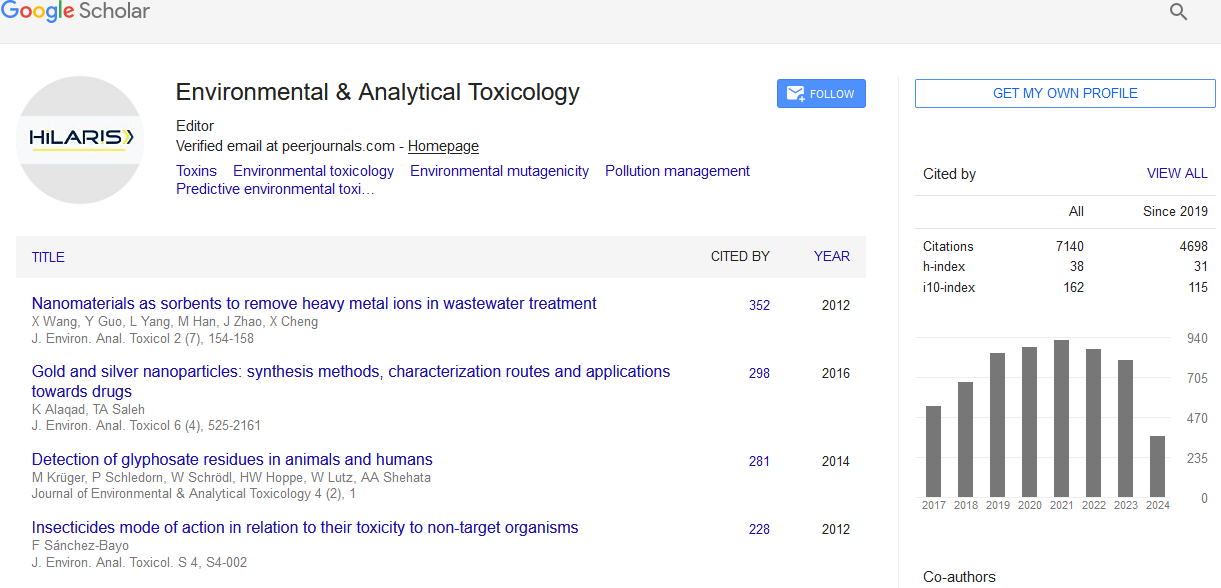
Environmental & Analytical Toxicology received 6818 citations as per Google Scholar report