Short Communication - (2025) Volume 15, Issue 6
Received: 02-Dec-2025, Manuscript No. jeat-26-188659;
Editor assigned: 04-Dec-2025, Pre QC No. P-188659;
Reviewed: 18-Dec-2025, QC No. Q-188659;
Revised: 23-Dec-2025, Manuscript No. R-188659;
Published:
30-Dec-2025
, DOI: 10.37421/2161-0525.2025.15.879
Citation: Tan, Mei Ling. ”Pollutants Threaten Biodiversity: Understanding
Toxicological Mechanisms.” J Environ Anal Toxicol 15 (2025):879.
Copyright: © 2025 Tan L. Mei This is an open-access article distributed under the terms of the Creative Commons Attribution License, which permits unrestricted use,
distribution and reproduction in any medium, provided the original author and source are credited.
Environmental pollutants represent a significant and multifaceted threat to the planet's biodiversity, impacting ecosystems both aquatic and terrestrial in profound ways. These contaminants, originating from various anthropogenic activities, can exert toxicological effects that disrupt the delicate balance of life. Among the most concerning are heavy metals, which are persistent and can bioaccumulate within organisms and food chains. Furthermore, pesticides, designed to control pests, often have unintended consequences for non-target species, leading to population declines. Persistent organic pollutants (POPs) are another class of compounds known for their longevity in the environment and their ability to cause widespread harm to wildlife. These substances can interfere with essential physiological processes, leading to impaired reproduction and the development of abnormalities in developing organisms. The cumulative impact of these pollutants on various species underscores the urgent need for effective conservation and environmental management strategies, which must be informed by a deep understanding of the underlying toxicological mechanisms. [1]
Microplastics, tiny fragments of plastic debris, have emerged as a pervasive contaminant in aquatic environments, posing a growing danger to marine life. These particles not only cause physical damage to the digestive systems of aquatic organisms but also act as vectors for chemical leaching of adsorbed pollutants. This dual threat of physical obstruction and toxic exposure can significantly disrupt feeding behaviors and reduce the survival rates of various fish and invertebrate species. The continuous influx of microplastics into oceans and freshwater systems necessitates a comprehensive approach to address this escalating environmental crisis and protect aquatic biodiversity and ecosystem health. [2] The widespread use of neonicotinoid pesticides has been implicated in the alarming decline of pollinator populations, with bees being particularly vulnerable. These systemic pesticides are absorbed by plants and are present in pollen and nectar, leading to chronic exposure for foraging insects. The persistent presence of neonicotinoids can impair essential functions such as navigation, foraging efficiency, and immune response in bees. This detrimental impact on pollinators has significant implications for agricultural productivity and the broader health of terrestrial ecosystems, highlighting the need for a reevaluation of pesticide use. [3] Certain heavy metals, such as mercury and lead, possess the dangerous characteristic of bioaccumulating in food chains. As these metals move up the trophic levels, they can reach critically toxic concentrations in apex predators. This process of bioamplification can result in severe neurological damage, reproductive failure, and increased mortality rates among vulnerable populations, including birds of prey and marine mammals. Understanding the dynamics of bioaccumulation and biomagnification is crucial for assessing the risks posed by heavy metal pollution to top predators and the stability of marine food webs. [4] Flame retardants, especially brominated flame retardants (BFRs), are prevalent environmental contaminants that have been found to disrupt the endocrine systems of wildlife. These chemicals can interfere with critical hormone regulation, particularly thyroid hormone pathways, which are essential for normal growth and development. Amphibians and fish are among the species that exhibit adverse effects due to BFR exposure, including developmental abnormalities. Addressing the widespread presence of these compounds is vital for protecting the endocrine health of aquatic wildlife. [5] Pharmaceuticals, continuously released into aquatic systems through wastewater discharge, can exert subtle yet significant adverse effects on fish populations. These sublethal impacts include alterations in behavior and impairments in reproductive success, which can have cascading consequences for aquatic ecosystems. Furthermore, the widespread presence of antibiotics in the environment contributes to the growing challenge of antimicrobial resistance among environmental bacteria, posing a broader public health concern. [6] Air pollutants, including ozone and particulate matter, can directly impact the physiological functions of terrestrial plants, leading to reduced growth rates and diminished photosynthetic activity. These direct effects on primary producers can have cascading implications for herbivores that rely on these plants for sustenance, potentially altering herbivore populations and the overall structure of terrestrial ecosystems. Mitigation of air pollution is therefore essential for maintaining plant health and ecosystem integrity. [7] Per- and polyfluoroalkyl substances (PFAS) are a group of synthetic chemicals that are ubiquitous in the environment due to their extreme persistence and tendency to bioaccumulate. Studies have linked PFAS exposure in wildlife to a range of health issues, including immune suppression, developmental problems, and metabolic disorders. The widespread contamination and persistence of PFAS necessitate a thorough understanding of their environmental fate and toxicological effects to protect wildlife from these pervasive chemicals. [8] Plasticizers, such as phthalates, commonly found in consumer products, can leach into the environment and disrupt the reproductive systems of both aquatic and terrestrial animals. These endocrine-disrupting chemicals have been linked to effects such as the feminization of male fish and reduced fertility in mammals. The pervasive presence of phthalates in the environment raises significant concerns for the reproductive health of wildlife populations. [9] Dioxins and furans, notorious for their potency as persistent organic pollutants, are highly toxic and can induce a spectrum of adverse effects in wildlife, including severe developmental abnormalities and carcinogenicity. Their enduring presence in the environment and their capacity for bioaccumulation present long-term risks to the health and stability of ecosystems, demanding vigilant monitoring and control measures. [10]Environmental pollutants encompass a broad spectrum of chemical substances that pose significant risks to biodiversity across diverse ecosystems. These include heavy metals, such as mercury and lead, which are known for their persistence and tendency to bioaccumulate in food webs, ultimately reaching toxic levels in apex predators [4].
Pesticides, another major category, can disrupt essential physiological processes and impair reproduction in various species [1].
Persistent organic pollutants (POPs), by their very nature, remain in the environment for extended periods, leading to widespread contamination and adverse effects on wildlife [1].
The toxicological mechanisms by which these substances exert their harmful influences are complex and varied, necessitating in-depth research for effective conservation [1].
Microplastics represent a distinct and growing threat, particularly to aquatic organisms. These ubiquitous particles not only cause physical damage to the digestive tracts of marine life but also serve as carriers for adsorbed pollutants, adding a chemical dimension to their harmful effects [2].
The dual impact of physical obstruction and toxic exposure from microplastics can significantly alter feeding behaviors and reduce the overall survival rates of fish and invertebrates within aquatic ecosystems [2].
This escalating issue highlights the interconnectedness of pollution types and their cumulative impact on biodiversity. [2] Neonicotinoid pesticides have been identified as a primary driver for the decline in pollinator populations, especially bees, which are crucial for ecosystem health and agriculture. Their systemic nature ensures their presence in pollen and nectar, leading to chronic exposure that compromises essential functions like navigation and foraging [3].
The impact on pollinators extends beyond individual species, affecting the pollination services vital for many plant species and the broader food web [3].
Heavy metals like mercury and lead are of particular concern due to their bioaccumulation and biomagnification potential. As they move up the food chain, their concentrations increase, leading to severe health issues in top predators, including neurological damage and reproductive failure [4].
This phenomenon underscores the far-reaching consequences of heavy metal pollution, impacting organisms at higher trophic levels and potentially destabilizing entire ecosystems. [4] Flame retardants, particularly brominated variants (BFRs), are widely detected in the environment and have been shown to interfere with endocrine systems. These disruptions can affect critical processes such as thyroid hormone regulation, impacting growth and development in species like amphibians and fish [5].
The widespread use of these chemicals necessitates a careful evaluation of their long-term ecological implications. [5] Pharmaceuticals, increasingly found in aquatic environments due to wastewater discharge, exhibit sublethal effects on fish. These can manifest as behavioral changes and reduced reproductive success, posing subtle yet significant threats to aquatic populations [6].
Additionally, the presence of antibiotics in these systems contributes to the development of antimicrobial resistance in environmental bacteria, a growing global health concern. [6] Air pollutants, such as ozone and particulate matter, directly affect terrestrial plant physiology. This impact can manifest as reduced growth and photosynthesis, which can then cascade through the ecosystem by affecting herbivores that depend on these plants for food [7].
The health of plant communities is therefore intrinsically linked to air quality. [7] Per- and polyfluoroalkyl substances (PFAS) are a class of persistent and bioaccumulative chemicals that are now ubiquitous environmental contaminants. Their presence in wildlife has been associated with detrimental health effects, including immune suppression, developmental problems, and metabolic disorders [8].
The widespread distribution of PFAS highlights the pervasive nature of modern chemical pollution. [8] Plasticizers, including phthalates, are widely used in consumer products and can leach into the environment, posing a threat to wildlife reproduction. These chemicals have been linked to reproductive disruptions, such as the feminization of male fish and reduced fertility in mammals, underscoring their endocrine-disrupting properties [9].
Dioxins and furans are potent persistent organic pollutants known for their high toxicity and capacity to cause developmental abnormalities and carcinogenicity. Their persistence and tendency to bioaccumulate in ecosystems present long-term risks to wildlife and the overall health of the environment [10].
[10]
Environmental pollutants, including heavy metals, pesticides, POPs, microplastics, neonicotinoids, flame retardants, pharmaceuticals, air pollutants, PFAS, plasticizers, and dioxins/furans, pose significant threats to biodiversity. These substances disrupt physiological processes, impair reproduction, cause developmental abnormalities, and lead to population declines in aquatic and terrestrial ecosystems. Heavy metals bioaccumulate, while microplastics cause physical and chemical harm. Neonicotinoids devastate pollinator populations, and flame retardants disrupt endocrine systems. Pharmaceuticals and air pollutants have sublethal effects on aquatic life and terrestrial plants, respectively. PFAS and plasticizers interfere with reproductive health, and dioxins/furans are highly toxic and persistent. Understanding these toxicological mechanisms is crucial for effective conservation and environmental management.
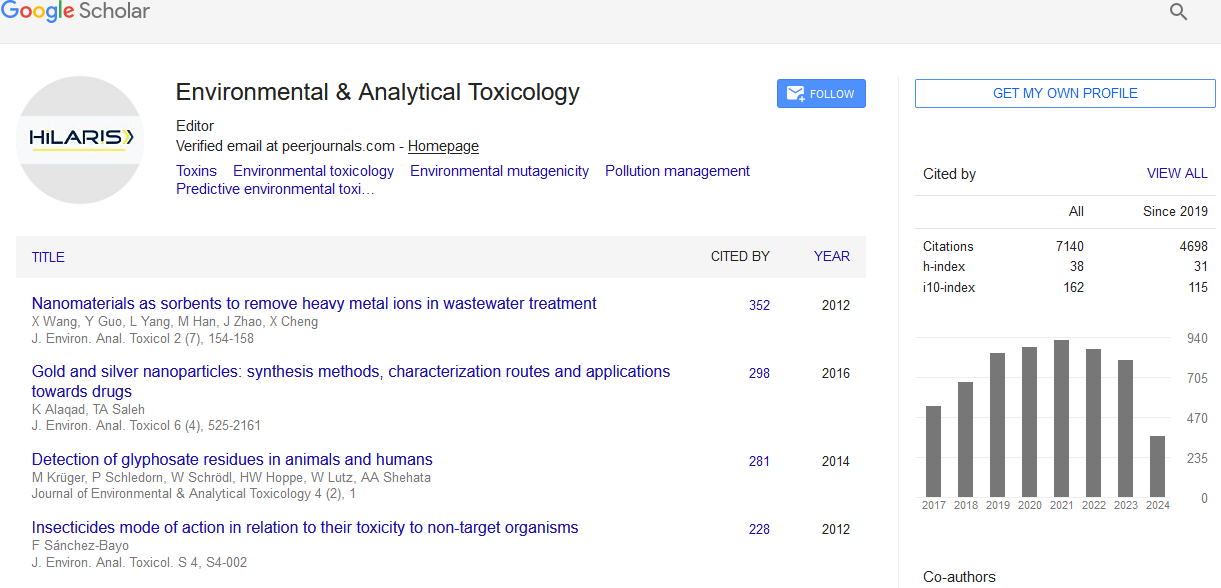
Environmental & Analytical Toxicology received 6818 citations as per Google Scholar report