Short Communication - (2025) Volume 10, Issue 5
Received: 01-Sep-2025, Manuscript No. JPNM-26-185758;
Editor assigned: 03-Sep-2025, Pre QC No. P-185758;
Reviewed: 17-Sep-2025, QC No. Q-185758;
Revised: 22-Sep-2025, Manuscript No. R-185758;
Published:
29-Sep-2025
, DOI: 10.37421/2472-100X.2025.10.365
Citation: Gutierrez, Juan Pablo. ”Pediatric Demyelinating Disorders: Early Detection, Comprehensive Management.” J Pediatr Neurol Med 10 (2025):365.
Copyright: © 2025 Gutierrez P. Juan This is an open-access article distributed under the terms of the Creative Commons Attribution License, which permits unrestricted use, distribution and reproduction in any medium, provided the original author and source are credited.
Early detection and comprehensive management are crucial for improving outcomes in pediatric demyelinating disorders, involving understanding diverse clinical presentations, employing timely diagnostic tools like MRI and serological testing, and initiating appropriate therapeutic interventions such as immunotherapy and supportive care, with long-term follow-up essential to monitor disease activity, manage relapses, and address developmental needs [1].
Pediatric acute-onset demyelinating syndromes, including acute disseminated encephalomyelitis (ADEM) and neuromyelitis optica spectrum disorder (NMOSD), necessitate prompt recognition and differentiated diagnosis, where MRI plays a pivotal role in identifying characteristic lesion patterns and understanding immunological underpinnings guides targeted treatment, often involving high-dose corticosteroids and sometimes plasma exchange or intravenous immunoglobulin [2].
The role of genetic factors in pediatric demyelinating disorders is increasingly recognized, as while typically considered acquired autoimmune conditions, certain genetic predispositions may influence susceptibility and disease course, with advances in genetic sequencing helping to elucidate these complex interactions and potentially paving the way for personalized treatment approaches [3].
Navigating the transition from pediatric to adult care for young individuals with demyelinating disorders is a critical aspect of long-term management, where ensuring continuity of care, effective communication between healthcare teams, and patient education are paramount to maintaining disease control and supporting psychosocial well-being during this vulnerable period [4].
Neuromyelitis optica spectrum disorder (NMOSD) in children presents unique challenges, including a higher prevalence of optic neuritis and longitudinally extensive transverse myelitis, with advances in serological testing for aquaporin-4 antibodies (AQP4-IgG) revolutionizing diagnosis, enabling earlier and more accurate identification, and targeted immunotherapies like rituximab and satralizumab showing efficacy in reducing relapse rates [5].
Multiple sclerosis (MS) in children and adolescents, while less common than in adults, requires a nuanced approach, necessitating differentiation from other demyelinating conditions, and the advent of disease-modifying therapies (DMTs) has significantly altered the prognosis, with early and aggressive treatment often recommended to prevent long-term disability [6].
Acute disseminated encephalomyelitis (ADEM) is a monophasic, immune-mediated inflammatory disease of the central nervous system that typically follows an infection or vaccination and is characterized by multifocal demyelination, and while most children recover fully, some may experience residual neurological deficits, with treatment focusing on supportive care and immunosuppression [7].
The development of biomarkers for early detection and monitoring of demyelinating disorders in pediatric patients is an active area of research, as identifying specific proteins, antibodies, or genetic markers could significantly improve diagnostic accuracy and allow for more precise therapeutic strategies, moving towards personalized medicine [8].
Cognitive and emotional sequelae can significantly impact the quality of life for children with demyelinating disorders, making neuropsychological assessments and targeted interventions, such as cognitive rehabilitation and psychosocial support, integral components of comprehensive care that address not just motor function but also overall well-being [9].
The multidisciplinary approach is fundamental in managing pediatric demyelinating disorders, fostering collaboration between pediatric neurologists, ophthalmologists, radiologists, rehabilitation specialists, and mental health professionals to ensure all aspects of the child's health are addressed, leading to optimized outcomes and improved family support [10].
Pediatric demyelinating disorders necessitate a proactive approach, emphasizing early detection and comprehensive management to improve patient outcomes. This strategy involves a deep understanding of the varied clinical manifestations, the timely application of diagnostic tools such as Magnetic Resonance Imaging (MRI) and serological tests, and the implementation of tailored therapeutic interventions, which may encompass immunotherapy and supportive care measures. Crucially, sustained long-term follow-up is indispensable for monitoring disease activity, effectively managing relapses, and addressing the developmental needs of affected children [1].
In the context of pediatric acute-onset demyelinating syndromes, including acute disseminated encephalomyelitis (ADEM) and neuromyelitis optica spectrum disorder (NMOSD), prompt recognition and accurate differential diagnosis are paramount. MRI serves a critical role in identifying characteristic patterns of lesions, and a thorough understanding of the underlying immunological mechanisms guides the selection of targeted treatments, which frequently involve high-dose corticosteroids, and in some instances, plasma exchange or intravenous immunoglobulin therapy [2].
The influence of genetic factors on the susceptibility and disease trajectory of pediatric demyelinating disorders is gaining increasing recognition. While these conditions are generally viewed as acquired autoimmune diseases, specific genetic predispositions can modulate an individual's risk and the progression of the illness. Ongoing advancements in genetic sequencing technologies are instrumental in unraveling these intricate genetic-environmental interactions, potentially paving the way for highly personalized therapeutic strategies in the future [3].
A significant challenge in the long-term care of young individuals diagnosed with demyelinating disorders lies in the seamless transition from pediatric to adult healthcare systems. Ensuring continuity of medical care, fostering effective communication channels between different healthcare teams, and empowering patients through comprehensive education are vital elements in maintaining optimal disease control and providing essential psychosocial support during this critical developmental phase [4].
Neuromyelitis optica spectrum disorder (NMOSD) in pediatric populations presents a distinct clinical profile, often characterized by a higher incidence of optic neuritis and longitudinally extensive transverse myelitis. The development of serological assays for aquaporin-4 antibodies (AQP4-IgG) has significantly advanced diagnostic capabilities, enabling earlier and more precise identification of the condition. Furthermore, targeted immunotherapies, such as rituximab and satralizumab, have demonstrated considerable efficacy in reducing the frequency of relapses [5].
Pediatric multiple sclerosis (MS), although less prevalent than in adult populations, demands a carefully considered and specialized management approach. Distinguishing pediatric MS from other demyelinating conditions is a fundamental diagnostic step. The introduction of disease-modifying therapies (DMTs) has profoundly impacted the long-term prognosis for these young patients, with early and aggressive treatment strategies often being recommended to mitigate the risk of permanent disability [6].
Acute disseminated encephalomyelitis (ADEM) is characterized as a monophasic, immune-mediated inflammatory process affecting the central nervous system, typically arising subsequent to an infection or vaccination and manifesting as multifocal demyelination. Although the majority of affected children achieve a full recovery, a subset may experience lasting neurological deficits, underscoring the importance of treatment focused on supportive care and immunosuppression [7].
The ongoing research into the development of robust biomarkers for the early detection and effective monitoring of demyelinating disorders in pediatric patients is a dynamic field. The identification of specific proteins, antibodies, or genetic markers holds the promise of substantially enhancing diagnostic precision and facilitating the implementation of more targeted therapeutic approaches, thereby advancing the paradigm of personalized medicine [8].
Cognitive deficits and emotional disturbances can exert a considerable influence on the overall quality of life experienced by children affected by demyelinating disorders. Consequently, neuropsychological evaluations and the provision of specialized interventions, including cognitive rehabilitation and psychosocial support services, are considered indispensable components of holistic care, addressing not only physical impairments but also the broader aspects of a child's well-being [9].
The management of pediatric demyelinating disorders is fundamentally underpinned by a multidisciplinary team approach. This collaborative model, involving pediatric neurologists, ophthalmologists, radiologists, rehabilitation specialists, and mental health professionals, ensures that all facets of a child's health are comprehensively addressed, ultimately contributing to improved clinical outcomes and enhanced support for the entire family unit [10].
Pediatric demyelinating disorders require early detection and comprehensive management, including timely diagnostics like MRI and serological testing, and appropriate therapies such as immunotherapy and supportive care. Acute-onset syndromes like ADEM and NMOSD need prompt recognition, with MRI playing a key diagnostic role and immunological understanding guiding treatment with corticosteroids and immunomodulators. Genetic factors are increasingly recognized as influencing susceptibility and disease course, potentially leading to personalized treatments. Transitioning care from pediatric to adult settings is critical for continuity and psychosocial support. NMOSD in children has unique features and is aided by AQP4-IgG testing and targeted immunotherapies. Pediatric MS also requires early intervention with disease-modifying therapies to prevent disability. ADEM is an immune-mediated inflammatory disease following infection or vaccination, managed with supportive care and immunosuppression. Biomarker development is crucial for early detection and personalized medicine. Cognitive and emotional outcomes are significant, necessitating neuropsychological assessment and support. A multidisciplinary team approach is fundamental for optimal management and family support.
None
None
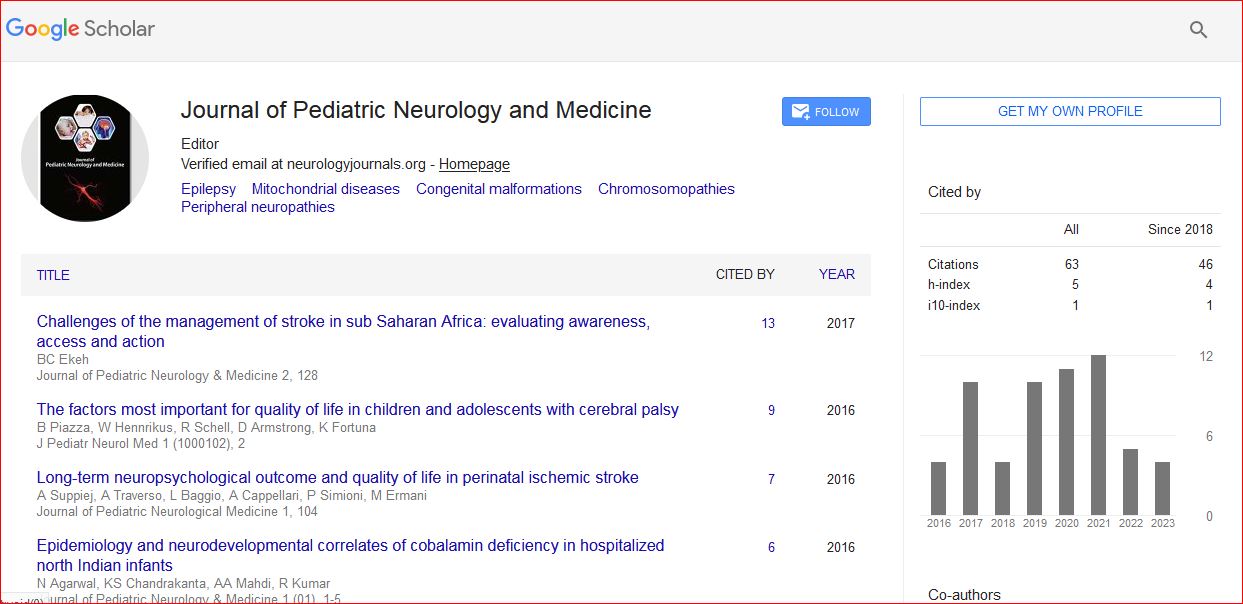
Journal of Pediatric Neurology and Medicine received 68 citations as per Google Scholar report