Perspective - (2025) Volume 9, Issue 6
Received: 02-Nov-2025, Manuscript No. hps-26-184501;
Editor assigned: 04-Nov-2025, Pre QC No. P-184501;
Reviewed: 18-Nov-2025, QC No. Q-184501;
Revised: 24-Nov-2025, Manuscript No. R-184501;
Published:
29-Nov-2025
, DOI: 10.37421/2573-4563.2025.9.376
Citation: Abdelrahman, Rania T.. ”Pancreatic Cancer: Overcoming Immunosuppression With Combinatorial Therapies.” J Hepatol Pancreat Sci 09 (2025):376.
Copyright: © 2025 Abdelrahman T. Rania This is an open-access article distributed under the terms of the Creative Commons Attribution License, which permits unrestricted use, distribution and reproduction in any medium, provided the original author and source are credited.
Pancreatic cancer represents a significant clinical challenge, primarily owing to its frequent late-stage diagnosis and limited responsiveness to standard therapeutic interventions. Immunotherapy, especially in the form of immune checkpoint inhibitors (ICIs), has emerged as a promising avenue, although its efficacy in pancreatic cancer often remains restricted. Current research efforts are intensely focused on devising strategies to amplify ICI effectiveness, which includes combining them with conventional chemotherapy, targeted agents, and other immunomodulatory compounds. These strategies are designed to confront the profoundly immunosuppressive tumor microenvironment, augment the presentation of neoantigens, and positively modulate the immune cells within the tumor infiltrate. Furthermore, early-phase clinical investigations are exploring novel therapeutic targets and combination regimens with the overarching aim of expanding the patient population who can potentially benefit from immunotherapy [1].
The stromal architecture within pancreatic ductal adenocarcinoma (PDAC) constitutes a substantial physical and immunological barrier, impeding both the delivery of therapeutic agents and the infiltration of immune cells into the tumor. Consequently, effectively targeting this dense stromal compartment is paramount for enhancing treatment outcomes. Promising approaches under investigation involve targeting cancer-associated fibroblasts (CAFs), enzymes responsible for degrading the extracellular matrix, and strategies aimed at normalizing tumor vasculature. The synergistic potential of combining these stromal-targeting agents with immunotherapy is a focal point of research, with the goal of creating a more conducive microenvironment for robust anti-tumor immune responses [2].
While CAR T-cell therapy has demonstrated remarkable success in hematological malignancies, its application in solid tumors, such as pancreatic cancer, is hampered by challenges including antigen heterogeneity, T-cell exhaustion, and the pervasive immunosuppressive tumor microenvironment. Researchers are actively developing innovative approaches to bolster CAR T-cell persistence and therapeutic impact. These include targeting multiple tumor-specific antigens simultaneously, engineering CAR constructs to resist immunosuppressive signals, and integrating CAR T-cells with other therapeutic modalities. A critical prerequisite for advancing CAR T-cell therapy in this context remains the identification of truly tumor-specific antigens [3].
The gut microbiome plays an integral role in modulating the host immune system and has a demonstrable influence on the body's response to various cancer immunotherapies. Certain bacterial species have been correlated with improved responses to ICIs across a spectrum of cancers. Consequently, strategies to intentionally manipulate the gut microbiome, such as through fecal microbiota transplantation or probiotic administration, are being developed to fortify anti-tumor immunity. A comprehensive understanding of the intricate interplay between the gut microbiome and the immune landscape of pancreatic cancer is an active and vital area of ongoing research [4].
Neoantigens, which originate from unique tumor-specific mutations, represent highly attractive targets for cancer immunotherapy due to their tumor-specific nature. Therapeutic cancer vaccines engineered to elicit potent immune responses against these neoantigens are currently undergoing rigorous investigation for the treatment of pancreatic cancer. The spectrum of strategies being explored encompasses personalized peptide vaccines, mRNA-based vaccines, and DNA vaccine platforms. Key challenges that persist include the accurate identification of immunogenic neoantigens and the development of effective delivery methods to prime a robust anti-tumor immune response, particularly within the challenging immunosuppressive microenvironment characteristic of PDAC [5].
Oncolytic viruses (OVs) are a class of viruses, either naturally occurring or genetically engineered, that possess the ability to selectively infect and lyse cancer cells while leaving healthy cells unharmed. Beyond direct cytolysis, OVs can also stimulate anti-tumor immunity by releasing tumor-associated antigens and danger signals that alert the immune system. For pancreatic cancer, specific considerations involve the selection of OVs capable of overcoming the dense stromal barrier and the immunosuppressive milieu. Combination therapies involving OVs and ICIs are under active exploration, with the expectation of achieving synergistic enhancements in anti-tumor immune responses [6].
Pancreatic cancer is intrinsically characterized by a highly immunosuppressive tumor microenvironment (TME). This TME is typically enriched with immunosuppressive cell populations, including myeloid-derived suppressor cells (MDSCs), tumor-associated macrophages (TAMs), and regulatory T cells (Tregs). These cellular components are instrumental in facilitating immune evasion by the tumor and contribute significantly to resistance against immunotherapy. Therapeutic interventions aimed at targeting these suppressive cell populations, such as employing inhibitors for CSF1R or CXCR2, are under investigation as means to reprogram the TME and thereby bolster anti-tumor immunity [7].
Biomarkers are indispensable tools for accurately predicting a patient's likelihood of responding to immunotherapy and for effectively monitoring the ongoing efficacy of treatment. In the context of pancreatic cancer, potential biomarkers under consideration include tumor mutational burden (TMB), microsatellite instability (MSI), specific gene expression profiles, and characteristic patterns of immune cell infiltration within the tumor. The identification of reliable and predictive biomarkers is crucial for enabling the development of personalized treatment strategies and for optimizing patient selection for immunotherapeutic approaches [8].
Combination therapeutic strategies are widely recognized as critical for overcoming the limitations in efficacy observed with single-agent immunotherapies in pancreatic cancer. The concurrent administration of ICIs with agents such as chemotherapy, radiation therapy, targeted therapies, or other immunomodulatory drugs is a major focus of current clinical trials. The primary objectives of these combination approaches are to enhance the infiltration of immune cells into the tumor, counteract existing immunosuppressive mechanisms, and foster a more potent and sustained anti-tumor immune response. The rational design of these combination therapies is considered paramount for achieving clinical success [9].
The metabolic reprogramming of immune cells within the tumor microenvironment exerts a substantial influence on their functional capacity and their ability to mount an effective anti-tumor response. Pancreatic cancer cells and associated stromal cells collectively contribute to creating a metabolically challenging landscape. Gaining a deeper understanding of how to modulate the metabolism of immune cells, for example, by targeting key metabolic pathways such as glycolysis or fatty acid oxidation, holds significant potential for enhancing their therapeutic efficacy and achieving synergistic effects with other immunotherapeutic strategies [10].
Pancreatic cancer presents a formidable therapeutic obstacle, largely attributed to its propensity for late diagnosis and inherent resistance to conventional treatments. Immunotherapy, particularly the application of immune checkpoint inhibitors (ICIs), has shown promise, yet responses in pancreatic cancer patients are frequently suboptimal. Consequently, extensive research is dedicated to identifying and implementing strategies that can enhance the efficacy of ICIs. These efforts include combining ICIs with chemotherapy, targeted therapies, and other immunomodulatory agents. The central focus of these strategies is to overcome the immunosuppressive characteristics of the tumor microenvironment, improve the presentation of tumor-specific neoantigens, and effectively modulate the immune cells that infiltrate the tumor. Early-phase clinical trials are actively evaluating novel therapeutic targets and innovative combination regimens, aiming to broaden the applicability and benefit of immunotherapy to a larger patient population [1].
The stromal component, a defining feature of pancreatic ductal adenocarcinoma (PDAC), creates a substantial physical and immunological barrier. This barrier significantly hinders both the delivery of therapeutic drugs and the infiltration of cytotoxic immune cells into the tumor mass. Therefore, targeting this dense stromal network is considered a crucial step towards improving therapeutic outcomes for patients. Current approaches include targeting cancer-associated fibroblasts (CAFs), employing enzymes that degrade the extracellular matrix, and implementing strategies for vascular normalization within the tumor. The potential synergistic benefits of combining stromal-targeting agents with immunotherapy are being actively investigated, with the ultimate goal of fostering a more permissive microenvironment for effective anti-tumor immune responses [2].
CAR T-cell therapy, despite its profound success in treating hematological malignancies, encounters substantial challenges when applied to solid tumors like pancreatic cancer. These challenges encompass antigen heterogeneity, the phenomenon of T-cell exhaustion, and the pervasive immunosuppressive nature of the tumor microenvironment. Researchers are actively pursuing strategies to enhance the persistence and efficacy of CAR T-cells. These include engineering CARs to target multiple antigens simultaneously, designing CAR constructs that are resistant to immunosuppressive signals, and combining CAR T-cells with other therapeutic modalities. A critical hurdle that still needs to be overcome is the identification of suitable tumor-specific antigens that can be reliably targeted [3].
The gut microbiome exerts a significant influence on the host's immune system and can profoundly impact the patient's response to cancer immunotherapies. Specific bacterial species have been identified and associated with enhanced responses to ICIs in various cancer types. In light of this, strategies aimed at manipulating the gut microbiome, such as fecal microbiota transplantation and the administration of probiotics, are being developed to boost anti-tumor immunity. A thorough understanding of the complex interactions between the gut microbiome and the immune system in the context of pancreatic cancer is an active and evolving area of research [4].
Neoantigens, which arise from tumor-specific mutations, represent highly desirable targets for the development of cancer immunotherapies. Therapeutic cancer vaccines designed to induce immune responses against these neoantigens are currently under investigation for pancreatic cancer. The range of strategies being explored includes personalized peptide vaccines, mRNA-based vaccines, and DNA vaccine approaches. Key challenges that remain include the accurate identification of immunogenic neoantigens and the development of effective methods for their delivery to prime a robust anti-tumor immune response, especially considering the immunosuppressive nature of the PDAC microenvironment [5].
Oncolytic viruses (OVs) are viruses, either naturally occurring or engineered, that exhibit a selective tropism for cancer cells, leading to their lysis while sparing normal cells. These viruses can also stimulate anti-tumor immunity by releasing tumor antigens and danger signals that activate the immune system. In the context of pancreatic cancer, strategies are being developed to select OVs that can effectively penetrate and function within the dense stroma and overcome the immunosuppressive environment. Combination therapies involving OVs and ICIs are being explored for their potential to synergistically enhance anti-tumor immune responses [6].
Pancreatic cancer is characteristically defined by an immunosuppressive tumor microenvironment (TME) that is densely populated with immune-suppressing cells. These include myeloid-derived suppressor cells (MDSCs), tumor-associated macrophages (TAMs), and regulatory T cells (Tregs). These cells play a critical role in enabling immune evasion by the tumor and contribute significantly to the resistance observed with immunotherapeutic treatments. Therapies designed to target these suppressive cell populations, such as inhibitors targeting CSF1R or CXCR2, are currently being investigated as potential strategies to reprogram the TME and enhance the host's anti-tumor immunity [7].
Biomarkers are of paramount importance for predicting patient responses to immunotherapy and for monitoring the effectiveness of treatment over time. For pancreatic cancer, a range of potential biomarkers are being investigated, including tumor mutational burden (TMB), microsatellite instability (MSI), specific gene expression profiles, and patterns of immune cell infiltration within the tumor. The identification of reliable and validated biomarkers is essential for enabling the implementation of personalized treatment strategies and for improving the selection of patients who are most likely to benefit from immunotherapeutic approaches [8].
Combination therapeutic strategies are considered crucial for overcoming the limitations associated with single-agent immunotherapies in the treatment of pancreatic cancer. The simultaneous administration of ICIs with chemotherapy, radiation therapy, targeted agents, or other immunomodulatory drugs is an active area of research and clinical investigation. The overarching goals of these combination strategies are to increase the infiltration of immune cells into the tumor, counteract mechanisms that suppress the immune response, and promote a more robust and effective anti-tumor immune response. The rational design of these combination therapies is considered a key determinant of their ultimate success [9].
Metabolic reprogramming of immune cells within the tumor microenvironment plays a significant role in dictating their functional capabilities and their effectiveness in combating cancer. Pancreatic cancer cells, along with stromal cells, actively create a metabolically challenging environment for immune cells. A deeper understanding of how to modulate the metabolism of these immune cells, for instance, by targeting critical pathways like glycolysis or fatty acid oxidation, could significantly enhance their anti-tumor activity and achieve synergistic effects when combined with other immunotherapeutic approaches [10].
Pancreatic cancer remains a challenging disease due to late diagnosis and limited response to therapies. Immunotherapy, particularly immune checkpoint inhibitors (ICIs), shows promise but faces limitations. Strategies to enhance ICI efficacy involve combining them with chemotherapy, targeted therapies, and other immunomodulators to overcome the immunosuppressive tumor microenvironment and improve immune cell function. CAR T-cell therapy faces hurdles in solid tumors like pancreatic cancer due to antigen variability and immunosuppression. Targeting the dense stroma of pancreatic cancer is crucial, with approaches focusing on cancer-associated fibroblasts and vascular normalization. The gut microbiome's role in modulating immunotherapy response is also a key research area. Neoantigens are promising targets for therapeutic vaccines, while oncolytic viruses offer direct tumor cell lysis and immune stimulation. The immunosuppressive tumor microenvironment, rich in suppressive immune cells, requires targeted therapies. Biomarkers are essential for predicting treatment response and guiding personalized therapies. Combination strategies, integrating various therapeutic modalities, are vital for improving outcomes. Metabolic reprogramming of immune cells is another area being explored to enhance anti-tumor immunity.
None
None
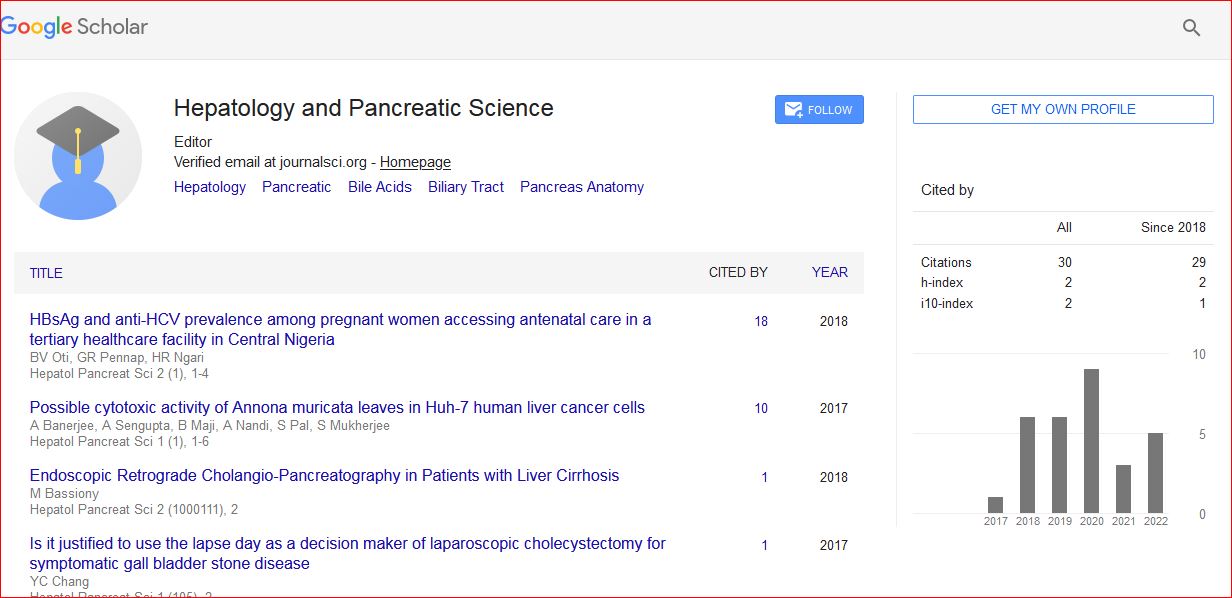
Hepatology and Pancreatic Science received 34 citations as per Google Scholar report