Brief Report - (2025) Volume 13, Issue 3
Received: 02-Jun-2025, Manuscript No. jaat-26-183157;
Editor assigned: 04-Jun-2025, Pre QC No. P-183157;
Reviewed: 18-Jun-2025, QC No. Q-183157;
Revised: 23-Jun-2025, Manuscript No. R-183157;
Published:
30-Jun-2025
, DOI: 10.37421/2329-6542.2025.13.356
Citation: Ramirez, Juan P.. ”Orbital Debris Management for Sustainable Space.” J Astrophys Aerospace Technol 13 (2025):356.
Copyright: © 2025 Ramirez P. Juan This is an open-access article distributed under the terms of the Creative Commons Attribution License, which permits unrestricted use, distribution and reproduction in any medium, provided the original author and source are credited.
Ensuring space situational awareness (SSA) and effectively managing orbital debris are critical for the sustained use of space. This involves a multi-faceted approach, encompassing enhanced tracking and characterization of space objects, predictive modeling of debris evolution, and the development of mitigation and remediation strategies. International collaboration and robust regulatory frameworks are essential to address the growing threat of Kessler syndrome and ensure the long-term sustainability of space activities [1].
Advanced sensor technologies and data fusion techniques are pivotal for improving the accuracy and timeliness of space object tracking. This research highlights the integration of optical, radar, and passive RF sensors to overcome the limitations of individual systems, leading to a more comprehensive understanding of the orbital environment [2].
The proliferation of small satellites and mega-constellations presents new challenges for SSA and debris management. This paper examines the impact of these trends on the orbital environment and proposes strategies for responsible deployment, including active debris removal technologies and improved collision avoidance maneuvers [3].
Orbital debris modeling and simulation are essential for predicting future debris populations and assessing collision risks. This work focuses on improving the fidelity of atmospheric drag models and solar activity influences on orbital trajectories, providing more accurate long-term predictions [4].
Active debris removal (ADR) technologies are gaining traction as a means to mitigate the growing debris problem. This study evaluates the feasibility and effectiveness of several ADR concepts, including robotic capture, deorbiting tethers, and laser ablation, considering their technical readiness and economic viability [5].
International cooperation is paramount for effective global space situational awareness and debris management. This article discusses the legal and policy frameworks needed to facilitate data sharing, joint monitoring efforts, and coordinated debris mitigation actions among nations [6].
The development of a comprehensive space traffic management (STM) system is crucial for preventing on-orbit collisions. This paper explores the requirements for an effective STM system, including real-time tracking, trajectory prediction, and the establishment of clear communication protocols for collision avoidance [7].
Re-entry risk assessment of space objects is a vital component of orbital debris management. This study presents improved methodologies for predicting the atmospheric re-entry trajectory and fragmentation of defunct satellites and rocket bodies to better assess risks to ground populations [8].
The use of artificial intelligence and machine learning is transforming SSA capabilities. This research explores the application of AI for automated detection, classification, and trajectory prediction of space objects, significantly enhancing the efficiency and accuracy of monitoring efforts [9].
The long-term sustainability of space requires proactive measures to address orbital debris. This paper emphasizes the importance of implementing the 'space debris mitigation guidelines' and exploring novel technologies for debris removal to safeguard future space activities [10].
Space situational awareness (SSA) and effective orbital debris management are foundational for the continued utility of space. A comprehensive strategy integrates enhanced tracking and characterization of space objects, predictive modeling of debris evolution, and the development of mitigation and remediation strategies. International collaboration and robust regulatory frameworks are indispensable for confronting the escalating risk of Kessler syndrome and ensuring the enduring sustainability of space operations [1].
Significant advancements in tracking space objects are being driven by sophisticated sensor technologies and data fusion techniques. Research demonstrates the synergistic benefits of integrating optical, radar, and passive radio frequency (RF) sensors, which collectively overcome the limitations inherent in individual systems, thereby enabling a more complete comprehension of the orbital environment [2].
The escalating numbers of small satellites and the emergence of mega-constellations introduce novel complexities to SSA and debris management paradigms. This investigation critically assesses the ramifications of these trends on the orbital environment and advances proposals for responsible deployment, encompassing the utilization of active debris removal technologies and the implementation of refined collision avoidance maneuvers [3].
Accurate prediction of future debris populations and the assessment of collision risks are critically dependent on advanced orbital debris modeling and simulation. Current efforts are focused on enhancing the fidelity of atmospheric drag models and understanding the influences of solar activity on orbital trajectories to achieve more precise long-term predictions [4].
Active debris removal (ADR) technologies are increasingly recognized as a vital solution for mitigating the escalating orbital debris problem. This study undertakes an evaluation of the technical feasibility and operational effectiveness of various ADR concepts, including robotic capture, deorbiting tethers, and laser ablation, while also considering their respective technical readiness levels and economic viability [5].
Effective global SSA and debris management are intrinsically linked to robust international cooperation. This paper delineates the essential legal and policy frameworks required to foster data sharing, enable joint monitoring initiatives, and coordinate debris mitigation actions among nations [6].
The development and implementation of a comprehensive space traffic management (STM) system are imperative for preventing on-orbit collisions. This paper elucidates the critical requirements for such a system, encompassing real-time tracking capabilities, precise trajectory prediction, and the establishment of unambiguous communication protocols for effective collision avoidance [7].
Assessing the risk associated with the atmospheric re-entry of space objects is a crucial element of orbital debris management. This study introduces refined methodologies designed to predict the re-entry trajectory and fragmentation patterns of defunct satellites and rocket bodies, thereby facilitating a more accurate evaluation of risks posed to populations on the ground [8].
The domain of SSA is undergoing a profound transformation through the application of artificial intelligence (AI) and machine learning (ML) techniques. This research explores the utilization of AI for automated detection, classification, and trajectory prediction of space objects, leading to substantial improvements in the efficiency and accuracy of space surveillance efforts [9].
Ensuring the long-term sustainability of space activities necessitates proactive measures to address the growing challenge of orbital debris. This paper underscores the critical importance of adhering to established 'space debris mitigation guidelines' and actively investigating innovative technologies for debris removal to safeguard future endeavors in space [10].
Space situational awareness and orbital debris management are crucial for sustainable space utilization. This involves advanced tracking, predictive modeling, and mitigation strategies, supported by international collaboration. New technologies like AI and advanced sensors enhance tracking accuracy. The rise of mega-constellations poses challenges, necessitating responsible deployment and active debris removal. Accurate modeling and re-entry risk assessments are vital. International cooperation and comprehensive space traffic management systems are essential to prevent collisions and ensure the long-term viability of space activities. Implementing debris mitigation guidelines and exploring novel removal technologies are key to safeguarding future space utilization.
None
None
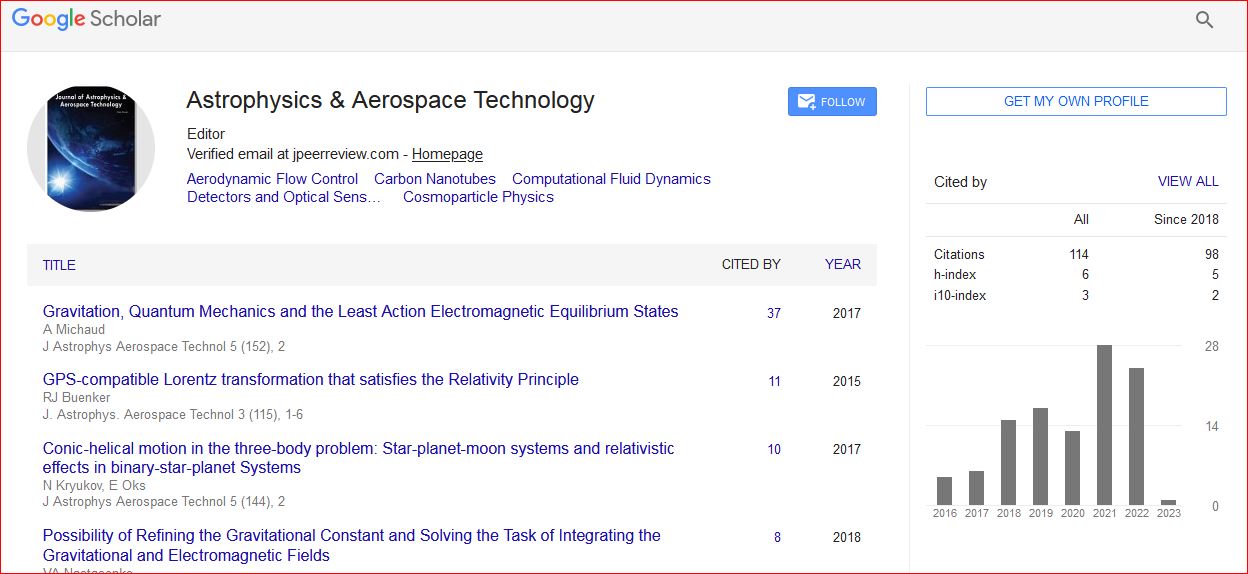
Astrophysics & Aerospace Technology received 114 citations as per Google Scholar report