Brief Report - (2025) Volume 14, Issue 3
Received: 02-Jun-2025, Manuscript No. jhoa-26-187785;
Editor assigned: 04-Jun-2025, Pre QC No. P-187785;
Reviewed: 18-Jun-2025, QC No. Q-187785;
Revised: 23-Jun-2025, Manuscript No. R-187785;
Published:
30-Jun-2025
, DOI: 10.37421/2167-1095.2025.14.517
Citation: Andersen, Lars. ”Obesity’s Complex Link to Hypertension Mechanisms.” J Hypertens 14 (2025):517.
Copyright: © 2025 Andersen L. This is an open-access article distributed under the terms of the Creative Commons Attribution License, which permits unrestricted use, distribution and reproduction in any medium, provided the original author and source are credited.
Obesity stands as a significant risk factor for hypertension, intricately linked through complex pathophysiological mechanisms. These include inflammation, insulin resistance, and the activation of the renin-angiotensin-aldosterone system. These interconnected pathways contribute to increased sympathetic nervous system activity, endothelial dysfunction, and altered vascular tone, ultimately leading to elevated blood pressure. Weight loss interventions, incorporating dietary modifications and physical activity, are paramount for managing both obesity and hypertension, frequently resulting in substantial reductions in blood pressure and cardiovascular risk [1].
The escalating global prevalence of obesity is inextricably associated with the rise in hypertension, presenting a formidable public health challenge. Excess adipose tissue, particularly visceral fat, releases adipokines and inflammatory mediators that disrupt cardiovascular homeostasis. This chronic low-grade inflammation and metabolic dysregulation promote vascular remodeling, oxidative stress, and endothelial dysfunction, all key contributors to the development and maintenance of high blood pressure. Understanding these mechanisms is vital for developing effective strategies to combat both conditions simultaneously [2].
The interplay between visceral obesity and hypertension is particularly concerning. Visceral adipose tissue is metabolically active, secreting hormones and cytokines that promote insulin resistance, dyslipidemia, and inflammation, all of which contribute to increased blood pressure. Sympathetic nervous system overactivity, a common feature in obesity, further exacerbates hypertension by increasing heart rate and peripheral vascular resistance. Addressing visceral adiposity is therefore a key target in managing this dual health burden [3].
Obesity-induced inflammation plays a pivotal role in the development of hypertension. Adipose tissue, especially when hypertrophied or inflamed, releases pro-inflammatory cytokines such as TNF-α and IL-6, which can impair endothelial function, promote vascular stiffness, and increase sympathetic outflow. This inflammatory cascade contributes significantly to the elevated blood pressure observed in obese individuals. Therapies aimed at reducing inflammation could therefore prove beneficial in managing both obesity and hypertension [4].
Insulin resistance, a hallmark of obesity, is intimately connected with hypertension. Impaired insulin signaling can lead to increased sodium reabsorption in the kidneys, activation of the sympathetic nervous system, and endothelial dysfunction, all contributing to higher blood pressure. Furthermore, hyperinsulinemia itself may exert direct pressor effects. Lifestyle modifications aimed at improving insulin sensitivity, such as weight loss and exercise, are therefore critical for managing hypertension in obese individuals [5].
The activation of the sympathetic nervous system is a crucial mediator linking obesity and hypertension. Excess adipose tissue, particularly visceral fat, leads to increased sympathetic nerve activity, which in turn promotes vasoconstriction, increased heart rate, and enhanced renin release, all contributing to elevated blood pressure. Lifestyle interventions that promote weight loss are effective in modulating sympathetic tone and improving blood pressure control [6].
Obesity is a major driver of hypertension, and the renin-angiotensin-aldosterone system (RAAS) plays a significant role in this relationship. Increased RAAS activity in obese individuals results in vasoconstriction, sodium retention, and inflammation, all of which contribute to elevated blood pressure. Targeting the RAAS with medications like ACE inhibitors and ARBs can be an effective strategy for managing hypertension in obese patients, although lifestyle modifications remain paramount [7].
Endothelial dysfunction is a critical link between obesity and hypertension. Excess body weight impairs the endothelium's ability to produce nitric oxide, a key vasodilator, while promoting the production of vasoconstrictors. This imbalance leads to reduced vascular compliance and increased blood pressure. Weight loss and exercise interventions can help restore endothelial function and improve blood pressure control in obese individuals [8].
Metabolic syndrome, which often encompasses obesity, hypertension, dyslipidemia, and insulin resistance, presents a significant cardiovascular risk. The clustering of these conditions amplifies their detrimental effects on the cardiovascular system. Effective management strategies necessitate a comprehensive approach targeting all components of the metabolic syndrome, with lifestyle modifications serving as the cornerstone for both weight management and blood pressure control [9].
The impact of bariatric surgery on hypertension in severely obese individuals is substantial. Weight loss achieved through bariatric procedures frequently leads to significant improvements or even remission of hypertension. This underscores the potent therapeutic effect of substantial weight reduction on blood pressure control, highlighting the direct link between obesity and hypertension and the efficacy of dedicated weight loss interventions [10].
Obesity is a principal risk factor for the development of hypertension, driven by a confluence of complex pathophysiological processes. These include chronic inflammation, the development of insulin resistance, and the overactivation of the renin-angiotensin-aldosterone system (RAAS). This intricate network of interconnected pathways results in heightened sympathetic nervous system activity, impaired endothelial function, and dysregulated vascular tone, collectively contributing to elevated blood pressure levels. Consequently, weight loss interventions, encompassing both dietary adjustments and increased physical activity, are indispensable for the effective management of both obesity and hypertension, often leading to significant improvements in blood pressure and a reduction in overall cardiovascular risk [1].
The pervasive global increase in obesity rates is intrinsically connected to the parallel rise in hypertension, creating a substantial public health crisis. Excess adipose tissue, particularly visceral fat accumulation, secretes various adipokines and pro-inflammatory mediators that can disrupt the delicate balance of cardiovascular homeostasis. This state of chronic low-grade inflammation, coupled with metabolic dysregulation, fosters pathological changes in the vasculature, including remodeling, increased oxidative stress, and endothelial dysfunction, all of which are critical factors in the pathogenesis and persistence of high blood pressure. A thorough understanding of these underlying mechanisms is therefore essential for the development of successful therapeutic strategies to address these co-existing conditions [2].
The specific relationship between visceral obesity and hypertension is a matter of significant clinical concern. Visceral adipose tissue is highly metabolically active, releasing a range of hormones and cytokines that promote insulin resistance, dyslipidemia, and systemic inflammation, all of which contribute to an increase in blood pressure. Furthermore, the overactivity of the sympathetic nervous system, a common characteristic observed in obese individuals, further exacerbates hypertension through mechanisms that include increased heart rate and elevated peripheral vascular resistance. Accordingly, targeting and reducing visceral adiposity emerges as a primary objective in the management of this dual health challenge [3].
Obesity-induced inflammation plays a central role in the pathogenesis of hypertension. Adipose tissue, particularly when it undergoes hypertrophy or becomes inflamed, releases pro-inflammatory cytokines such as tumor necrosis factor-alpha (TNF-α) and interleukin-6 (IL-6). These mediators can impair the normal function of the endothelium, promote increased stiffness of the blood vessels, and augment sympathetic nervous system outflow. This inflammatory cascade significantly contributes to the elevated blood pressure commonly observed in individuals with obesity. Therefore, therapeutic approaches designed to mitigate inflammation may offer considerable benefits in the comprehensive management of both obesity and hypertension [4].
Insulin resistance, a defining characteristic of obesity, exhibits a profound and intimate association with hypertension. Deficiencies in insulin signaling pathways can trigger several physiological responses that elevate blood pressure, including increased sodium reabsorption by the kidneys, heightened sympathetic nervous system activity, and impaired endothelial function. Moreover, the state of hyperinsulinemia itself may exert direct pressor effects on the vasculature. Consequently, lifestyle interventions aimed at enhancing insulin sensitivity, such as promoting weight loss and encouraging regular exercise, are of critical importance for effectively managing hypertension in the context of obesity [5].
The activation of the sympathetic nervous system serves as a crucial intermediary in the pathophysiological linkage between obesity and hypertension. Excess accumulation of adipose tissue, especially visceral fat, leads to an augmentation of sympathetic nerve activity. This heightened activity, in turn, promotes vasoconstriction of blood vessels, increases heart rate, and stimulates the release of renin, all of which contribute to an increase in blood pressure. Fortunately, lifestyle interventions focused on weight reduction have demonstrated efficacy in modulating sympathetic tone and improving overall blood pressure control [6].
Obesity is widely recognized as a primary driver of hypertension, with the renin-angiotensin-aldosterone system (RAAS) playing a pivotal role in mediating this relationship. In obese individuals, enhanced RAAS activity contributes to vasoconstriction, promotes sodium and water retention by the kidneys, and exacerbates inflammatory processes, all of which collectively lead to elevated blood pressure. Pharmacological interventions targeting the RAAS, such as ACE inhibitors and angiotensin II receptor blockers (ARBs), can be effective therapeutic strategies for managing hypertension in obese patients, although it is crucial to emphasize that lifestyle modifications remain the cornerstone of treatment [7].
Endothelial dysfunction represents a critical mechanistic link between obesity and the development of hypertension. An excess of body weight can impair the endothelium's capacity to generate nitric oxide (NO), a vital vasodilator that promotes smooth muscle relaxation and blood vessel dilation, while simultaneously increasing the production of vasoconstrictor substances. This imbalance disrupts normal vascular regulation, leading to reduced vascular compliance and consequently, elevated blood pressure. Fortunately, interventions such as weight loss and regular physical activity can help to restore endothelial function and improve blood pressure control in individuals with obesity [8].
Metabolic syndrome, a cluster of conditions that frequently includes obesity, hypertension, dyslipidemia, and insulin resistance, poses a significant threat to cardiovascular health. The concurrent presence of these metabolic abnormalities amplifies their deleterious effects on the cardiovascular system. Therefore, effective management necessitates a comprehensive and integrated approach that addresses all components of the metabolic syndrome, with lifestyle modifications being the fundamental strategy for achieving both weight management and optimal blood pressure control [9].
Bariatric surgery has demonstrated a substantial positive impact on hypertension among severely obese individuals. The significant weight loss achieved through these surgical procedures often results in marked improvements in blood pressure or even complete remission of hypertension. This outcome powerfully illustrates the profound therapeutic effect of substantial weight reduction on blood pressure regulation, thereby reinforcing the direct link between obesity and hypertension and underscoring the efficacy of dedicated interventions aimed at significant weight loss [10].
Obesity is a significant risk factor for hypertension, driven by mechanisms including inflammation, insulin resistance, and the renin-angiotensin-aldosterone system activation. These factors lead to increased sympathetic activity, endothelial dysfunction, and altered vascular tone, resulting in elevated blood pressure. Visceral obesity, in particular, contributes to cardiovascular issues through the release of adipokines and inflammatory mediators. Obesity-induced inflammation, through cytokines like TNF-α and IL-6, further impairs endothelial function and increases vascular stiffness. Insulin resistance, a common feature of obesity, also contributes to hypertension by affecting sodium reabsorption and sympathetic activity. Sympathetic nervous system overactivity in obesity promotes vasoconstriction and increased heart rate. While RAAS activation in obesity leads to vasoconstriction and sodium retention, targeting it with medications can be beneficial, though lifestyle changes are paramount. Endothelial dysfunction, characterized by impaired nitric oxide production, is another key link. Metabolic syndrome, a combination of these conditions, amplifies cardiovascular risk. Bariatric surgery has shown significant success in improving or resolving hypertension in severely obese individuals, highlighting the importance of weight loss.
None
None
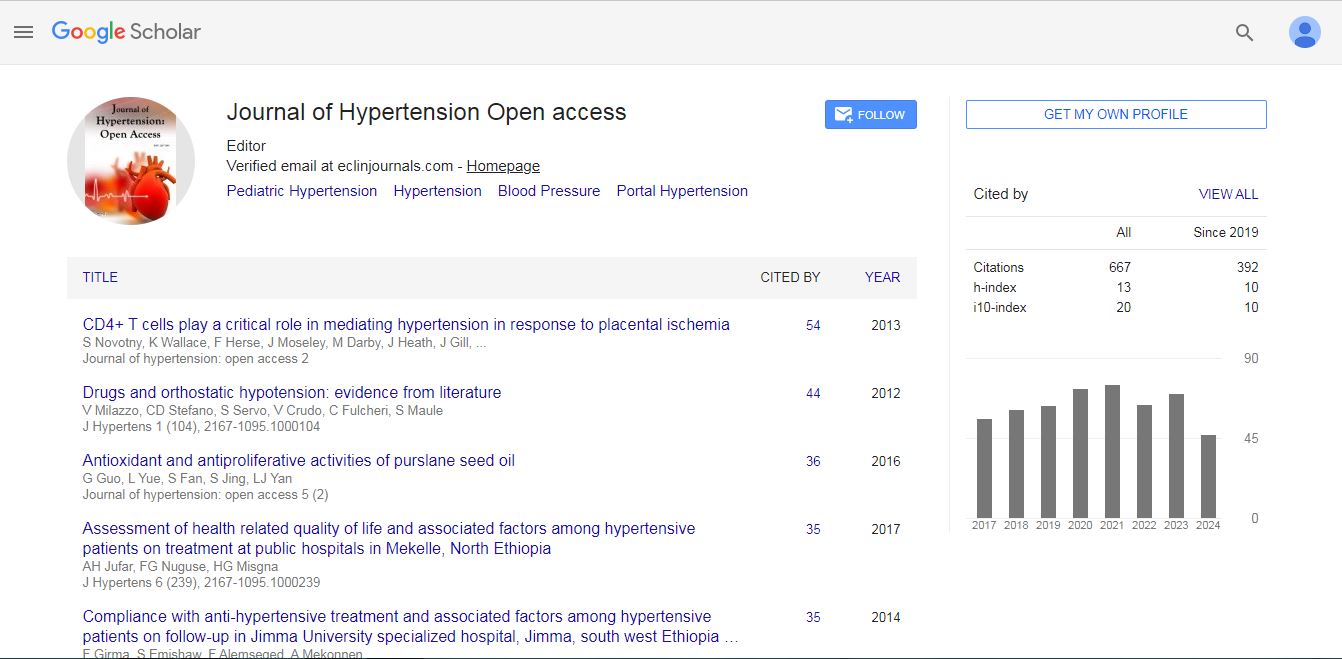
Journal of Hypertension: Open Access received 614 citations as per Google Scholar report