Commentary - (2025) Volume 13, Issue 5
Received: 01-Oct-2025, Manuscript No. jcdd-25-177662;
Editor assigned: 03-Oct-2025, Pre QC No. P-177662;
Reviewed: 17-Oct-2025, QC No. Q-177662;
Revised: 22-Oct-2025, Manuscript No. R-177662;
Published:
29-Oct-2025
, DOI: 10.37421/2329-9517.2025.13.691
Citation: Abdullah, Tariq. "Obesity: Complex Challenge, Diverse
Solutions." J Cardiovasc Dis Diagn 13 (2025):691.
Copyright: © 2025 Abdullah T. This is an open-access article distributed under the terms of the Creative Commons Attribution License, which permits unrestricted use,
distribution and reproduction in any medium, provided the original author and source are credited.
This article provides an up-to-date overview of pharmacological treatments for obesity, detailing current approved medications and those in development. It emphasizes the evolving landscape of drug therapies, particularly GLP-1 receptor agonists, and their efficacy in weight management, highlighting the importance of personalized approaches in clinical practice[1].
This scientific statement from the American Heart Association thoroughly examines the intricate relationship between obesity and cardiovascular disease. It outlines how obesity increases the risk for various cardiovascular conditions, emphasizes the critical role of lifestyle interventions, and discusses the potential benefits of pharmacological and surgical treatments in mitigating these risks[2].
This article highlights the crucial role primary care providers play in preventing and managing childhood obesity. It offers practical strategies for early identification, counseling parents on healthy lifestyle choices, and implementing effective interventions within the primary care setting, underscoring the importance of a proactive and consistent approach[3].
This review delves into the critical role of adipose tissue inflammation in the development of obesity-related metabolic dysfunction. It elucidates the cellular and molecular mechanisms driving this inflammation, linking it to insulin resistance and other comorbidities, and suggests potential therapeutic targets aimed at resolving chronic inflammation in obese individuals[4].
This comprehensive review explores the profound influence of the gut microbiome on obesity development and its associated metabolic disorders. It synthesizes current research on microbial dysbiosis, identifies key bacterial species and metabolic pathways involved, and discusses promising therapeutic strategies targeting the gut microbiota for obesity management[5].
This article reviews the contemporary role of bariatric surgery in managing severe obesity, highlighting its efficacy in achieving sustained weight loss and resolving comorbidities. It covers different surgical techniques, patient selection criteria, and long-term outcomes, underscoring the procedure's benefits and potential risks in a comprehensive manner[6].
This article explores the complex genetic underpinnings of obesity, moving beyond simple monogenic causes to polygenic influences and gene-environment interactions. It discusses how genetic predispositions affect energy metabolism and appetite regulation, providing insights into potential personalized prevention and treatment strategies based on an individual's genetic profile[7].
This review examines the complex, bidirectional relationship between obesity and various mental health conditions. It explores how obesity can predispose individuals to psychological distress, depression, and anxiety, while also discussing how mental health disorders can contribute to weight gain, emphasizing the need for integrated care approaches[8].
This article investigates the global socioeconomic factors contributing to the rising prevalence of obesity. It highlights how income, education, occupation, and access to healthy food environments disproportionately affect obesity rates across different populations, advocating for policy interventions that address these systemic inequalities to promote healthier outcomes[9].
This systematic review and meta-analysis assesses the effectiveness of various digital health interventions in managing obesity. It provides evidence on how mobile apps, wearable devices, and online platforms can facilitate weight loss and improve health behaviors, highlighting their potential as scalable tools for obesity prevention and treatment, while also noting areas for further research and improvement[10].
Obesity is a multifaceted health concern influenced by a complex interplay of biological, behavioral, and environmental factors. Modern medical science offers a range of interventions, from pharmacological approaches to surgical solutions, demonstrating a continuous evolution in managing this condition. Pharmacological treatments, particularly GLP-1 receptor agonists, are increasingly recognized for their efficacy in weight management, underscoring the shift towards personalized medicine in clinical practice [1]. For individuals with severe obesity, bariatric surgery represents a highly effective option, consistently achieving sustained weight loss and significant resolution of associated comorbidities. A review of current practices highlights the diverse surgical techniques available, patient selection protocols, and long-term outcomes, emphasizing both the substantial benefits and inherent risks of such procedures [6].
Beyond direct interventions, a deeper understanding of the underlying biological mechanisms is crucial for effective treatment development. Adipose tissue, once simply viewed as an energy storage organ, is now understood to play a critical role in metabolic dysfunction through inflammation. Research delves into the cellular and molecular pathways driving this inflammation, revealing its links to insulin resistance and other comorbidities, thereby suggesting novel therapeutic targets aimed at resolving chronic inflammation in obese individuals [4]. The gut microbiome also profoundly influences obesity and related metabolic disorders. Studies synthesize current knowledge on microbial dysbiosis, identifying specific bacterial species and metabolic pathways that contribute to obesity, and explore promising therapeutic strategies that target the gut microbiota for management [5]. Furthermore, the genetic underpinnings of obesity are complex, extending beyond simple monogenic causes to include polygenic influences and intricate gene-environment interactions that modulate energy metabolism and appetite regulation. These genetic insights pave the way for personalized prevention and treatment strategies tailored to an individual's unique genetic profile [7].
The impact of obesity extends into broader health domains and is shaped by societal influences. It has a well-established, intricate relationship with cardiovascular disease, significantly increasing the risk for various cardiovascular conditions. This highlights the critical importance of lifestyle modifications alongside potential pharmacological and surgical interventions to mitigate these risks [2]. A bidirectional relationship also exists between obesity and mental health. Obesity can predispose individuals to psychological distress, depression, and anxiety, while conversely, mental health disorders can contribute to weight gain. This underscores the necessity for integrated care approaches that address both physical and psychological well-being [8].
Moreover, global socioeconomic factors play a significant role in the escalating prevalence of obesity. Variables such as income, education level, occupation, and access to environments conducive to healthy living, including healthy food options, disproportionately affect obesity rates across different populations. Recognizing these systemic inequalities is vital for advocating policy interventions aimed at promoting healthier outcomes for all [9]. In terms of prevention, particularly for childhood obesity, primary care providers are instrumental. They offer practical strategies for early identification, provide essential counseling to parents on healthy lifestyle choices, and implement effective interventions within the primary care setting, advocating for a proactive and consistent approach [3]. The advent of digital health interventions offers promising, scalable tools for managing obesity. Systematic reviews and meta-analyses demonstrate the effectiveness of mobile applications, wearable devices, and online platforms in facilitating weight loss and improving health behaviors, although further research is needed to optimize their long-term impact and reach [10].
Obesity presents a complex global health challenge, addressed through diverse research perspectives. Pharmacological treatments, particularly GLP-1 receptor agonists, offer evolving solutions for weight management, emphasizing personalized approaches. Bariatric surgery also proves effective for severe obesity, achieving sustained weight loss and resolving comorbidities, with various techniques and long-term outcomes reviewed. Beyond direct interventions, understanding the biological underpinnings is crucial. Adipose tissue inflammation plays a key role in metabolic dysfunction, linking to insulin resistance and suggesting therapeutic targets. The gut microbiome significantly influences obesity development and associated metabolic disorders, with dysbiosis identified and potential therapeutic strategies explored. Genetic factors, from monogenic to polygenic influences and gene-environment interactions, impact energy metabolism and appetite regulation, informing personalized prevention. The broader implications of obesity are substantial. It intricately links with cardiovascular disease, increasing risk for various conditions and highlighting the importance of lifestyle, pharmacological, and surgical interventions. A complex, bidirectional relationship exists between obesity and mental health, where obesity can predispose individuals to psychological distress, and mental health disorders can contribute to weight gain, necessitating integrated care. Socioeconomic factors, including income, education, and access to healthy food, are global determinants influencing obesity rates, advocating for policy interventions to address systemic inequalities. Prevention efforts are vital, especially in childhood, where primary care providers play a crucial role in early identification, counseling parents, and implementing effective interventions. Digital health interventions, such as mobile apps and wearables, offer scalable tools for managing obesity by facilitating weight loss and improving health behaviors. These varied perspectives collectively underscore the intricate nature of obesity and the necessity of multi-pronged strategies for effective management and prevention.
Indexed at, Google Scholar, Crossref
Indexed at, Google Scholar, Crossref
Indexed at, Google Scholar, Crossref
Indexed at, Google Scholar, Crossref
Indexed at, Google Scholar, Crossref
Indexed at, Google Scholar, Crossref
Indexed at, Google Scholar, Crossref
Indexed at, Google Scholar, Crossref
Indexed at, Google Scholar, Crossref
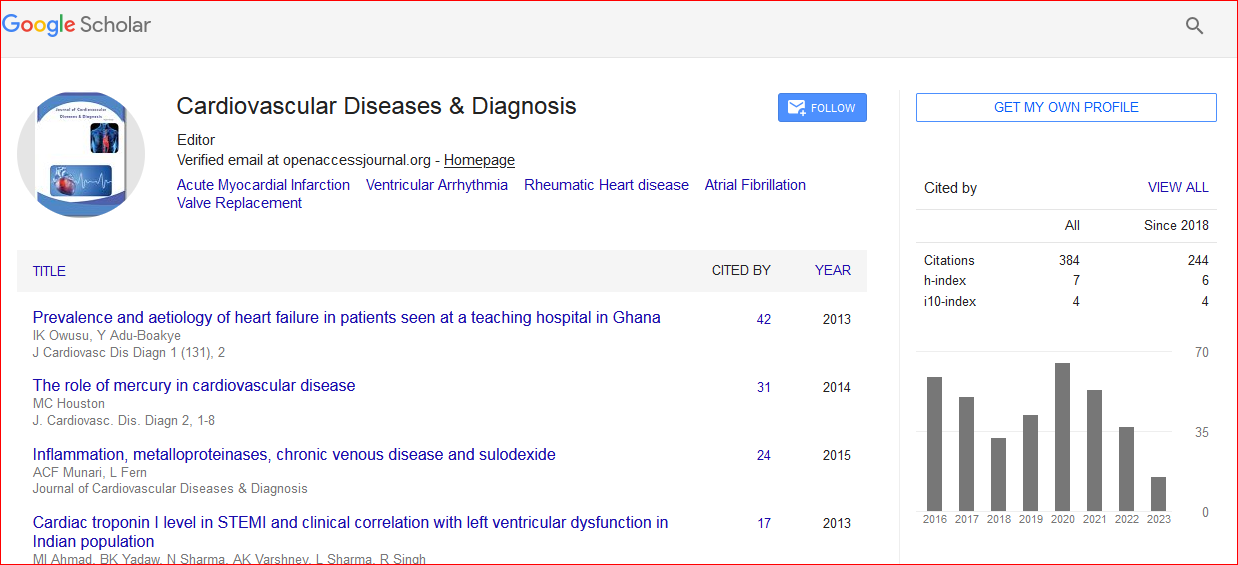
Cardiovascular Diseases & Diagnosis received 427 citations as per Google Scholar report