Opinion - (2025) Volume 9, Issue 2
Received: 01-Apr-2025, Manuscript No. ahbs-26-182403;
Editor assigned: 03-Apr-2025, Pre QC No. P-182403;
Reviewed: 17-Apr-2025, QC No. Q-182403;
Revised: 22-Apr-2025, Manuscript No. R-182403;
Published:
29-Apr-2025
, DOI: 10.37421/2952-8097.2025.9.307
Citation: Thompson, Laura J.. ”Nutrition: Key to Animal Wellbeing
and Behavior.” J Anim Health Behav Sci 09 (2025):307.
Copyright: © 2025 Thompson J. Laura This is an open-access article distributed under the terms of the Creative Commons Attribution License, which permits unrestricted use,
distribution and reproduction in any medium, provided the original author and source are credited.
The intricate relationship between nutrition and animal well-being is a cornerstone of modern veterinary science, impacting a broad spectrum of physiological and behavioral functions. Optimal nutrition is intrinsically linked to animal well-being, influencing everything from immune function and growth to cognitive abilities and social interactions. Specific nutrient deficiencies or imbalances can manifest as altered behaviors, increased susceptibility to disease, and reduced productivity, highlighting the critical role of dietary management in veterinary science. [1]
Maternal nutrition profoundly impacts offspring development, extending beyond physical growth to influence neurological pathways and stress responses. This early programming can have long-lasting effects on an animal's health and behavior throughout its life, underscoring the importance of adequate nutrition during gestation and lactation. [2] Micronutrient deficiencies, particularly those involving trace elements like zinc and selenium, can lead to impaired immune function and manifest as increased anxiety or aggression in various animal species. Ensuring adequate intake of these essential cofactors is vital for maintaining neurological health and stable behavior. [3] The gut microbiome's intricate relationship with the brain, known as the gut-brain axis, is significantly influenced by diet. A balanced gut microbiota, fostered by appropriate fiber intake and pre/probiotics, can positively impact mood, reduce stress, and improve cognitive function in animals. [4] Omega-3 fatty acids are crucial for brain health and neurotransmitter function. Their inclusion in the diet has been associated with reduced inflammation, improved cognitive performance, and a decrease in aggressive or anxious behaviors in various domestic and captive animal populations. [5] Protein quality and quantity directly affect an animal's energy levels, muscle development, and neurological function. Inadequate protein can lead to lethargy and impaired cognitive processes, while imbalances can impact neurotransmitter synthesis, influencing mood and excitability. [6] The palatability and presentation of food can significantly influence an animal's feeding behavior and stress levels. Foraging opportunities and varied diets can promote natural behaviors, reduce boredom, and contribute to overall psychological well-being. [7] Excessive caloric intake and diets high in refined carbohydrates and saturated fats can contribute to obesity, which is increasingly recognized as a factor in behavioral issues such as lethargy, reduced exploration, and increased aggression due to inflammation and metabolic disturbances. [8] Specific dietary interventions, such as therapeutic diets designed to manage inflammation or support neurological health, can be instrumental in altering undesirable behaviors and improving overall quality of life in animals with specific health conditions. [9] The impact of dietary toxins and antinutrients on animal behavior and health is a critical concern. Contaminated feed or improperly prepared ingredients can lead to neurological dysfunction, behavioral abnormalities, and significant health risks, necessitating stringent quality control. [10]The fundamental role of nutrition in shaping animal behavior and overall well-being is a multifaceted area of study with profound implications for veterinary practice and animal husbandry. Optimal nutrition is intrinsically linked to animal well-being, influencing everything from immune function and growth to cognitive abilities and social interactions. Specific nutrient deficiencies or imbalances can manifest as altered behaviors, increased susceptibility to disease, and reduced productivity, highlighting the critical role of dietary management in veterinary science. [1]
Maternal nutrition profoundly impacts offspring development, extending beyond physical growth to influence neurological pathways and stress responses. This early programming can have long-lasting effects on an animal's health and behavior throughout its life, underscoring the importance of adequate nutrition during gestation and lactation. [2] Micronutrient deficiencies, particularly those involving trace elements like zinc and selenium, can lead to impaired immune function and manifest as increased anxiety or aggression in various animal species. Ensuring adequate intake of these essential cofactors is vital for maintaining neurological health and stable behavior. [3] The gut microbiome's intricate relationship with the brain, known as the gut-brain axis, is significantly influenced by diet. A balanced gut microbiota, fostered by appropriate fiber intake and pre/probiotics, can positively impact mood, reduce stress, and improve cognitive function in animals. [4] Omega-3 fatty acids are crucial for brain health and neurotransmitter function. Their inclusion in the diet has been associated with reduced inflammation, improved cognitive performance, and a decrease in aggressive or anxious behaviors in various domestic and captive animal populations. [5] Protein quality and quantity directly affect an animal's energy levels, muscle development, and neurological function. Inadequate protein can lead to lethargy and impaired cognitive processes, while imbalances can impact neurotransmitter synthesis, influencing mood and excitability. [6] The palatability and presentation of food can significantly influence an animal's feeding behavior and stress levels. Foraging opportunities and varied diets can promote natural behaviors, reduce boredom, and contribute to overall psychological well-being. [7] Excessive caloric intake and diets high in refined carbohydrates and saturated fats can contribute to obesity, which is increasingly recognized as a factor in behavioral issues such as lethargy, reduced exploration, and increased aggression due to inflammation and metabolic disturbances. [8] Specific dietary interventions, such as therapeutic diets designed to manage inflammation or support neurological health, can be instrumental in altering undesirable behaviors and improving overall quality of life in animals with specific health conditions. [9] The impact of dietary toxins and antinutrients on animal behavior and health is a critical concern. Contaminated feed or improperly prepared ingredients can lead to neurological dysfunction, behavioral abnormalities, and significant health risks, necessitating stringent quality control. [10]Animal behavior and well-being are intimately connected to their nutritional status. Optimal diets are essential for immune function, growth, cognitive abilities, and social interactions. Deficiencies or imbalances in nutrients can lead to behavioral changes, increased disease susceptibility, and reduced productivity. Maternal nutrition significantly influences offspring development, impacting neurological pathways and stress responses with long-term effects. Micronutrients like zinc and selenium are vital for neurological health and behavior, with deficiencies potentially causing anxiety or aggression. The gut microbiome, modulated by diet, plays a crucial role in the gut-brain axis, affecting mood, stress, and cognition. Omega-3 fatty acids are important for brain health, potentially reducing inflammation and improving behavior. Protein intake affects energy levels, muscle development, and neurological function, influencing mood and excitability. Food presentation and palatability can impact feeding behavior and stress, while varied diets promote natural behaviors. Conversely, excessive caloric intake and diets high in unhealthy fats can lead to obesity and behavioral issues. Therapeutic diets can be used to manage behavioral disorders. Finally, dietary toxins and antinutrients pose significant risks, causing neurological dysfunction and behavioral abnormalities, emphasizing the need for stringent feed quality control.
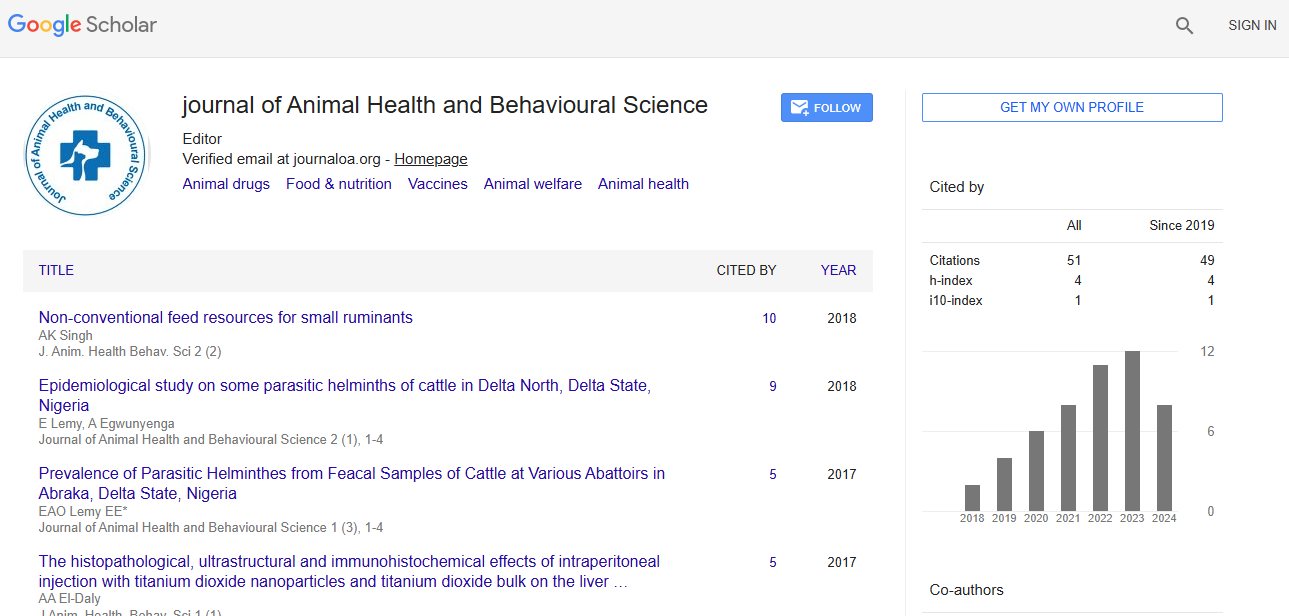
Journal of Animal Health and Behavioural Science received 38 citations as per Google Scholar report