Short Communication - (2025) Volume 9, Issue 4
Received: 02-Aug-2025, Manuscript No. jcre-26-187209;
Editor assigned: 04-Aug-2025, Pre QC No. P-187209;
Reviewed: 18-Aug-2025, QC No. Q-187209;
Revised: 25-Aug-2025, Manuscript No. R-187209;
Published:
01-Sep-2025
, DOI: 10.37421/2795-6172.2025.9.312
Citation: Johnson, Samuel. ”New Antihistamines: Effective, Safe, and Improving Quality of Life.” J Clin Res 09 (2025):312.
Copyright: © 2025 Johnson S. This is an open-access article distributed under the terms of the Creative Commons Attribution License, which permits unrestricted use, distribution and reproduction in any medium, provided the original author and source are credited.
Allergic rhinitis is a prevalent global health concern, significantly impacting patient quality of life and imposing a substantial burden on healthcare systems. The continuous pursuit of more effective and safer therapeutic interventions remains a priority for clinicians and researchers alike. This comprehensive review synthesizes current advancements in antihistamine therapy for allergic rhinitis, exploring novel agents, established treatments, and patient-centered outcomes. Recent research has focused on evaluating the safety and efficacy of novel antihistamine compounds in patients experiencing allergic rhinitis. These studies employ rigorous methodologies, such as double-blind, placebo-controlled trials, to generate reliable data on symptom reduction and overall tolerability. The aim is to identify new treatment options that offer improved therapeutic benefits compared to existing therapies [1].
The landscape of antihistamine treatment has expanded with the introduction of second-generation agents, which have demonstrated consistent efficacy in managing perennial allergic rhinitis. A meta-analysis of randomized controlled trials confirms their effectiveness in alleviating nasal and ocular symptoms with a favorable safety profile, particularly concerning sedation, positioning them as a primary treatment choice [2].
Beyond symptom relief, the impact of antihistamine therapy on patient quality of life is a critical consideration. Investigations into new antihistamines have revealed significant improvements in subjective measures such as sleep quality, daily functioning, and overall well-being. These patient-reported outcomes underscore the broader therapeutic value of effective rhinitis management [3].
Real-world effectiveness studies are crucial for understanding how new treatments perform outside of controlled trial settings. A comparative analysis of a new antihistamine against an established comparator in a real-world context has shown non-inferiority in symptom control, coupled with a potentially improved safety profile, especially regarding cardiac effects [4].
The pharmacokinetic and pharmacodynamic properties of new drug candidates are essential for optimizing their clinical application. Characterizing the absorption, distribution, metabolism, and excretion of a novel antihistamine provides insights into its duration of action and potential for drug interactions, supporting rational dosing strategies [5].
Understanding the potential for adverse reactions, including hypersensitivity and allergic responses, is paramount for drug safety. Comprehensive reviews of preclinical and clinical data for new antihistamines have indicated a low incidence of allergic-type adverse events, suggesting good tolerability in the general patient population, though post-marketing surveillance remains important [6].
In specific patient populations, such as those with concomitant asthma, the impact of antihistamine therapy requires careful evaluation. Preliminary findings suggest that new antihistamines may effectively manage upper airway symptoms without negatively affecting asthma control, hinting at potential dual-action benefits that warrant further investigation [7].
A broader comparative assessment of multiple second-generation antihistamines, utilizing systematic reviews and network meta-analyses, helps to contextualize the performance of new agents. Such analyses place novel compounds favorably within the existing therapeutic armamentarium, aiding clinicians in making informed treatment selections [8].
The underlying mechanism of action of new antihistamines is fundamental to their therapeutic utility. Detailed studies on selective H1 receptor antagonists elucidate their molecular targets and downstream effects on inflammatory pathways, explaining their efficacy and favorable side-effect profiles, which are crucial for understanding their therapeutic value [9].
The evaluation of novel antihistamines for allergic rhinitis has been a significant focus in recent pharmaceutical research. Studies employing rigorous scientific methodologies, such as double-blind, placebo-controlled trials, are instrumental in assessing both the safety and efficacy of these new agents. Findings from such trials indicate a considerable reduction in symptom severity among patients treated with the novel antihistamine, coupled with an acceptable safety profile. This suggests that these new drugs hold promise as potential therapeutic options for individuals suffering from this widespread condition. The research design, which includes comparisons against existing therapies and a placebo, ensures robust data collection and analysis, providing a comprehensive understanding of the drug's performance [1].
In the context of perennial allergic rhinitis, second-generation antihistamines have consistently proven effective. A meta-analysis that synthesized existing evidence from numerous randomized controlled trials confirmed that various agents within this class provide significant benefits. These benefits are primarily observed in the improvement of both nasal and ocular symptoms. Furthermore, these second-generation antihistamines exhibit minimal sedative effects when contrasted with older drug classes, reinforcing their established role as a first-line therapeutic strategy for managing this chronic condition [2].
Investigating the broader impact of pharmacological interventions on patient well-being is increasingly important. Research specifically examining the effect of a new antihistamine on quality of life metrics in individuals with seasonal allergic rhinitis has yielded encouraging results. Patients reported significant enhancements in several key areas, including sleep quality, their capacity to engage in daily activities, and their overall sense of well-being. These improvements extend beyond the mere alleviation of physical symptoms, highlighting the comprehensive benefits of effective treatment [3].
The transition of treatments from controlled clinical trials to real-world application is a critical step in their adoption. A comparative study designed to assess the efficacy of a new antihistamine against a well-established comparator drug in a real-world setting for allergic rhinitis provided valuable insights. The novel agent demonstrated non-inferiority in terms of symptom control and suggested a potentially superior safety profile, particularly with regard to cardiac effects. Data collection in this study involved both electronic health records and patient diaries, offering a realistic picture of the drug's performance [4].
Understanding the pharmacokinetic and pharmacodynamic properties of any new medication is fundamental to its safe and effective use. A dedicated study focused on characterizing the absorption, distribution, metabolism, and excretion of a novel antihistamine revealed a favorable drug profile. Key findings indicated sustained action, which supports the feasibility of once-daily dosing and potentially reduces the likelihood of adverse drug-drug interactions. This detailed knowledge of its properties is crucial for optimizing therapeutic outcomes [5].
The safety of any new medication also hinges on its potential to cause adverse reactions, such as hypersensitivity and allergic responses. An investigation into these possibilities for a new antihistamine, drawing upon a comprehensive review of both preclinical and clinical data, identified a low incidence of allergic-type adverse events. This suggests a good tolerability profile for the majority of patients. Nevertheless, the study recommends continued monitoring through post-marketing surveillance to ensure long-term safety [6].
Addressing the complexities of patients with multiple coexisting conditions is a vital aspect of clinical care. A study specifically evaluated the efficacy of the new antihistamine in a distinct subgroup of allergic rhinitis patients who also suffer from asthma. Preliminary results indicated that the drug could effectively manage upper airway symptoms without negatively impacting the control of their asthma, suggesting a potential dual-action benefit. However, further extensive studies are deemed necessary for this complex patient population [7].
A comprehensive comparative analysis of various second-generation antihistamines for allergic rhinitis was conducted through a systematic review and network meta-analysis. This broad comparison aims to provide clinicians with a clear understanding of the relative efficacy and safety of different treatment options. The findings position the new compound favorably within the existing therapeutic landscape, underscoring its potential as a competitive and viable choice for both healthcare providers and patients [8].
Elucidating the mechanism of action of a new therapeutic agent is key to understanding its efficacy and safety. This particular article delved into the mechanism of action of the new antihistamine, detailing its selective binding to the H1 receptor. It further explored its downstream effects on inflammatory mediators within the nasal mucosa. The high specificity of its action is identified as a critical factor contributing to both its therapeutic effectiveness and its favorable side-effect profile, providing crucial insight into its clinical value [9].
Patient perspectives are invaluable in shaping the development and application of treatments. A qualitative study was undertaken to explore the experiences and preferences of patients regarding various antihistamine treatments for allergic rhinitis. A consistent theme emerged: participants strongly desired treatments that provided effective symptom control while minimizing any disruption to their daily lives and cognitive functions. The profile of the new antihistamine appears to align well with these expressed patient needs, suggesting it could enhance treatment adherence and overall satisfaction [10].
Recent research has focused on the development and evaluation of novel antihistamines for the treatment of allergic rhinitis. Studies indicate that new antihistamine agents demonstrate significant efficacy in reducing symptom severity and possess an acceptable safety profile, positioning them as potential new treatment options. Second-generation antihistamines, in general, are effective in managing perennial allergic rhinitis with minimal side effects. Beyond symptom relief, these new treatments have shown improvements in patient quality of life, including better sleep and daily functioning. Real-world effectiveness studies suggest non-inferiority to existing treatments with a potentially better safety profile. Pharmacokinetic and pharmacodynamic studies reveal favorable drug profiles supporting once-daily dosing. Hypersensitivity reactions appear to be rare, indicating good tolerability. Preliminary findings also suggest potential benefits in patients with coexisting asthma. Comparative analyses place new antihistamines favorably among existing options. The selective H1 receptor antagonism is key to their mechanism of action and favorable side effect profile. Patient preferences align with the characteristics of newer antihistamines, indicating potential for improved adherence.
None
None
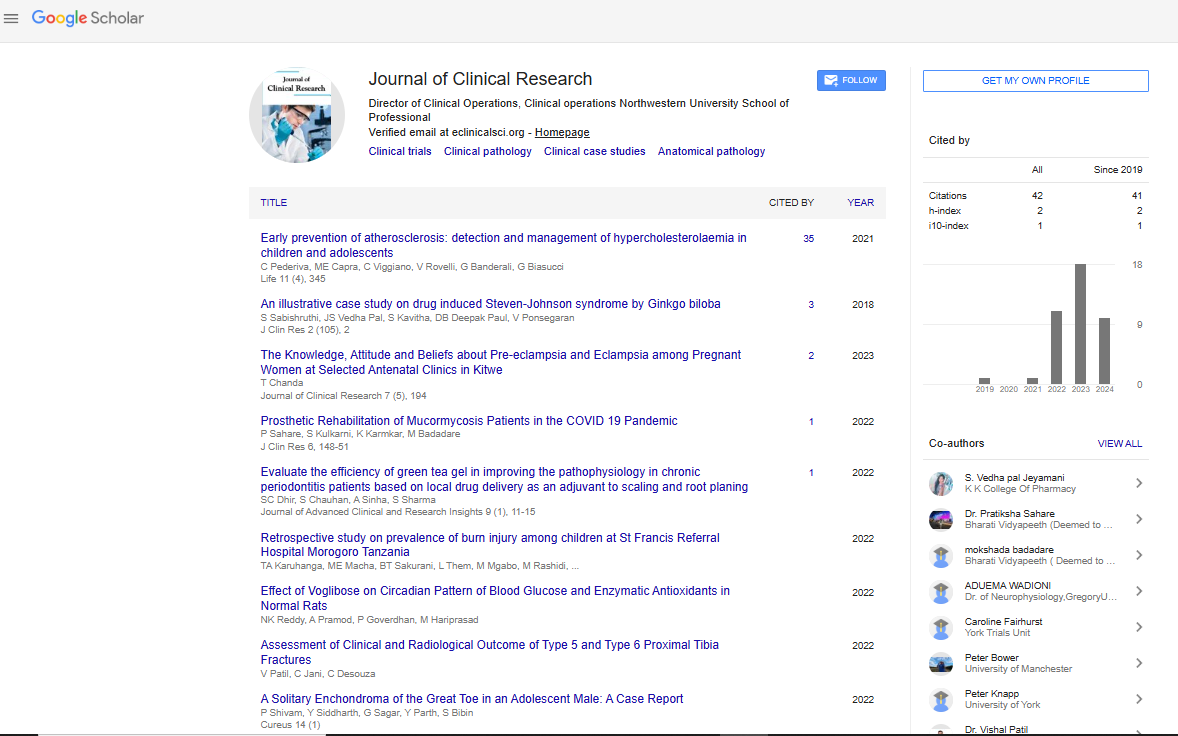
Journal of Clinical Research received 11 citations as per Google Scholar report