Opinion - (2026) Volume 10, Issue 1
Received: 01-Feb-2026, Manuscript No. cmcr-25-186122;
Editor assigned: 03-Feb-2026, Pre QC No. P-186122;
Reviewed: 17-Feb-2026, QC No. Q-186122;
Revised: 23-Feb-2026, Manuscript No. R-186122;
Published:
02-Mar-2026
, DOI: 10.37421/2684-4915.2025.9.419
Citation: Weber, Felix. "Neurology's Revolution: New Therapies, Personalized Medicine."Clin Med Case Rep 10 (2026):419.
Copyright: © 2026 Weber F. This is an open-access article distributed under the terms of the Creative Commons Attribution License, which permits unrestricted use, distribution
and reproduction in any medium, provided the original author and source are credited.
The intricate genetic architecture underlying neurodegenerative diseases is undergoing profound clarification, revealing novel therapeutic targets that stem directly from genetic research. This necessitates a paradigm shift towards personalized treatment strategies, tailored to an individual's unique genetic makeup, promising a more effective and nuanced approach to patient care [1].
Parallel to genetic insights, the gut microbiome has emerged as a critical player in the pathogenesis of complex neurological disorders, particularly Parkinson's disease. The bidirectional communication axis between the gut and the brain is increasingly recognized, suggesting that modulating the microbial ecosystem could unlock novel therapeutic avenues for symptom management [2].
Early and accurate diagnosis remains a cornerstone for effective intervention in neurodegenerative conditions. Advanced neuroimaging techniques, including Positron Emission Tomography (PET) and Magnetic Resonance Imaging (MRI), are showing remarkable promise in identifying subtle pathological changes, thereby facilitating earlier therapeutic engagement in diseases like Alzheimer's disease [3].
Neuroinflammation is a central pathological hallmark across a spectrum of neurological disorders. In conditions such as multiple sclerosis, a deeper understanding of key inflammatory pathways is paving the way for targeted therapies aimed at mitigating disease progression and alleviating debilitating symptoms by interrupting these detrimental cascades [4].
The landscape of treatments for amyotrophic lateral sclerosis (ALS) is continuously evolving, with a recent surge in disease-modifying therapies. Despite significant challenges in drug development, emerging therapeutic strategies offer renewed hope for patients, addressing the complex biological underpinnings of this devastating condition [5].
Glial cells, once considered mere support cells, are now understood to play pivotal roles in both neuroinflammation and neurodegeneration. Their active contribution to disease processes suggests that targeting glial cell activation represents a promising therapeutic strategy for a range of neurological disorders [6].
Acute stroke management has seen significant advancements, particularly in the realm of reperfusion therapies. However, ongoing research into neuroprotective agents continues to be crucial for improving outcomes and reducing the long-term neurological deficits associated with ischemic events [7].
The pathophysiology of epilepsy is being re-examined, leading to the development of novel therapeutic approaches beyond conventional antiepileptic drugs. The focus is shifting towards treatments that address the underlying mechanisms of seizure generation and propagation, aiming for more comprehensive disease control [8].
The integrity of the blood-brain barrier (BBB) is paramount for maintaining a healthy central nervous system. Dysfunction of the BBB is increasingly implicated in neuroinflammatory diseases, prompting investigations into the mechanisms of its compromise and the development of strategies to restore its protective function [9].
Artificial intelligence (AI) is revolutionizing the field of neurology, offering powerful tools for diagnosis and management of neurological conditions. AI algorithms are demonstrating impressive capabilities in analyzing complex medical images and patient data, leading to improved diagnostic accuracy and personalized treatment plans [10].
The genetic landscape of neurodegenerative diseases is yielding critical insights, with ongoing research identifying novel therapeutic targets. This progress underscores the imperative to develop personalized treatment strategies based on an individual's genetic profile, moving beyond one-size-fits-all approaches [1].
The gut microbiome's influence on neurological health, especially in Parkinson's disease, is a rapidly expanding area of research. Understanding the intricate gut-brain axis and its bidirectional communication pathways offers promising avenues for therapeutic interventions through microbial modulation [2].
Neuroimaging technologies are rapidly advancing, providing unprecedented ability to detect early pathological changes in neurodegenerative diseases like Alzheimer's. Techniques such as PET and MRI are crucial for enabling earlier detection, which is vital for timely and effective intervention [3].
Neuroinflammation is a critical factor in the progression of many neurological conditions, including multiple sclerosis. Identifying and targeting specific inflammatory pathways is a key focus for developing more effective treatments to halt disease progression and manage symptoms [4].
For amyotrophic lateral sclerosis (ALS), the development of disease-modifying treatments is a major area of advancement. While challenges persist in drug development, new therapeutic strategies are emerging that hold significant promise for altering the course of the disease [5].
The role of glial cells in neurological disorders, particularly their contribution to neuroinflammation and neurodegeneration, is gaining prominence. Therapies aimed at modulating glial cell activity are being explored as a potential treatment modality for various neurological conditions [6].
In acute stroke care, reperfusion therapies have shown considerable success, but research into neuroprotective agents is essential to further enhance recovery and minimize brain damage. The focus remains on improving patient outcomes through timely and effective interventions [7].
Epilepsy research is moving towards understanding and targeting the fundamental mechanisms of the disease, rather than solely managing symptoms. This shift in perspective is driving the development of new treatment strategies that aim to offer more comprehensive seizure control [8].
Disruptions in the blood-brain barrier are increasingly recognized as contributors to neuroinflammatory diseases. Research efforts are concentrated on understanding these disruptions and developing methods to restore BBB integrity, which could be key to treating these conditions [9].
Artificial intelligence is transforming neurological practice by enhancing diagnostic capabilities and personalizing treatment. AI's ability to process vast amounts of data and identify complex patterns is crucial for improving the accuracy and efficiency of neurological care [10].
Recent advancements are revolutionizing the understanding and treatment of neurological disorders. Genetic research is pinpointing novel therapeutic targets for neurodegenerative diseases, emphasizing personalized medicine. The gut microbiome's role in conditions like Parkinson's disease is being explored for therapeutic modulation. Advanced neuroimaging offers early diagnostic potential for Alzheimer's, while understanding neuroinflammation is key to treating multiple sclerosis. Progress is being made in disease-modifying therapies for ALS, and targeting glial cells shows therapeutic promise. Stroke treatment benefits from reperfusion therapies and neuroprotective agents. New strategies for epilepsy aim to address underlying mechanisms, and restoring blood-brain barrier function is a focus for neuroinflammatory disorders. Artificial intelligence is enhancing diagnostic accuracy and personalized treatment across neurology.
None
None
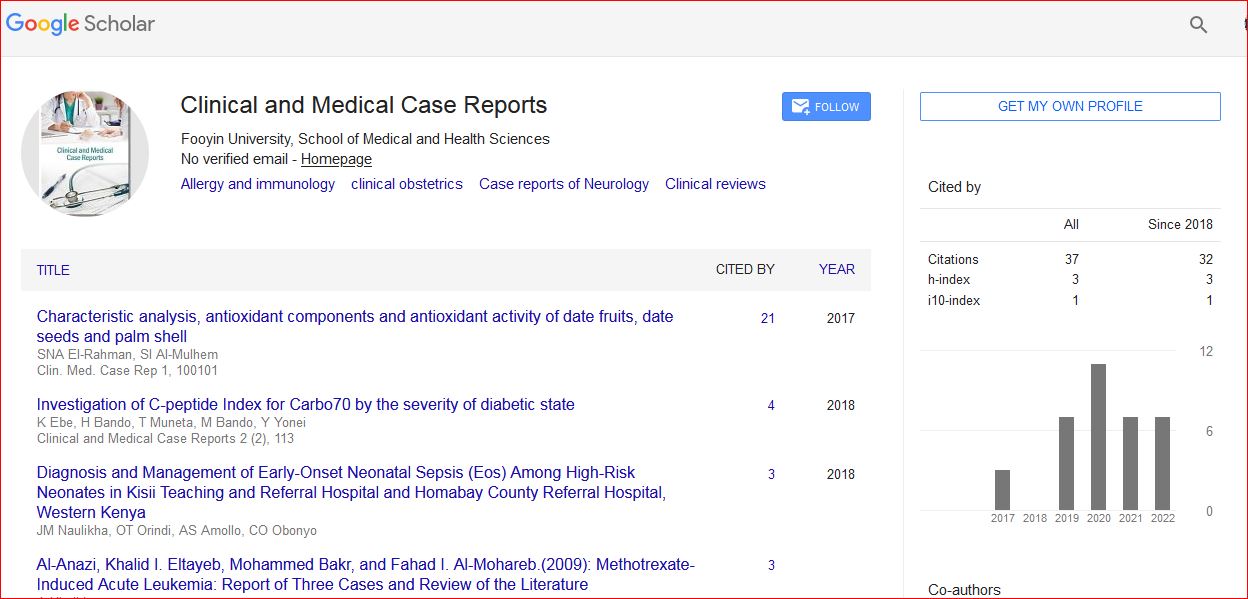
Clinical and Medical Case Reports received 53 citations as per Google Scholar report