Perspective - (2025) Volume 16, Issue 6
Received: 01-Nov-2025, Manuscript No. bej-26-182559;
Editor assigned: 03-Nov-2025, Pre QC No. P-182559;
Reviewed: 17-Nov-2025, QC No. Q-182559;
Revised: 22-Nov-2025, Manuscript No. R-182559;
Published:
29-Nov-2025
, DOI: 10.37421/2161-6219.2025.16.588
Citation: Costa, Marcelo. ”Navigating Global Economic Dynamics:
Agility and Adaptation.” Bus Econ J 16 (2025):588.
Copyright: © 2025 Costa M. This is an open-access article distributed under the terms of the Creative Commons Attribution License, which permits unrestricted use, distribution
and reproduction in any medium, provided the original author and source are credited.
The contemporary global business environment is characterized by an intricate web of interconnected forces, demanding a nuanced understanding of their interplay to navigate the complexities of economic stability and growth. This introductory section aims to provide a foundational overview of these dynamics by examining various influential factors that shape the landscape for businesses worldwide. We will explore how technological advancements and shifts in consumer behavior, alongside geopolitical considerations, significantly impact economic trajectories and present both challenges and opportunities for global enterprises. The pervasive influence of digital transformation has undeniably reshaped the operational paradigms of businesses and amplified their economic competitiveness. Investments in cutting-edge technologies such as artificial intelligence, big data analytics, and cloud computing are instrumental in this evolution, leading to the emergence of novel economic structures and necessitating agile strategic responses from firms. Furthermore, the imperative for businesses to adopt sustainable practices has gained considerable traction, emerging as a critical driver for achieving economic resilience and fostering long-term prosperity.
The integration of environmental, social, and governance (ESG) factors is increasingly recognized as a pivotal determinant in attracting investment, stimulating innovation, and solidifying market positions. Parallel to these technological and sustainability trends, evolving consumer preferences, particularly the growing demand for personalized products and services, are profoundly influencing business strategies and overall economic activity. Businesses are actively adapting their approaches to meet these evolving consumer expectations, thereby shaping prevailing market dynamics. The intricate network of global supply chains has also come under intense scrutiny, with disruptions revealing inherent vulnerabilities and underscoring the importance of robust operational strategies. Consequently, businesses are prioritizing the development of more resilient and diversified supply networks to mitigate future risks. Macroeconomic conditions, including inflationary pressures, interest rate adjustments, and the specter of recession, represent significant headwinds that impact business investment, consumer expenditure, and broader market sentiment. A thorough understanding of these macroeconomic forces is crucial for strategic business planning. In parallel, the ascendancy of the gig economy signifies a fundamental shift in labor markets and business models. The proliferation of flexible work arrangements is transforming traditional employment structures, presenting unique challenges and considerations for economic policy development. Geopolitical risks, encompassing political instability, trade disputes, and regional conflicts, introduce considerable uncertainty into the international business arena. These factors significantly disrupt global economic flows and necessitate careful risk management strategies for multinational corporations. Moreover, the development and nurturing of innovation ecosystems have become paramount for propelling economic growth and enhancing competitiveness. The collaborative synergy between businesses, academic institutions, and governmental bodies is a potent catalyst for technological advancement and the creation of new business ventures. Finally, demographic shifts, such as aging populations and evolving migration patterns, exert a profound influence on labor markets and consumer demand. These demographic transformations present a complex interplay of challenges and opportunities for both businesses and policymakers as they strive to adapt to societal changes.The interconnectedness of global business trends with prevailing economic conditions is a central theme, highlighting how technological disruptions, evolving consumer behavior, and geopolitical shifts profoundly influence economic stability and growth, presenting a multifaceted landscape for businesses worldwide. This dynamic interplay necessitates strategic adaptation for sustained success. The impact of digital transformation on firm performance and economic competitiveness is a critical area of investigation, as investments in artificial intelligence, big data analytics, and cloud computing are reshaping industries and fostering new economic paradigms, demanding agile business strategies. Sustainable business practices are increasingly recognized as a key driver of economic resilience and long-term growth, with environmental, social, and governance (ESG) factors becoming crucial determinants for investment, innovation, and market positioning in the global economy.
The research delves into how changing consumer preferences, particularly the rising demand for personalized products and services, are directly influencing business strategies and economic activity, prompting businesses to adapt to cater to these evolving expectations and market dynamics. Global supply chain disruptions have exposed significant vulnerabilities in business operations and economic stability, prompting businesses to adopt strategies aimed at building more resilient and diversified supply networks to navigate future uncertainties. The economic landscape is currently shaped by macroeconomic headwinds, including inflation and interest rate hikes, which are assessed for their impact on business investment, consumer spending, and overall market sentiment, influencing the near-term economic outlook. The emerging trend of the gig economy signifies a transformation in labor markets and business models, as flexible work arrangements reshape employment structures and present distinct challenges for economic policy development and implementation. Geopolitical risks, such as political instability and trade wars, introduce significant uncertainty into international business and trade, affecting global economic flows and requiring businesses to develop robust strategies for managing these complexities. Innovation ecosystems play a vital role in fostering economic growth and competitiveness by facilitating collaboration between firms, universities, and government bodies, thereby driving technological advancements and creating new business opportunities. Demographic shifts, including aging populations and migration patterns, are analyzed for their implications on labor markets and consumer demand, presenting both challenges and opportunities for businesses and economic policymakers as they adapt to societal changes.This collection of research explores the multifaceted factors influencing the global business and economic landscape. Key themes include the impact of technological advancements like AI and big data on firm performance and competitiveness, the growing importance of sustainable business practices (ESG) for resilience and growth, and the influence of evolving consumer preferences on business strategies. The research also addresses the challenges posed by global supply chain disruptions, macroeconomic headwinds such as inflation and interest rates, and geopolitical risks. Furthermore, the rise of the gig economy, the role of innovation ecosystems, and the consequences of demographic shifts on labor markets and consumer demand are examined. Ultimately, the papers highlight the need for businesses to be agile, adaptable, and strategic in navigating these complex and interconnected dynamics to ensure economic stability and growth.
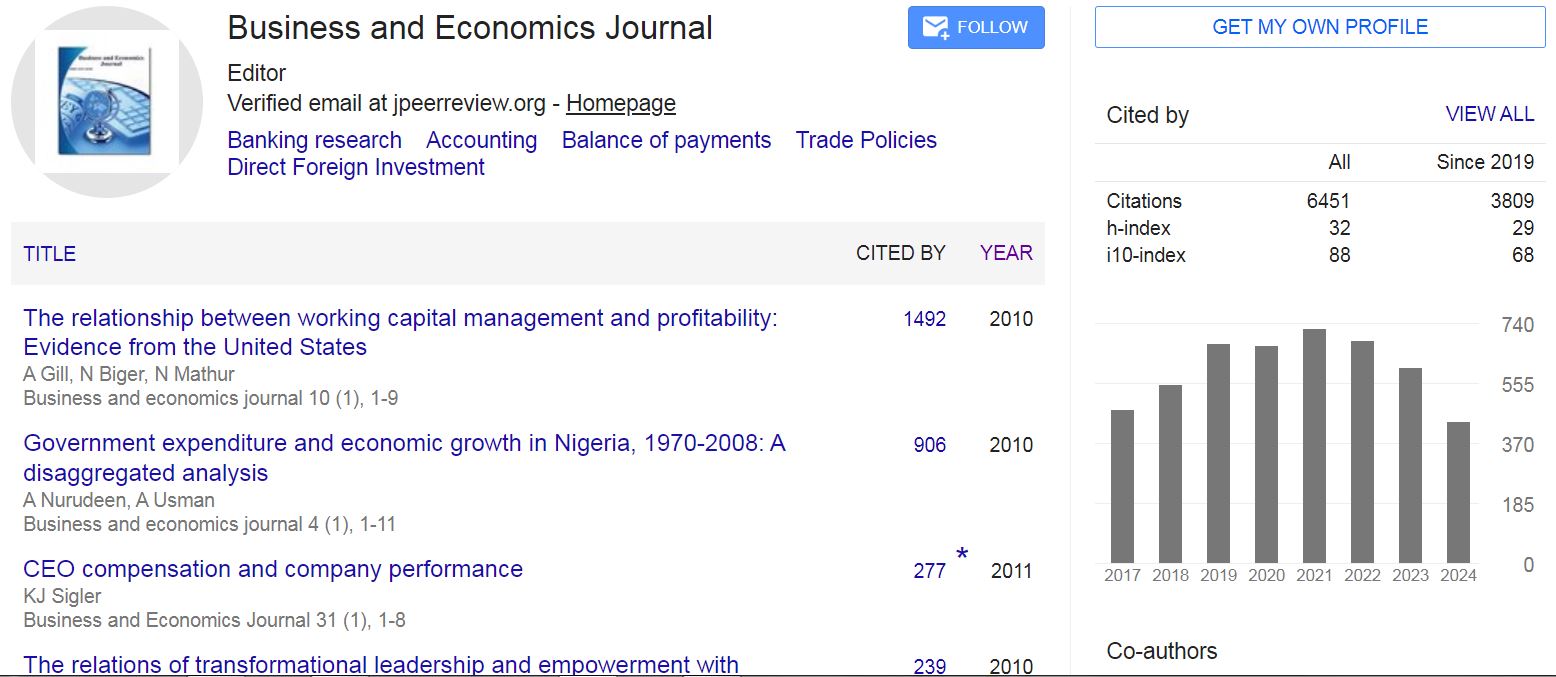
Business and Economics Journal received 6451 citations as per Google Scholar report