Short Communication - (2025) Volume 11, Issue 2
Received: 01-Apr-2025, Manuscript No. jpnp-25-166018;
Editor assigned: 03-Apr-2025, Pre QC No. P-166018;
Reviewed: 15-Apr-2025, QC No. Q-166018;
Revised: 22-Apr-2025, Manuscript No. R-166018;
Published:
29-Apr-2025
, DOI: 10.37421/2472-0992.2025.11.356
Citation: Artika, Sazlina. “Natural Skincare Revolution: The Role of Plant-derived Products in Beauty and Wellness.” J Pharmacogn Nat Prod 11 (2025): 356.
Copyright: © 2025 Artika S. This is an open-access article distributed under the terms of the Creative Commons Attribution License, which permits unrestricted use, distribution and reproduction in any medium, provided the original author and source are credited.
The natural skincare revolution has gained significant momentum in recent years, as more people seek out clean, plant-based alternatives to traditional beauty products. With growing awareness of the potential harmful effects of synthetic chemicals and an increasing desire for sustainable and eco-friendly choices, consumers are turning to plant-derived products to nourish and protect their skin. These products, often rich in vitamins, antioxidants, and essential fatty acids, are believed to support the skinâ??s natural functions, promote a healthy complexion, and address common skin concerns such as dryness, aging, and acne. The move toward plant-based skincare represents not just a trend but a broader shift toward more conscious, holistic approaches to beauty and wellness, where the emphasis is on the power of nature to heal and restore. Plant-derived skincare products have been used for centuries in traditional beauty practices, and modern science is now validating many of their long-held claims. Ingredients like Aloe Vera, tea tree oil, and rosehip seed oil are just a few examples of botanicals that have gained widespread recognition for their skin-loving properties. Packed with bioactive compounds, these plant-based ingredients are known for their ability to hydrate, soothe, and repair skin, often with fewer side effects compared to synthetic alternatives. As the demand for natural beauty products grows, innovation in plant-based skincare is flourishing, with new botanicals being discovered and integrated into formulations that promise to enhance beauty and wellness in a sustainable, effective way. With an increasing focus on transparency and ethical sourcing, the natural skincare revolution is not only transforming the beauty industry but also empowering consumers to make more informed and health-conscious choices [1].
The natural skincare revolution is redefining the beauty industry as consumers increasingly seek products that are both effective and free from synthetic chemicals. With heightened awareness about the potential risks of harmful ingredients often found in conventional skincare products, such as parabens, sulfates, and artificial fragrances, there has been a marked shift toward plant-derived alternatives. These natural products, often sourced from organic farming practices, harness the power of nature to care for and protect the skin, offering a more sustainable and holistic approach to beauty. Plant-based skincare products are typically rich in vitamins, antioxidants, and essential fatty acids, all of which play an important role in nourishing the skin, supporting its natural barrier function, and addressing various concerns, including acne, hyperpigmentation, fine lines, and wrinkles. The appeal of plant-derived skincare lies not only in its natural composition but also in its gentleness on the skin. Many synthetic skincare products can cause irritation or allergic reactions, especially for sensitive skin types. In contrast, plant-based ingredients are often rich in anti-inflammatory and soothing compounds that can calm the skin, reduce redness, and promote healing [2].
As people become more attuned to the importance of mental and physical well-being, there is an increasing focus on beauty routines that are not only skin-deep but also enhances overall health. Many plant-based skincare products incorporate holistic principles, often blending the benefits of aromatherapy, mindfulness, and relaxation into their formulations. Botanicals such as lavender, rose, and sandalwood are known for their calming and uplifting properties, making them a perfect addition to a skincare regimen that promotes relaxation and mental clarity. Additionally, as consumers become more conscious of the impact their choices have on their health, plant-derived products offer a safer and more natural alternative to conventional beauty products, which may contain harmful additives or irritants. In the realm of modern skincare, the versatility of plant-based ingredients has led to a proliferation of innovative formulations targeting a wide variety of skin concerns. From age-defying serums to acne-fighting treatments, plant-derived products are being formulated to address specific skin needs using natureâ??s finest ingredients. Research and technological advancements in extraction methods have enabled brands to unlock the full potential of botanicals, isolating key compounds and developing more concentrated and effective products. For example, the rise of plant stem cell technology, which utilizes the regenerative properties of plant cells, has led to breakthroughs in anti-aging skincare, providing consumers with advanced formulations that can boost skin renewal and reduce the appearance of fine lines and wrinkles [4].
The growing popularity of natural skincare is also a testament to a broader cultural movement that values authenticity, transparency, and holistic wellness. With consumers demanding more information about where their beauty products come from and how they are made, the natural skincare market is being driven by a desire for brands to be more open and honest about their ingredients and sourcing practices. This shift has led to an increase in clean beauty standards, where brands are held to higher levels of accountability for both the effectiveness and safety of their products. For many consumers, choosing plant-derived skincare is not only about the benefits for their skin but also about making ethical, sustainable choices that align with their values. The trend reflects a growing recognition of the interconnectedness between personal wellness, environmental health, and social responsibility. As the plant-based skincare movement continues to evolve, the future of the beauty industry looks set to be shaped by natural, sustainable, and ethical practices. The widespread availability of plant-derived products across a range of price points and formulations makes them accessible to a broader audience, ensuring that everyone can benefit from the healing properties of plants. In The shift toward plant-derived skincare is not just a passing trend; it represents a fundamental change in how we approach beauty, wellness, and self-care, moving away from artificial chemicals toward natural, plant-powered solutions that are as good for the planet as they are for our skin [5].
Google Scholar Cross Ref Indexed at
Google Scholar Cross Ref Indexed at
Google Scholar Cross Ref Indexed at
Google Scholar Cross Ref Indexed at
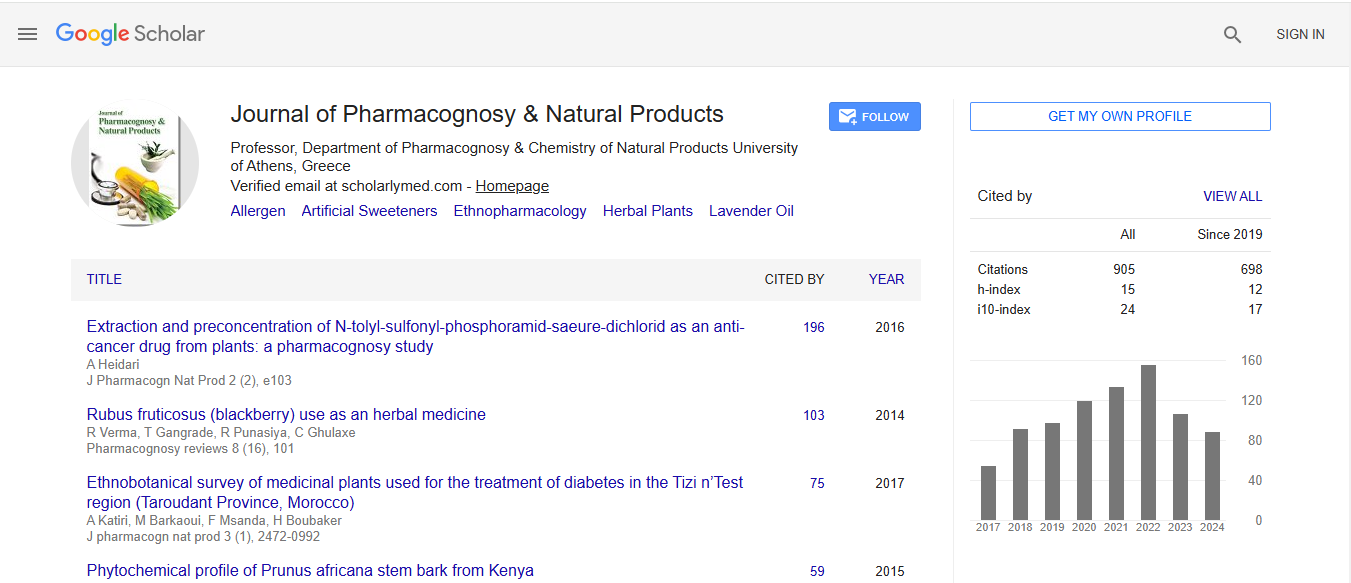
Journal of Pharmacognosy & Natural Products received 606 citations as per Google Scholar report