Opinion - (2025) Volume 13, Issue 6
Received: 01-Dec-2025, Manuscript No. jaat-26-183190;
Editor assigned: 03-Dec-2025, Pre QC No. P-183190;
Reviewed: 17-Dec-2025, QC No. Q-183190;
Revised: 22-Dec-2025, Manuscript No. R-183190;
Published:
29-Dec-2025
, DOI: 10.37421/2329-6542.2025.13.386
Citation: Sanchez, Pablo. ”Protecting Earth: Defending Against Asteroid Threats.” J Astrophys Aerospace Technol 13 (2025):386.
Copyright: © 2025 Sanchez P. This is an open-access article distributed under the terms of the Creative Commons Attribution License, which permits unrestricted use, distribution and reproduction in any medium, provided the original author and source are credited.
The critical mission of Planetary Defense, focused on detecting and mitigating Near-Earth Objects (NEOs) that pose an impact threat, is increasingly gaining attention and technological focus. Advancements in observational techniques, sophisticated data analysis, and the development of novel deflection methodologies are at the forefront of this endeavor, underscoring the necessity for collaborative international efforts to safeguard our planet. The emphasis on early detection and the feasibility of current and near-future deflection technologies are paramount in this scientific domain [1].
The evolving landscape of Near-Earth Object (NEO) surveys is characterized by the capabilities of both current and upcoming observatories. Significant challenges persist in detecting smaller, potentially hazardous asteroids and comets, necessitating the exploration of sophisticated algorithms for precise orbit determination and comprehensive threat assessment. The imperative for increased sky coverage and improved observation cadence to enhance detection rates for objects on potential impact trajectories is a recurring theme in this field [2].
The kinetic impactor mission concept is rigorously analyzed as a primary method for deflecting hazardous asteroids. Detailed simulations of mission trajectories, impact energies, and the resulting trajectory changes for various asteroid compositions and sizes are crucial. Furthermore, considerations of potential risks associated with fragmentation and secondary impacts provide essential data for meticulous mission planning [3].
Exploring alternative deflection strategies, the potential of gravitational tractors offers a non-disruptive method for altering an object's trajectory over an extended period. This approach involves analyzing spacecraft mass, proximity, and the time required to achieve a safe deflection, highlighting its advantages for larger or more fragile asteroids where kinetic impact might prove counterproductive [4].
The detection capabilities of established ground-based telescope networks, such as the Pan-STARRS and Catalina Sky Survey, are critically evaluated. Discussions often center on current limitations in detecting fainter objects and the synergy achievable between different survey strategies. The ongoing need for upgraded instrumentation and expanded survey parameters to improve the catalog of known NEOs remains a significant focus [5].
The physical characterization of asteroids, encompassing their size, shape, rotation, and composition, is vital for effectively planning mitigation missions. Advanced remote sensing techniques, including radar observations and spectroscopic analysis, are reviewed to understand how an asteroid will respond to deflection attempts, providing critical insights for mission design [6].
The coordinated efforts of working groups like the Near-Earth Object Survey and Deflection (NEOSD) highlight interdisciplinary collaboration among astronomers, engineers, and policymakers. Development of comprehensive risk assessment frameworks and emergency response protocols for potential asteroid impacts underscores the global nature of planetary defense initiatives [7].
In scenarios involving large asteroids and short warning times, the effectiveness of nuclear explosive devices as a last-resort deflection method is investigated. Analysis of various scenarios, including stand-off detonations and direct impacts, while considering uncertainties in asteroid properties and potential fragmentation, critically assesses the risks and challenges of employing such powerful technology [8].
The crucial role of space-based observatories, such as the NEOWISE mission and the planned NEO Surveyor, in detecting and tracking near-Earth objects is examined. The advantages of infrared detection for identifying smaller, darker asteroids, which are less visible to ground-based telescopes, are emphasized. Scientific return and mission objectives for future space-based surveys are key considerations [9].
Finally, the potential for asteroid redirection using advanced propulsion systems, like ion thrusters or solar sails, is explored for smaller objects or for fine-tuning trajectories after initial deflection. Examining the feasibility of such methods for long-term, low-thrust maneuvers and their integration into broader planetary defense strategies, alongside assessing the technological readiness levels of these advanced concepts, completes the current landscape of mitigation research [10].
Planetary Defense represents a critical scientific and engineering domain dedicated to the detection and mitigation of Near-Earth Objects (NEOs) that pose a potential impact threat to Earth. This field draws upon advancements in observational techniques, sophisticated data analysis, and the development of innovative deflection methodologies. The collaborative international efforts required to safeguard our planet are underscored by the emphasis on early detection and the feasibility of current and near-future deflection technologies [1].
The continuous evolution of Near-Earth Object (NEO) surveys is driven by the capabilities of both existing and forthcoming observatories. A significant challenge lies in the detection of smaller, potentially hazardous asteroids and comets, prompting the development and application of sophisticated algorithms for precise orbit determination and comprehensive threat assessment. To improve detection rates for objects on impact trajectories, there is a persistent need for increased sky coverage and enhanced observation cadence [2].
The kinetic impactor mission concept is rigorously examined as a primary strategy for deflecting hazardous asteroids. This approach involves detailed simulations of mission trajectories, impact energies, and the resultant trajectory changes, accounting for diverse asteroid compositions and sizes. Crucial data for mission planning are derived from considerations of potential risks, such as fragmentation and secondary impacts [3].
Alternative deflection strategies, such as the utilization of gravitational tractors, offer a non-disruptive method for altering an object's trajectory over extended periods. This technique hinges on the interplay of spacecraft mass, proximity to the asteroid, and the duration required to achieve a safe deflection. Its advantages are particularly notable for larger or more fragile asteroids where direct kinetic impact might be detrimental [4].
Established ground-based telescope networks, including the Pan-STARRS and Catalina Sky Survey, are subject to critical evaluation of their detection capabilities. Discussions often address current limitations in identifying fainter objects and the synergistic potential between different survey strategies. The imperative for upgrading instrumentation and expanding survey parameters to enhance the catalog of known NEOs remains a key area of focus [5].
For effective mitigation mission design, the physical characterization of asteroids is indispensable. This includes determining their size, shape, rotation, and composition. Advanced remote sensing techniques, such as radar observations and spectroscopic analysis, are reviewed to predict how an asteroid will respond to deflection attempts, providing vital information for mission planning [6].
The coordinated endeavors of entities like the Near-Earth Object Survey and Deflection (NEOSD) Working Group highlight the importance of interdisciplinary collaboration among astronomers, engineers, and policymakers. The development of comprehensive risk assessment frameworks and emergency response protocols for potential asteroid impacts emphasizes the global nature of planetary defense [7].
In critical situations involving large asteroids and limited warning times, the effectiveness of nuclear explosive devices as a last-resort deflection method is under investigation. This research analyzes various scenarios, including stand-off detonations and direct impacts, while considering uncertainties in asteroid properties and the potential for fragmentation. A thorough assessment of the risks and challenges associated with deploying such a powerful technology is paramount [8].
Space-based observatories, exemplified by the NEOWISE mission and the forthcoming NEO Surveyor, play a vital role in the detection and tracking of near-Earth objects. The inherent advantages of infrared detection for identifying smaller, darker asteroids, which are less readily observed by ground-based telescopes, are a significant aspect of this strategy. The scientific return and mission objectives for future space-based surveys are critical considerations [9].
Finally, the potential application of advanced propulsion systems, such as ion thrusters or solar sails, for asteroid redirection is explored, particularly for smaller objects or for fine-tuning trajectories post-initial deflection. The feasibility of these methods for long-term, low-thrust maneuvers and their integration into comprehensive planetary defense strategies are examined, alongside an assessment of the technological readiness levels of these advanced propulsion concepts [10].
Planetary defense is a critical field focused on detecting and mitigating Near-Earth Objects (NEOs) that pose an impact threat. This involves advancements in observation, data analysis, and deflection technologies, requiring international collaboration. Current efforts concentrate on enhancing NEO surveys through improved observatories and algorithms to detect smaller objects, necessitating expanded sky coverage. Mitigation strategies include kinetic impactors, which are modeled for various asteroid types, and gravitational tractors, a gentler method suitable for fragile or large asteroids. Ground-based and space-based observatories, particularly those utilizing infrared detection, are essential for cataloging NEOs. Understanding asteroid physical properties is crucial for designing effective deflection missions. International working groups are developing risk assessment frameworks and response protocols. Nuclear explosives are considered a last resort for large, short-warning threats, with careful risk assessment. Advanced propulsion systems are being explored for fine-tuning trajectories. The overarching goal is to safeguard Earth from potential asteroid impacts through a multi-faceted approach.
None
None
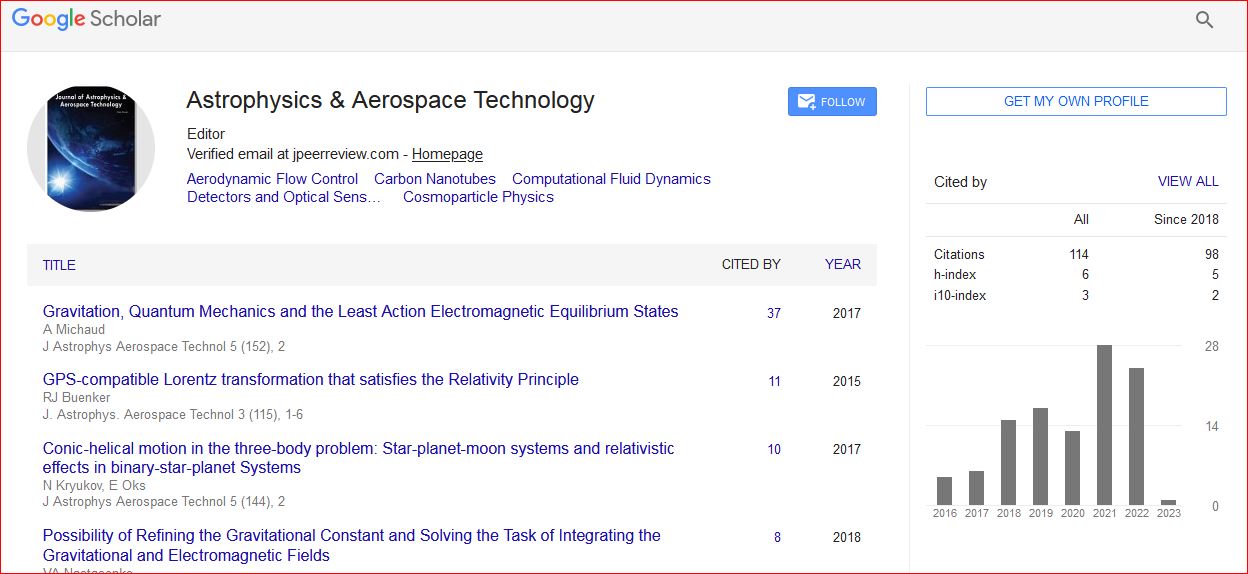
Astrophysics & Aerospace Technology received 114 citations as per Google Scholar report