Opinion - (2025) Volume 9, Issue 6
Received: 02-Nov-2025, Manuscript No. hps-26-184497;
Editor assigned: 04-Nov-2025, Pre QC No. P-184497;
Reviewed: 18-Nov-2025, QC No. Q-184497;
Revised: 04-Nov-2025, Manuscript No. R-184497;
Published:
29-Nov-2025
, DOI: 10.37421/2573-4563.2025.9.379
Citation: Boateng, Samuel K.. ”Nanomedicine Enhances Hepatopancreatic Disorder Treatment.” J Hepatol Pancreat Sci 09 (2025):379.
Copyright: © 2025 Boateng K. Samuel This is an open-access article distributed under the terms of the Creative Commons Attribution License, which permits unrestricted use, distribution and reproduction in any medium, provided the original author and source are credited.
Nanomedicine is ushering in a new era for treating hepatopancreatic disorders, offering advanced strategies for drug delivery, diagnostics, and targeted therapies. By engineering nanoparticles to selectively deliver therapeutic agents to diseased liver and pancreatic tissues, this approach promises to minimize systemic toxicity and enhance treatment efficacy for a range of conditions including liver fibrosis, cirrhosis, hepatitis, pancreatic cancer, and pancreatitis [1].
The application of nanocarriers in pancreatic cancer therapy is rapidly advancing. These sophisticated systems are designed to facilitate the accumulation of chemotherapeutics within pancreatic tumors, effectively overcoming significant challenges such as dense stroma and poor drug penetration. Lipid nanoparticles, polymeric nanoparticles, and inorganic nanoparticles are actively being explored for their potential to improve drug bioavailability and ultimately enhance therapeutic outcomes in pancreatic adenocarcinoma [2].
Targeted delivery of anti-fibrotic agents using nanomedicine holds significant promise for impacting the progression of liver fibrosis. Nanoparticles can be specifically designed to target hepatic stellate cells, which are the primary effector cells driving fibrosis, thereby leading to a reduction in collagen deposition and inflammation. This represents a more localized and effective treatment strategy when contrasted with conventional systemic administration methods [3].
Nanomaterial-based imaging agents are revolutionizing the early detection and ongoing monitoring of hepatopancreatic diseases. Advanced materials such as quantum dots, magnetic nanoparticles, and gold nanoparticles can be expertly functionalized to bind with specific biomarkers that are indicative of liver and pancreatic pathologies. This capability enables high-resolution imaging with demonstrably improved sensitivity and specificity [4].
Lipid-based nanoparticles, with a particular emphasis on liposomes and solid lipid nanoparticles (SLNs), are emerging as exceptionally effective platforms for the delivery of therapeutic agents directly to the pancreas. Their inherent biocompatibility and their remarkable ability to encapsulate both hydrophilic and hydrophobic drugs render them ideal candidates for treating pancreatic cancer and various inflammatory conditions affecting the pancreas [5].
Gene therapy approaches, utilizing both viral and non-viral nanocarriers, are currently being rigorously investigated for the treatment of genetic liver disorders. Nanoparticles are capable of protecting therapeutic genetic material from premature degradation and facilitating its efficient delivery into hepatocytes, thereby presenting potential cures for debilitating diseases such as alpha-1 antitrypsin deficiency [6].
Photodynamic therapy (PDT) when integrated with nanomedicine exhibits considerable promise for the effective treatment of localized pancreatic tumors. Photosensitizer-loaded nanoparticles can be precisely targeted to the tumor site, and upon activation by light, they generate reactive oxygen species that induce cancer cell death. This method also offers the advantage of reduced damage to surrounding healthy tissues [7].
Immune-modulating nanotherapies are actively being developed to bolster the body's natural immune response against liver cancer. Nanoparticles can be ingeniously engineered to deliver immunoadjuvants or checkpoint inhibitors directly into the tumor microenvironment. This strategic delivery stimulates a potent anti-tumor immune response and helps to overcome common mechanisms of immune evasion employed by cancer cells [8].
The utilization of biodegradable polymers within nanomedicine presents a safe and highly effective modality for delivering drugs to manage chronic liver diseases. Polymeric nanoparticles can be meticulously designed to achieve sustained drug release over time, which in turn reduces the required dosing frequency and significantly improves patient compliance, particularly for conditions necessitating long-term treatment regimens [9].
Theranostic nanoplatforms, which adeptly integrate both diagnostic and therapeutic functionalities, are substantially advancing the clinical management of pancreatic neuroendocrine tumors (PNETs). These sophisticated systems permit real-time monitoring of treatment response and enable highly targeted drug delivery, thereby optimizing therapeutic strategies and ultimately improving patient outcomes [10].
Nanomedicine offers a transformative paradigm for treating hepatopancreatic disorders through enhanced drug delivery, improved diagnostics, and targeted therapies. Nanoparticles are engineered for selective delivery to diseased liver and pancreatic tissues, minimizing systemic toxicity and boosting treatment efficacy for conditions like liver fibrosis, cirrhosis, hepatitis, pancreatic cancer, and pancreatitis [1].
The integration of nanocarriers into pancreatic cancer therapy is gaining significant traction. These nanocarrier systems are designed to promote the accumulation of chemotherapeutics within pancreatic tumors, thereby addressing challenges such as dense tumor stroma and poor drug penetration. Current research explores lipid nanoparticles, polymeric nanoparticles, and inorganic nanoparticles for their potential to increase drug bioavailability and improve therapeutic results in pancreatic adenocarcinoma [2].
Targeted delivery of anti-fibrotic agents via nanomedicine can profoundly influence the progression of liver fibrosis. Nanoparticles can be precisely engineered to target hepatic stellate cells, the key effector cells in fibrotic processes, leading to a reduction in collagen deposition and inflammation. This approach offers a more localized and effective treatment than conventional systemic administration [3].
Nanomaterial-based imaging agents are revolutionizing the early detection and monitoring of hepatopancreatic diseases. Functionalized quantum dots, magnetic nanoparticles, and gold nanoparticles can bind to specific biomarkers associated with liver and pancreatic pathologies, enabling high-resolution imaging with enhanced sensitivity and specificity [4].
Lipid-based nanoparticles, including liposomes and solid lipid nanoparticles (SLNs), are proving to be excellent platforms for delivering therapeutics to the pancreas. Their biocompatibility and capacity to encapsulate both hydrophilic and hydrophobic drugs make them ideal for treating pancreatic cancer and inflammatory conditions [5].
Gene therapy strategies employing viral and non-viral nanocarriers are under investigation for treating genetic liver disorders. Nanoparticles protect therapeutic genetic material from degradation and facilitate its delivery into hepatocytes, offering potential cures for diseases like alpha-1 antitrypsin deficiency [6].
Photodynamic therapy (PDT) combined with nanomedicine demonstrates considerable promise for treating localized pancreatic tumors. Photosensitizer-loaded nanoparticles are targeted to the tumor, and upon light activation, generate reactive oxygen species that induce cancer cell death while sparing surrounding healthy tissues [7].
Immune-modulating nanotherapies are being developed to boost the immune system's response against liver cancer. Nanoparticles can deliver immunoadjuvants or checkpoint inhibitors directly to the tumor microenvironment, stimulating an anti-tumor immune response and overcoming immune evasion mechanisms [8].
Biodegradable polymers in nanomedicine provide a safe and effective method for delivering drugs for chronic liver diseases. Polymeric nanoparticles can be designed for sustained drug release, reducing dosing frequency and improving patient compliance for long-term treatment regimens [9].
Theranostic nanoplatforms, which combine diagnostic and therapeutic capabilities, are advancing the management of pancreatic neuroendocrine tumors (PNETs). These systems allow real-time monitoring of treatment response and targeted drug delivery, optimizing strategies and improving patient outcomes [10].
Nanomedicine is transforming the treatment of hepatopancreatic disorders by enhancing drug delivery, diagnostics, and targeted therapies using nanoparticles. These nanocarriers selectively target diseased tissues, reducing toxicity and improving efficacy for conditions like liver fibrosis and pancreatic cancer. Advanced nanocarrier systems, including lipid-based and polymeric nanoparticles, are crucial for overcoming treatment challenges. Nanomaterials also enable precise imaging and early disease detection. Gene therapy and immunotherapy approaches are being explored, alongside theranostic platforms that integrate diagnosis and treatment. The use of biodegradable polymers ensures safe and sustained drug delivery for chronic conditions, ultimately improving patient outcomes.
None
None
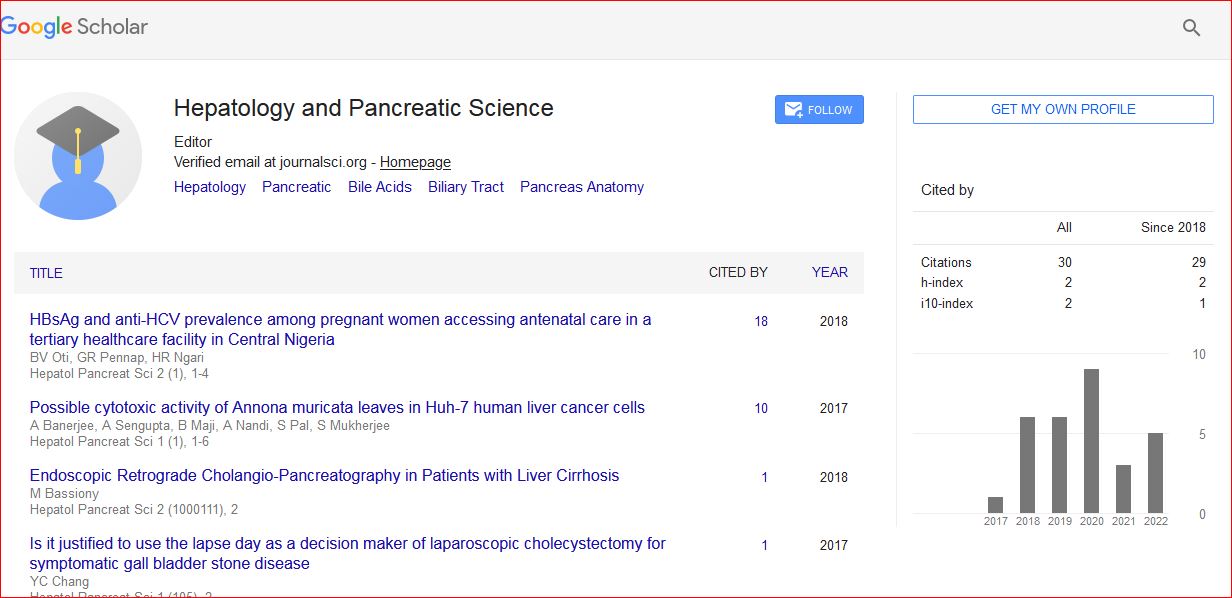
Hepatology and Pancreatic Science received 34 citations as per Google Scholar report