Brief Report - (2025) Volume 10, Issue 4
Received: 01-Jul-2025, Manuscript No. JPNM-26-185770;
Editor assigned: 03-Jul-2025, Pre QC No. P-185770;
Reviewed: 17-Jul-2025, QC No. Q-185770;
Revised: 22-Jul-2025, Manuscript No. R-185770;
Published:
29-Jul-2025
, DOI: 10.37421/2472-100X.2025.10.352
Citation: Schneider, Lukas. ”Multidisciplinary Management for Pediatric Brain Tumors.” J Pediatr Neurol Med 10 (2025):352.
Copyright: © 2025 Schneider L. This is an open-access article distributed under the terms of the Creative Commons Attribution License, which permits unrestricted use, distribution and reproduction in any medium, provided the original author and source are credited.
The management of pediatric brain tumors necessitates a comprehensive and integrated approach to address the multifaceted challenges they present. Multidisciplinary management is paramount, bringing together a diverse team of specialists to optimize diagnosis, treatment, and supportive care for young patients. This collaborative model ensures that all aspects of the child's well-being are considered, from the initial diagnosis through long-term survivorship [1].
Advances in neuroimaging have revolutionized the way pediatric brain tumors are visualized and understood, playing a crucial role in accurate tumor delineation, surgical planning, and monitoring treatment response. High-resolution MRI and diffusion tensor imaging, among other techniques, provide unparalleled detail, allowing for more precise interventions [2].
Surgical resection remains a cornerstone of treatment for many pediatric brain tumors, with the extent of tumor removal significantly impacting prognosis. Modern surgical strategies aim to maximize tumor eradication while meticulously preserving neurological function, often employing minimally invasive techniques and advanced intraoperative guidance [3].
Pediatric neuro-oncology involves complex pharmacological interventions, including chemotherapy and the judicious use of targeted agents. Treatment protocols are increasingly personalized, based on the specific tumor type, its grade, and detailed molecular profiling, to enhance efficacy and reduce toxicity [4].
Radiation therapy is a critical modality in the treatment of numerous pediatric brain tumors, particularly those that are unresectable or aggressive. Sophisticated techniques such as proton therapy and intensity-modulated radiation therapy are utilized to deliver precise radiation doses, minimizing damage to surrounding healthy tissues and mitigating long-term side effects [5].
Neuropathology is fundamental to the accurate diagnosis and classification of pediatric brain tumors, providing the essential foundation for all subsequent treatment decisions. Emerging advancements in molecular pathology, including genetic sequencing and immunohistochemistry, are proving invaluable in identifying specific tumor subtypes and predicting therapeutic outcomes [6].
Neuropsychological assessment and robust supportive care are integral to managing the cognitive, emotional, and behavioral sequelae that often accompany pediatric brain tumors and their treatments. Early identification and intervention for deficits in critical cognitive functions can profoundly improve a child's quality of life and academic trajectory [7].
The multidisciplinary team extends to include vital rehabilitation specialists, such as physical therapists, occupational therapists, and speech-language pathologists, who are indispensable in restoring function and promoting independence in children affected by brain tumors. Their interventions address a wide spectrum of functional impairments [8].
Family-centered care and comprehensive psychosocial support are critical components in the holistic management of pediatric brain tumors. The involvement of social workers and child life specialists is crucial in helping families navigate the arduous medical journey, cope with emotional distress, and access essential resources, recognizing that the family's well-being is intrinsically linked to the child's recovery [9].
Long-term follow-up care is an indispensable aspect of managing pediatric brain tumor survivors. This ongoing surveillance is vital for monitoring for tumor recurrence, effectively managing treatment-related late effects, and ensuring the highest possible quality of life for these young individuals, underscoring the need for sustained interdisciplinary collaboration [10].
The effective management of pediatric brain tumors hinges on a multidisciplinary approach, integrating expertise from neurosurgery, neuro-oncology, radiation oncology, neuropathology, neuroradiology, nursing, social work, and rehabilitation services. This integrated strategy aims to optimize diagnosis, refine treatment plans, and provide essential supportive care, with a focus on tailored strategies that consider tumor characteristics and the individual child's needs, emphasizing precision medicine and minimizing long-term consequences [1].
Advanced neuroimaging techniques, including high-resolution magnetic resonance imaging (MRI) and diffusion tensor imaging (DTI), play a pivotal role in the precise delineation of pediatric brain tumors. These technologies are instrumental in surgical planning, treatment monitoring, and providing a clearer visualization of tumor boundaries, critical neurovascular structures, and white matter tracts, thereby facilitating more accurate surgical resections and targeted radiotherapy [2].
Surgical resection remains a fundamental pillar in the treatment of pediatric brain tumors. The extent of surgical removal, guided by intraoperative neurophysiological monitoring and sophisticated imaging modalities, profoundly influences patient prognosis. Current surgical practices leverage minimally invasive techniques and personalized approaches to maximize tumor eradication while diligently preserving vital neurological functions [3].
Pediatric neuro-oncology encompasses complex pharmacotherapy, including diverse chemotherapy regimens and cutting-edge targeted agents. Treatment protocols are increasingly tailored based on tumor type, grade, and comprehensive molecular profiling to achieve tumor eradication, prevent recurrence, and minimize treatment-related toxicities, necessitating vigilant monitoring and adaptive dosing strategies [4].
Radiation therapy is an indispensable component in the treatment armamentarium for many pediatric brain tumors, especially those that are unresectable or exhibit high-grade features. Advanced techniques like proton therapy and intensity-modulated radiation therapy (IMRT) are employed to deliver precise radiation doses to the tumor while sparing adjacent healthy tissues, significantly reducing the incidence of long-term neurocognitive and endocrine deficits [5].
Neuropathology is indispensable for the accurate diagnosis and classification of pediatric brain tumors, serving as the bedrock for informed treatment decisions. Significant progress in molecular pathology, including comprehensive genetic sequencing and immunohistochemistry, is increasingly vital for identifying specific tumor subtypes and predicting both treatment response and overall prognosis [6].
Neuropsychological assessment and dedicated supportive care are integral to addressing the cognitive, emotional, and behavioral challenges that arise from pediatric brain tumors and their treatments. Proactive identification and intervention for deficits in memory, attention, executive function, and social cognition can markedly enhance a child's quality of life and academic success [7].
The multidisciplinary team's scope extends to rehabilitation specialists, including physical therapists, occupational therapists, and speech-language pathologists, who are crucial for restoring function and fostering independence in children affected by brain tumors. Their targeted interventions address motor impairments, swallowing difficulties, communication challenges, and facilitate the regaining of optimal physical and functional capabilities [8].
Family-centered care and robust psychosocial support are essential elements in the comprehensive management of pediatric brain tumors. The active involvement of social workers and child life specialists empowers families to navigate the intricate medical journey, effectively cope with emotional distress, and secure necessary resources, thereby addressing the holistic needs of the child and family to achieve optimal outcomes [9].
Long-term follow-up care is a critical necessity for pediatric brain tumor survivors to vigilantly monitor for recurrence and manage treatment-related late effects, such as endocrine dysfunction, learning disabilities, and secondary malignancies. This ongoing surveillance ensures optimal quality of life and requires sustained collaboration among a diverse group of specialists [10].
Pediatric brain tumors require a multidisciplinary management approach, integrating various medical specialties to optimize diagnosis, treatment, and supportive care. Advances in neuroimaging are crucial for accurate tumor delineation and surgical planning. Surgical resection remains a cornerstone, aiming for maximal tumor removal while preserving neurological function. Pharmacotherapy, including chemotherapy and targeted agents, is tailored based on tumor characteristics and molecular profiling. Radiation therapy, employing techniques like proton therapy, is vital for specific tumor types, sparing healthy tissues. Neuropathology is fundamental for diagnosis and guiding treatment, with molecular pathology playing an increasing role. Neuropsychological assessments and supportive care are essential for managing cognitive and emotional sequelae. Rehabilitation specialists focus on restoring function and independence. Family-centered care and psychosocial support are critical for navigating the treatment journey. Long-term follow-up is necessary to monitor for recurrence and manage late effects, ensuring survivors achieve an optimal quality of life.
None
None
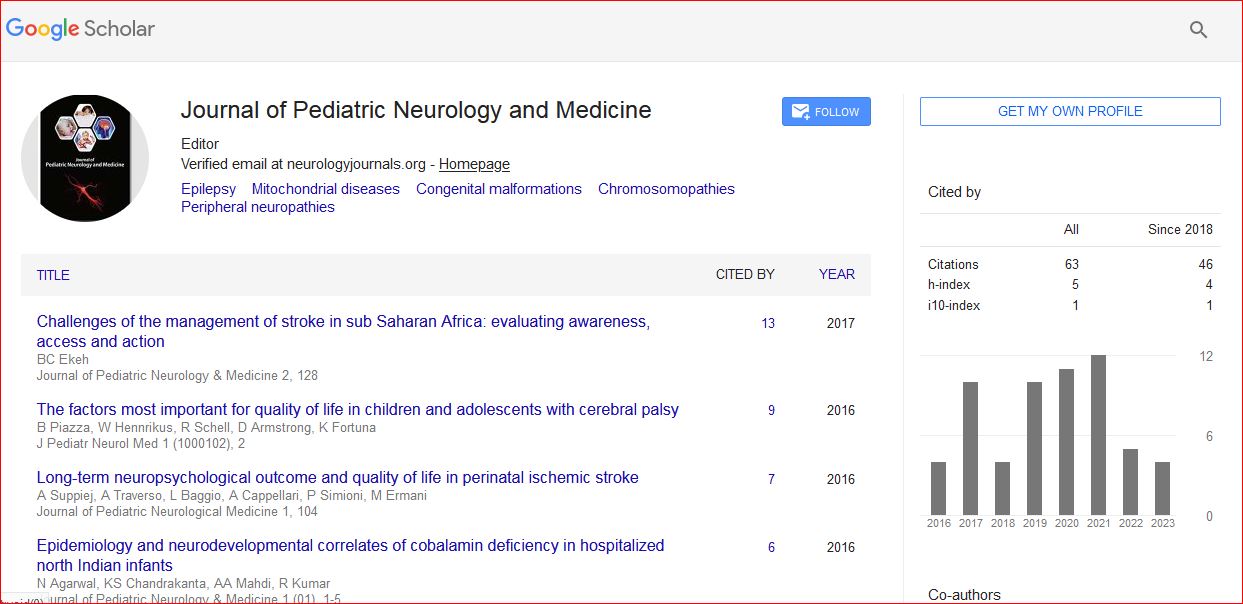
Journal of Pediatric Neurology and Medicine received 68 citations as per Google Scholar report