Opinion - (2025) Volume 14, Issue 2
Received: 02-Mar-2025, Manuscript No. VTE-26-180070;
Editor assigned: 04-Mar-2025, Pre QC No. P-180070;
Reviewed: 18-Mar-2025, QC No. Q-180070;
Revised: 24-Mar-2025, Manuscript No. R-180070;
Published:
30-Mar-2025
, DOI: 10.37421/2376-1318.2025.14.361
Citation: Alvarez, Miguel. ”Mineral Absorption and Bioavailability: Mechanisms, Factors, and Optimization.” Vitam Miner 14 (2025):361.
Copyright: © 2025 Alvarez M. This is an open-access article distributed under the terms of the Creative Commons Attribution License, which permits unrestricted use, distribution and reproduction in any medium, provided the original author and source are credited.
The human body relies on a complex array of dietary minerals for optimal physiological function. Understanding how these essential micronutrients are absorbed and utilized is paramount to maintaining health and preventing deficiency-related diseases. This review aims to provide a comprehensive overview of the fundamental mechanisms governing mineral bioavailability, exploring the multifaceted factors that influence their uptake from the diet into the body. Key mechanisms governing mineral bioavailability are the focus of current research, highlighting the intricate interplay of chemical form, dietary enhancers and inhibitors, and the physiological status of the individual. Optimizing nutritional strategies and addressing mineral deficiencies hinges on a deep understanding of these processes [1].
Among the vital minerals, zinc plays a critical role in numerous enzymatic reactions and cellular processes. Its absorption pathway across the intestinal epithelium is a subject of considerable scientific interest, with specific transporters like ZIP4 identified as crucial players. Furthermore, the bioavailability of zinc is significantly modulated by dietary components such as phytates and polyphenols. Host factors, including the presence of inflammation, also exert a notable impact on an individual's zinc status [2].
Iron, another indispensable mineral, is absorbed through distinct pathways depending on its chemical form: heme and non-heme iron. Recent studies have elucidated the roles of key proteins, such as DMT1 and HFE, in the transport and regulation of iron absorption. The findings underscore the significant impact of vitamin C in enhancing non-heme iron absorption and highlight the inhibitory effects of calcium and tannins on iron uptake [3].
Calcium, essential for bone health and numerous cellular functions, is absorbed in the human intestine via both active transcellular transport and passive paracellular diffusion. The efficiency of calcium absorption is tightly regulated by critical hormones like vitamin D and parathyroid hormone, which play pivotal roles in maintaining calcium homeostasis [4].
Magnesium, involved in over 300 enzymatic reactions, is absorbed through both passive paracellular and active transcellular pathways in the intestine. This process is influenced by various dietary factors, including phytates and fiber content. Moreover, common gastrointestinal disorders can significantly impact an individual's magnesium status [5].
Iodine is crucial for thyroid hormone synthesis, and its absorption and subsequent transport to the thyroid gland are mediated by specific mechanisms. The sodium-iodide symporter (NIS) is a key protein involved in this process, and its activity can be affected by various factors. Additionally, the bioavailability of iodine and thyroid function can be influenced by dietary goitrogens and selenium [6].
Selenium, an essential trace element with potent antioxidant properties, is absorbed from various dietary forms, including selenomethionine and selenocysteine. Specific transporters facilitate its uptake, and the gut microbiota also plays a role in modulating selenium bioavailability. Dietary interactions and protein binding further influence its absorption and metabolism [7].
Copper is absorbed in the small intestine through mechanisms involving the copper transporter 1 (CTR1) and other specific transporters. The bioavailability of copper can be modulated by dietary components such as phytates, sulfides, and certain amino acids. The body also employs sophisticated homeostatic mechanisms to control copper absorption [8].
Manganese, a vital component of various enzymes, is absorbed across the intestinal barrier through specific transport mechanisms. Its bioavailability is influenced by dietary factors, including iron status and calcium intake. Interactions with other divalent metal ions can also affect manganese uptake and utilization [9].
Chromium, often associated with glucose metabolism, is absorbed and regulated by mechanisms that are still being fully elucidated. While precise intestinal transport pathways remain a subject of ongoing research, dietary factors and even exercise have been implicated in influencing its uptake and utilization [10].
The review begins by establishing a foundational understanding of dietary mineral bioavailability, emphasizing the mechanisms of absorption and the factors that govern their uptake. It underscores the complexity of mineral metabolism, where chemical form, dietary context, and individual physiological status converge to determine how effectively these nutrients are assimilated by the body. The importance of this knowledge for nutritional strategies and the mitigation of deficiencies is a recurring theme [1].
The intricate process of zinc absorption is then detailed, focusing on its passage across the intestinal epithelium. The role of specific transporters, such as ZIP4, is highlighted, alongside the inhibitory effects of phytates and polyphenols on zinc bioavailability. The impact of host physiological conditions, particularly inflammation, on zinc status is also examined, revealing a complex interplay of factors influencing this essential mineral's availability [2].
Iron absorption is explored through the lens of its distinct dietary forms: heme and non-heme iron. The review elucidates the critical roles of proteins like DMT1 and HFE in iron transport and cellular regulation within the intestinal cells. Furthermore, it emphasizes the enhancing effect of vitamin C on non-heme iron absorption and the counteracting inhibitory influences of calcium and tannins, providing practical insights into dietary iron assimilation [3].
Calcium absorption pathways are thoroughly investigated, distinguishing between active transcellular transport and passive paracellular diffusion. The article meticulously details how vitamin D and parathyroid hormone orchestrate calcium homeostasis, underscoring their indispensable roles in regulating the efficiency of intestinal calcium uptake and maintaining skeletal integrity [4].
Magnesium absorption from various dietary sources is examined, with an emphasis on both passive paracellular and active transcellular transport mechanisms. The significant influence of dietary constituents like phytates and fiber on magnesium bioavailability is discussed. The review also addresses the implications of gastrointestinal disorders for magnesium status, highlighting potential malabsorption issues [5].
Iodine absorption and its subsequent transport to the thyroid gland are analyzed, with a focus on the sodium-iodide symporter (NIS) and its functional modulators. The impact of dietary goitrogens and selenium on iodine bioavailability and overall thyroid function is also considered, emphasizing the interconnectedness of these nutrients [6].
Selenium bioavailability is explored concerning its absorption from diverse dietary forms, including selenomethionine and selenocysteine. The presence of specific transporters and the influence of the gut microbiota on selenium uptake are highlighted. The review also considers how protein binding and various dietary interactions can affect selenium assimilation [7].
The absorption dynamics of copper within the small intestine are meticulously described, with a focus on the contributions of CTR1 and other dedicated copper transporters. The review elaborates on how dietary components like phytates, sulfides, and specific amino acids can modulate copper bioavailability. The intricate homeostatic mechanisms that govern copper absorption are also touched upon [8].
Manganese absorption and its transport across the intestinal barrier are investigated, with particular attention paid to the influence of dietary factors such as iron status and calcium intake on manganese bioavailability. Potential interactions with other divalent metal ions are also addressed, providing a comprehensive view of manganese absorption regulation [9].
Finally, the absorption and regulatory mechanisms of chromium are discussed, distinguishing between its various chemical forms. While precise intestinal transport pathways for chromium remain an area requiring further research, the article emphasizes the role of dietary factors and the potential impact of exercise on its uptake and utilization, offering insights into the current understanding of chromium metabolism [10].
This collection of research explores the absorption and bioavailability of various essential dietary minerals. It details the specific mechanisms, transporters, and regulatory pathways involved in the uptake of minerals like iron, zinc, calcium, magnesium, iodine, selenium, copper, manganese, and chromium. The studies highlight the significant influence of dietary components, both enhancing and inhibitory, as well as host physiological factors and potential interactions with other nutrients, on how effectively these minerals are utilized by the body. Understanding these complex processes is crucial for optimizing nutritional intake and addressing potential deficiencies.
None
None
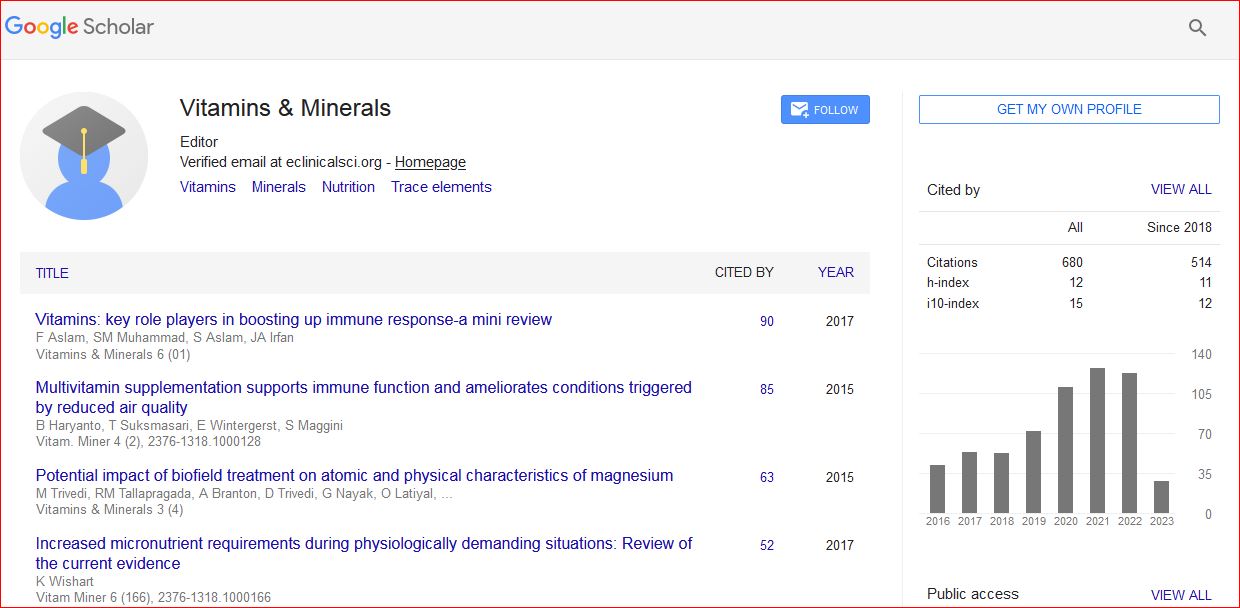
Vitamins & Minerals received 790 citations as per Google Scholar report