Short Communication - (127) Volume 14, Issue 6
Received: 01-Nov-2025, Manuscript No. VTE-26-180151;
Editor assigned: 03-Nov-2025, Pre QC No. P-180151;
Reviewed: 17-Nov-2025, QC No. Q-180151;
Revised: 24-Nov-2025, Manuscript No. R-180151;
Published:
29-Nov-2025
, DOI: 10.37421/2376-1318.2025.14.407
Citation: Boumediene, Hassan.” Micronutrient Bioavailability Personalized nutrition, Microbiome and Beyond.” Vitam Miner 14 (2025):407.
Copyright: © 2025 Boumediene H. This is an open-access article distributed under the terms of the Creative Commons Attribution License, which permits unrestricted use, distribution and reproduction in any medium, provided the original author and source are credited.
Research into vitamin and mineral bioavailability and absorption is undergoing significant evolution, driven by advancements in personalized nutrition and a deeper understanding of the gut microbiome's influence. Emerging areas are focused on elucidating nutrient-gene interactions to optimize individualized supplementation strategies, alongside exploring novel delivery systems like nanoencapsulation to improve efficacy and minimize adverse effects. Investigations into the synergistic effects of multiple micronutrients and their collective impact on chronic disease prevention are gaining momentum, signaling a shift from singular nutrient-focused approaches [1].
The intricate relationship between the gut microbiota and vitamin synthesis and absorption, particularly for B vitamins and vitamin K, represents a burgeoning field of scientific inquiry. Current research is actively examining how diverse dietary patterns and the implementation of pre/probiotic interventions can effectively modulate these microbial communities. The ultimate aim is to enhance host nutrient status and promote overall health, paving the way for microbiome-targeted strategies to combat micronutrient deficiencies [2].
Understanding the genetic and epigenetic factors that profoundly influence individual responses to vitamin and mineral supplementation is paramount for the development of precision nutrition. This involves comprehending how variations in genes responsible for nutrient transport, metabolism, and signaling pathways can predict the efficacy of interventions and identify potential adverse effects, thereby enabling the design of truly tailored nutritional plans [3].
The application of nanotechnology in enhancing the delivery of vitamins and minerals stands out as a significant area of exploration. Nanoencapsulation techniques offer the potential to improve the solubility and stability of these essential nutrients, facilitating targeted delivery. This approach could lead to significantly higher bioavailability and reduced dosage requirements, especially for fat-soluble vitamins and minerals that are typically poorly absorbed [4].
The paradigm is shifting towards understanding the synergistic interactions among different micronutrients and their combined impact on the prevention or management of chronic diseases. Moving beyond traditional single-nutrient studies, researchers are now investigating how complex combinations of vitamins and minerals collaborate to exert physiological effects. This offers a more holistic and integrated perspective on nutritional interventions for long-term health [5].
The specific roles of certain minerals, such as magnesium and zinc, in modulating immune function are attracting considerable attention, along with their potential therapeutic applications. Scientific endeavors are delving into the precise molecular mechanisms through which these minerals regulate immune responses. This research holds significant implications for understanding and addressing infectious diseases and autoimmune conditions [6].
The interplay between vitamin D, calcium, and the maintenance of bone health continues to be a central focus within micronutrient research. Recent findings are shedding new light on optimal nutrient levels, revealing non-skeletal health benefits, and highlighting the importance of personalized supplementation strategies. These insights are particularly crucial for vulnerable populations who may be at higher risk of deficiencies [7].
The influence of micronutrients, especially iron and folate, on cognitive development and overall cognitive function throughout the human lifespan is an active and evolving area of research. Studies are meticulously exploring the effects of deficiencies and the importance of optimal intake on brain structure and function. This research has significant implications for understanding and addressing neurodevelopmental disorders and age-related cognitive decline [8].
The exploration of novel sources and forms of vitamins and minerals, including those derived from algae or through engineered yeasts, represents a growing trend in the field. The primary objectives of this research are to enhance sustainability, improve bioavailability, and potentially develop compounds with augmented biological activity for therapeutic purposes, offering new avenues for nutrient sourcing and application [9].
The profound impact of environmental factors and lifestyle choices on an individual's micronutrient status and metabolic processes is a critical area of ongoing scientific investigation. Researchers are actively examining how various environmental exposures, such as pollution, and lifestyle habits, like stress and physical activity levels, influence the absorption, utilization, and excretion of essential vitamins and minerals within the body [10].
The continuous evolution of research into vitamin and mineral bioavailability and absorption is significantly influenced by the growing emphasis on personalized nutrition and the intricate role of the gut microbiome. Key emerging areas include the detailed understanding of nutrient-gene interactions, which is essential for developing highly personalized supplementation strategies. Furthermore, significant attention is being directed towards exploring innovative delivery systems, such as nanoencapsulation, with the aim of substantially enhancing nutrient efficacy and reducing the incidence of side effects associated with supplementation [1].
A burgeoning field of research is dedicated to understanding the complex influence of the gut microbiota on the synthesis and absorption of vital vitamins, with a particular focus on B vitamins and vitamin K. Current investigations are concentrating on how various dietary patterns and the strategic use of pre/probiotic interventions can effectively modulate these microbial communities. This modulation is seen as a crucial pathway to improve the host's nutrient status and overall health, thereby opening up new avenues for microbiome-targeted strategies to address prevalent micronutrient deficiencies [2].
Investigating the critical genetic and epigenetic factors that shape individual responses to vitamin and mineral supplementation is fundamental for the advancement of precision nutrition. A deeper comprehension of how variations within genes involved in nutrient transport, metabolic pathways, and signaling processes can accurately predict the efficacy of interventions and identify potential adverse reactions is crucial. This knowledge enables the development of precisely tailored nutritional interventions [3].
The application of nanotechnology to enhance the delivery of vitamins and minerals constitutes a significant and actively explored area. Nanoencapsulation technologies hold the promise of improving the solubility and stability of these essential micronutrients, facilitating more effective targeted delivery. This can potentially lead to demonstrably higher bioavailability and a reduction in the required dosage, particularly for vitamins and minerals that are inherently fat-soluble or poorly absorbed [4].
An evolving paradigm in micronutrient research centers on understanding the synergistic interactions between various micronutrients and their combined influence on the prevention or management of chronic diseases. This approach marks a departure from previous studies that focused on single nutrients. Current research is actively exploring how complex combinations of vitamins and minerals function collaboratively to exert physiological effects, thus promoting a more comprehensive and integrated approach to nutritional interventions [5].
The role of specific minerals, notably magnesium and zinc, in the intricate regulation of immune function is garnering substantial attention, alongside their potential therapeutic applications. Research efforts are progressively delving into the precise molecular mechanisms by which these minerals modulate immune responses. The findings from such investigations hold significant implications for both the understanding and treatment of infectious diseases and various autoimmune conditions [6].
The interplay between vitamin D, calcium, and the maintenance of optimal bone health remains a foundational area of micronutrient research. New insights are continuously emerging regarding the establishment of optimal nutrient levels, the discovery of hitherto unrecognized non-skeletal health benefits, and the development of personalized supplementation strategies. These advancements are particularly vital for vulnerable demographic groups who may face heightened risks of nutrient deficiencies [7].
The impact of micronutrients, with a specific emphasis on iron and folate, on cognitive development and functional capacity throughout the entire human lifespan is an active and important area of scientific inquiry. Studies are diligently investigating how deficiencies in these nutrients, as well as achieving optimal intake levels, affect brain structure and function. This research carries significant implications for understanding and addressing neurodevelopmental disorders and the challenges associated with age-related cognitive decline [8].
The exploration of novel sources and innovative forms of vitamins and minerals, including those derived from natural resources like algae or through biotechnological methods such as engineered yeasts, represents a distinct and growing trend within the field. The overarching goals of this research are to enhance the sustainability of nutrient sourcing, improve their bioavailability within the body, and potentially engineer compounds with superior biological activity for advanced therapeutic applications [9].
The critical influence of environmental factors and diverse lifestyle choices on an individual's micronutrient status and metabolic processes is a subject of ongoing and vital investigation. Current research is meticulously examining how various environmental exposures, including pollution, and lifestyle habits, such as chronic stress and varying levels of physical activity, collectively affect the absorption, metabolic utilization, and subsequent excretion of essential vitamins and minerals within the human body [10].
Current research in micronutrient bioavailability and absorption is advancing rapidly, with a strong focus on personalized nutrition and the gut microbiome's influence. Emerging areas include understanding nutrient-gene interactions for tailored supplementation and exploring novel delivery systems like nanoencapsulation to boost efficacy. Investigations are also shifting towards the synergistic effects of multiple micronutrients in chronic disease prevention, moving beyond single-nutrient approaches. The gut microbiota's role in vitamin synthesis and absorption is a key focus, with research exploring how diet and probiotics can modulate gut communities for improved nutrient status. Precision nutrition relies on understanding genetic and epigenetic factors influencing nutrient responses. Nanotechnology offers promise for enhanced delivery, while exploring novel sources like algae is gaining traction. The impact of environmental factors and lifestyle on micronutrient status is also a critical area of investigation.
None
None
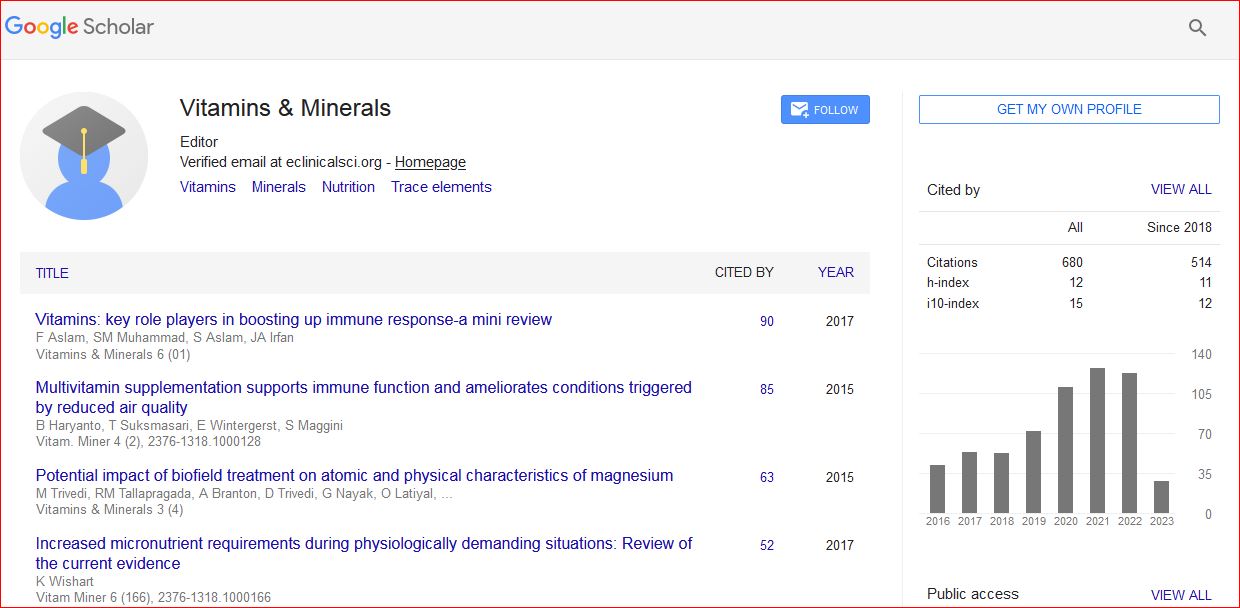
Vitamins & Minerals received 790 citations as per Google Scholar report