Brief Report - (2025) Volume 9, Issue 4
Received: 01-Jul-2025, Manuscript No. jgdr-26-179175;
Editor assigned: 03-Jul-2025, Pre QC No. P-179175;
Reviewed: 17-Jul-2025, QC No. Q-179175;
Revised: 22-Jul-2025, Manuscript No. R-179175;
Published:
29-Jul-2025
, DOI: 10.37421/2684-6039.2025.09.271
Citation: Okoye, Hannah. ”Metagenomics: Unveiling Microbial Diversity and Its Impacts.” J Genet DNA Res 09 (2025):271.
Copyright: © 2025 Okoye H. This is an open-access article distributed under the terms of the Creative Commons Attribution License, which permits unrestricted use, distribution and reproduction in any medium, provided the original author and source are credited.
Metagenomics stands as a transformative technology, offering a powerful lens through which to explore the vast genetic diversity present within microbial communities, significantly advancing our capabilities beyond traditional cultivation-dependent methods. This innovative approach allows us to uncover the immense, uncultured majority of microbes and to elucidate their complex and often intricate ecological roles within various environments. By directly sequencing DNA extracted from environmental samples, researchers can infer detailed community composition, assess functional potential, and unravel evolutionary relationships among microorganisms. The comprehension of this microbial diversity is of paramount importance across a broad spectrum of scientific disciplines, including environmental science, agriculture, and human health, particularly in understanding the profound impact of the microbiome on disease pathogenesis and progression [1].
The intricate interplay between host genetics and the gut microbiome emerges as a key determinant of overall health and the susceptibility to various diseases. Metagenomic studies have proven instrumental in dissecting these complex host-microbe interactions, enabling the identification of specific microbial taxa and genes that significantly influence host physiology, immune responses, and overall metabolic function. This deepening knowledge is vital for the development of personalized therapeutic strategies that precisely target and modulate the microbiome for improved health outcomes [2].
Metagenomic sequencing is actively revolutionizing our understanding of microbial diversity within complex environmental matrices, such as soil ecosystems. This technology facilitates the comprehensive characterization of the complete genetic potential harbored by these communities, including genes that are critically involved in essential processes like nutrient cycling and intricate plant-microbe interactions. Such insights hold significant implications for the advancement of sustainable agricultural practices and more effective ecosystem management strategies [3].
The genetic diversity inherent in aquatic microbial communities is profoundly shaped by a multitude of dynamic environmental factors. Metagenomics provides an unprecedented and highly detailed view of this diversity, facilitating the discovery of novel metabolic pathways and unique adaptations that enable microbes to thrive under specific aquatic conditions. This understanding is essential for accurately assessing water quality, deciphering biogeochemical cycles, and evaluating the pervasive impact of pollution on aquatic ecosystems [4].
Viral metagenomics, often referred to as viromics, has initiated new and exciting avenues for the study of viral diversity and their multifaceted impact across diverse ecosystems. This rapidly evolving field allows for the identification of previously unknown viruses, enhances our understanding of their critical roles in shaping microbial community dynamics, and highlights their potential as diagnostic markers or therapeutic targets. The sheer vastness and complexity of the viral realm are only now being fully appreciated through these advanced techniques [5].
Significant challenges persist within the realm of metagenomic data analysis, including inherent biases introduced during sequencing and assembly processes, and a continuous demand for sophisticated bioinformatics tools. The development of robust and reliable pipelines capable of accurately assessing microbial diversity and elucidating functional potential remains an active and crucial area of ongoing research and innovation [6].
The genetic diversity of the human microbiome is intrinsically and inextricably linked to human health and well-being. Metagenomic investigations are progressively revealing how subtle variations and compositions within microbial communities correlate with a wide array of conditions, ranging from inflammatory bowel disease and obesity to even certain neurological disorders. This growing body of evidence is paving the way for the development of novel microbiome-based diagnostics and therapeutic interventions [7].
Metagenomic approaches are proving to be critically important for understanding the genetic underpinnings of antimicrobial resistance (AMR) within diverse microbial communities. Environmental reservoirs of resistance genes, effectively identified through metagenomic analyses, underscore the complex and often clandestine pathways through which AMR can disseminate. This highlights the urgent need for integrated and comprehensive surveillance strategies to combat the global threat of antibiotic resistance [8].
The application of metagenomics within the burgeoning field of industrial biotechnology is experiencing a rapid and expansive growth. By meticulously characterizing microbial consortia residing in bioreactors and various other industrial settings, researchers are empowered to optimize existing processes, discover novel enzymes with valuable industrial applications, and engineer microbial communities for enhanced production of biofuels, essential chemicals, and life-saving pharmaceuticals [9].
Metagenomics serves as an indispensable tool for the comprehensive assessment of microbial genetic diversity in extreme environments, such as hydrothermal hot springs and deep-sea hydrothermal vents. Studies conducted in these unique habitats reveal the remarkable and often unique adaptations and evolutionary strategies employed by extremophiles. This research offers profound insights into the fundamental limits of life and highlights potential avenues for novel biotechnological applications derived from these resilient organisms [10].
Metagenomics provides an unparalleled window into the genetic tapestry of microbial communities, extending far beyond the limitations of traditional cultivation techniques. This powerful methodology allows for the exploration of the vast majority of microbes that remain uncultured, shedding light on their essential ecological functions and interactions. Through the direct sequencing of environmental DNA, researchers can reconstruct community structures, infer functional capabilities, and trace evolutionary histories. Understanding this extensive microbial diversity is fundamental for advancements in diverse fields, including environmental monitoring, agricultural sustainability, and human medicine, particularly concerning the microbiome's role in health and disease [1].
The complex dialogue between host genetic factors and the gut microbiome is a significant determinant of an individual's health status and susceptibility to illness. Metagenomic studies play a pivotal role in untangling these intricate host-microbe relationships, identifying key microbial species and genetic elements that modulate host metabolism, immunity, and overall physiological balance. This knowledge is crucial for devising personalized medical interventions tailored to the specific characteristics of a patient's microbiome [2].
Through the application of metagenomic sequencing, our comprehension of microbial community structure and function in challenging environments, such as soils, is undergoing a profound transformation. This approach enables the detailed characterization of the entire genetic repertoire of these communities, including genes responsible for vital processes like nutrient transformation and symbiotic relationships with plants. These discoveries have direct implications for improving the efficiency and sustainability of agricultural systems and for enhancing the management of natural ecosystems [3].
The genetic makeup of microbial populations inhabiting aquatic environments is heavily influenced by a dynamic array of physicochemical factors. Metagenomics offers an unprecedented resolution in characterizing this diversity, revealing novel enzymatic pathways and adaptive mechanisms developed by microbes to thrive under diverse aquatic conditions. Such insights are critical for evaluating water resource quality, understanding global biogeochemical cycles, and assessing the ecological impact of anthropogenic pollution [4].
Viral metagenomics, or viromics, represents a frontier in microbial ecology, enabling the exploration of viral diversity and their ecological significance in various environments. This field facilitates the discovery of new viruses, provides crucial information on their roles in regulating microbial populations, and identifies their potential as biomarkers or therapeutic agents. The immense and largely uncharted territory of the virosphere is becoming increasingly accessible through these advanced techniques [5].
Navigating the complexities of metagenomic data analysis presents notable challenges, including potential biases inherent in high-throughput sequencing and genome assembly. The continuous development and refinement of sophisticated bioinformatics tools are essential for overcoming these hurdles and for accurately characterizing microbial diversity and predicting functional roles. This area remains a focal point of active research and innovation [6].
The genetic composition of the human microbiome is deeply intertwined with human health. Metagenomic research is consistently uncovering correlations between specific microbial community profiles and various health conditions, such as inflammatory bowel diseases, obesity, and even neurological disorders. This growing understanding is driving the development of new diagnostic tools and therapeutic strategies based on microbiome modulation [7].
Metagenomic techniques are indispensable for investigating the genetic basis of antimicrobial resistance (AMR) within diverse microbial assemblages. The identification of environmental reservoirs harboring resistance genes through metagenomics highlights the intricate routes of AMR dissemination and emphasizes the critical need for coordinated global surveillance efforts to mitigate this growing public health threat [8].
In the realm of industrial biotechnology, metagenomics is rapidly expanding its utility. By providing a comprehensive view of microbial consortia in industrial fermentation processes and other applications, metagenomics aids in optimizing bioprocesses, discovering novel enzymes for industrial use, and engineering microbial communities to improve the production of valuable compounds such as biofuels, industrial chemicals, and pharmaceuticals [9].
Metagenomics is a vital methodology for characterizing the genetic diversity of microbial life in extreme environments, including volcanic hot springs and deep-sea hydrothermal vents. These investigations reveal extraordinary adaptations and unique evolutionary strategies employed by extremophiles, thereby broadening our understanding of the limits of life and uncovering potential biotechnological applications derived from these resilient organisms [10].
Metagenomics is a powerful tool for studying microbial diversity, revealing uncultured microbes and their ecological roles by sequencing DNA directly from environmental samples. This approach is crucial for understanding microbial communities in various environments, including the gut, soil, and aquatic ecosystems, and has significant implications for human health, agriculture, and industrial biotechnology. Viral metagenomics (viromics) is expanding our knowledge of viral diversity and impact. While computational challenges exist in data analysis, ongoing research aims to improve accuracy and reliability. Metagenomics also plays a key role in understanding antimicrobial resistance and studying life in extreme environments, paving the way for novel applications and interventions.
None
None
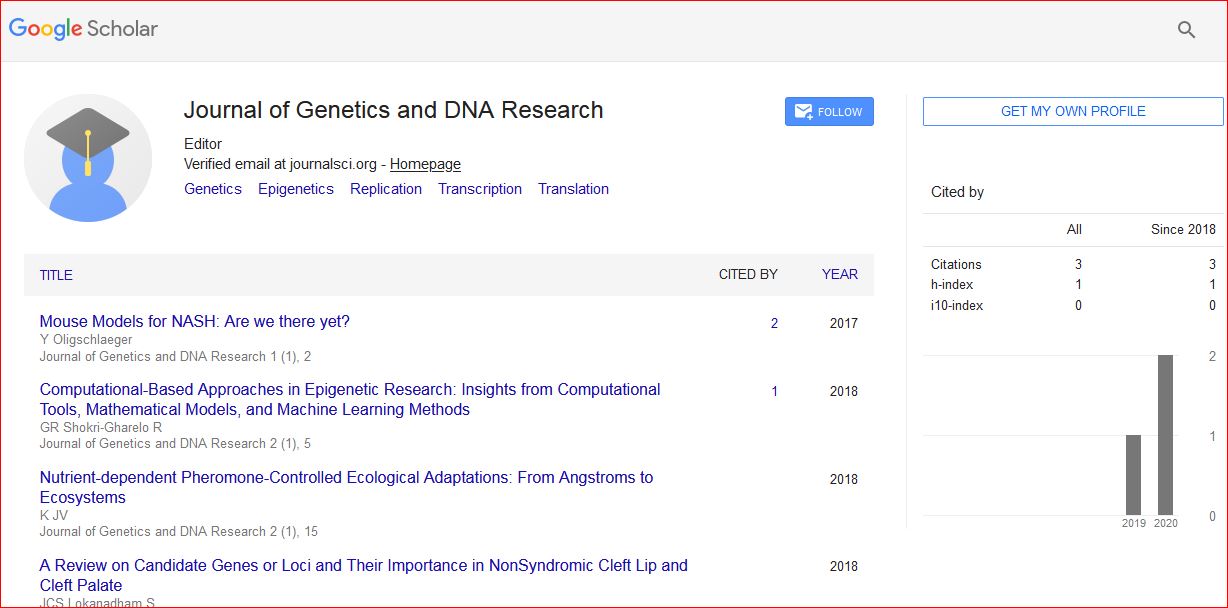
Journal of Genetics and DNA Research received 3 citations as per Google Scholar report