Perspective - (2025) Volume 14, Issue 5
Received: 01-Sep-2025, Manuscript No. aim-25-177776;
Editor assigned: 03-Sep-2025, Pre QC No. P-177776;
Reviewed: 17-Sep-2025, QC No. Q-177776;
Revised: 22-Sep-2025, Manuscript No. R-177776;
Published:
29-Sep-2025
, DOI: 10.37421/2427-5162.2025.14.594
Citation: Conti, Isabella. ”Metabolic Health: Gut, Lifestyle, Environment, and Stress.” Alt Integr Med 14 (2025):594.
Copyright: © 2025 Conti I. This is an open-access article distributed under the terms of the Creative Commons Attribution License, which permits unrestricted use, distribution and reproduction in any medium, provided the original author and source are credited.
The intricate interplay between the gut microbiome, various lifestyle factors, and overall metabolic health represents a critical area of scientific inquiry. Disruptions in the composition and function of gut microbiota, significantly influenced by dietary patterns, physical activity levels, and psychological stress, demonstrably affect metabolic processes. This highlights the guts fundamental role as a primary player in metabolic regulation and vital detoxification pathways [1].
A comprehensive understanding of how diet, specific lifestyle choices, and the resident gut microbiota collectively contribute to the development and effective management of metabolic syndrome is essential. An integrative and holistic approach, specifically emphasizing judicious dietary patterns, regular physical activity, and targeted modulation of the gut environment, is recognized as crucial for effectively addressing the complex underlying metabolic dysfunctions observed in this condition [2].
Maintaining optimal liver health is paramount for the bodys metabolic equilibrium and detoxification capabilities, necessitating effective nutritional strategies. This involves highlighting the significant role played by various natural products, along with strategic lifestyle modifications. Supporting robust liver function through a judicious diet and appropriate interventions is thus considered vital for detoxification processes and overall systemic metabolic balance [3].
Compelling evidence increasingly links exposure to a wide array of environmental chemicals, often termed xenobiotics, with the heightened risk and development of metabolic syndrome. This perspective underscores the critical importance of acknowledging these external substances as significant contributors to pervasive metabolic dysfunction. Consequently, strategies aimed at reducing environmental exposure and bolstering endogenous detoxification mechanisms are deemed critical for preserving metabolic health [4].
The burgeoning field of personalized nutrition holds profound implications for optimizing individual metabolic health outcomes. Tailored dietary interventions, meticulously designed based on an individuals unique genetic predispositions, specific microbial profiles, and distinct lifestyle factors, offer a substantially more effective approach to both preventing and managing complex metabolic disorders. This contrasts sharply with generic, universally applied dietary advice [5].
The essential role of various micronutrients in the multifaceted prevention and management of metabolic syndrome cannot be overstated. Deficiencies or subtle imbalances in key vitamins and minerals can significantly impair crucial metabolic pathways and compromise detoxification capacities. Therefore, ensuring adequate intake of these vital micronutrients is critically important for diligently maintaining comprehensive metabolic integrity and preventing chronic disease [6].
Medicinal plants possess an extensive repertoire of bioactive compounds, which present substantial therapeutic potential for directly addressing the complexities of metabolic syndrome. Research consistently demonstrates that these naturally occurring compounds can effectively modulate a diverse range of metabolic pathways and actively support crucial detoxification functions. This offers promising avenues for the development of innovative, integrative treatment strategies [7].
A critical link exists between persistent chronic inflammation and the subsequent development of numerous metabolic diseases. Bioactive compounds derived from natural sources show considerable promise in their capacity to significantly mitigate these pervasive inflammatory responses. Reducing systemic inflammation is therefore recognized as a fundamental strategy in effectively managing metabolic health and robustly supporting the bodys innate restorative processes [8].
Human studies on intermittent fasting have consolidated significant findings regarding its positive effects on metabolic health. Various fasting protocols have been shown to improve critical metabolic markers, substantially enhance cellular repair mechanisms, and effectively support detoxification pathways. This positions intermittent fasting as a powerful and highly efficacious lifestyle intervention for promoting comprehensive metabolic wellbeing and longevity [9].
The profound connection between chronic psychological stress and the development of metabolic syndrome is a significant area of research. Chronic stress can profoundly dysregulate essential hormones and metabolic pathways, contributing to adverse health outcomes. Consequently, effective stress management strategies are emphasized as an integral and indispensable component of any integrative approach aimed at improving metabolic health and reducing systemic physiological burden [10].
Recent research underscores the pivotal role of the gut microbiome in human metabolic health, influenced heavily by daily lifestyle choices. Alterations in the gut microbiotas composition and functional activity, often driven by dietary habits, levels of physical activity, and stress, directly impact the efficiency of metabolic processes. This reinforces the guts indispensable function in regulating metabolism and facilitating essential detoxification [1]. A detailed examination reveals the combined influence of dietary practices, lifestyle decisions, and the gut microbiota on the emergence and control of metabolic syndrome. An integrative methodology, which prioritizes specific dietary patterns, consistent physical activity, and deliberate modulation of the gut environment, is paramount. Such an approach is deemed essential for addressing the intricate metabolic dysfunctions inherent to this condition [2]. Effective nutritional strategies are crucial for maintaining liver vitality, a key organ in metabolic and detoxification processes. The article highlights the importance of natural products and strategic adjustments in lifestyle. Emphasizing dietary support and targeted interventions for liver function is vital, ensuring robust detoxification processes and contributing significantly to the bodys overall metabolic equilibrium [3]. Mounting scientific evidence strongly implicates exposure to environmental chemicals, or xenobiotics, in the progression of metabolic syndrome. It is crucial to acknowledge these exogenous agents as significant contributors to metabolic dysfunction. Consequently, strategies aimed at minimizing environmental exposure and actively bolstering the bodys inherent detoxification mechanisms are considered vital for safeguarding metabolic health [4]. Personalized nutrition represents a cuttingedge approach with farreaching implications for optimizing individual metabolic health. Tailored dietary interventions, meticulously crafted based on an individuals unique genetic makeup, specific microbial signatures, and lifestyle behaviors, offer a distinctly more efficacious path to preventing and managing metabolic disorders than generalized dietary recommendations [5]. Micronutrients play a fundamental role in the prevention and therapeutic management of metabolic syndrome. Deficiencies or imbalances in crucial vitamins and minerals can severely impede vital metabolic pathways and impair detoxification capabilities. Thus, ensuring an adequate and balanced intake of these essential micronutrients is absolutely critical for sustaining metabolic integrity and fostering overall physiological wellbeing [6]. Bioactive compounds derived from diverse medicinal plants exhibit considerable promise as therapeutic agents for combating metabolic syndrome. Evidence suggests these natural compounds can effectively modulate a variety of metabolic pathways and substantially enhance the bodys detoxification processes. This opens compelling avenues for developing innovative and integrative treatment strategies for metabolic health [7]. The profound connection between chronic, lowgrade inflammation and the onset of metabolic diseases is increasingly recognized. Bioactive compounds present a compelling opportunity to effectively mitigate these deleterious inflammatory responses. Consequently, the reduction of systemic inflammation stands out as a core strategic objective in comprehensively managing metabolic health and supporting the bodys intrinsic restorative capacities [8]. Research on intermittent fasting protocols in human subjects has demonstrated significant positive impacts on metabolic health. Various fasting regimens have been shown to improve key metabolic markers, enhance cellular repair mechanisms, and robustly support natural detoxification processes. This positions intermittent fasting as a powerful and accessible lifestyle intervention for promoting enduring metabolic wellbeing [9]. The critical relationship between sustained psychological stress and the manifestation of metabolic syndrome is thoroughly explored. Chronic stress is understood to disrupt hormonal balance and metabolic pathways, underscoring its significant role in metabolic dysfunction. Therefore, the integration of effective stress management techniques is essential as a foundational element within any comprehensive strategy aimed at improving metabolic health and reducing systemic physiological burden [10].
The provided literature comprehensively addresses the multifaceted nature of metabolic health, emphasizing the interconnectedness of various physiological, environmental, and lifestyle factors. A recurring theme highlights the gut microbiome as a central player, with its composition and function profoundly influenced by diet, physical activity, and stress, directly impacting metabolic regulation and detoxification. Nutritional strategies, including personalized diets, adequate micronutrient intake, and the integration of natural products and bioactive compounds, are consistently presented as crucial for supporting liver function, mitigating inflammation, and managing metabolic syndrome. Furthermore, external factors such as exposure to environmental chemicals are identified as significant contributors to metabolic dysfunction, underscoring the need for reduced exposure and enhanced detoxification mechanisms. Lifestyle interventions like intermittent fasting are recognized for their ability to improve metabolic markers and cellular repair. Finally, the critical role of psychological stress in dysregulating metabolic pathways reinforces the necessity of holistic approaches that integrate stress management for optimal metabolic wellbeing. This body of research collectively advocates for integrative and personalized strategies to prevent and manage metabolic disorders, focusing on diet, lifestyle, gut health, and environmental awareness.
None
None
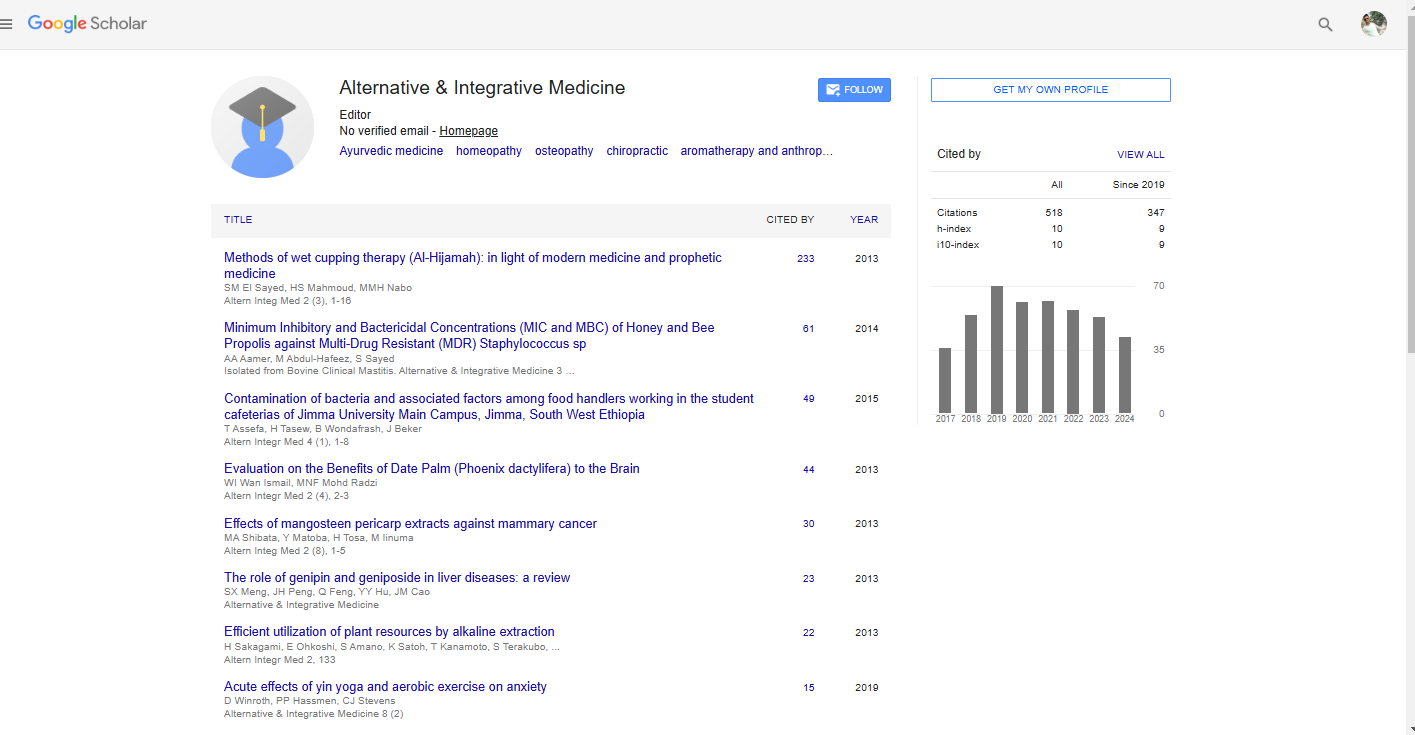
Alternative & Integrative Medicine received 476 citations as per Google Scholar report