Perspective - (127) Volume 11, Issue 4
Received: 01-Aug-2025, Manuscript No. cdp-26-185467;
Editor assigned: 04-Aug-2025, Pre QC No. P-185467;
Reviewed: 18-Aug-2025, QC No. Q-185467;
Revised: 24-Aug-2025, Manuscript No. R-185467;
Published:
29-Aug-2025
, DOI: 10.37421/2572-0791.2025.11.188
Citation: Nkosi, Thabo. ”Mental Health Awareness: Key to Depression Care.” Clin Depress 11 (2025):188.
Copyright: © 2025 Nkosi T. This is an open-access article distributed under the terms of the Creative Commons Attribution License, which permits unrestricted use, distribution and reproduction in any medium, provided the original author and source are credited.
Mental health awareness stands as a cornerstone in the effective care of depression, fundamentally addressing societal barriers that impede help-seeking and recovery. By illuminating the nature of depression as a legitimate health concern, awareness campaigns work to dismantle the stigma that has historically shrouded mental illness, thereby encouraging individuals to come forward for support without fear of judgment or discrimination [1].
Furthermore, an enhanced public understanding of depressionâ??s complex origins is crucial for its de-stigmatization. When people recognize that depression is influenced by a confluence of biological, psychological, and environmental factors, rather than being a sign of personal weakness, the perception shifts towards a treatable medical condition, fostering greater acceptance of diagnosis and treatment [2].
Promoting widespread mental health awareness directly underpins the effectiveness of early intervention strategies for depression. An informed populace is more adept at identifying the nascent signs and symptoms of depression in themselves and others, prompting timely consultations with healthcare professionals. This early recognition is instrumental in improving long-term prognoses and mitigating the severity and duration of depressive episodes [3].
The cultivation of supportive societal contexts for depression care is intrinsically linked to pervasive mental health awareness. Educated communities are more likely to foster environments where individuals feel secure discussing their mental health struggles, thereby providing invaluable social support that complements clinical interventions and enhances overall well-being [4].
The integration of mental health services into primary care settings is significantly facilitated by a heightened awareness of mental health issues. When primary care physicians and their staff possess a greater understanding of depression's manifestations, they are better positioned to conduct screenings and make appropriate referrals, thereby expanding access to care and alleviating pressure on specialized mental health services [5].
De-stigmatization, driven by robust mental health awareness initiatives, plays a pivotal role in encouraging individuals to seek professional assistance for depression. As societal attitudes evolve to view depression as a legitimate health issue, the reluctance to seek treatment diminishes, improving patient engagement with care pathways [6].
Mental health awareness education is instrumental in empowering individuals with knowledge regarding the diverse treatment modalities available for depression. This includes an understanding of options such as psychotherapy and pharmacotherapy, which facilitates shared decision-making between patients and clinicians, leading to more personalized and effective care plans that resonate with individual needs and preferences [7].
The profound impact of societal awareness on the attitudes of family members and caregivers cannot be overstated. When families are well-informed about depression, they are better equipped to provide compassionate and effective support, a critical element in the patient's recovery journey that can also prevent familial discord and misunderstanding [8].
Mental health literacy, a core component of awareness, equips individuals with the essential knowledge and skills to recognize, comprehend, and respond appropriately to mental health challenges. This is particularly vital for depression care, as it promotes proactive engagement with services and the adoption of self-management strategies, ultimately contributing to more favorable long-term health outcomes [9].
The persistent call for enhanced mental health policies and increased funding finds a powerful ally in public awareness. When the general population comprehends the substantial burden of depression and the critical need for accessible, high-quality care, it galvanizes advocacy efforts for policy reform, ensuring that mental health is prioritized in public health agendas and resource allocation [10].
The crucial role of mental health awareness in depression care is multifaceted, primarily serving to combat the pervasive stigma that often deters individuals from seeking help. By fostering a greater understanding that depression is a treatable illness, awareness campaigns encourage early intervention and create a more supportive environment for patients and their families [1].
Cultivating a deeper public comprehension of the biological and psychological underpinnings of depression is essential for its de-stigmatization. When individuals understand that depression is a complex condition influenced by genetics, brain chemistry, and environmental factors, it shifts the perception from a character flaw to a legitimate health issue requiring medical attention, thereby increasing receptiveness to diagnosis and treatment [2].
Enhanced mental health awareness directly influences the efficacy of early intervention strategies for depression. An informed public is more likely to recognize the early warning signs of depression in themselves and others, leading to prompt consultation with healthcare professionals, which significantly improves prognosis and reduces the severity and duration of depressive episodes [3].
The establishment of a supportive societal context for depression care is profoundly reliant on widespread mental health awareness. When communities are educated about depression, they can cultivate environments where individuals feel safe to discuss their struggles without fear of judgment, providing vital social support that complements clinical treatments and enhances overall well-being [4].
Integration of mental health services into primary care is significantly advanced by mental health awareness. When primary care physicians and their staff are more knowledgeable about depression's signs and symptoms, they are better equipped to screen for it and make appropriate referrals, thereby broadening access to care and reducing the strain on specialized mental health services [5].
De-stigmatization efforts, propelled by mental health awareness, are paramount for encouraging individuals to seek professional help for depression. As societal attitudes evolve to view depression as a legitimate health concern, individuals are less likely to experience shame or fear associated with seeking treatment, leading to improved engagement with care [6].
Mental health awareness education empowers individuals by informing them about the various treatment options available for depression, including psychotherapy and pharmacotherapy. This knowledge facilitates shared decision-making between patients and clinicians, resulting in more personalized and effective care plans that align with patient preferences and needs [7].
The impact of societal awareness on the attitudes of family members and caregivers is substantial. When families are informed about depression, they can offer more informed and compassionate support, which is a critical factor in a patient's recovery journey and helps prevent familial strain and misunderstanding [8].
Mental health literacy, a key component of awareness, equips individuals with the knowledge and skills to recognize, understand, and respond to mental health problems. This is vital for depression care as it enables proactive engagement with mental health services and self-management strategies, ultimately leading to better long-term outcomes [9].
The ongoing advocacy for improved mental health policies and funding is amplified by public awareness. When the general population understands the burden of depression and the importance of accessible, quality care, it fuels movements for policy change, ensuring that mental health is prioritized in public health agendas and resource allocation [10].
Mental health awareness is crucial for effective depression care, as it combats stigma, encourages early help-seeking, and fosters supportive environments. Increased awareness promotes understanding of depression as a treatable illness, not a personal failing, which improves treatment adherence and outcomes. It highlights the importance of integrating mental health into general healthcare and empowers individuals with knowledge of treatment options, facilitating shared decision-making. Awareness also bolsters support from families and communities, influences policy changes, and enables proactive engagement with services and self-management strategies, ultimately leading to better long-term recovery.
None
None
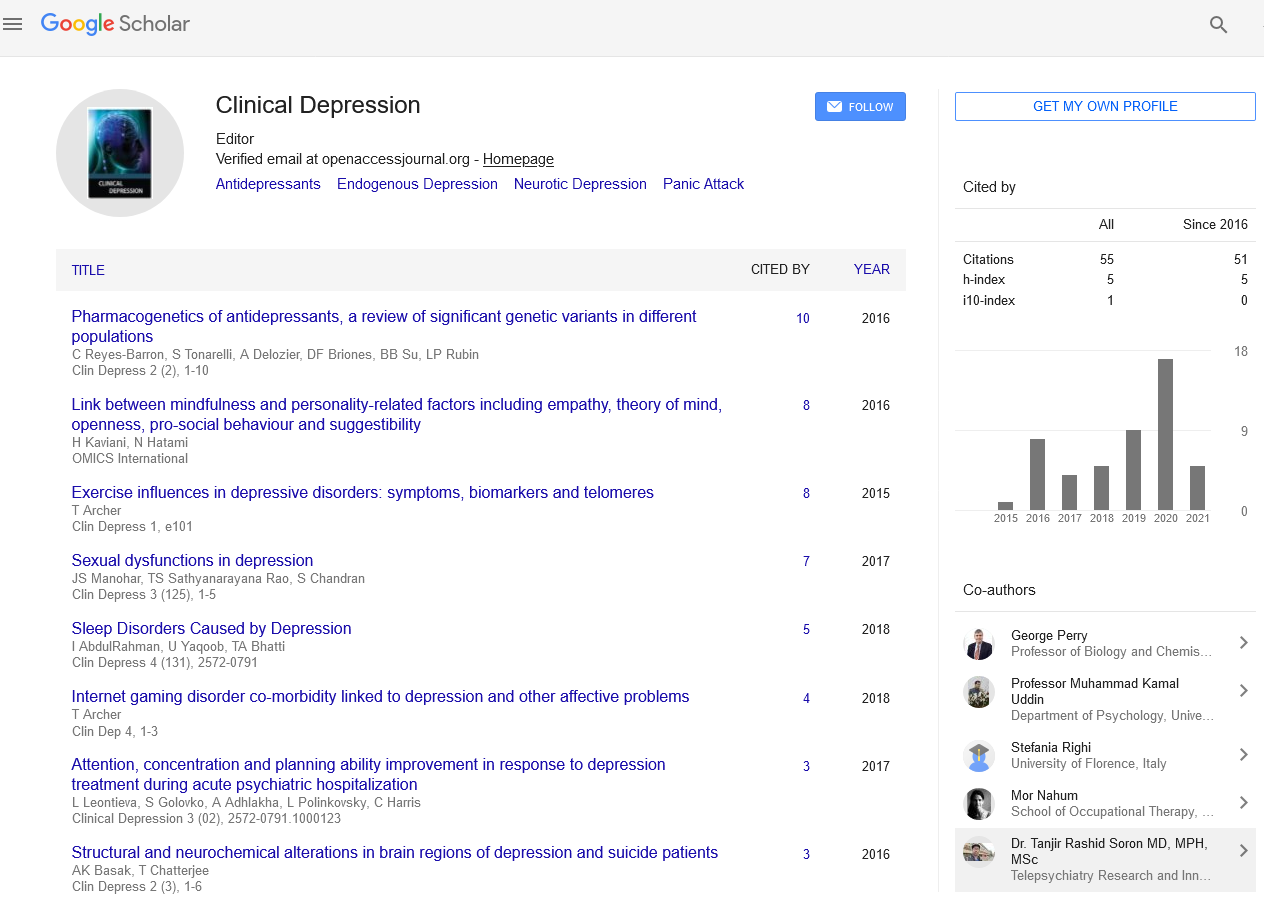
Clinical Depression received 89 citations as per Google Scholar report