Short Communication - (2025) Volume 14, Issue 4
Received: 01-Jul-2025, Manuscript No. jio-26-184823;
Editor assigned: 03-Jul-2025, Pre QC No. P-184823;
Reviewed: 17-Jul-2025, QC No. Q-184823;
Revised: 22-Jul-2025, Manuscript No. R-184823;
Published:
29-Jul-2025
, DOI: 10.37421/2329-6771.2025.14.572
Citation: Kowalska, Maria. ”Medicinal Plants’ Multifaceted Role in Cancer Therapy.” J Integr Onco 14 (2025):572.
Copyright: © 2025 Kowalska M. This is an open-access article distributed under the terms of the Creative Commons Attribution License, which permits unrestricted use, distribution and reproduction in any medium, provided the original author and source are credited.
Medicinal plants represent a significant reservoir of bioactive compounds with profound potential for anticancer applications, operating through multifaceted mechanisms including antiproliferative, apoptotic, anti-angiogenic, and antioxidant pathways. This integrative perspective underscores the critical need to elucidate these intricate interactions for the advancement of novel therapeutic strategies in oncology [1].
The synergistic interactions observed between plant-derived compounds and conventional chemotherapy regimens offer a promising avenue for augmenting treatment efficacy while simultaneously mitigating adverse side effects. This integrative approach is geared towards optimizing drug combinations to achieve superior patient outcomes [2].
A thorough understanding of the specific molecular targets engaged by plant-derived anticancer agents is paramount for their rational development. Contemporary research is increasingly directing its focus towards pathways implicated in cell cycle regulation, programmed cell death (apoptosis), and complex signal transduction cascades [3].
The role of complementary therapies, notably the utilization of medicinal plants, in comprehensive cancer management is steadily gaining recognition and traction within the medical community. An integrative approach embraces a holistic view of the patient, thoughtfully incorporating evidence-based complementary options alongside established conventional treatments [4].
Preclinical investigations continue to identify an array of novel compounds derived from diverse botanical sources, exhibiting potent cytotoxic and antiproliferative activities against a broad spectrum of cancer cell lines. A significant shift in research focus is now directed towards compounds capable of surmounting existing drug resistance mechanisms [5].
The immunomodulatory properties inherent in certain medicinal plants are currently being rigorously explored for their therapeutic potential in cancer treatment, particularly in the context of bolstering the host immune response against malignant tumor cells. This area represents a substantial frontier for advancements in integrative oncology [6].
Natural product drug discovery remains an indispensable and vital component of ongoing anticancer research. The inherent complexity found within phytochemical mixtures can confer unique advantages, potentially paving the way for multi-target therapies that exhibit reduced susceptibility to resistance development [7].
The development of botanical drugs specifically for cancer therapy necessitates rigorous scientific validation. This process demands detailed pharmacokinetic and pharmacodynamic studies to ensure safety and efficacy. An integrative approach serves to bridge traditional herbal knowledge with contemporary scientific methodologies [8].
Targeting cancer stem cells (CSCs), which are implicated in tumor recurrence and metastasis, is recognized as a critical therapeutic strategy. A growing body of evidence suggests that several plant-derived compounds possess the ability to effectively inhibit CSC properties, thereby presenting novel therapeutic possibilities [9].
The convergence of traditional medicine practices and modern oncology research presents a unique and fertile platform for both the discovery and subsequent development of novel anticancer agents. An integrative perspective acknowledges the vast therapeutic potential harbored within medicinal plants and provides a guiding framework for their translation into effective clinical applications [10].
Medicinal plants are a wellspring of compounds with demonstrated potential against cancer, acting through a variety of mechanisms such as inhibiting cell proliferation, inducing apoptosis, blocking angiogenesis, and providing antioxidant effects. This comprehensive view emphasizes the significance of understanding these complex plant-cancer interactions for creating new treatment strategies [1].
Combinations of plant extracts with standard chemotherapy have shown synergistic effects, enhancing treatment effectiveness and reducing side effects. This integrated approach aims to improve patient outcomes by optimizing the use of these combined therapies [2].
Identifying the specific molecular targets of plant-based anticancer compounds is crucial for their rational development. Current research efforts are increasingly concentrated on understanding pathways involved in cell cycle control, apoptosis, and signal transduction relevant to cancer [3].
The use of complementary therapies, including medicinal plants, in cancer care is becoming more widespread. An integrative oncology approach considers the patient as a whole, incorporating evidence-based complementary options alongside conventional treatments to provide holistic care [4].
Ongoing preclinical studies continue to identify new compounds from various plant sources that exhibit strong cytotoxic and antiproliferative activities against different cancer cell lines. A key research direction is the development of compounds that can overcome drug resistance [5].
The ability of certain medicinal plants to modulate the immune system is being investigated for cancer therapy, specifically to enhance the body's immune response against tumors. This area is considered highly significant for the field of integrative oncology [6].
The search for new anticancer drugs from natural products remains a vital area of research. The complex nature of phytochemicals in plants may offer advantages, potentially leading to therapies that act on multiple targets and are less prone to resistance [7].
For botanical drugs to be successfully used in cancer therapy, they must undergo thorough scientific evaluation, including detailed studies on their pharmacokinetics and pharmacodynamics. An integrative approach helps to connect traditional knowledge with modern scientific methods [8].
Combating cancer stem cells, which are responsible for tumor recurrence and spread, is a critical treatment goal. Several compounds derived from plants have shown promise in inhibiting the characteristics of cancer stem cells, opening up new therapeutic avenues [9].
The combination of traditional medicinal knowledge and modern scientific approaches in oncology provides a unique opportunity to discover and develop new anticancer drugs. This integrated perspective recognizes the immense potential of medicinal plants and guides their clinical application [10].
Medicinal plants offer a rich source of compounds with anticancer potential, acting through diverse mechanisms like antiproliferation and apoptosis. Research is exploring synergistic effects with conventional chemotherapy to enhance efficacy and reduce side effects. Understanding specific molecular targets is crucial for rational drug development. Complementary therapies, including medicinal plants, are gaining traction in integrative oncology. Preclinical studies continue to identify novel compounds with cytotoxic and antiproliferative activities, with a focus on overcoming drug resistance. Immunomodulatory properties of plants are also being investigated for cancer therapy. Natural product discovery remains vital, with complex phytochemicals potentially leading to multi-target therapies. Rigorous scientific validation, including pharmacokinetic and pharmacodynamic studies, is necessary for botanical drug development. Targeting cancer stem cells with plant-derived compounds is a promising strategy for preventing recurrence and metastasis. Bridging traditional knowledge with modern science is key to unlocking the full therapeutic potential of medicinal plants in oncology.
None
None
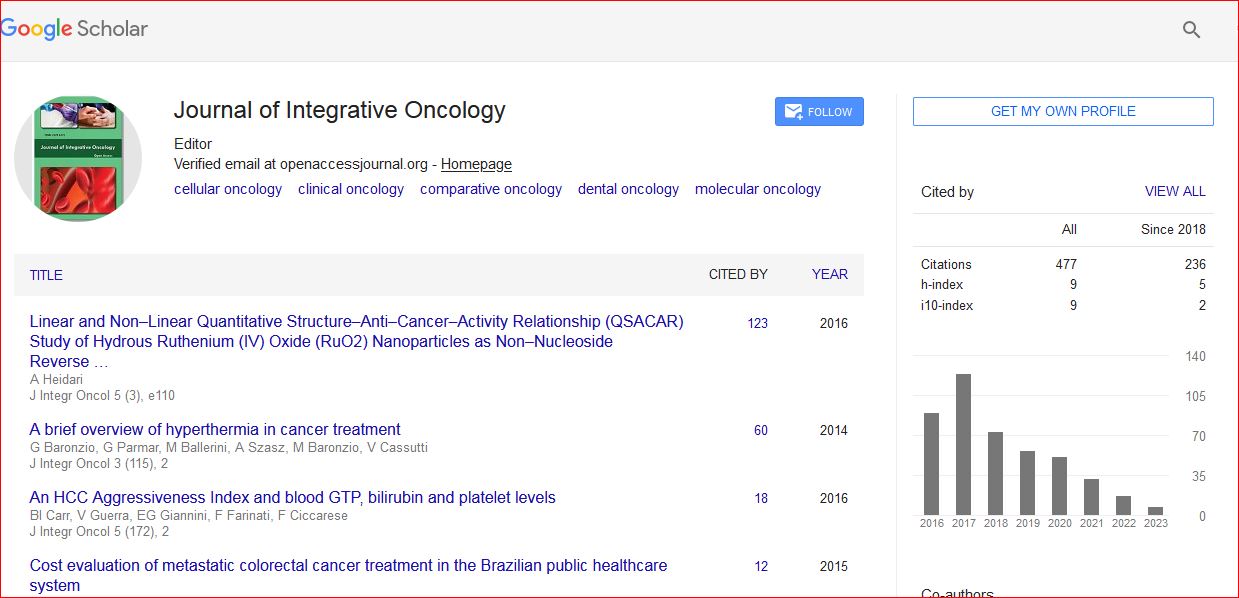
Journal of Integrative Oncology received 495 citations as per Google Scholar report