Brief Report - (2026) Volume 10, Issue 1
Received: 01-Feb-2026, Manuscript No. cmcr-25-186119;
Editor assigned: 03-Feb-2026, Pre QC No. P-186119;
Reviewed: 17-Feb-2026, QC No. Q-186119;
Revised: 23-Feb-2026, Manuscript No. R-186119;
Published:
02-Mar-2026
, DOI: 10.37421/2684-4915.2025.9.416
Citation: Lindstrom, Erik. ”Medical Advancements: Future of Personalized Healthcare.” Clin Med Case Rep 10 (2026):416.
Copyright: © 2026 Lindstrom E. This is an open-access article distributed under the terms of the Creative Commons Attribution License, which permits unrestricted use,
distribution and reproduction in any medium, provided the original author and source are credited.
The field of medicine is continually evolving, driven by groundbreaking research and advancements in understanding complex diseases. Rare autoimmune blistering diseases, for instance, present significant diagnostic hurdles, necessitating early recognition and tailored therapeutic strategies for improved patient outcomes, as highlighted by recent explorations into their diagnosis and management [1].
The intricate relationship between the gut microbiota and human health is becoming increasingly apparent, particularly in the context of chronic conditions. Inflammatory bowel disease (IBD) pathogenesis is being investigated through the lens of gut microbiome modulation, suggesting potential therapeutic targets for inducing remission and preventing relapse in affected patients [2].
In parallel, the escalating incidence of antibiotic-resistant bacterial infections poses a critical global health challenge. Current surveillance methods and treatment strategies are being rigorously examined, emphasizing the urgent need for novel antimicrobial agents and robust stewardship programs to combat this growing threat [3].
The integration of artificial intelligence (AI) into medical diagnostics is revolutionizing various specialties. Specifically, AI's utility in interpreting medical imaging, such as CT scans and MRIs, is showing promise in enhancing early disease detection and characterization, thereby improving diagnostic accuracy and workflow efficiency [4].
The lingering effects of viral infections, such as long COVID, are also a subject of intense research. Cardiovascular manifestations, including myocarditis and arrhythmias, are being identified, prompting the development of diagnostic and management strategies for these post-acute sequelae affecting cardiac health [5].
Oncology has witnessed a paradigm shift with the advent of precision medicine. The use of genomic profiling and targeted therapies is central to personalizing cancer treatment, aiming to enhance treatment efficacy while simultaneously reducing patient toxicity [6].
Immunotherapy has emerged as a powerful tool in the fight against cancer. Recent breakthroughs, particularly in checkpoint inhibitors and combination therapies, have significantly improved survival rates for patients with advanced melanoma, marking a new era in treatment [7].
Chronic metabolic diseases, such as type 2 diabetes, require comprehensive management approaches. The contemporary landscape emphasizes integrating lifestyle modifications, pharmacotherapy, and advanced technologies like continuous glucose monitoring for optimal glycemic control and complication prevention [8].
Genetic disorders are on the cusp of being addressed with revolutionary gene editing technologies. CRISPR-based approaches hold considerable promise for both in vivo and ex vivo applications in treating genetic diseases, alongside ongoing discussions regarding ethical considerations, especially concerning germline editing [9].
Neurodegenerative disorders, exemplified by Alzheimer's disease, are being investigated at a fundamental neurobiological level. Understanding protein aggregation and neuroinflammation pathways is crucial for developing therapeutic strategies aimed at slowing disease progression [10].
Rare autoimmune blistering diseases, a group of complex dermatological conditions, present considerable challenges in their accurate diagnosis and effective management. Recent research underscores the critical importance of early recognition to initiate prompt and appropriate interventions. Furthermore, the development of tailored treatment strategies is paramount for improving the prognosis and quality of life for affected individuals [1].
The human gut harbors a complex ecosystem of microorganisms, collectively known as the gut microbiota, which plays a pivotal role in maintaining health. Dysbiosis, an imbalance in this microbial community, has been implicated in the pathogenesis of various diseases, including inflammatory bowel disease (IBD). Investigations are actively exploring how to therapeutically target the gut microbiome to achieve remission and prevent disease recurrence in IBD patients [2].
The global public health is facing an escalating crisis with the rise of antibiotic-resistant bacteria. This phenomenon complicates the treatment of common infections, leading to prolonged illnesses and increased mortality. Robust surveillance systems are essential for tracking resistance patterns, while the development of novel antimicrobial agents and the implementation of stringent antimicrobial stewardship programs are urgently needed to mitigate this threat [3].
The transformative potential of artificial intelligence (AI) in medical imaging interpretation is becoming increasingly evident. AI algorithms are being developed and validated to assist radiologists in the early detection and precise characterization of diseases from radiological scans, such as computed tomography (CT) and magnetic resonance imaging (MRI), thereby enhancing diagnostic accuracy and optimizing clinical workflows [4].
Post-viral syndromes, notably long COVID, have emerged as a significant clinical concern, with a wide range of long-term health implications. Cardiovascular complications, including inflammation of the heart muscle (myocarditis) and irregular heart rhythms (arrhythmias), are among the identified sequelae. Consequently, there is a growing need for robust diagnostic tools and management protocols for these cardiac manifestations [5].
Precision medicine represents a paradigm shift in cancer treatment, moving away from a one-size-fits-all approach. By leveraging genomic profiling of tumors, clinicians can identify specific molecular targets and administer therapies tailored to an individual patient's genetic makeup. This personalized approach aims to maximize treatment efficacy while minimizing adverse effects [6].
Immunotherapy has revolutionized the treatment of several cancers, particularly in cases of advanced disease. Significant advancements have been made in harnessing the power of the immune system to fight cancer, with checkpoint inhibitors and innovative combination therapies demonstrating remarkable improvements in patient survival rates for conditions like advanced melanoma [7].
The management of type 2 diabetes mellitus is a complex undertaking that requires a multifaceted approach. Contemporary guidelines emphasize the synergistic role of lifestyle modifications, pharmacological interventions, and the adoption of new technologies, such as continuous glucose monitoring systems, to achieve optimal glycemic control and effectively prevent the development of diabetes-related complications [8].
Gene editing technologies, particularly CRISPR-based systems, offer unprecedented possibilities for treating genetic disorders. Research is progressing rapidly in exploring both in vivo (directly in the body) and ex vivo (outside the body) applications of these technologies. Alongside the scientific advancements, critical ethical considerations, particularly regarding germline modifications, are being carefully debated and addressed [9].
Understanding the underlying neurobiological mechanisms of debilitating neurodegenerative diseases like Alzheimer's disease is crucial for developing effective treatments. Current research focuses on the role of abnormal protein accumulation and chronic neuroinflammation as key contributors to disease progression, paving the way for the identification of novel therapeutic targets [10].
This collection of research highlights significant advancements across various medical domains. It covers the challenges and progress in diagnosing and managing rare autoimmune blistering diseases, the role of gut microbiota in inflammatory bowel disease, and the growing threat of antibiotic resistance. The impact of artificial intelligence on medical imaging, cardiovascular manifestations of long COVID, and the evolution of precision medicine in oncology are also discussed. Furthermore, breakthroughs in melanoma immunotherapy, contemporary approaches to type 2 diabetes management, the potential of CRISPR gene editing for genetic disorders, and neurobiological pathways in Alzheimer's disease are explored. These studies collectively point towards a future of more personalized, effective, and technologically-driven healthcare solutions.
None
None
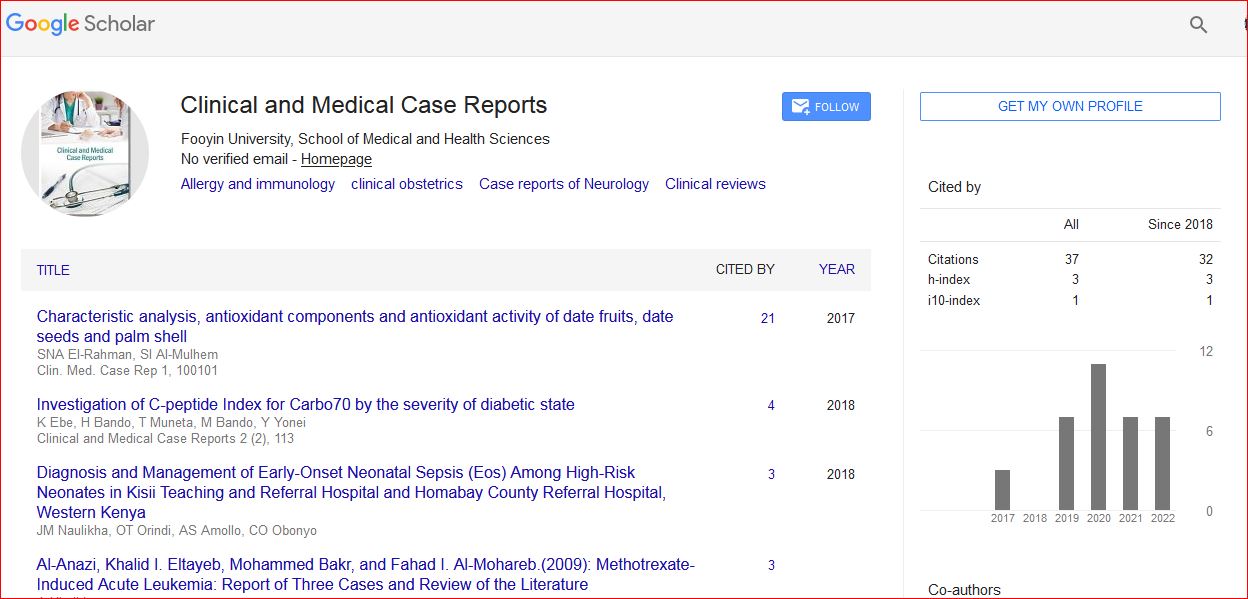
Clinical and Medical Case Reports received 53 citations as per Google Scholar report