Brief Report - (2025) Volume 10, Issue 3
Received: 01-Jun-2025, Manuscript No. jidm-26-188063;
Editor assigned: 03-Jun-2025, Pre QC No. P-188063;
Reviewed: 17-Jun-2025, QC No. Q-188063;
Revised: 23-Jun-2025, Manuscript No. R-188063;
Published:
30-Jun-2025
, DOI: 10.37421/2576-1420.2025.10.401
Citation: Lim, Priya. "Antiviral Therapies: Innovation, Discovery,
and Future Directions." J Infect Dis Med 10 (2025):401.
Copyright: © 2025 Lim P. This is an open-access article distributed under the terms of the Creative Commons Attribution License, which permits unrestricted use, distribution
and reproduction in any medium, provided the original author and source are credited.
Recent advancements in antiviral therapies are profoundly transforming the management of infectious diseases, driven by a sophisticated understanding of viral replication mechanisms and innovative drug development strategies. This progress is marked by the emergence of novel broad-spectrum antivirals, alongside highly targeted therapies designed to inhibit specific viral enzymes. The repurposing of existing drugs also contributes significantly to this evolving landscape of therapeutic options [1].
The development of potent and selective inhibitors targeting viral proteases has been instrumental in combating viruses such as HIV and Hepatitis C. Current research actively seeks to overcome resistance mutations through combination therapies and the design of next-generation protease inhibitors with enhanced pharmacokinetic profiles to achieve durable viral suppression and minimize treatment failure [2].
Nucleoside and nucleotide analogs continue to play a vital role in treating a spectrum of viral infections, including herpesviruses and hepatitis B. A persistent challenge is the development of compounds that demonstrate high efficacy while exhibiting minimal host toxicity. Innovations in this area include prodrug strategies to improve bioavailability and targeted delivery mechanisms to reduce systemic exposure [3].
The advent of direct-acting antivirals (DAAs) has revolutionized the treatment of chronic hepatitis C, achieving high cure rates with convenient oral administration. Ongoing research efforts are concentrated on simplifying treatment regimens, reducing costs, and developing DAAs that are effective against emerging resistant strains of the virus [4].
Emerging viral threats, including novel coronaviruses and arboviruses, underscore the urgent need for the rapid development of adaptable antiviral platforms. Strategies such as mRNA vaccine technology and broad-spectrum small molecules are under active investigation to address these evolving challenges [5].
Antiviral therapies for influenza remain a critical focus, with efforts directed towards addressing seasonal strains and potential pandemic threats. While neuraminidase inhibitors are a current mainstay, research is actively exploring novel targets, including viral entry inhibitors and host-directed therapies that modulate the immune response [6].
Antiretroviral therapy (ART) has successfully transformed HIV infection into a manageable chronic condition. Current research initiatives are focused on developing simplified ART regimens, long-acting injectable formulations, and strategies aimed at achieving a functional cure for the virus [7].
The exploration of host-directed therapies (HDTs) signifies a paradigm shift in antiviral drug development. Instead of targeting viral components directly, HDTs aim to modulate host cellular pathways essential for viral replication, offering potential for broader activity and a reduced risk of resistance development [8].
The integration of artificial intelligence (AI) and machine learning (ML) into antiviral drug discovery is significantly accelerating the identification and optimization of novel therapeutic agents. These computational approaches facilitate rapid screening of chemical libraries, prediction of drug efficacy, and a deeper understanding of complex drug-target interactions [9].
The development of safe and effective antiviral vaccines is a crucial component in controlling infectious diseases globally. Recent successes, particularly against viruses like COVID-19, have showcased the power of novel platforms and expedited development timelines, with ongoing research focused on broadening efficacy and durability [10].
The landscape of infectious disease management is being dramatically reshaped by recent strides in antiviral therapies, propelled by a deeper understanding of viral replication mechanisms and innovative drug development strategies. Key advancements include the emergence of novel broad-spectrum antivirals, targeted therapies against specific viral enzymes, and the strategic repurposing of existing drugs. Furthermore, the development of personalized antiviral approaches, informed by genetic and immunological profiles, holds immense promise for improving treatment efficacy and minimizing the development of resistance. The ongoing integration of artificial intelligence and machine learning in drug discovery is accelerating the identification of new therapeutic candidates [1].
The creation of potent and selective inhibitors that target viral proteases has been a foundational element in the ongoing battle against viruses such as HIV and Hepatitis C. Contemporary research is intensely focused on addressing and overcoming resistance mutations by employing combination therapies and by designing next-generation protease inhibitors endowed with improved pharmacokinetic profiles. This multifaceted strategy is designed to achieve sustained viral suppression and significantly reduce the likelihood of treatment failure [2].
Nucleoside and nucleotide analogs continue to be indispensable in the treatment of a diverse array of viral infections, encompassing herpesviruses and hepatitis B. The primary challenge that persists is the development of compounds capable of exhibiting high efficacy without inducing significant host toxicity. Recent innovations are centered on prodrug strategies to enhance bioavailability and on targeted delivery mechanisms to minimize systemic exposure [3].
The introduction of direct-acting antivirals (DAAs) has profoundly transformed the treatment paradigm for chronic hepatitis C, offering high cure rates achievable through simple oral administration. Current research priorities include the simplification of treatment regimens, reduction in therapeutic costs, and the development of DAAs that exhibit activity against increasingly prevalent resistant strains [4].
The emergence of novel viral threats, such as newly identified coronaviruses and arboviruses, necessitates the swift development of adaptable antiviral platforms. Promising strategies under active exploration include mRNA vaccine technology and the design of broad-spectrum small molecules, aimed at providing rapid and effective countermeasures against these emerging pathogens [5].
Antiviral therapies aimed at controlling influenza remain an area of paramount importance, with a dual focus on addressing seasonal strains and preparing for potential pandemic threats. Neuraminidase inhibitors persist as a primary therapeutic option, yet research is actively pursuing novel targets, including viral entry inhibitors and host-directed therapies that modulate the immune response to enhance viral control [6].
Antiretroviral therapy (ART) has successfully transitioned HIV infection from a terminal illness to a manageable chronic condition. Ongoing research efforts are concentrated on the development of simplified ART regimens, the creation of long-acting injectable formulations, and the exploration of strategies aimed at achieving a functional cure for HIV infection [7].
The investigation into host-directed therapies (HDTs) represents a significant paradigm shift in the field of antiviral drug development. Rather than directly targeting viral components, HDTs focus on modulating host cellular pathways that are indispensable for viral replication, thereby offering the potential for broader antiviral activity and a reduced risk of resistance development [8].
The incorporation of artificial intelligence (AI) and machine learning (ML) techniques into the process of antiviral drug discovery is dramatically accelerating the identification and refinement of novel therapeutic agents. These advanced computational methodologies enable the rapid screening of extensive chemical libraries, the prediction of drug efficacy, and a more profound comprehension of intricate drug-target interactions [9].
The development of safe and highly effective antiviral vaccines remains a critical strategy for controlling infectious diseases on a global scale. Recent breakthroughs in vaccine development, particularly against viruses like COVID-19, have underscored the immense potential of novel platforms and the benefits of accelerated development timelines, with continued research focusing on enhancing vaccine efficacy, durability, and applicability to challenging pathogens [10].
The field of antiviral therapies is undergoing rapid transformation due to a deeper understanding of viral mechanisms and innovative drug development. Advances include broad-spectrum antivirals, targeted therapies, and drug repurposing. Personalized approaches and the integration of AI and machine learning are accelerating drug discovery. Key therapeutic classes such as protease inhibitors, nucleoside analogs, and direct-acting antivirals continue to evolve, addressing challenges like resistance and toxicity. Host-directed therapies and novel vaccine platforms offer promising future directions for managing existing and emerging viral threats. The overall progress aims to improve treatment efficacy, minimize resistance, and achieve better control over a wide range of viral infections.
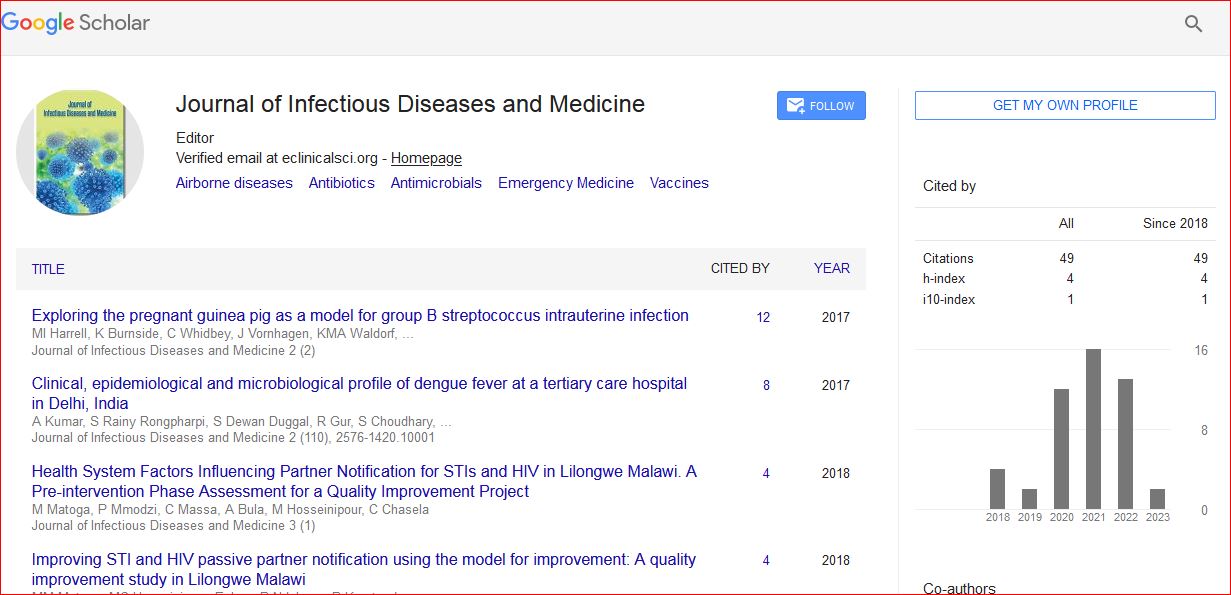
Journal of Infectious Diseases and Medicine received 1059 citations as per Google Scholar report