Brief Report - (2025) Volume 11, Issue 6
Received: 03-Nov-2025, Manuscript No. OHCR-25-167872;
Editor assigned: 05-Nov-2025, Pre QC No. P-167872;
Reviewed: 17-Nov-2025, QC No. Q-167872;
Revised: 22-Nov-2025, Manuscript No. R-167872;
Published:
29-Nov-2025
, DOI: 10.37421/2471-8726.2025.11.213
Citation: Iensen, Bernardello. “Managing Tetracycline Staining with Whitening-Focused Oral Hygiene Regimens.” Oral Health Case Rep 11 (2025): 213.
Copyright: © 2025 Iensen B. This is an open-access article distributed under the terms of the Creative Commons Attribution License, which permits unrestricted use, distribution and reproduction in any medium, provided the original author and source are credited.
Tetracycline staining presents a unique and persistent challenge in aesthetic dentistry, often causing deep intrinsic discoloration that resists conventional whitening treatments. These stains arise from the systemic administration of tetracycline antibiotics during tooth development, where the drug binds to calcium ions and becomes incorporated into dentin and enamel. The result is a spectrum of discoloration ranging from yellow-gray to dark brown bands that can significantly affect the appearance of a smile. Unlike surface stains caused by food or tobacco, tetracycline-induced discoloration is deeply embedded, making treatment more complex and requiring a strategic, long-term approach. As demand for non-invasive cosmetic improvements grows, interest in whitening-focused oral hygiene regimens has increased. These regimens aim to reduce visible staining and improve overall tooth brightness while preserving enamel health and minimizing patient discomfort [1].
Modern oral hygiene strategies are increasingly being tailored to aesthetic concerns, with whitening becoming a primary focus for many adults. In the context of tetracycline staining, conventional whitening products often fall short, particularly in moderate to severe cases where discoloration lies deep within the tooth structure. However, integrating targeted oral hygiene regimens into the overall management plan can support gradual aesthetic improvement, prolong professional whitening results, and enhance patient satisfaction. These regimens include the use of high-fluoride whitening toothpastes, gentle abrasives, low-concentration peroxide rinses, and remineralizing agents that maintain enamel integrity. For individuals unwilling or unable to pursue veneers or in-office bleaching, such regimens offer a minimally invasive alternative. The effectiveness of these measures depends on consistency, formulation, and the baseline severity of staining, making customized care plans essential for success [2].
Tetracycline stains result from antibiotic incorporation during tooth development, usually between the second trimester in utero and the age of eight years. The severity of staining depends on dosage, duration, and age of exposure. Once incorporated, tetracycline binds to dentin and fluoresces under UV light, eventually oxidizing and darkening over time. These stains differ from extrinsic discoloration in origin and treatment response, making them resistant to over-the-counter whitening products. Whitening-focused oral hygiene regimens aim not to eliminate intrinsic stains outright, but to reduce the contrast between discolored areas and surrounding tooth surfaces while enhancing brightness over time. These regimens typically include daily use of whitening toothpastes with mild abrasives such as hydrated silica or calcium carbonate to lift surface pigments. In some cases, low-concentration carbamide peroxide gels or rinses can be prescribed for home use under supervision, allowing for prolonged contact with enamel while reducing sensitivity risks. Additionally, incorporating remineralizing agents like nano-hydroxyapatite or fluoride strengthens enamel, providing a polished appearance and counteracting erosion. Although these regimens may not fully resolve severe tetracycline staining, they can significantly improve overall shade and surface luster. When used consistently, they serve as effective maintenance following professional whitening procedures or as standalone solutions for mild to moderate cases [3].
Professional management of tetracycline staining often includes in-office treatments such as deep bleaching, microabrasion, or placement of veneers, but these options can be invasive or cost-prohibitive for some patients. Whitening-focused oral hygiene regimens present a conservative alternative or adjunct, especially for those with mild to moderate discoloration. These regimens rely on consistency, product efficacy, and patient compliance to gradually improve aesthetics. Toothpastes containing low-abrasion whitening agents offer surface polishing without damaging enamel, while peroxide-based rinses used intermittently may lighten the superficial enamel slightly. Products enriched with potassium nitrate can address sensitivity, a common issue with extended whitening. For long-term effectiveness, regimens should be customized based on staining severity, enamel health, and patient expectations. Biweekly evaluations help monitor progress and adjust protocols as needed. Combining whitening agents with remineralizing and desensitizing formulations enhances enamel resilience while improving gloss and brightness. It's important to manage expectations, as intrinsic stains from tetracycline are seldom completely reversible without restorative procedures. However, these hygiene regimens can increase patient confidence and satisfaction, particularly when more aggressive interventions are deferred or contraindicated. By integrating aesthetic goals into daily oral care, dentists can offer patients gradual, meaningful improvements with minimal intervention, making cosmetic maintenance both accessible and sustainable [4].
The success of whitening-focused regimens in managing tetracycline stains depends heavily on personalized product selection, patient education, and ongoing professional supervision. Not all whitening products are equally effective or safe for long-term use, particularly in the context of intrinsic discoloration. Toothpastes with blue covarine or optical brighteners can temporarily mask yellow tones by altering light reflection, offering instant but superficial improvements. Hydrogen peroxide-based formulations offer deeper whitening potential, but extended use must be carefully managed to avoid enamel dehydration or sensitivity. Incorporating remineralization agents into these regimens enhances tooth appearance by filling micro-defects and strengthening enamel, creating a smoother, shinier surface that reflects light more evenly. Patient compliance is critical-daily brushing, adherence to application times, and dietary adjustments such as reducing staining foods can all affect outcomes. Follow-up appointments provide opportunities to assess enamel integrity, monitor progress, and provide encouragement. While these regimens may not achieve the dramatic transformation possible with veneers or internal bleaching, they serve as valuable tools for patients seeking gradual, non-invasive aesthetic enhancement. Importantly, they empower individuals to take an active role in managing their oral appearance. As product formulations continue to advance, these regimens will likely become more effective, accessible, and integrated into routine dental care as part of a comprehensive cosmetic management strategy [5].
Google Scholar Cross Ref Indexed at
Google Scholar Cross Ref Indexed at
Google Scholar Cross Ref Indexed at
Google Scholar Cross Ref Indexed at
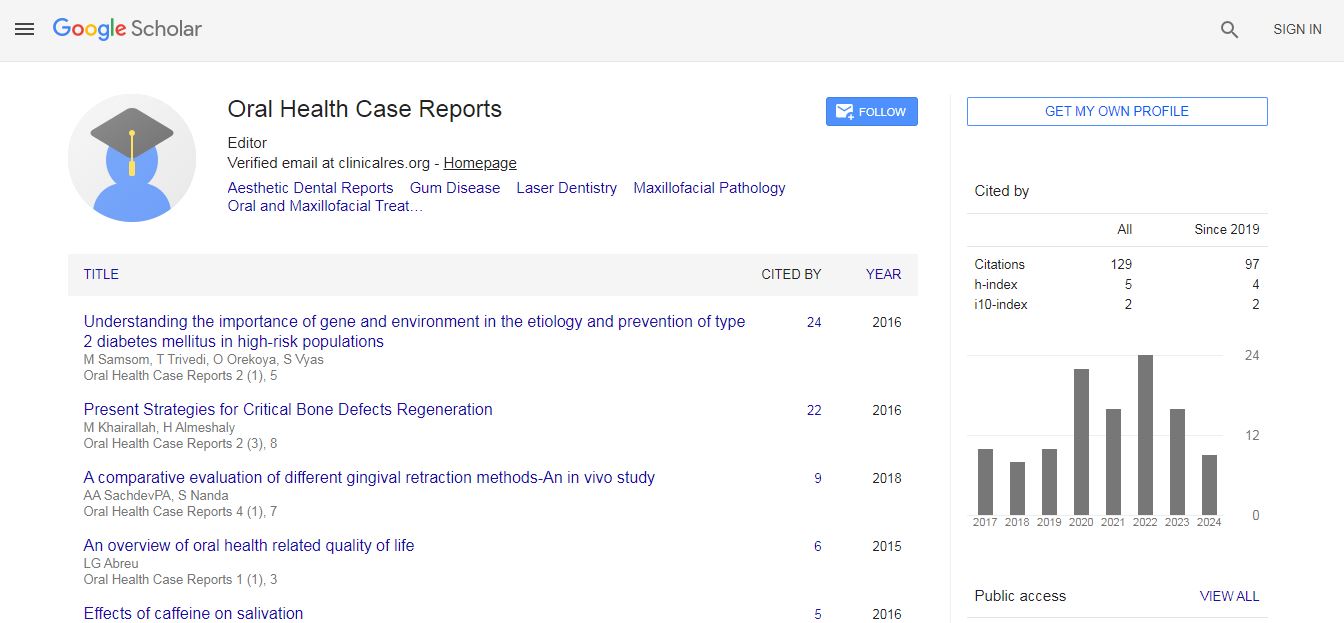
Oral Health Case Reports received 120 citations as per Google Scholar report