Opinion - (2025) Volume 10, Issue 5
Received: 01-Oct-2025, Manuscript No. jidm-26-188095;
Editor assigned: 04-Oct-2025, Pre QC No. P-188095;
Reviewed: 18-Oct-2025, QC No. Q-188095;
Revised: 22-Oct-2025, Manuscript No. R-188095;
Published:
29-Oct-2025
, DOI: 10.37421/2576-1420.2025.10.424
Citation: Papadopoulos, Konstantinos. ”Managing Infections In
The Immunocompromised Patient.” J Infect Dis Med 10 (2025):424.
Copyright: © 2025 Papadopoulos K. This is an open-access article distributed under the terms of the Creative Commons Attribution License, which permits unrestricted use,
distribution and reproduction in any medium, provided the original author and source are credited.
Immunocompromised patients represent a highly susceptible population, facing an elevated risk of a broad spectrum of infectious diseases, from common opportunistic agents to rare and aggressive pathogens. This heightened vulnerability stems from intrinsic or acquired deficiencies in cellular or humoral immunity, or impairments in innate immune responses. These immunological deficits can arise from various underlying conditions, medical interventions such as chemotherapy or immunosuppressive drugs, or simply advanced age. The management of these infections necessitates a prompt and accurate diagnosis, coupled with appropriate antimicrobial therapy that is specifically tailored to the identified pathogen and the host's immune status. Furthermore, strategies aimed at restoring immune function or mitigating the degree of immunosuppression are often crucial. Maintaining a high level of vigilance in the identification and management of these infections is paramount to improving patient outcomes and reducing both morbidity and mortality within this specific patient group [1].
Transplant recipients are particularly susceptible to a range of severe fungal infections, including aspergillosis, candidiasis, and mucormycosis. The diagnosis and treatment of these mycoses are often complicated by their overlapping clinical presentations with bacterial infections and the growing challenge of antifungal resistance. Effective management strategies therefore hinge on robust risk stratification protocols, the timely initiation of empirical treatment, and the utilization of novel diagnostic tools. These advanced diagnostic aids may include biomarkers and sophisticated imaging techniques, all of which are essential for improving survival rates in this vulnerable population [2].
Cytomegalovirus (CMV) infection and disease pose a significant threat to patients undergoing hematopoietic stem cell transplantation (HSCT), profoundly impacting transplant outcomes. The complications associated with CMV can include graft rejection and a substantial increase in mortality. To effectively mitigate these risks, the authors advocate for the implementation of stringent screening protocols, the prompt administration of preemptive therapy, and the continuous development of more effective prophylactic strategies. Such measures are vital for minimizing the incidence and severity of CMV-related complications in HSCT recipients [3].
Antimicrobial resistance, especially among gram-negative bacteria, presents an escalating challenge, particularly for immunocompromised individuals. This growing concern necessitates a thorough understanding of resistance mechanisms, their clinical implications, and optimized treatment approaches. Strategies such as combination therapy and the judicious use of newer antimicrobial agents are being explored. Crucially, the authors underscore the indispensable role of antimicrobial stewardship programs in preserving the efficacy of currently available drugs and combating the spread of resistance [4].
Parasitic infections represent another significant threat to immunocompromised individuals, with protozoal infections like Pneumocystis jirovecii pneumonia and toxoplasmosis being of particular concern. Comprehensive diagnostic approaches, encompassing serological tests and molecular methods, are essential for timely identification. Treatment options must be promptly and effectively implemented to avert severe outcomes. The emergence of novel parasitic pathogens further adds to the diagnostic and therapeutic complexities in managing these patients [5].
Patients with primary immunodeficiencies (PIDs) are at an increased risk for a wide array of viral infections. These can range from common respiratory viruses to more severe manifestations caused by herpesviruses and enteroviruses. The impaired immune responses in PID patients complicate both the diagnosis and management of these viral illnesses. Early recognition of infection, timely administration of specific antiviral therapies, and robust supportive care are critical components of successful management [6].
The intricate relationship between the microbiome and an individual's susceptibility to infections in immunocompromised hosts is an area of growing research interest. Alterations in the composition of the gut, skin, or respiratory microbiota can create an environment conducive to the proliferation of opportunistic pathogens. Emerging evidence suggests that therapeutic modulation of the microbiome, through interventions such as probiotics, prebiotics, or fecal microbiota transplantation, holds promise as a strategy to bolster immune defenses and reduce infection risk [7].
Bacterial pneumonia, whether community-acquired or hospital-acquired, presents unique diagnostic and management challenges in immunocompromised patients. The broad differential diagnosis requires careful consideration, and early microbiological sampling is imperative for guiding therapy. Empiric and targeted antibiotic treatments play crucial roles, but close clinical monitoring and timely adjustments based on patient response and evolving susceptibility patterns are equally important for optimizing outcomes [8].
The COVID-19 pandemic has had a profound impact on immunocompromised patients, who are at a significantly higher risk of severe disease, prolonged viral shedding, and complex treatment challenges. Current research is focused on vaccine effectiveness in this population and the management of breakthrough infections. The authors emphasize the need for continued vigilance, personalized therapeutic strategies, and ongoing investigations into optimal interventions to address the unique needs of immunocompromised individuals during this pandemic [9].
Disseminated fungal infections are a serious concern in patients with hematological malignancies. This review examines the epidemiological trends, diagnostic hurdles, and therapeutic interventions for invasive aspergillosis, candidiasis, and cryptococcosis. The authors highlight the critical importance of early diagnosis, appropriate antifungal prophylaxis and treatment regimens, and the synergistic use of imaging and biomarker data to achieve the best possible patient outcomes [10].
Immunocompromised patients exhibit a distinct vulnerability to a wide array of infectious agents, spanning from common opportunistic pathogens to rare and aggressive microbial invaders. This increased susceptibility is attributable to deficiencies in cellular or humoral immunity, or impaired innate immune responses, often resulting from underlying medical conditions, treatments like chemotherapy or immunosuppressive drugs, or the natural process of aging. Effective management hinges on prompt diagnosis, appropriate antimicrobial therapy precisely tailored to the specific pathogen and the host's immune status, and often, strategic interventions to restore immune function or mitigate existing immunosuppression. Constant vigilance in identifying and managing these infections is paramount for enhancing patient outcomes and diminishing morbidity and mortality within this vulnerable demographic [1].
In solid organ transplant recipients, the landscape of fungal infections is a critical area of focus, with particular attention given to aspergillosis, candidiasis, and mucormycosis. The challenges in accurately diagnosing and effectively treating these fungal infections are amplified by their overlapping clinical presentations with bacterial infections and the alarming development of antifungal resistance. The article underscores the vital importance of meticulous risk stratification, early initiation of empirical treatment regimens, and the adoption of novel diagnostic tools, including biomarkers and advanced imaging modalities, to significantly improve patient survival rates [2].
Cytomegalovirus (CMV) infection and subsequent disease represent a significant clinical challenge for patients undergoing hematopoietic stem cell transplantation (HSCT). CMV has a demonstrable negative impact on transplant outcomes, contributing to graft rejection and increased mortality rates. Consequently, the authors strongly advocate for the implementation of comprehensive screening protocols, timely preemptive therapy, and the ongoing development of more effective prophylactic strategies to mitigate the incidence and severity of CMV-related complications in this high-risk patient group [3].
The escalating challenge posed by antimicrobial resistance in gram-negative bacteria, especially within immunocompromised hosts, demands careful consideration. This review delves into the mechanisms by which these bacteria develop resistance, the profound clinical implications of these resistant infections, and strategies for optimizing treatment. Such strategies include the utilization of combination antibiotic therapy and the deployment of newer antimicrobial agents. The authors stress the critical need for robust antimicrobial stewardship programs to preserve the efficacy of existing therapeutic agents [4].
Parasitic infections present a notable threat to immunocompromised individuals, with protozoal infections such as Pneumocystis jirovecii pneumonia and toxoplasmosis requiring particular attention. The paper outlines key diagnostic approaches, including serology and molecular methods, and discusses various treatment options, emphasizing the necessity of prompt and effective therapy to prevent severe sequelae. The emergence of new parasitic pathogens also poses ongoing challenges for clinicians managing these complex cases [5].
Viral infections are a significant concern in patients diagnosed with primary immunodeficiencies (PIDs). This article explores the diverse spectrum of viral pathogens encountered, ranging from common respiratory viruses to more severe infections caused by herpesviruses and enteroviruses. The challenges in diagnosis and management are exacerbated by the impaired immune responses characteristic of PIDs. The authors highlight the crucial role of early recognition, the administration of specific antiviral therapies, and comprehensive supportive care in improving patient outcomes [6].
The role of the microbiome in influencing the susceptibility of immunocompromised patients to infections is a subject of intensive research. Disturbances in the gut, skin, or respiratory microbiota can predispose individuals to colonization and infection by opportunistic pathogens. The authors propose that therapeutic interventions aimed at modulating the microbiome, such as the use of probiotics, prebiotics, or fecal microbiota transplantation, could offer a promising avenue for enhancing immune defense mechanisms [7].
Bacterial pneumonia, in both its community-acquired and hospital-acquired forms, poses distinct challenges in the immunocompromised patient population. The differential diagnosis is broad, making early and accurate microbiological sampling essential for guiding therapy. The article discusses the importance of both empiric and targeted antibiotic strategies. The authors emphasize the necessity of close patient monitoring and the adaptive adjustment of treatment based on clinical response and evolving antimicrobial susceptibility patterns [8].
The COVID-19 pandemic has disproportionately affected immunocompromised patients, who face an increased risk of severe disease, prolonged viral shedding, and potential complications from treatment. This perspective article reviews the current data on vaccine effectiveness in this group and the challenges associated with managing breakthrough infections. The authors call for sustained vigilance, personalized treatment plans, and continued research to identify optimal therapeutic interventions for immunocompromised individuals during the pandemic [9].
Disseminated fungal infections pose a significant threat to patients with hematological malignancies. This review provides an overview of the epidemiological trends, diagnostic difficulties, and therapeutic options for invasive aspergillosis, candidiasis, and cryptococcosis. The authors strongly emphasize the critical importance of early diagnosis, the implementation of appropriate antifungal prophylaxis and treatment, and the integrated use of imaging and biomarker data to achieve optimal clinical outcomes for these patients [10].
Immunocompromised patients are highly susceptible to a wide range of infections due to weakened immune systems. Effective management requires prompt diagnosis, tailored antimicrobial therapy, and strategies to bolster immune function. Fungal infections, such as aspergillosis and candidiasis, are a significant concern in transplant recipients and individuals with hematological malignancies, with antifungal resistance posing a major challenge. Cytomegalovirus (CMV) poses a substantial risk in hematopoietic stem cell transplantation, necessitating robust screening and preemptive therapies. Antimicrobial resistance, particularly in gram-negative bacteria, further complicates treatment. Parasitic and viral infections, including COVID-19, also present serious threats. The role of the microbiome in modulating infection risk and potential therapeutic interventions is an active area of research. Bacterial pneumonia in immunocompromised hosts requires careful diagnostic and therapeutic approaches, emphasizing early sampling and appropriate antibiotic use. Vigilance, personalized strategies, and ongoing research are crucial for improving outcomes in this vulnerable population.
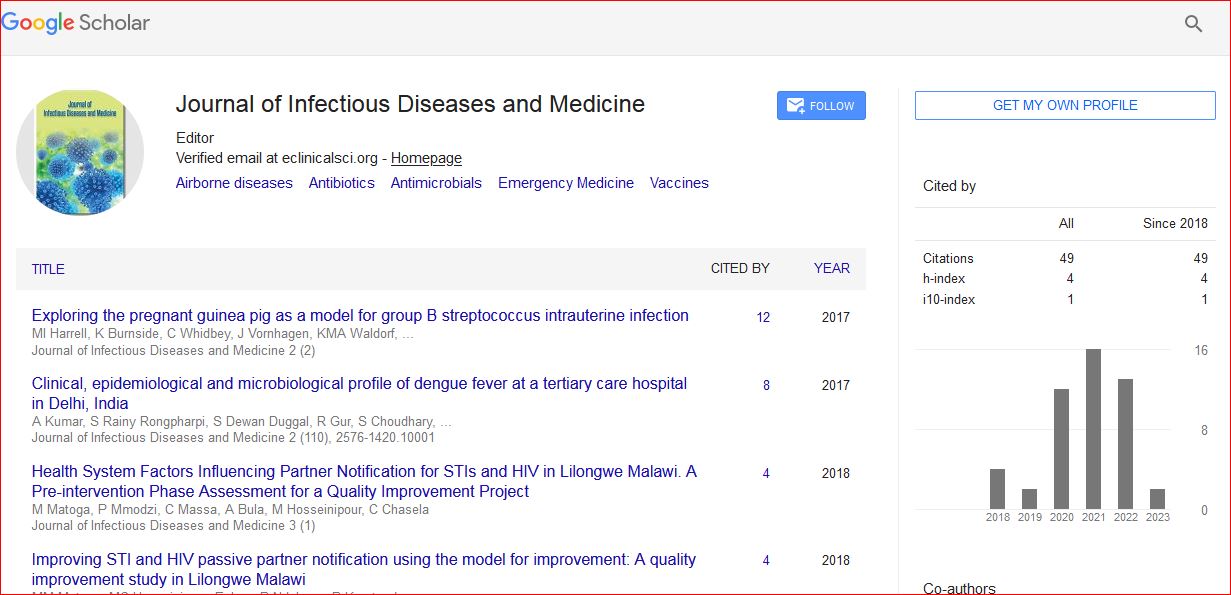
Journal of Infectious Diseases and Medicine received 1059 citations as per Google Scholar report