Opinion - (2025) Volume 16, Issue 2
Received: 01-Apr-2025, Manuscript No. jvst-26-187994;
Editor assigned: 03-Apr-2025, Pre QC No. P-187994;
Reviewed: 17-Apr-2025, QC No. Q-187994;
Revised: 22-Apr-2025, Manuscript No. R-187994;
Published:
29-Apr-2025
, DOI: 10.37421/2157-7579.2025.16.291
Citation: Bianchi, Luca. ”Livestock Nutrition: Optimizing Health,
Productivity, and Profitability.” J Vet Sci Techno 16 (2025):291.
Copyright: © 2025 Bianchi L. This is an open-access article distributed under the terms of the Creative Commons Attribution License, which permits unrestricted use,
distribution and reproduction in any medium, provided the original author and source are credited.
Optimal nutrition stands as the bedrock of robust livestock health and enhanced productivity, fundamentally influencing the integrity of the immune system, the pace of growth, the efficiency of reproductive processes, and the overall capacity for disease resistance [1].
Nutritional deficiencies or imbalances, particularly concerning essential nutrients, can precipitate substantial economic repercussions for producers, manifesting as diminished yields and escalating veterinary expenditures. Consequently, the implementation of precision feeding strategies, meticulously calibrated to the unique life stages and specific production objectives of individual animals or groups, emerges as a critical determinant for optimizing animal well-being and bolstering farm profitability. Furthermore, the vanguard of scientific inquiry is increasingly illuminating the significant role that specialized feed additives and agents designed to modulate gut health can play in amplifying the nutritional benefits derived from feedstuffs, thereby contributing to more resilient and productive livestock populations [1].
Dietary protein, encompassing both its quality and quantity, exerts a profound influence on the development of muscle tissue and the reproductive efficacy of cattle. Ensuring that these animals receive an adequate supply of essential amino acids, with particular emphasis on lysine and methionine, is paramount for achieving optimal growth rates and maximizing milk production. Beyond direct dietary provision, the metabolic activities of rumen microbes in processing protein are of considerable importance. A comprehensive understanding of these intricate microbial interactions is indispensable for the formulation of rations that are not only nutritionally sound but also highly efficient in meeting the animal's needs [2].
Trace minerals, such as selenium, zinc, and copper, are indispensable micronutrients for poultry, playing vital roles in bolstering the immune system and reinforcing the body's antioxidant defense mechanisms. A deficiency in any of these critical elements can lead to a compromised state of the immune system, particularly impairing the function of T-cells, and consequently increasing the susceptibility of the birds to various diseases. This heightened vulnerability often translates into stunted growth and elevated mortality rates. Therefore, the bioavailability of these essential minerals from diverse feed sources must be a primary consideration when developing effective supplementation strategies to ensure optimal health and productivity [3].
The gastrointestinal microbiome is an area of growing recognition for its significant impact on the digestion and absorption of nutrients in swine. Dietary components such as fiber, prebiotics, and probiotics have demonstrated a notable capacity to positively influence the composition and activity of the gut microbiota. Such modulation can lead to more efficient nutrient utilization, a reduced incidence of enteric diseases that commonly plague swine operations, and consequently, an overall enhancement in growth performance. A thorough comprehension of the complex interplay between dietary inputs and the intricate gut ecosystem is therefore fundamental to devising strategies that optimize the health and productivity of pigs [4].
Energy balance is recognized as a fundamental pillar underpinning the productivity of dairy cows, directly affecting critical parameters such as milk yield, the nutritional composition of that milk, and the efficiency of reproductive cycles. Insufficient energy intake, particularly during the crucial postpartum period, can precipitate a negative energy balance, significantly increasing the risk of metabolic disorders, including ketosis, and can also disrupt normal reproductive cycles. Therefore, the precise management of energy through careful and accurate feed formulation is of paramount importance to maintain the health and productivity of these high-performing animals [5].
Vitamins, especially those that are fat-soluble such as A, D, and E, are critically important for livestock, playing key roles in supporting immune function, maintaining bone health, and contributing to the body's antioxidant capacity. The effectiveness of these vitamins can be influenced by various factors, including the processing methods applied to feed and the overall health status of the animal. Consequently, ensuring that livestock receive an adequate and appropriately balanced supply of vitamins through supplementation is essential to prevent deficiency-related diseases and to promote their general well-being and productivity [6].
Calcium and phosphorus are essential macrominerals that are fundamental for the proper skeletal development and the execution of various metabolic functions across all livestock species. The maintenance of an appropriate ratio between these two minerals, along with their effective bioavailability, is crucial for the prevention of debilitating skeletal conditions such as rickets and osteomalacia. Furthermore, a balanced supply supports efficient growth and milk production. Imbalances in calcium and phosphorus levels can also have detrimental effects on reproductive performance, highlighting their systemic importance [7].
The detrimental effects of mycotoxins, which can contaminate livestock feed, pose a significant and persistent concern for animal health and overall productivity. These toxic compounds produced by fungi can lead to a cascade of negative health outcomes, including impairment of the immune system, suppression of growth, and the development of reproductive problems. Therefore, the implementation of effective nutritional strategies, which may include the utilization of specific mycotoxin binders, is of vital importance to mitigate the widespread and serious detrimental impacts of these feed contaminants on livestock [8].
Omega-3 and omega-6 fatty acids, essential components of the diet, fulfill crucial roles in the modulation of immune responses and the maintenance of reproductive health in livestock. Achieving an appropriate balance between these essential fatty acids within the animal's diet can exert a positive influence on inflammatory processes and contribute to improved fertility rates. It is also important to note that the specific source and type of fat included in the feed can significantly affect how these fatty acids are incorporated into animal products, impacting both quality and health benefits [9].
Water, though frequently overlooked in nutritional discussions, is unequivocally a fundamental nutrient essential for the health and productivity of all livestock. Ensuring that animals have access to an adequate intake of clean water is indispensable for the proper functioning of virtually all physiological processes. This includes the efficient transport of nutrients throughout the body, the regulation of body temperature (thermoregulation), and the effective elimination of metabolic waste products. Various factors, such as the quality of the water, its consistent availability, and its temperature, can significantly influence an animal's water consumption and, consequently, its overall performance [10].
Optimal nutrition is a cornerstone of livestock health and productivity, directly influencing immune function, growth rates, reproductive efficiency, and disease resistance. Deficiencies or imbalances in key nutrients can lead to significant economic losses through reduced yields and increased veterinary costs. Precision feeding strategies tailored to specific life stages and production goals are crucial for maximizing animal well-being and farm profitability. Emerging research also highlights the role of feed additives and gut health modulators in further enhancing nutritional benefits [1].
Dietary protein quality and quantity significantly impact muscle development and reproductive performance in cattle. Ensuring adequate intake of essential amino acids, particularly lysine and methionine, is key for optimizing growth and milk production. Furthermore, protein metabolism by rumen microbes plays a critical role, and understanding these interactions allows for more precise ration formulation [2].
Trace minerals like selenium, zinc, and copper are vital for immune system function and antioxidant defense in poultry. Deficiencies can impair T-cell activity and increase susceptibility to diseases, leading to reduced growth and higher mortality. Bioavailability of these minerals from different feed sources is a critical consideration for effective supplementation strategies [3].
The gut microbiome plays a significant role in nutrient digestion and absorption in swine. Dietary fiber, prebiotics, and probiotics can modulate the gut microbiota, leading to improved nutrient utilization, reduced incidence of enteric diseases, and enhanced growth performance. Understanding the complex interactions between diet and the gut ecosystem is essential for optimizing pig health [4].
Energy balance is a cornerstone of dairy cow productivity, impacting milk yield, milk composition, and reproductive success. Suboptimal energy intake can lead to negative energy balance, particularly postpartum, increasing the risk of metabolic disorders like ketosis and displacing reproductive cycles. Precise energy management through feed formulation is critical [5].
Vitamins, particularly fat-soluble vitamins like A, D, and E, are crucial for immune function, bone health, and antioxidant capacity in livestock. Their bioavailability can be influenced by feed processing and animal health status. Ensuring adequate and balanced vitamin supplementation is essential for preventing deficiencies and supporting overall well-being [6].
Calcium and phosphorus are essential for skeletal development and metabolic functions in all livestock species. Their ratio and availability are critical for preventing rickets and osteomalacia, and for supporting efficient growth and milk production. Imbalances can also affect reproductive performance [7].
The impact of mycotoxins in feed on livestock health and productivity is a significant concern. These fungal toxins can impair immune function, reduce growth, and cause reproductive issues. Nutritional strategies, including the use of mycotoxin binders, are vital for mitigating these detrimental effects [8].
Omega-3 and omega-6 fatty acids play crucial roles in immune modulation and reproductive health in livestock. Balancing these essential fatty acids in the diet can influence inflammatory responses and improve fertility rates. The source and type of fat fed significantly impact their incorporation into animal products as well [9].
Water is often overlooked but is a fundamental nutrient for livestock health and productivity. Adequate water intake is essential for all physiological processes, including nutrient transport, thermoregulation, and waste elimination. Factors like water quality, availability, and temperature can significantly influence consumption and performance [10].
Optimal nutrition is fundamental for livestock health and productivity, impacting immunity, growth, and reproduction. Deficiencies lead to economic losses. Precision feeding and feed additives are key for profitability and animal well-being. Dietary protein, particularly essential amino acids, is crucial for cattle growth and milk production, with rumen microbial activity playing a significant role. Trace minerals like selenium, zinc, and copper are vital for poultry immunity and disease resistance, with bioavailability being a key factor. The gut microbiome in swine is influenced by fiber, prebiotics, and probiotics, improving nutrient utilization and growth. Energy balance is critical for dairy cow productivity, affecting milk yield, composition, and reproduction. Fat-soluble vitamins (A, D, E) are essential for livestock immunity and bone health. Calcium and phosphorus are vital for skeletal development and metabolic functions, with their ratio and availability being important. Mycotoxins in feed pose a threat to livestock health, productivity, and reproduction, necessitating mitigation strategies. Essential fatty acids, omega-3 and omega-6, impact immune modulation and reproductive health. Water, often overlooked, is a fundamental nutrient essential for all physiological processes in livestock, with quality and availability being crucial.
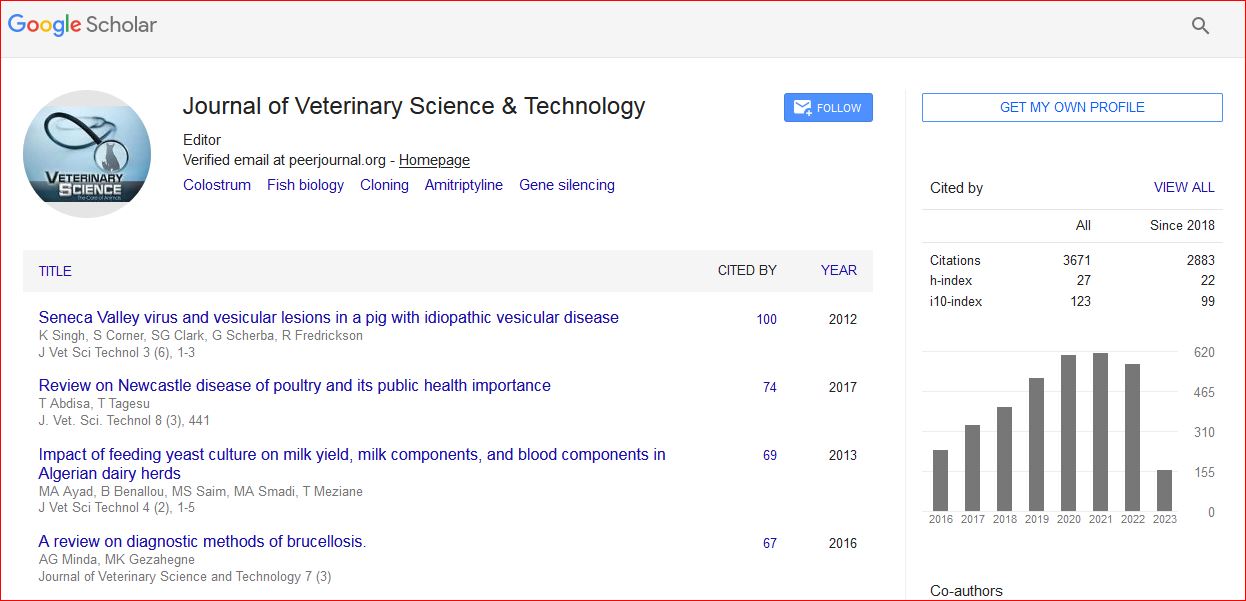
Veterinary Science & Technology received 4472 citations as per Google Scholar report