Short Communication - (2025) Volume 16, Issue 4
Received: 02-Aug-2025, Manuscript No. jvst-26-188043;
Editor assigned: 04-Aug-2025, Pre QC No. P-188043;
Reviewed: 18-Aug-2025, QC No. Q-188043;
Revised: 25-Aug-2025, Manuscript No. R-188043;
Published:
01-Sep-2025
, DOI: 10.37421/2157-7579.2025.16.311
Citation: Al-Harbi, Noura. ”Livestock Infection Control: A Multifaceted
Approach.” J Vet Sci Techno 16 (2025):311.
Copyright: © 2025 Al-Harbi N. This is an open-access article distributed under the terms of the Creative Commons Attribution License, which permits unrestricted use,
distribution and reproduction in any medium, provided the original author and source are credited.
Controlling bacterial infections in livestock is of paramount importance for ensuring animal health and maintaining global food security. This complex challenge necessitates a comprehensive, multi-faceted strategy that integrates various interventions to effectively manage and mitigate the impact of these diseases. The approach typically involves judicious antimicrobial use, the development and deployment of robust vaccines, and the enhancement of on-farm biosecurity measures to prevent pathogen introduction and spread. A deep understanding of the epidemiology and resistance patterns exhibited by common and significant pathogens, such as Staphylococcus aureus, Escherichia coli, and Salmonella species, is absolutely crucial for the design and implementation of targeted, effective interventions and control programs [1].
Vaccination stands as a cornerstone of disease prevention within animal agriculture, offering a proactive means to protect animal populations from a wide array of infectious agents. The ongoing evolution and development of novel vaccine platforms, including innovative subunit and DNA vaccine technologies, are continuously opening promising new avenues for controlling bacterial infections. These advanced vaccines aim to elicit more robust and highly specific immune responses in animals, thereby contributing significantly to reducing the overall reliance on antibiotics for disease management [2].
Biosecurity measures represent fundamental pillars in the overarching strategy to prevent the introduction and subsequent spread of bacterial pathogens within livestock farming operations. Implementing stringent protocols that govern animal movement, rigorous disinfection procedures, effective pest control strategies, and meticulous hygiene management are all essential components. Collectively, these measures create a critical barrier designed to impede the entry and dissemination of infectious agents into and throughout farm environments [3].
Understanding the intricate genetic underpinnings of bacterial virulence, as well as the mechanisms driving antibiotic resistance, is a key determinant in the successful development of effective control strategies. Advanced techniques such as genomic surveillance and comprehensive whole-genome sequencing provide invaluable tools for identifying emerging resistance mechanisms and meticulously tracking the evolutionary trajectory of pathogens within livestock populations. This knowledge is vital for informed decision-making in disease control [4].
Phage therapy, which involves the strategic use of bacteriophagesâ??viruses that specifically infect and kill bacteriaâ??is emerging as a highly promising alternative or complementary approach to traditional antibiotic treatments for managing bacterial infections in animal agriculture. This innovative therapeutic strategy offers the distinct advantage of high specificity, targeting particular bacterial strains while sparing beneficial microbes, and crucially, it can effectively overcome existing antibiotic resistance challenges [5].
The utilization of probiotics and prebiotics represents a significant dietary strategy aimed at modulating the gut microbiota of farm animals. By fostering a healthier and more balanced microbial community within the gastrointestinal tract, these interventions can significantly enhance the animal's natural defense mechanisms against pathogenic bacteria. This dietary approach contributes to a more robust gut environment and ultimately improves the animal's overall disease resistance capabilities [6].
The judicious and responsible use of antimicrobials, a practice commonly referred to as antimicrobial stewardship, is critically important for slowing down the development and the subsequent spread of antibiotic resistance. This principle emphasizes using the right antimicrobial drug, administering it at the correct dose, ensuring it is given for the appropriate duration, and crucially, only administering it when it is absolutely necessary for treating a diagnosed infection [7].
Investigating and understanding the complex interplay of host-pathogen interactions is essential for the design and development of more effective disease control strategies in livestock. Research focused on immune modulation within the host animal and exploring the innate resistance mechanisms present in livestock species can pave the way for the creation of novel therapeutics and highly effective preventative measures against bacterial infections [8].
Advanced diagnostic tools play an indispensable role in the early detection and accurate identification of bacterial infections in farm animals. The development and implementation of rapid, sensitive, and specific diagnostic methods are crucial for enabling prompt and appropriate treatment decisions, thereby helping to prevent the escalation of infections and the potential for widespread outbreaks within herds and flocks [9].
Integrating comprehensive genomic information with traditional epidemiological data offers a significantly more holistic and nuanced understanding of the dynamics governing bacterial infections within farm animal populations. This integrated approach enhances the capabilities for effective surveillance, more accurate risk assessments, and the development of highly targeted and efficient control strategies for bacterial diseases in livestock [10].
The control of bacterial infections in livestock is an essential undertaking for safeguarding animal welfare and ensuring the safety and security of the global food supply. This critical objective is addressed through a multifaceted approach that encompasses several key strategies, including the conscientious application of antimicrobial agents, the advancement and implementation of effective vaccination programs, and the rigorous enhancement of biosecurity protocols on farms. A thorough comprehension of the epidemiological patterns and prevailing resistance trends of prevalent bacterial pathogens, such as Staphylococcus aureus, Escherichia coli, and various Salmonella species, is indispensable for formulating and executing precise and impactful interventions [1].
Within the realm of animal agriculture, vaccination continues to be a foundational element for preventing diseases and maintaining healthy livestock populations. The ongoing innovation in vaccine technology, particularly the exploration and development of new platforms like subunit and DNA vaccines, presents significant opportunities for effectively managing bacterial infections. These advanced vaccines are designed to stimulate potent and specific immune responses, thereby playing a crucial role in diminishing the dependence on antibiotics for disease management and control [2].
Farm biosecurity measures are fundamentally important for preventing the initial introduction of bacterial pathogens onto farms and halting their subsequent dissemination throughout the animal population. The establishment and consistent adherence to strict protocols, encompassing the management of animal movement, thorough disinfection practices, effective pest eradication, and vigilant hygiene management, collectively create a formidable barrier against the entry and spread of infectious agents within agricultural settings [3].
A deep understanding of the genetic factors that contribute to bacterial pathogenicity and the mechanisms responsible for antibiotic resistance is a prerequisite for devising successful strategies to combat these infections. Advanced methods, including genomic surveillance and whole-genome sequencing, are instrumental in identifying novel resistance genes and tracking the evolution and spread of pathogens within livestock populations, providing critical insights for control efforts [4].
Phage therapy, a therapeutic modality that employs bacteriophages to target and eliminate specific bacterial species, is rapidly gaining traction as a potent alternative or adjunctive treatment for bacterial infections in animals. This method offers a high degree of specificity, minimizing disruption to the animal's native microflora, and importantly, it presents a viable strategy for overcoming established antibiotic resistance [5].
The strategic use of probiotics and prebiotics offers a means to positively influence the composition and function of the gut microbiota in farm animals. By promoting a healthier intestinal environment, these agents can bolster the animal's innate immune defenses against bacterial pathogens, contributing to improved resilience and overall health status [6].
Antimicrobial stewardship, characterized by the prudent and responsible use of antibiotics, is a vital practice aimed at curbing the emergence and proliferation of antibiotic resistance. This approach entails ensuring that antimicrobials are used appropriately, encompassing the selection of the correct drug, the precise dosage, the optimal treatment duration, and their administration strictly when clinically indicated [7].
Understanding the complex molecular and cellular interactions that occur between hosts and pathogens is paramount for developing more efficacious control measures. Research focused on manipulating the host's immune system and investigating the inherent resistance mechanisms found in livestock can lead to the innovation of novel therapeutic agents and preventative strategies against bacterial diseases [8].
Diagnostic technologies are essential for the prompt and accurate identification of bacterial diseases in livestock. The development and application of rapid and highly sensitive diagnostic assays facilitate timely therapeutic interventions and are critical for preventing the rapid spread of infections and mitigating the impact of potential outbreaks [9].
The synergistic integration of genomic data with traditional epidemiological surveillance provides a more comprehensive and powerful framework for understanding the complex dynamics of bacterial infections in livestock populations. This combined approach enhances the ability to conduct effective monitoring, assess risks accurately, and implement precisely targeted control measures to combat bacterial diseases [10].
Controlling bacterial infections in livestock is crucial for animal health and food security, requiring a multifaceted approach that includes judicious antimicrobial use, vaccine development, and enhanced biosecurity measures. Understanding pathogen epidemiology and resistance patterns is key for targeted interventions. Vaccination remains a vital preventive strategy, with novel platforms offering promising avenues to reduce antibiotic reliance. Biosecurity measures are fundamental in preventing pathogen introduction and spread. Genomic surveillance and whole-genome sequencing are vital for understanding virulence and resistance mechanisms. Phage therapy is emerging as a promising alternative to antibiotics, offering specificity and overcoming resistance. Probiotics and prebiotics can modulate gut microbiota, boosting natural defenses. Antimicrobial stewardship is critical to slow resistance development. Understanding host-pathogen interactions informs the development of novel therapeutics. Advanced diagnostic tools enable early detection and accurate identification of infections. Integrating genomic and epidemiological data provides a comprehensive understanding for enhanced surveillance and control.
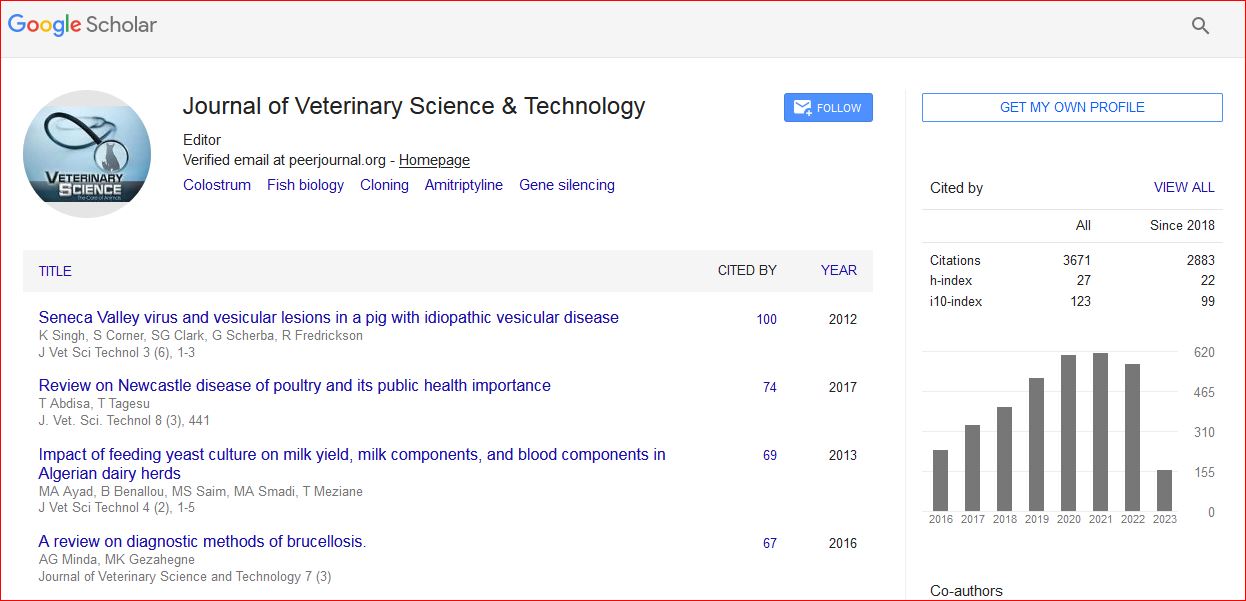
Veterinary Science & Technology received 4472 citations as per Google Scholar report